Lemon Tree Fertilizer Guide for Pots and Gardens
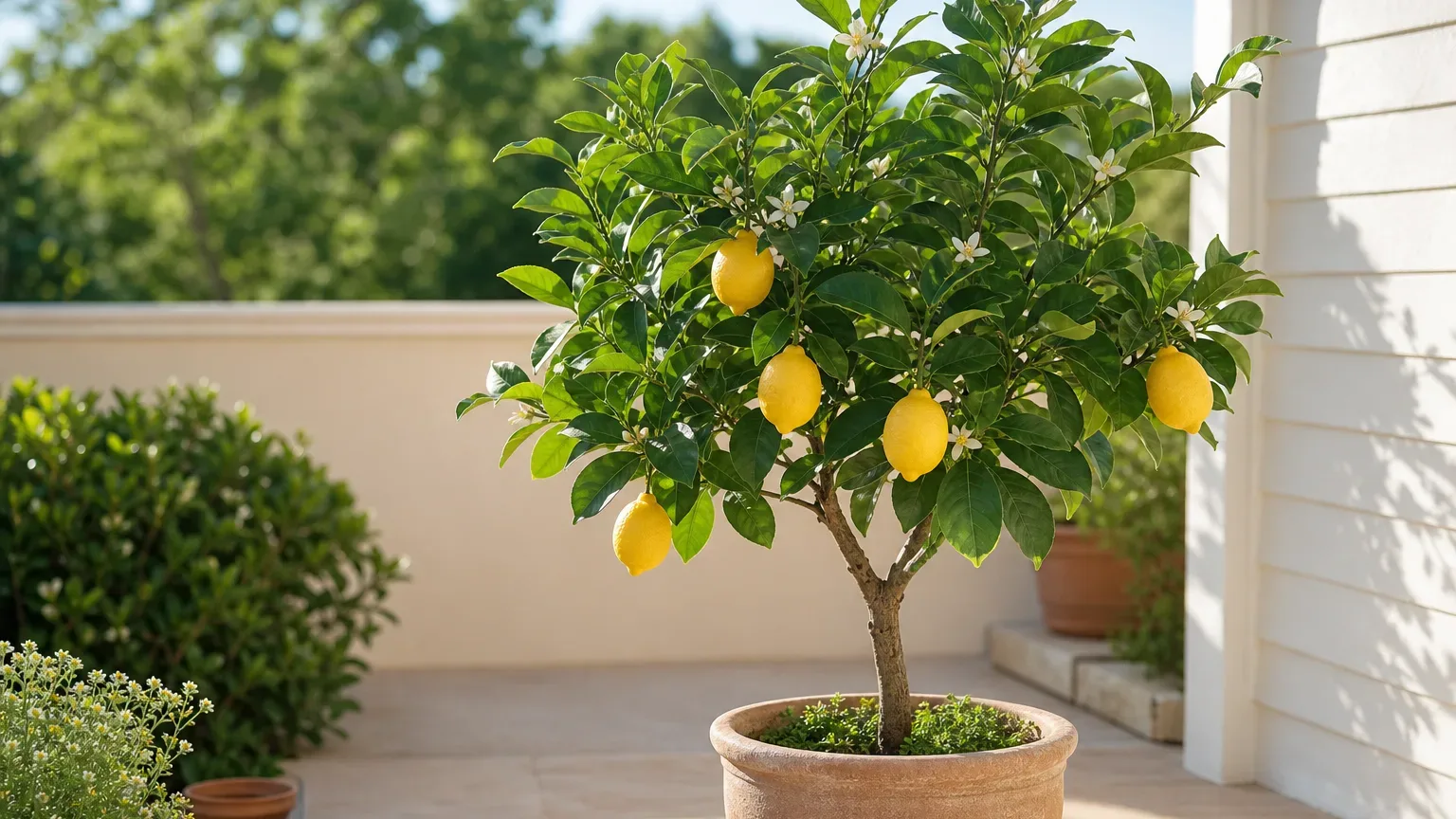
Lemon Tree Fertilizer Guide for Pots and Gardens
Lemon Tree Fertilizer Guide for Pots and Gardens
Your lemon tree does not need constant feeding. It needs nutrients when warm weather, strong sun, and healthy roots allow Citrus limon to push fragrant white flowers, set fruit, and ripen yellow lemons on the branch. For a potted nimbu on an Indian terrace, the safest starting point is a citrus-specific feed at half the container label rate every four to six weeks during visible active growth, skipping applications whenever the mix is saturated, the plant is heat-wilted, or cool winter growth has slowed.
That container plan is deliberately more conservative than an orchard schedule. A mature lemon in soil has a broad root zone; a balcony tree may have only 40–80 litres of mix, where repeated fertilizer salts accumulate quickly. Feed the plant you have, not the kilogram dose printed for a field tree.
Lemon tree fertilizer: the quick answer
For lemon trees in Indian gardens, split nutrition around active growth rather than giving one heavy annual dump. UC IPM recommends dividing nitrogen for mature citrus into two or three applications from late winter through early summer, and warns that late-season feeding can hurt fruit quality and rind finish. UF/IFAS publishes age-based schedules using an 8-8-8 analysis with micronutrients for home landscape citrus. Both point to the same useful principle: timed, measured feeds are safer than one concentrated handful.
Use a fertilizer formulated for citrus fruit, not a generic foliage houseplant tonic. The RHS citrus guide advises switching between a high-nitrogen summer citrus feed from late March through October and a more balanced winter citrus feed from November to mid-March. In a pot, follow the product’s container directions and begin at half strength instead of converting UF/IFAS pound-per-tree field advice into a terrace dose.
What to feed and how often in a pot
A complete citrus feed supplies nitrogen for leaves and shoots, phosphorus and potassium for root and fruit processes, and ideally iron, manganese, zinc, and magnesium. Missouri Botanical Garden notes that during the growing season lemon trees need plenty of water and regular small applications of nitrogenous fertilizer to promote growth and fruit size. “Small” and “regular” are the operative words for containers: light doses on a schedule beat one large scoop that crusts the mix.
Why Citrus limon needs steady, measured feeding
Citrus limon is a sun-loving evergreen acid citrus, not a dim-room foliage plant. Nitrogen supports leaves and productive shoots, while potassium and micronutrients help the tree hold fruit and maintain green foliage in free-draining, slightly acidic mix. True lemon is self-fertile, so one grafted tree can flower and fruit, but steady light, warmth, even moisture, and nutrition determine whether blossoms hold and lemons size properly.
Fertilizer cannot compensate for shade, waterlogged mix, or a root-bound pot. Lemons are among the more heat-tolerant citrus for home culture, yet they still need substantial sun to ripen fruit well. Check the Lemon Tree light guide before treating sparse growth as hunger. If the pot stays wet for days, fix drainage through the Lemon Tree soil guide because stressed roots cannot use an extra feed efficiently. Irregular watering during flowering or young-fruit development can trigger blossom or fruit drop regardless of how recently you fed.
Acid citrus growth and year-round fruiting habit
Lemons are classified as acid fruits in extension guidance and can flower and fruit across a long season in warm climates. UF/IFAS lists commercial lemon harvest from July through December, but container trees in frost-free Indian terraces may push flushes whenever heat and light stay strong. That does not mean feed every week year-round. It means match feeding to visible new growth, not to the calendar alone, and pause when roots are stressed or the mix stays saturated.
In-ground lemons vs container nimbu: different dose logic
Field recommendations are written as pounds of actual nitrogen per tree per year. UC IPM, for example, scales from one tablespoon of nitrogen fertilizer three times in year one up to about one pound of actual nitrogen annually by year five, divided across applications. UF/IFAS Table 2 lists pounds of 6-6-6, 8-8-8, or 10-10-10 per application by tree age for in-ground home trees. Those sources prove lemon is routinely fed as a fruit crop, but they are not container recipes: root volume, leaching, fertilizer analysis, climate, and plant size differ too much.
Container media hold a finite nutrient and salt load. Clemson HGIC container citrus guidance notes that frequent watering flushes nutrients from pots and recommends slow-release formulas such as 12-6-6 or 12-4-6 with two to three applications through the growing season, supplemented only when a clear deficiency appears. UC IPM specifically notes that dwarf plants or trees in containers with restricted root space may require less fertilizer than the same-age tree in open ground.
Why field nitrogen tables are not terrace recipes
A fifth-year UF/IFAS split dose spread under a 3-metre canopy is a different risk profile from the same product buried in a 35 cm pot. Salts concentrate where roots cannot escape. That is why a small liquid dose, followed by observation, is more controllable than a large handful of granules. Prefer soil or mix testing when you can, and increase only after you see a full flush and good drainage.
India seasonal fertilizer schedule for lemon trees
India has no single nimbu calendar. A dry Maharashtra terrace, a humid coastal courtyard, and a north Indian conservatory with cool winters do not enter active growth on the same week. Use the table as a decision framework, then let new leaves, flowering, rainfall, and root-zone moisture decide the exact timing.
| Seasonal cue | In-ground lemon tree | Container lemon tree |
|---|---|---|
| New spring flush begins | Apply the first split based on tree age, product label, and preferably a soil test | Start half-rate citrus feed after steady new growth appears |
| Hot, dry flowering or fruit fill | Feed only if irrigation is reliable; never fertilize drought-stressed roots | Water first, then feed on a cooler morning; skip during severe heat wilt |
| Sustained monsoon rain | Pause if soil is saturated or nutrients would wash away | Usually pause while the pot stays wet; resume after drainage and growth normalize |
| Post-monsoon active flush | Apply the next planned split when soil is moist but not flooded | Resume a half-rate feed if the plant is actively growing |
| Cool slow-growth period | Reduce nitrogen; maintain light balanced feeding if growth continues indoors | Switch to winter citrus feed per label; reduce frequency in cool conservatories |
Late winter and spring flush
In much of India, late winter to spring brings stronger light and a new flush after the coolest weeks. Begin feeding only after you see expanding leaves or shoots, especially on a plant that was recently moved outdoors, repotted, or hard-pruned. UF/IFAS recommends starting fertilization when swelling buds indicate growth is beginning, or about three weeks after planting — a useful timing cue even when you scale the dose for a pot.
If you repotted into fresh compost-rich mix, wait several weeks and check whether the mix already contains controlled-release fertilizer. Stacking liquid feed over a charged potting mix is a common route to excess salts. Use the Lemon Tree repotting guide to separate transplant recovery from feeding.
Hot summer flowering and fruit fill
Do not apply fertilizer to bone-dry roots during a heatwave. Water thoroughly, allow drainage, and feed later at a normal irrigation when leaves are firm. Consistent moisture from flowering through ripening protects fruit quality; fertilizer is secondary when the plant is wilted.
Avoid heavy nitrogen once fruit is sizing and colour is developing. UC IPM warns that late-season fertilization may affect fruit quality, delay fruit coloring, and make the rind rough. For Indian growers, that translates to a practical rule: do not chase soft leafy growth with high-N feeds once lemons are filling and the monsoon is ending.
Monsoon pause and post-rain recovery
Pause routine feeding when monsoon rain keeps the soil saturated. Applying soluble fertilizer before a heavy downpour wastes nutrients; adding granules to an airless pot increases root stress. Move portable containers out of constant roof runoff, confirm drainage holes are open, and wait until the mix returns to a normal wet-dry rhythm described in the Lemon Tree watering guide.
During cool winter months, many container lemons slow growth even though they keep their leaves. The RHS still recommends year-round feeding for citrus but switches to a more balanced winter formula and reduced watering. Match that shift: continue light winter citrus feed if the tree is in active conservatory growth, but stop nitrogen-heavy summer feeds while the plant is barely growing.
Cool-season and conservatory feeding
Evergreen citrus in a bright, cool room may keep metabolizing through winter while needing less aggressive vegetative push than during the main growth season. A balanced winter citrus feed at the label’s reduced rate is usually enough. If the tree drops leaves from cold drafts, dry heater air, or sudden light changes, fix the environment before adding more fertilizer.
Best fertilizer type for lemon tree
Choose a product labelled for citrus fruit with a declared nutrient analysis and directions for containers. A complete water-soluble citrus feed is easiest to reduce and distribute evenly in a pot. Controlled-release granules can work if you know the release period and avoid overlapping liquid feeds.
UF/IFAS recommends an 8-8-8 analysis with other macro and micronutrients as a good general fertilizer for home landscape citrus trees. That supports using a complete formula rather than a single-nutrient tonic, then adjusting only when a clear deficiency pattern or soil test justifies it.
Choosing a complete citrus NPK formula
Most mature citrus need regular nitrogen, while other nutrients are often present in sufficient amounts in garden soil — but container mixes leach faster and may lack micronutrients. Read the guaranteed analysis, check that iron, manganese, and zinc are included or available as a separate citrus micronutrient product, and follow the container directions on the label.
Avoid chasing very high phosphorus “bloom booster” products unless a soil test shows a need. Lemon flowering depends more on strong light, stable moisture, and overall plant health than on a single high-P application. A balanced or citrus-labelled complete feed during active growth is the mainstream home-garden approach.
Summer vs winter citrus feeds
The RHS citrus guide distinguishes two seasonal products: a summer citrus feed high in nitrogen from late March to October, and a winter citrus feed that is more balanced from November to mid-March. That split reflects how evergreen citrus in protected culture keeps metabolizing through winter while needing less aggressive vegetative push than during the main growth season.
In India’s warmer zones, your “summer” window may start earlier and run longer outdoors, while a cool conservatory still benefits from the winter formula during the shortest days. Let new shoot length and pot dryness guide frequency more than calendar month alone.
Slow-release granules vs liquid feeds
Clemson HGIC recommends slow-release citrus formulas for containers because irrigation leaches soluble nutrients quickly. If you use coated granules, apply the label rate for your pot size once or twice per active season and avoid adding monthly liquid feed unless the label supports combining them. A newly purchased nursery tree may already contain coated granules; look for pellets before feeding.
Liquids are easier to halve and distribute when you are still learning the tree’s response. Whichever form you choose, keep granules and concentrated solution away from the trunk and graft union.
Compost, FYM, and organic top-dressing
Well-rotted farmyard manure or mature compost can contribute nutrients and organic matter gradually. UC IPM notes that organic fertilizers such as manure or blood meal can be applied in fall under the canopy in orchard settings, and that about 100 lb of composted cow manure can supply roughly one pound of actual nitrogen per year in field culture. In a pot, use only well-finished material as a thin top-dressing away from the trunk, and do not fill the container with bulky manure that reduces air space.
“Organic” does not mean unlimited. Do not combine manure, oil cake, liquid feed, and slow-release granules at once. Add one input, observe a growth cycle, and adjust. Vermicompost can help, but its nutrient analysis varies and it is not a complete substitute for a measured citrus fertilizer program when the tree is actively growing and clearly hungry.
How much fertilizer to use in a container
There is no defensible gram dose without the fertilizer analysis, pot volume, plant size, and label directions. Start a healthy, actively growing potted lemon at half the label’s container rate. Repeat no sooner than four to six weeks with a water-soluble product, and stop if the plant is not producing new growth.
For controlled-release fertilizer, use the label rate for the actual container diameter or media volume and note the release period. Do not add monthly liquid feed unless the label specifically supports combining them. A newly purchased nursery tree may already contain coated granules; look for pellets before feeding.
For in-ground plants, UF/IFAS and UC IPM age-based nitrogen figures are useful anchors for mature orchard trees, but young potted plants should never receive a fifth-year field dose. Increase only after you see a full flush and good drainage.
How to fertilize lemon tree step by step
- Confirm the tree is in strong sun, actively growing, and free of severe wilt or root decline.
- Feel the mix. If it is bone dry, water and postpone feeding; if saturated, wait for drainage and aeration.
- Measure the product rather than estimating by handful. For a liquid feed, begin at half the label’s container concentration.
- Apply evenly over already moist mix, keeping concentrated granules and solution away from the woody crown and graft union.
- Allow drainage to leave the pot and empty the saucer. Record the date and product.
- Reassess new growth over the next month. Do not “top up” because results are not visible in a few days.
This sequence keeps feeding tied to root health and watering rhythm. If roots circle densely or the pot dries within a day, increasing fertilizer is the wrong response; the plant may need a larger root zone through repotting.
Reading pale leaves, tip burn, and slow growth
Uniformly pale older leaves can be consistent with nitrogen shortage, while interveinal yellowing on new growth can involve micronutrients such as zinc or iron. UC IPM describes correcting zinc or iron deficiencies with a foliar chelated micronutrient spray as new growth emerges in spring, or with zinc sulfate or iron sulfate applied to the soil. Yet wet roots, high-pH iron lockout, pests, drought, and natural post-move leaf drop can mimic deficiency. Diagnose the pattern, soil moisture, recent feeding, light level, and root condition together.
If a lemon tree has not been fed for months, drains well, receives full sun, and is actively growing pale leaves, try one measured half-rate complete citrus feed. If new growth remains chlorotic, test pH — UF/IFAS lists 5.5–6.5 as the optimum range for citrus — and consider a targeted micronutrient approach rather than stacking more general NPK. Avoid repeated “rescue” doses; they turn a root or drainage problem into salt injury.
Signs of too much fertilizer on lemon trees
Watch for a white crust on the media or pot rim, brown leaf tips and margins appearing after feeding, sudden wilt despite moist soil, leaf drop, or stalled growth. UC IPM cautions that overfertilization causes excessive new growth, which makes citrus more susceptible to disorders such as bacterial blast. UC IPM irregular fertilization guidance links overfertilized plants to excessive new growth and poor blooming, while underfeeding can yellow or streak leaves.
Stop feeding immediately. Remove visible granules if practical, then leach a free-draining pot with plain water only if the roots are otherwise healthy and the mix drains promptly. Do not flood compacted or already waterlogged soil; correct the root-zone problem first through better drainage and the watering guide.
Iron, zinc, magnesium, and micronutrient notes
UC IPM identifies zinc and iron as occasional citrus micronutrient deficiencies, with chlorotic areas between veins on affected foliage. UF/IFAS notes that home landscape citrus on richer soils are less likely to show deficiencies than commercial groves, but recommends routine consideration of manganese and zinc in annual nutritional sprays on alkaline soils, and soil-applied iron chelates when iron deficiency is confirmed.
Clemson HGIC container citrus guidance adds that many water-soluble fertilizers lack calcium or magnesium, so Epsom salt (magnesium sulfate) or gypsum may be needed in some bark-based mixes. These are targeted corrections, not casual monthly tonics. Do not spray micronutrient concentrates onto a balcony plant at orchard rates without a clear diagnosis and product directions. More complete fertilizer will not fix iron problems if pH or root damage is blocking uptake.
Meyer lemon and true lemon feeding differences
Home growers often buy Citrus limon cultivars such as ‘Eureka’ or ‘Lisbon’, or the more cold-tolerant Meyer lemon (Citrus × meyeri), which UF/IFAS lists as a reasonable substitute for true lemons in home gardens. Feeding logic is the same — complete citrus nutrition during active growth, conservative doses in pots — but Meyer trees are often smaller and may need less total product per application. Regardless of cultivar, remove vigorous shoots from below the graft; they belong to the rootstock, not your lemon scion, and will not respond to scion-targeted feeding the way you intend.
When to use this page vs other Lemon Tree guides
- Use the Lemon Tree overview for whole-plant placement, cultivar choice, fruiting habit, and first-month priorities.
- Use Lemon Tree light guidance when weak growth or poor flowering may come from shade.
- Use Lemon Tree watering guidance before feeding a wilted, dry, or persistently wet plant.
- Use Lemon Tree soil guidance for drainage, pH, and container-mix decisions.
- Use Lemon Tree repotting guidance when roots circle, drainage fails, or the pot dries unusually fast.
Related Lemon Tree guides
- Lemon Tree pruning — coordinate feeding with canopy control so you do not force soft shoots before a hard prune.
- Lemon Tree propagation — feed established young plants, not unrooted cuttings.
- Lemon Tree fertilizer — bookmark this page to compare the next application with your seasonal notes.
- Lemon Tree care hub — return to the complete cluster when a symptom does not fit a nutrition problem.
Conclusion
The best lemon tree fertilizer plan is measured, seasonal, and scaled to the root zone. Feed an actively growing garden tree in split applications suited to local conditions, using UF/IFAS and UC IPM field rates as regional context rather than a terrace commandment. For a container Citrus limon, begin with a citrus-specific feed at half the label’s pot rate every four to six weeks during active growth, switch to a balanced winter formula when growth slows, and pause through saturated monsoon weather, drought stress, and recovery after repotting.
Do not use fertilizer to solve shade, waterlogging, a cramped pot, or late-season rind problems caused by excess nitrogen. Keep records, change one input at a time, and stop at the first signs of salt stress. Lemon is productive when sun, roots, water, and nutrition work together; fertilizer is only one part of that system.