Lemon Tree Soil Guide: Mix, pH & Drainage
Lemon Tree Soil Guide: Mix, pH & Drainage
Lemon Tree Soil Guide: Mix, pH & Drainage
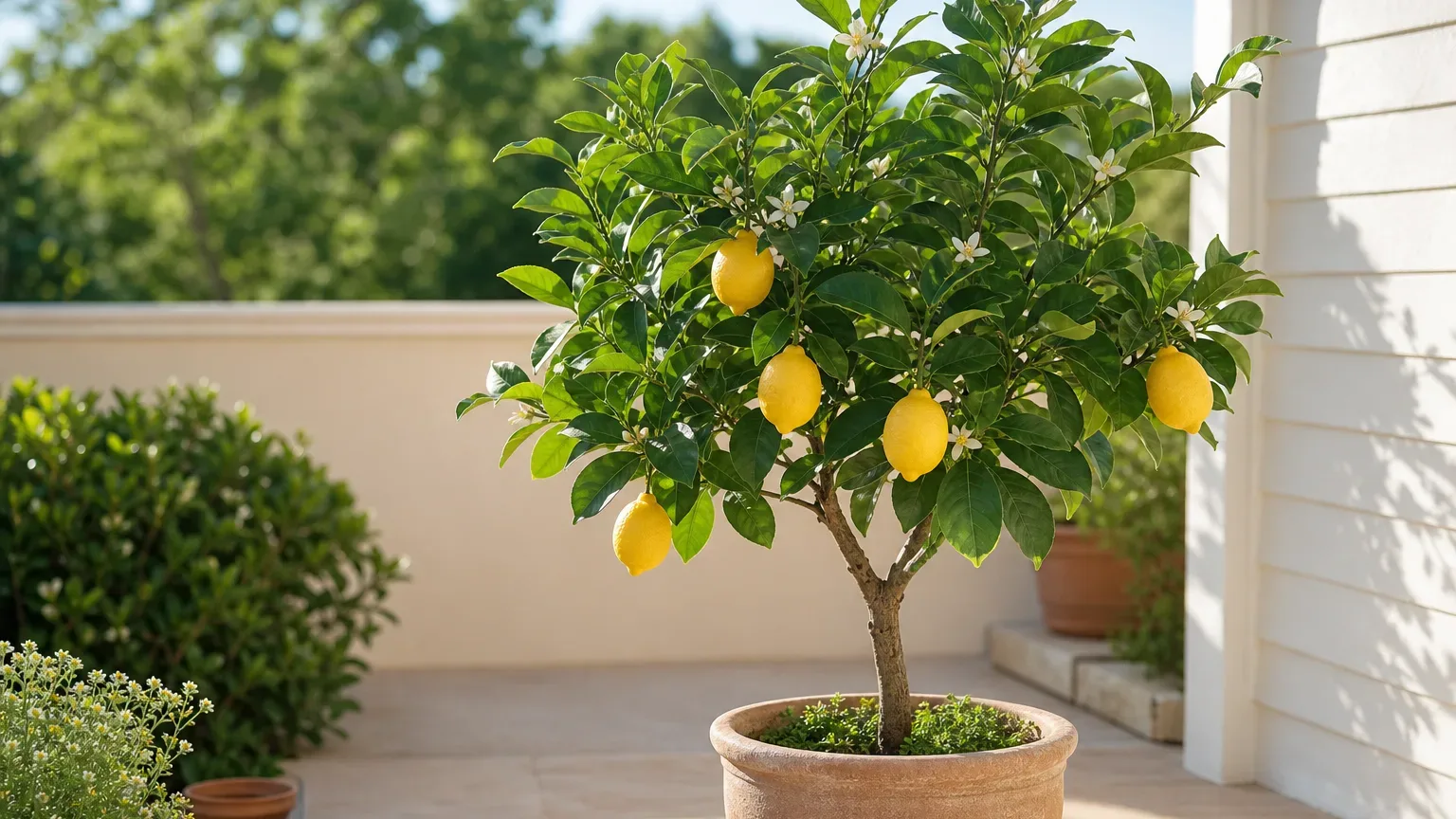
Citrus limon is a sun-loving evergreen fruit tree, not a moisture-loving foliage houseplant. Its roots need a steady supply of water and oxygen at the same time—a combination that only works when the soil or potting mix drains freely, holds moderate moisture between waterings, and stays in a slightly acidic pH band where iron and other micronutrients remain available. Missouri Botanical Garden describes lemon culture as fertile, well-drained soil in a sunny, wind-sheltered position. That sentence is the whole framework: fertility without drainage is how terrace lemons develop yellow leaves, sour-smelling mix, and stalled growth even when you water carefully.
For growers in India and similar warm climates, soil problems usually show up as structure failures rather than missing “magic” ingredients. Monsoon rain on a dense cocopeat blend, calcareous terrace fill that pushes pH upward, or a decorative pot with one blocked outlet can all mimic nutrient deficiency at the leaf surface while the real issue sits in the root zone. This guide focuses on what Citrus limon actually needs beneath the surface—and how to fix the mix before you chase another fertilizer product.
The short answer: what soil does a lemon tree need?
The best lemon tree soil is fertile, slightly acidic, and fast-draining. In containers, aim for a coarse, soilless-leaning blend that rewets evenly, drains within minutes after a thorough soak, and dries gradually rather than staying glossy-wet for days. A practical starting recipe is 60% quality potting mix, 20% fine pine bark, and 20% perlite or pumice—the same ratios used in the LeafyPixels lemon profile—adjusted upward on the coarse fraction if your terrace stays humid through monsoon.
For pH, target roughly 5.5–6.5. UF/IFAS grove-establishment guidance places the optimum soil and irrigation-water pH between 6.0 and 6.5, while UF/IFAS citrus pH research recommends adjusting alkaline soils toward 6.0–6.5 for potassium, phosphorus, calcium, manganese, zinc, and iron availability. Avoid letting container mix fall below about pH 5.0, because UF/IFAS warns that very low pH can increase aluminum, iron, manganese, and zinc solubility to toxic levels for citrus.
Why drainage matters more than a “citrus” label on the bag
Drainage is the movement of excess water out of the root zone, not a dry surface crust. Lemon roots are relatively shallow and spread widely; UC IPM notes that citrus and avocado root zones are shallow and that emitters must follow root expansion as trees establish. When fine particles collapse the large pores in a pot, water lingers around those shallow roots while the top few centimetres feel ready for another watering. That mismatch is one of the fastest routes to chronic stress on a container nimbu.
Florida grove planners treat excess soil moisture as more damaging than drought: more than three days of root-zone flooding can severely injure citrus roots, followed by decline and possible tree death. You may never flood a terrace pot for 72 straight hours, but the same oxygen starvation happens when a dense mix stays saturated through repeated monsoon storms or when a saucer holds runoff all week.
Shallow citrus roots and oxygen
Commercial citrus nurseries fill containers with soilless potting mix formulated for both water-holding capacity and adequate drainage—because small root volumes dry quickly yet cannot tolerate standing water. Your home container should follow the same logic at a larger scale: enough fine material to hold plant-available water through a hot afternoon, enough coarse material to restore air after irrigation or rain.
Do not compensate for poor drainage by watering less and less until the tree wilts. Starving a waterlogged root system of oxygen is the problem; skimping on water after the damage starts only adds drought stress on top. Fix structure first, then align timing with the Lemon Tree watering guide.
Wet mix is not the same as even moisture
A good lemon mix accepts a deep soak, drains promptly, then dries steadily through the upper 5–8 cm before the next watering. Pure fine cocopeat, heavy black compost, or unamended garden clay often fail that rhythm: the surface looks dry while the core stays cold and wet, or water channels down the pot wall without wetting the centre. Neither pattern supports the deep, rhythmic irrigation citrus prefers during active growth and fruit development.
If water races out the bottom within seconds of starting the hose, you may have channeling or a hydrophobic dry core—not “excellent drainage.” Break up the surface gently, water in slow stages, and rebuild with more even particle sizes rather than adding more nitrogen in the Lemon Tree fertilizer guide.
Lemon tree soil pH and nutrient uptake
Soil pH controls how soluble—and therefore how plant-available—many nutrients become. UF/IFAS citrus pH research states that soil pH determines the solubility and bioavailability of nutrients essential for citrus growth and yield. Ferrous iron in slightly acid soils is the form most plants absorb; ferric iron in high-pH soils is not, so citrus on alkaline media commonly shows iron deficiency even when iron is present in the mix.
That biology explains a frustrating terrace pattern: dark-green older leaves, pale or yellow new growth with green veins, and a pot that has been fed regularly. Before escalating micronutrient sprays, confirm pH, drainage, and root health. A wet, alkaline root ball cannot fix chlorosis with foliar iron alone.
Iron chlorosis on alkaline terraces
Many Indian terraces and raised beds sit on calcareous rubble or receive hard, alkaline irrigation water. UF/IFAS notes that alkaline irrigation water gradually raises soil pH over time—exactly what happens when you top-water a container for years without repotting. High pH also limits phosphorus, potassium, calcium, manganese, and zinc uptake according to the same UF/IFAS pH bulletin.
If a soil test shows pH above about 7.0, address the root zone rather than only the leaves. Repotting into fresh, slightly acidic mix, using acid-forming fertilizers per label, and improving drainage often help more than repeated chelated iron drenches on unchanged media. In the ground, UF/IFAS suggests choosing rootstocks that tolerate high pH when the site starts alkaline—another reason to buy a named grafted tree instead of an unknown seedling.
Test before you acidify or lime
A cheap pH meter or kit is worthwhile before you dump sulphur, vinegar, or garden lime into a pot. Interveinal yellowing can also follow overwatering, cold roots, or recent repotting shock—conditions that mimic nutrient problems. Test the mix you actually water, not only the garden soil beneath a lifted pot.
When pH is slightly high but drainage is excellent, incremental correction through appropriate citrus feeding and fresh top-dressed mix may be enough. When pH is high and the root ball stays wet, fix aeration first. Chasing pH on saturated roots wastes money and delays the real repair.
A practical lemon tree potting mix
Container soil must anchor a woody, top-heavy citrus tree, survive hot terrace days, and recover air after monsoon downpours. Field soil alone usually slumps into a dense mass in a pot. A feather-light peat- or coir-only blend can stay uniformly wet, shrink as it ages, and offer too little stability for a fruiting tree in wind.
A reliable starting recipe
For a grafted lemon in a large outdoor container, begin with:
- 60% quality potting mix for fine water-holding material and baseline fertility;
- 20% fine pine bark for durable structure and slow organic matter;
- 20% perlite or pumice for coarse air space.
Mix ingredients throughout the pot, not as layers. In very humid monsoon weather, shift a few percentage points from potting mix toward bark or perlite rather than adding more fine compost.
Skip a thick “drainage layer” of stones at the bottom. It steals root volume and does not fix a dense medium above it. If the blend slumps after the first watering or takes many minutes to start draining, increase perlite, pumice, or clean grit before planting.
Substituting materials available in India
Cocopeat is widely available and useful as part of the water-holding fraction, but it should not be the entire mix on a rainy terrace. Combine buffered, low-salt coir with potting mix and a coarse mineral component. Choose mature compost or well-rotted farmyard manure that smells earthy and is cool; unfinished manure continues decomposing, consumes oxygen, and can release salts that push pH upward.
Red loam can add weight and minerals in moderation, but break all clods and never fill a closed pot with garden earth alone. Where perlite is scarce or blows away on windy rooftops, use coarse pumice, horticultural grit, or expanded clay for the same structural role. Pine bark may be replaced partially with composted coir chips when bark is hard to source—keep visible coarse particles throughout.
How to choose a ready-made citrus or fruit-tree mix
Ignore vague labels such as “rich,” “organic,” or “for all plants” until you inspect texture. A lemon-ready bag should show visible coarse particles and spring back when squeezed moist rather than forming a sticky ball. Avoid mixes dominated by fine black compost, fresh wood chips, or dense local soil sold as “garden soil in a bag.”
Run a small test before a full repot. Fill a nursery pot, wet the mix completely, wait ten minutes, and squeeze a handful: it should hold loosely, then break apart with a touch. Leave the test pot overnight in warm weather; if it remains heavy and glossy-wet the next day, amend with coarse material rather than hoping extra holes alone will fix internal structure.
Container drainage that works on a real terrace
The pot is part of the soil system. A free-draining recipe cannot work if one outlet is sealed by a flat terrace tile, circling roots, compacted debris, or a decorative cachepot without holes. Choose a heavy, stable container with several unobstructed outlets and enough width to resist tipping once the canopy fills out and fruit loads the branches.
UC IPM recommends planting citrus on sites with well-drained soil and warns against placing trees in lawns or beds that require frequent shallow irrigation—good advice for terrace culture too, where a lemon shares a drip line with thirsty ornamentals and never dries properly.
Avoid leaving the pot sitting in collected runoff. Roots at the base meet that saturated zone first, and the canopy can still look acceptable for weeks. A saucer may protect flooring, but empty it after watering and rain.
Planting depth and the root flare
Planting depth is a soil issue as much as a hole-digging issue. UC IPM instructs setting container citrus so the tree sits at the same depth as in the nursery pot, with the root ball about an inch above the finished soil line in ground plantings. Planting too deep invites soil and water against the trunk, promoting crown and root rots; planting too high exposes roots to rapid drying.
In a pot, keep the graft union and root flare visible above the final mix line—never bury them during repotting enthusiasm. UF/IFAS home-planting guidance likewise keeps the top of the root ball even with the existing soil line. If you add fresh mix each year, scrape away old mounded material rather than stacking new layers against the trunk.
Monsoon and summer adjustments
Before dependable monsoon rain, clear every outlet, remove saucers that collect water, and shift the pot away from roof downpipes. Shelter the root ball if repeated storms keep it saturated, but keep the canopy in strong light and airflow—lemon still needs sun per the Lemon Tree light guide. Never wrap an already wet soil surface in plastic; that traps moisture and slows gas exchange.
In hot pre-monsoon weeks, a slightly more water-retentive—but still coarse—mix may reduce midday wilting on a windy terrace. In humid coastal monsoon, increase the coarse fraction and verify drainage before you increase irrigation frequency. Do not automatically repot a stressed tree in the middle of a prolonged wet spell; first stop supplemental water, keep additional rain out, and confirm outlets are open.
Planting lemon trees in garden soil
In the ground, assess the whole site rather than digging a narrow hole and filling it with fluffy potting mix that becomes a waterlogged bathtub. UF/IFAS notes that poorly drained soils are more likely to harbour Phytophthora even without a recorded history, and that bedding or drainage systems are required on flood-prone flat sites.
Heavy clay is not automatically impossible if water moves through the profile, but compacted or seasonally waterlogged clay is a poor lemon site. Create a wide raised planting area, keep the root flare at or slightly above finished grade, and divert hardscape runoff. Black cotton soils that swell when wet and crack when dry need site-level drainage planning; mixing a little sand into a small planting pocket will not change their behaviour.
Sandy or lateritic ground presents the opposite problem: water and nutrients can move below active roots quickly. UF/IFAS describes typical Florida citrus soils as sandy with very low cation-exchange capacity, requiring organic-matter management and careful irrigation. Add mature organic matter across a broad surface, mulch without burying the trunk collar, and irrigate according to moisture checks rather than a rigid calendar.
Warning signs that the soil is wrong
Persistently wet mix, a sour smell, algae on a shaded pot surface, fungus gnats, stalled flushes, and yellowing leaves together point toward excess moisture or poor aeration. Pale new leaves with green veins on an otherwise healthy-looking tree suggest iron deficiency linked to high pH, wet roots, or both. Dry brown edges, a pot that becomes feather-light within a day, or water running down the side without wetting the centre suggest channeling, root packing, or an overly coarse, hydrophobic blend.
Take the first action below the surface. Push a wooden skewer deep into the pot, check an outlet, and compare pot weight before adding water or fertiliser. White crust on the rim can indicate soluble salts from hard water or feed; flush only when drainage is excellent. Pouring more water through an already saturated, poorly draining root ball worsens the oxygen problem—exactly the scenario the Lemon Tree repotting guide addresses when you inspect roots and replace old mix.
When to use this page vs other Lemon Tree guides
Use this soil guide to choose ingredients, evaluate texture, manage pH, and fix drainage design. Use the Lemon Tree watering guide when the medium is suitable but you need to decide when and how deeply to irrigate. Use the Lemon Tree repotting guide for pot sizing, root inspection, and the safest time to replace old mix.
For identity, grafting, frost protection, and the full care framework, return to the Lemon Tree care overview. Soil cannot fix a dim room, a neglected rootstock sucker, or a tree that needs structural pruning—see the Lemon Tree pruning guide for canopy work after the root zone is sound.
Related Lemon Tree guides
- Lemon Tree care overview — identity, growth habit, and the complete care framework.
- Lemon Tree watering — moisture checks and seasonal irrigation for container and in-ground trees.
- Lemon Tree repotting — root work, pot sizing, and mix replacement.
- Lemon Tree fertilizer — nutrient timing after drainage and pH are sound.
- Lemon Tree light — sun requirements and their effect on water use and fruit quality.
- Lemon Tree propagation — grafted trees, cuttings, and aftercare for new plants.
- Lemon Tree pruning — shaping, thorn safety, and productive wood.
Conclusion
Good lemon tree soil is a physical and chemical system, not a secret bag label. Give Citrus limon a fertile root zone that drains freely, holds moderate moisture, and stays in a slightly acidic pH band where iron and other micronutrients remain available. In containers, start with roughly 60% potting mix, 20% fine pine bark, and 20% perlite or pumice, then adjust for your climate—more coarse material for humid monsoon terraces, slightly more water-holding organic matter for hot, windy rooftops.
Plant at the correct depth with the graft union and root flare exposed, confirm every drainage outlet works before the rains arrive, and test pH when new leaves pale while the mix stays wet. In the ground, fix site drainage with grading or broad raised beds rather than trying to rescue a waterlogged hole with amendments alone. If uncertain, check the lower root zone first; what happens beneath the surface matters more than how dark or “rich” the mix looks on day one.