Underwatering on Lemon Tree: Causes, Checks & Fixes
Quick answer
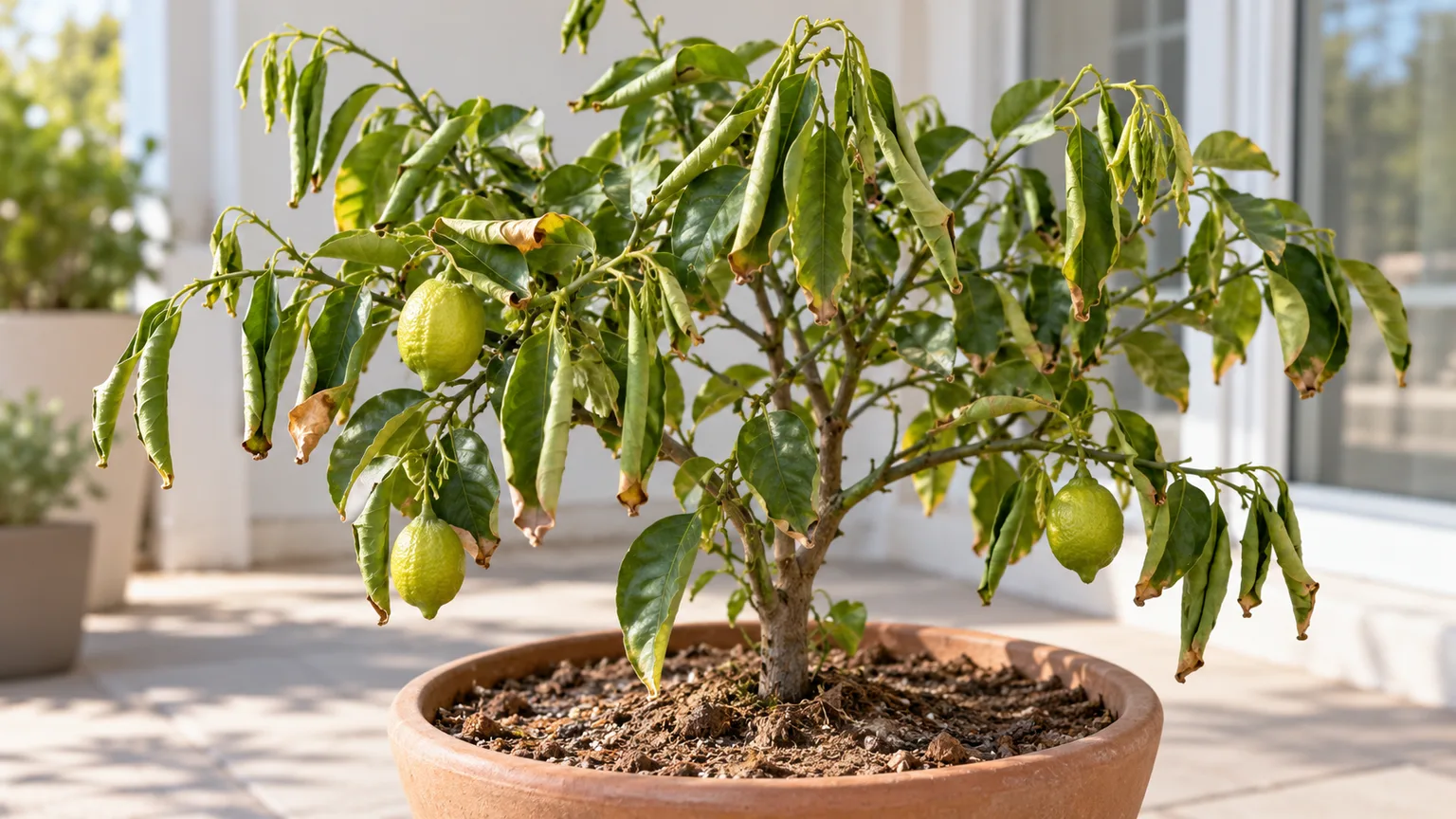
Underwatered lemon trees curl their leaves inward lengthwise like a cigar while still green, then drop blossoms, young fruit, and dry brown-edged leaves. Check moisture 5-8 cm deep and lift the pot: a light pot with dry mix points to thirst. First fix: give one slow, deep soak until water runs from the drainage holes, then reset your watering rhythm before changing anything else.
Underwatering on Lemon Tree: Causes, Checks & Fixes
This guide covers underwatering on Lemon Tree. See also the general Underwatering guide, watering, and light pages for this plant.
Underwatering on Lemon Tree: Causes, Checks & Fixes
Quick answer
An underwatered lemon tree folds its leaves inward along the midrib like a cigar while they are still green, droops at the shoot tips, and sheds blossoms or marble-sized fruitlets it can no longer support. Older leaves develop dry brown edges, crisp, and fall. Check moisture 5–8 cm deep and lift the pot: if the mix is dry at depth and the pot feels light, the tree is thirsty. First, give one slow, deep soak until water flows freely from the drainage holes, then let the top layer begin drying again before the next watering. For the general mechanics of how chronic dryness damages roots, see our underwatering guide — on lemon trees, the pattern usually shows up first as green cigar-roll curl plus fruit drop rather than plain yellowing.
What underwatering looks like on a lemon tree
On citrus, drought stress has a signature you can learn at a glance. Leaves curl inward lengthwise like a cigar, yet stay green for a while — quite different from the soft yellow wilt of overwatering. Young leaves and shoot tips flag first because they lose water fastest; they go limp in afternoon heat and may or may not perk up overnight. If dryness continues, leaf margins turn papery brown, whole leaves crisp, and the canopy thins from the outside in.
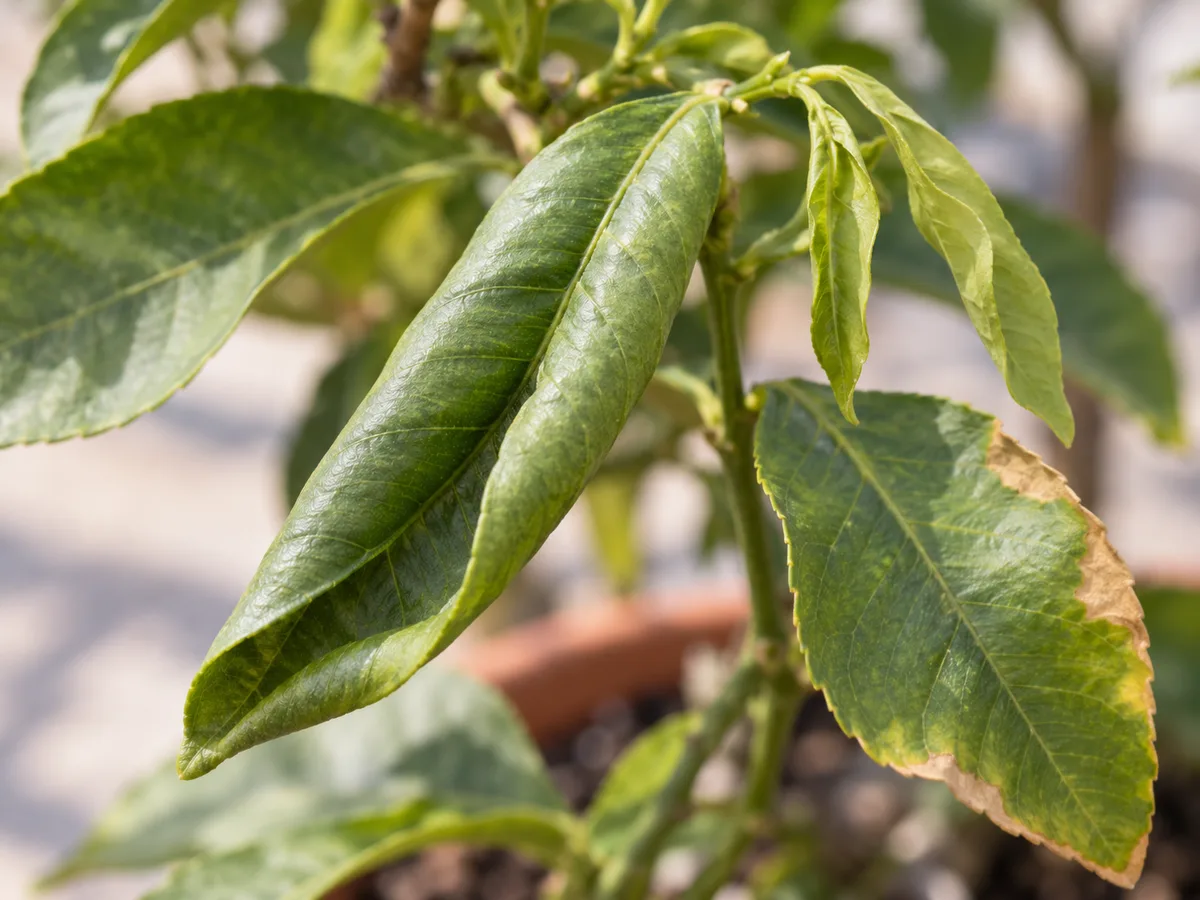
Curled, cupped leaves with dry brown margins on a lemon tree — the classic cigar-roll drought signal before leaves crisp and drop.
Blossom and fruit behavior is the second giveaway, and it is lemon-specific. A thirsty tree aborts what it cannot ripen: flowers drop without setting, fruitlets the size of marbles fall, and remaining lemons stay undersized — container lemon guides likewise list irregular watering among the top causes of heavy fruit drop. Fruit exposed by a thinned canopy can sunburn, developing pale, leathery patches; UC IPM notes that underwatered citrus produces small fruit prone to exactly this damage, while UC’s lack-of-water page describes how soft tissue between the veins collapses as cells lose turgor.
Container trees add their own clues. Mix that has gone fully dry can shrink from the pot wall, so poured water races down the gap and out the bottom while the root ball stays dry. A pot that feels suspiciously light for the size of the canopy, plus dust-dry mix at finger depth, is a thirsty pot even if the surface was watered yesterday.
Why lemon trees dry out
Lemon trees are sun-hungry evergreens that carry leaves, flowers, and fruit at the same time, so their water demand is high and nearly year-round. The Missouri Botanical Garden notes that growing-season lemons want plenty of water in fertile, well-drained soil and full sun — that combination of heat, light, and free drainage means a container can swing from moist to dry in a day or two of summer weather. Three lemon-specific setups dry fastest.
A big canopy in a small pot. Nurseries often sell fruiting-size trees in pots the root system has already filled. With little mix relative to leaf area, there is almost no moisture buffer, and the tree drinks its reserve within days. If water runs straight through without wetting the ball, or roots circle densely at the edge, the pot — not your schedule — is the problem. Read when to size up in the lemon tree repotting guide.
Heat, wind, and indoor heating. Dry windy weather pulls moisture straight from the leaves, and lemons in exposed terrace spots or beside heater vents lose water far faster than the schedule assumes. Fruiting trees in 32°C+ heat may need daily checking; indoor trees in winter-heated rooms dry from the canopy side even while the mix looks fine. Compare your humidity setup with low humidity on lemon trees.
A mix that drains faster than the roots drink. Coarse citrus mix is correct for lemons — they hate wet feet — but a very bark-heavy or old, compacted mix can become hydrophobic, shedding water instead of absorbing it. Sandy in-ground soils behave the same way. The fix is technique (slow, repeated soaking, plus mulch), not a heavier, suffocating soil. See the lemon tree soil guide for the right balance.
Newly planted trees deserve a special mention. Until roots grow out into the surrounding soil, the original root ball is the tree’s only water source. UF/IFAS advises watering new citrus 2 to 3 times per week for about 4 weeks, adjusted for rainfall — a schedule many owners abandon far too early.
How to confirm the cause
Work through these checks in order before reaching for the hose. They take five minutes and separate thirst from its lookalikes.
- Finger test at depth. Push a finger 5–8 cm into the mix, not just the surface. Water when that layer is approaching dry — this is the standard lemon check described in the lemon tree watering guide. Surface-dry but damp underneath means wait.
- Lift the pot. A thirsty container feels strikingly light for the size of the tree. Learn the heavy-after-watering weight once, and the lift test becomes your fastest daily read.
- Read the curl. Green leaves rolled lengthwise like a cigar, especially on young growth, point to drought. Yellow, soft, droopy leaves in wet mix point the other way — compare with overwatering on lemon trees before deciding.
- Check drainage and weather. Confirm holes are open and the tree is not standing in a saucer of old water. Factor in the last week: heatwaves, strong wind, and indoor heating all raise demand, while a good rain resets it. UF/IFAS suggests skipping irrigation for two days after half an inch of rain.
- Inspect new growth and pests. Thirst hits young shoots first; pests distort them differently, with sticky honeydew, stippling, or visible insects. If shoot tips are twisted rather than simply limp, check aphids on lemon trees and spider mites on lemon trees.
The first fix to try
Give one slow, deep soak until water runs freely from the drainage holes. Water from above in two or three passes a few minutes apart so the mix absorbs rather than sheds, and empty the saucer afterward so the roots are moist but not standing in water. For in-ground trees, trickle the hose at the dripline for 30–60 minutes so moisture reaches deep roots.
If the root ball has gone fully hydrophobic and water races down the pot walls, stand the pot in a bucket of tepid water for 20–30 minutes until the surface feels evenly damp, then drain it completely. Either way, make this one correction first and watch for 2–3 days before changing feed, light, or pots — a lemon that was merely thirsty will firm up its young leaves within a day.
Step-by-step recovery
- Soak as above, then shade-check. Move a scorched container out of the harshest afternoon blast for a few days while it rehydrates, but keep it bright — dim rooms stall recovery. See not enough light on lemon trees if growth was already leggy.
- Remove only the truly dead. Crispy brown leaves will not green up again; snip them off so you can read new growth clearly. Leave partly green curled leaves alone — they still photosynthesize.
- Mulch the surface. Lay 5–8 cm of compost or pine bark over the mix, kept clear of the trunk, to slow the next dry-down. This single step visibly stretches watering intervals on terrace pots.
- Reset the rhythm. Recheck moisture every day or two in summer heat rather than following a calendar. Outdoor pots often need water every 2–3 days in mild weather and daily above 32°C; indoor trees typically need far less. Use the Plant Watering Calculator to calibrate a starting interval for your pot size and position.
- Hold the fertilizer. Never feed drought-stressed roots — concentrated salts on dry roots burn them. Resume a citrus feed only once new growth looks healthy, following the lemon tree fertilizer guide.
- Repot only if root-bound. If the ball is a solid mat of circling roots, schedule a spring repot into a larger container with fresh citrus mix. Do not repot a wilted tree on day one; rehydrate first and let it stabilize.
Recovery timeline
Young leaves that were only limp usually firm up within 24 hours of a good soak. Cigar-rolled leaves may partially relax over several days, but heavily crisped or brown-edged leaves will not repair — they will eventually drop. The real verdict comes from the next flush: better new growth is the sign to watch, with firm, flat, deep-green shoots within 2–4 weeks meaning the tree has recovered. Blossom and fruit that already dropped will not reattach; flowering resumes on the tree’s next cycle once watering stabilizes. If the canopy keeps thinning, shoots die back from the tips, or no new growth appears after a month of correct watering, suspect compounded root damage and compare with root rot on lemon trees.
Mistakes to avoid
- Sipping instead of soaking. Daily splashes wet only the surface and train roots upward. Always water deeply, then let the top 5–8 cm begin drying.
- Feeding a thirsty tree. Fertilizer on dry roots scorches them and deepens leaf burn. Water first, feed weeks later.
- Repotting on day one. Unpotting a wilted lemon adds root damage to drought stress. Rehydrate, stabilize, then repot if needed.
- Waterlogging the rescue. The correction for dryness is moist, not swampy. Empty saucers and confirm drainage, or you trade underwatering for root rot.
- Ignoring the pot size. A tree that needs water every single day in mild weather is telling you it has outgrown its container, not that you are a bad waterer.
How to prevent it next time
Match the setup to the tree’s appetite. Pot fruiting lemons in containers with real ballast and drainage, in the coarse citrus mix from the lemon tree soil guide, and mulch the surface every spring. Tie watering to the finger test rather than the weekday — check containers several times a week in hot weather, as the lemon tree watering guide recommends. Group pots out of the fiercest wind, and remember that flowering and fruiting trees drink hardest. Keep a simple log for one summer: date, finger-test result, and whether you watered. Within weeks you will know your tree’s rhythm better than any generic schedule.
When to use this page vs other lemon tree guides
Use this page when leaves curl green like cigars, young shoots droop in dry mix, and blossoms or fruitlets drop — the drought pattern. Switch to overwatering on lemon trees when leaves yellow and wilt in persistently wet, heavy mix. Choose wilting on lemon trees when shoots collapse and the soil-moisture read is ambiguous, drooping leaves on lemon trees for soft, hanging foliage without clear curl, yellow leaves on lemon trees when color loss leads, and brown tips on lemon trees when margin burn appears without curl or drop. For the full picture, start at the lemon tree overview or browse every issue in the lemon tree problems hub.
Related lemon tree guides
- Lemon tree overview — full care profile: sun, soil, feeding, and frost protection.
- Lemon tree problems hub — browse every diagnosed lemon-tree issue in one place.
- Lemon tree watering guide — the complete watering rhythm this recovery plan plugs into.
- Overwatering on lemon trees — use when wilt comes with wet mix and yellowing instead of dry curl.
- Root rot on lemon trees — use when the tree stays limp after correct watering and roots look dark or smell sour.
- Wilting on lemon trees — use when collapse could be heat, roots, or thirst and you need the differential.
- Drooping leaves on lemon trees — use for soft hanging leaves without the cigar-roll signature.
- Yellow leaves on lemon trees — use when yellowing, not curl or fruit drop, is the main symptom.
- Brown tips on lemon trees — use for margin burn from salts or dry air without whole-leaf curl.
- Low humidity on lemon trees — use for dry-air stress on indoor or winter-heated trees.
- Slow growth on lemon trees — use when the tree stalls after repeated drought cycles.
Related tool
Use the Plant Watering Calculator to set a starting watering interval matched to your lemon tree’s pot size, position, and season, then fine-tune with the finger test.