Slow Growth on Lemon Tree: Causes, Checks & Fixes
Quick answer
A lemon tree that stalls through spring and summer is usually short of direct sun, root space, or citrus feed. First step: move it to 6-8 hours of direct sun and check whether roots have filled the pot before changing water or fertilizer.
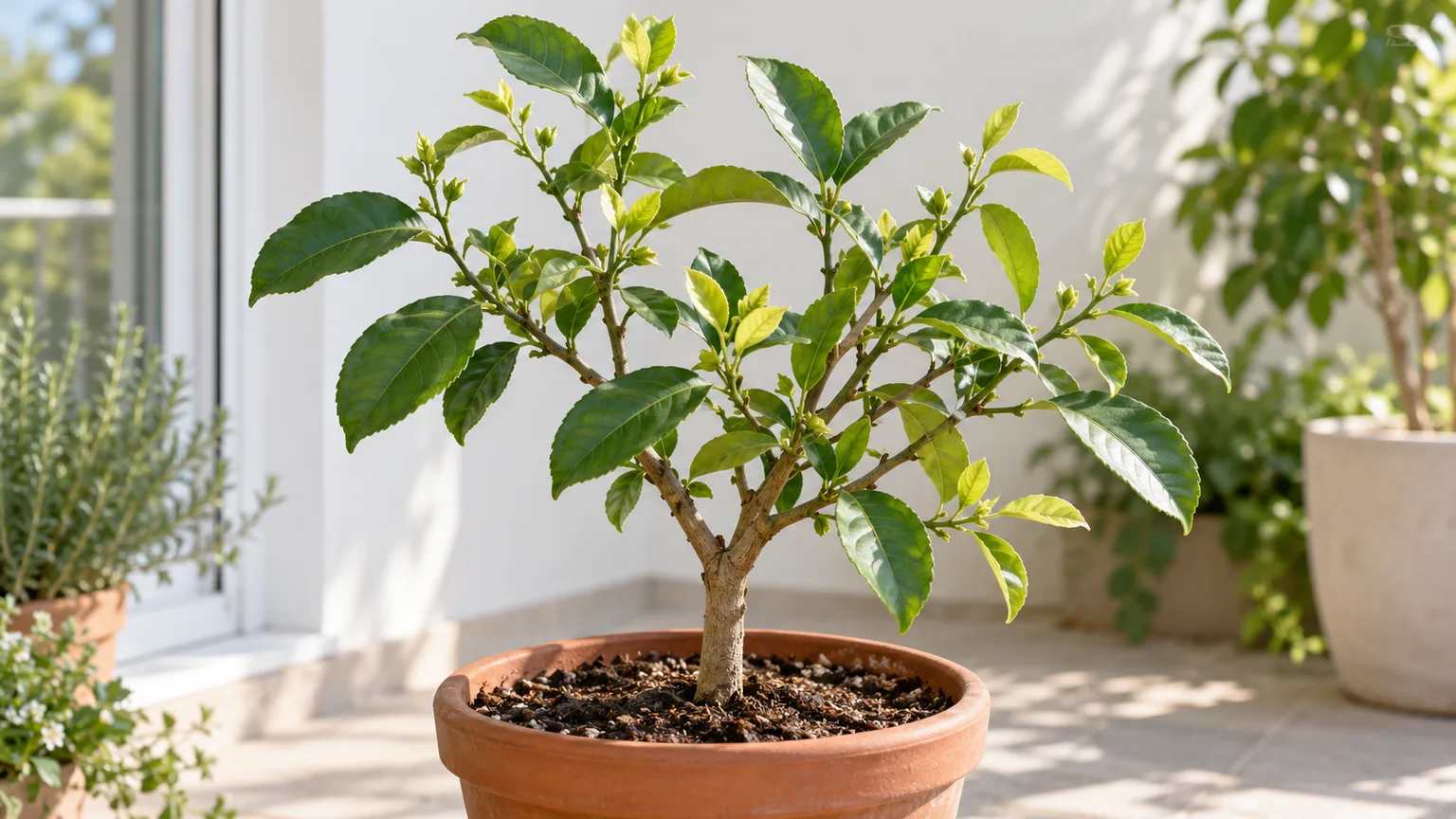
Slow Growth on Lemon Tree: Causes, Checks & Fixes
This guide covers slow growth on Lemon Tree. See also the general Slow Growth guide, watering, and light pages for this plant.
Slow Growth on Lemon Tree: Causes, Checks & Fixes
Quick answer
If your lemon tree barely extended its shoots through spring and summer, suspect light first, roots second, and feeding third. A potted Citrus limon needs at least 6 to 8 hours of direct light to fuel compact growth, flowering, and fruit — no fertilizer can compensate for a dim position.
First step: move the tree to the sunniest sheltered spot you have and check whether the roots have filled the pot. Lift the nursery pot, look for roots circling densely or pushing through drainage holes, and confirm the tree gets a full half-day of direct sun before you touch water or feed. For the general mechanics of stalled plants, see our slow growth guide. On lemon trees, the pattern usually shows up as short pale shoots, smaller-than-normal leaves, and a season with almost no new extension — often while the tree otherwise looks alive.
What slow growth looks like on a lemon tree
A stalled lemon rarely looks dramatic, which is why owners notice it late. Expect one or more of these through the warm months:
- Almost no new shoot extension from spring into late summer
- New leaves emerging smaller and paler than the previous season’s foliage
- Flowering and fruit set weak or absent on a mature tree, even though old leaves stay green
- Roots circling the pot edge, matting at the surface, or escaping through drainage holes
- Water running straight through the pot without wetting the root ball — a classic rootbound signal that repotting is overdue
- Vigorous shoots appearing only from low on the trunk, below the graft union — those belong to the rootstock, not your lemon cultivar
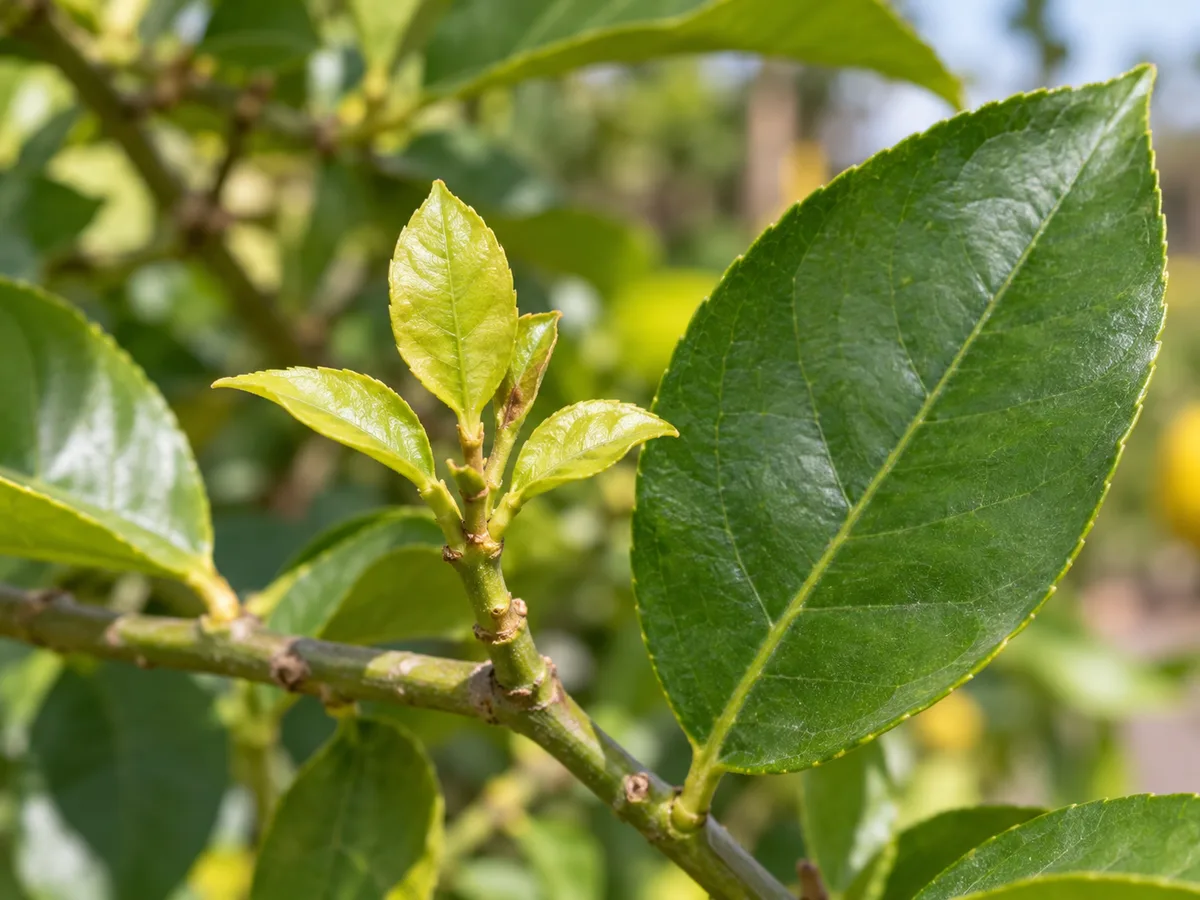
Stalled shoot tips with undersized pale leaves on a lemon tree — compare new flush size against the previous season’s leaves on the same branches.
Normal winter stillness is not this problem. Lemon is a subtropical evergreen that slows in cool, short days; a tree resting through winter and flushing in spring is behaving correctly. Slow growth becomes a diagnosis when the stall persists through warm, long-day weather with stable care, as described in the lemon tree overview.
Why lemon trees stall: the usual bottlenecks
Too little direct sun. This is the most common cause on patios and indoors. Lemon trees are sun-loving fruit trees, not low-light houseplants, and shaded trees stretch weakly or simply sit still. Indoor trees behind glass are especially prone: foliage raised indoors can also scorch if shoved into harsh sun without acclimation, so move the tree outward over a week or two. If your tree leans toward the window with long gaps between leaves, read the not enough light guide and the leggy growth guide to separate shade stretch from a true stall.
A rootbound container. Young container trees need repotting every 2 to 3 years, and a tree whose roots have replaced most of its mix cannot take up water or nutrients efficiently no matter how you feed it. Check the cues in the lemon tree repotting guide — circling roots, water channeling down the pot sides, and growth slowing despite good light and feeding all point here. Note that overpotting into a much bigger container causes its own problems, so go up only one pot size in spring with a coarse citrus mix like the one in the lemon tree soil guide.
Missed citrus feeding. Lemons are hungry plants, and a tree living on old, depleted mix quietly downshifts. During the growing season citrus need regular small applications of nitrogenous fertilizer, and nitrogen deficiency will limit tree growth while new foliage emerges pale green. The RHS advises a high-nitrogen summer citrus feed from late March to October, switching to a balanced winter feed — match your schedule to the lemon tree fertilizer guide rather than dosing heavily all at once.
Micronutrient lockout at the wrong pH. Sometimes the feed is present but unavailable. Lemon trees want slightly acidic soil around pH 5.5 to 6.5, and alkaline mix locks out iron, zinc, and manganese. Iron deficiency shows first on new foliage, which emerges yellowed and undersized, while zinc shortage gives small narrow-tipped leaves on terminal growth. If new leaves yellow between green veins while old leaves stay green, suspect pH and micronutrients before adding more nitrogen.
Salt buildup from fertilizer or hard water. Excess salts injure feeder roots before leaves show obvious damage: reduced root growth, smaller leaf size, and impaired shoot growth can all precede visible leaf burn. Container trees fed heavily or watered with saline water stall exactly this way. Flush the pot thoroughly with clean water, let it drain freely, and ease back to label-rate feeding.
Chronic wet or dry roots. Both extremes stall growth. Persistent wet mix suffocates roots and invites the decline described in the overwatering guide and the root rot guide, while chronic underwatering drops blossoms and young fruit before shoots extend — compare against the underwatering guide and the wilting guide. Water deeply, then let the upper 5 to 8 cm begin to dry, per the lemon tree watering guide.
A cool, dim winter with no rest. Citrus prefer a cool, bright winter over a hot, dim room, and low winter temperatures encourage flowering. A lemon kept warm and dark all winter burns energy on weak growth instead of resting, then has nothing left for spring. Overwinter cool and bright, then move outdoors after frost danger once acclimated.
Rootstock suckers stealing vigor. Grafted lemons can push vigorous shoots from below the graft union, and these rootstock shoots outgrow the lemon cultivar while contributing nothing to fruit. If all the vigor sits low on the trunk and the upper canopy stalls, the rootstock is winning — prune suckers off promptly and keep the graft union visible above the mix.
How to confirm the cause
Work in this order so each check narrows the field:
- Count the sun. Track direct-sun hours on the canopy for two or three days. Under 6 hours in the growing season makes light the prime suspect.
- Check the calendar. A stall from November to February in cool conditions is rest; the same stall from April to August is a problem.
- Inspect the roots. Slide the root ball out of the nursery pot. Dense circling mats, roots girdling the trunk, or a ball that falls apart dry all confirm repotting is overdue.
- Read the newest leaves. Pale all-over foliage points to nitrogen hunger; yellowing between green veins on new leaves points to iron or pH lockout; small narrow-tipped terminal leaves suggest zinc shortage.
- Review water and salt. White crust on the mix surface, leaf-edge burn, and a history of heavy feeding suggest salt buildup. Sour-smelling mix or leaf drop on wet soil points to root stress instead — see the yellow leaves guide if discoloration dominates.
- Look below the graft. Find the knobby graft union low on the trunk. Any vigorous shoot emerging beneath it is rootstock — a separate fix from feeding or light.
- Scan for pests and disease. Scale, leafminer, and psyllid pressure can suppress new growth; the UC IPM citrus pages list the key invertebrate pests with photos for comparison.
Confirmed diagnosis — stall through warm months plus one concrete bottleneck: under 6 hours of sun, a matted root ball, documented missed feeding, or suckers below the graft. Suspected — stall with green normal-sized leaves and no root crowding, which may need a soil pH test or a season of corrected light before the cause is certain.
The first fix to try
Move the tree into full sun and confirm the pot still has room for roots — do that before changing feed or water. Give it 6 to 8 hours of direct sun in a wind-sheltered spot, acclimating indoor foliage over 7 to 10 days, and check the root ball the same week. This single correction resolves most lemon stalls because light drives the photosynthesis that powers every other process, and a rootbound tree cannot use extra fertilizer anyway.
After the move, hold steady for two weeks: water deeply when the upper layer approaches dry, and add nothing else. If new buds swell and fresh leaves emerge at full size, light or root crowding was the limiter. Only then proceed to feeding and repotting steps below, one at a time, so you can read the tree’s response.
Step-by-step recovery
Reset the light position. Place the tree where the canopy receives morning-to-midday sun with some shelter from scorching late-afternoon container heat. Indoor trees belong beside the brightest window, away from heater vents, with the light requirements as the benchmark. Rotate the pot a quarter turn weekly so all sides contribute shoots.
Repot if rootbound — in spring, one size up. Wait for early spring just before vigorous growth unless the tree is severely potbound and declining. Use a coarse, slightly acidic citrus mix and keep the graft union and root flare above the mix surface. Water the fresh mix in thoroughly and return the tree to full sun; details are in the repotting guide.
Restart citrus feeding at label rate. Once the tree sits in good light with room for roots, apply a complete citrus fertilizer containing nitrogen plus iron, magnesium, and micronutrients through spring and early autumn. Small regular doses beat one heavy application, which can burn roots and add salt stress. Never feed drought-stressed or waterlogged roots — rehydrate correctly first.
Correct pH and salts if leaves point that way. For suspected lockout, test the mix pH and leach the pot with clean water until it flows freely from the drainage holes. RHS notes that citrus compost can dry quickly in heat, so check container moisture daily in summer rather than on a fixed schedule. Foliar micronutrient sprays can green up new foliage while soil corrections take effect.
Remove rootstock suckers. Cut shoots emerging below the graft union flush at their base as soon as they appear, and recheck monthly through the growing season. Do not let them leaf out “to help photosynthesis” — every sucker leaf feeds the rootstock at the cultivar’s expense.
Rule out pests and disease before escalating. Sticky honeydew, sooty mold, distorted mined leaves, or dieback with gum point to insects or pathogens rather than care gaps — Gardening Know How’s lemon disease rundown covers the common culprits for comparison. Treat the identified pest or consult a local extension clinic rather than stacking fertilizer on a sick tree.
Recovery timeline
New buds usually swell within 2 to 4 weeks of corrected light and root room in warm weather; the first full-sized leaves follow over the next month. Judge progress by shoot extension and new-leaf size across 6 to 8 weeks, not day to day — old stunted leaves will not enlarge, and that is normal.
Flowering and fruit lag further behind: fruit can take many months to ripen, and a tree that stalled hard may spend a full season rebuilding canopy before blooming well. If nothing moves after two months of full sun, correct feeding, and confirmed root room, retest soil pH and inspect roots again — persistent stillness despite good care points to root damage, disease, or a failing graft worth professional assessment.
Lookalike symptoms
| What you see | Likely cause | Key check |
|---|---|---|
| Long pale shoots stretching toward light | Shade stretch | See not enough light and leggy growth |
| Yellow leaves with wet soil | Overwatering or root stress | See overwatering and root rot |
| Wilt, crispy edges, dropped blossoms | Underwatering | See underwatering and wilting |
| Uniform pale foliage, weak season | Nitrogen hunger | Feeding history; fertilizer guide |
| Yellow veins pattern on new leaves | Iron or pH lockout | Test mix pH against the soil guide |
| Vigor only below the graft union | Rootstock takeover | Find the graft union; remove suckers |
Mistakes to avoid
- Do not fertilize a stalled tree before confirming sun and root room — feed cannot fix shade or a matted root ball and may add salt stress.
- Do not jump the tree three pot sizes; overpotting keeps mix wet around a small root ball.
- Do not stack repotting, hard pruning, and pest sprays in one weekend — you will not know which action helped or hurt.
- Do not overwinter the tree warm and dim and expect a spring flush; cool and bright rest sets up the next season.
- Do not mistake rootstock suckers for recovery growth; vigorous low shoots while the canopy stalls mean the graft needs attention, not the fertilizer schedule.
How to prevent it next season
Keep the lemon in full sun from spring through autumn and feed little and often with citrus fertilizer during active growth. Repot every 2 to 3 years in spring before roots mat, refreshing the surface mix in between years. Browse the full lemon tree problems hub each spring so small issues get caught while they are still small, and overwinter cool, bright, and on the drier side — never leave pots standing in water in winter, since cold wet roots rot quietly and stall the following season before it starts.
When to use this page vs other lemon tree guides
- Lemon tree watering — use when moisture rhythm is the main question rather than a season-long stall.
- Lemon tree light — use for placement and indoor-versus-outdoor decisions.
- Lemon tree fertilizer — use for ongoing feeding schedules once growth has resumed.
- Not enough light — use when pale stretch and window-leaning dominate rather than a general stall.
- Yellow leaves — use when discoloration, not stillness, is the main symptom.
Related Lemon Tree guides
- Lemon tree overview — full care profile for Citrus limon, from sun to frost protection.
- Lemon tree problems hub — browse every diagnosed issue on this species.
- Lemon tree watering — deep-watering rhythm and the 5 to 8 cm dry-down check.
- Lemon tree light — hitting 6 to 8 hours of direct sun in pots and indoors.
- Lemon tree soil — coarse citrus mix and pH 5.5 to 6.5 for available micronutrients.
- Lemon tree fertilizer — seasonal citrus feeding once growth resumes.
- Not enough light on lemon tree — shade-specific diagnosis when sun is short.
- Leggy growth on lemon tree — stretched shoots versus a true stall.
- Yellow leaves on lemon tree — discoloration patterns and nutrient lookalikes.
- Overwatering on lemon tree — wet-root decline that mimics stalling.