Leggy Growth on Lemon Tree: Causes, Checks & Fixes
Quick answer
Leggy growth on Lemon Tree means long bare internodes, small pale leaves, and a hard lean toward glass from too little direct sun. First step: move the tree to full sun (six to eight hours of direct light) with gradual acclimation, then prune and pinch only after new compact growth proves the placement works.
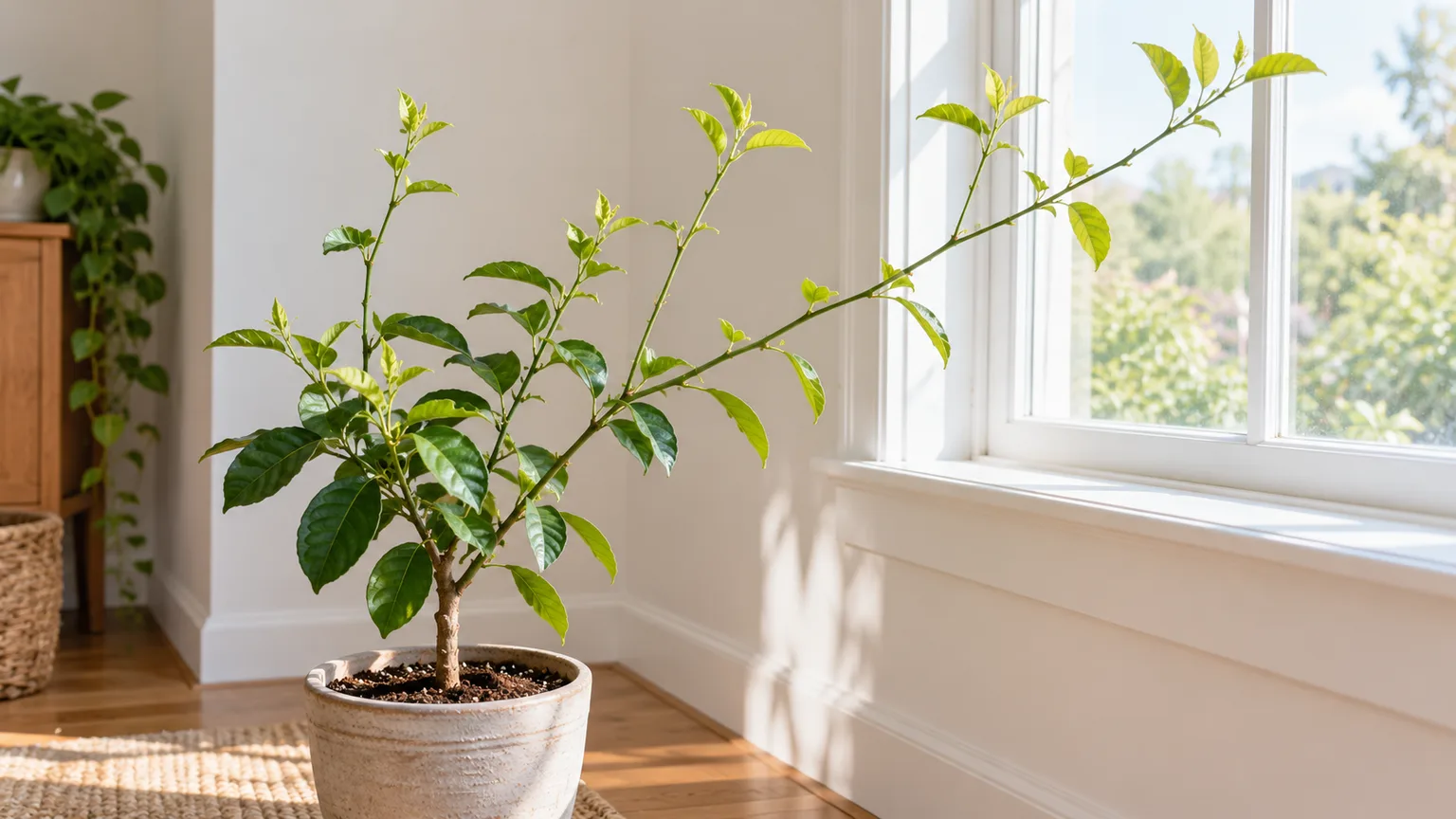
Leggy Growth on Lemon Tree: Causes, Checks & Fixes
This guide covers leggy growth on Lemon Tree. See also the general Leggy Growth guide, watering, and light pages for this plant.
Leggy Growth on Lemon Tree: Causes, Checks & Fixes
Quick answer
Leggy growth on Lemon Tree (Citrus limon) is etiolation: long bare gaps between leaves, smaller paler new foliage, and shoots leaning hard toward the brightest window. On a tree that wants eight hours of full sun with six to eight hours of direct light as the working minimum for compact growth and bloom, that silhouette almost always means the leaves are starved of direct light, not that the roots need feeding.
First step: move the tree into full sun — a south-facing wall, an unshaded terrace, or the brightest frost-free window you own — but acclimate it over seven to fourteen days rather than jumping from a dim room to harsh midday sun. Give it two weeks in the new spot, then prune and pinch only after the newest leaves emerge closer together.
Use this page when upper branches already show long empty sections and floppy reach toward glass — you need stretch-specific pruning, pinching, and sucker separation. Use the not enough light guide instead when pale leaves or missing flowers come first and stems are not dramatically stretched yet. For how stretch works in general, see our leggy growth hub. On lemon, the telltales are wide gaps along green new shoots, small thin leaves on recent flushes, and vigorous upright shoots that make the canopy look wild rather than bushy.
What leggy growth looks like on Lemon Tree
A healthy lemon carries dense, dark-green, glossy foliage on bushy branching, eventually forming a tree 10 to 20 feet tall with sharp thorns on the twigs in the ground — or a compact multi-branched small tree in a large container. Leggy trees break that picture in predictable ways.
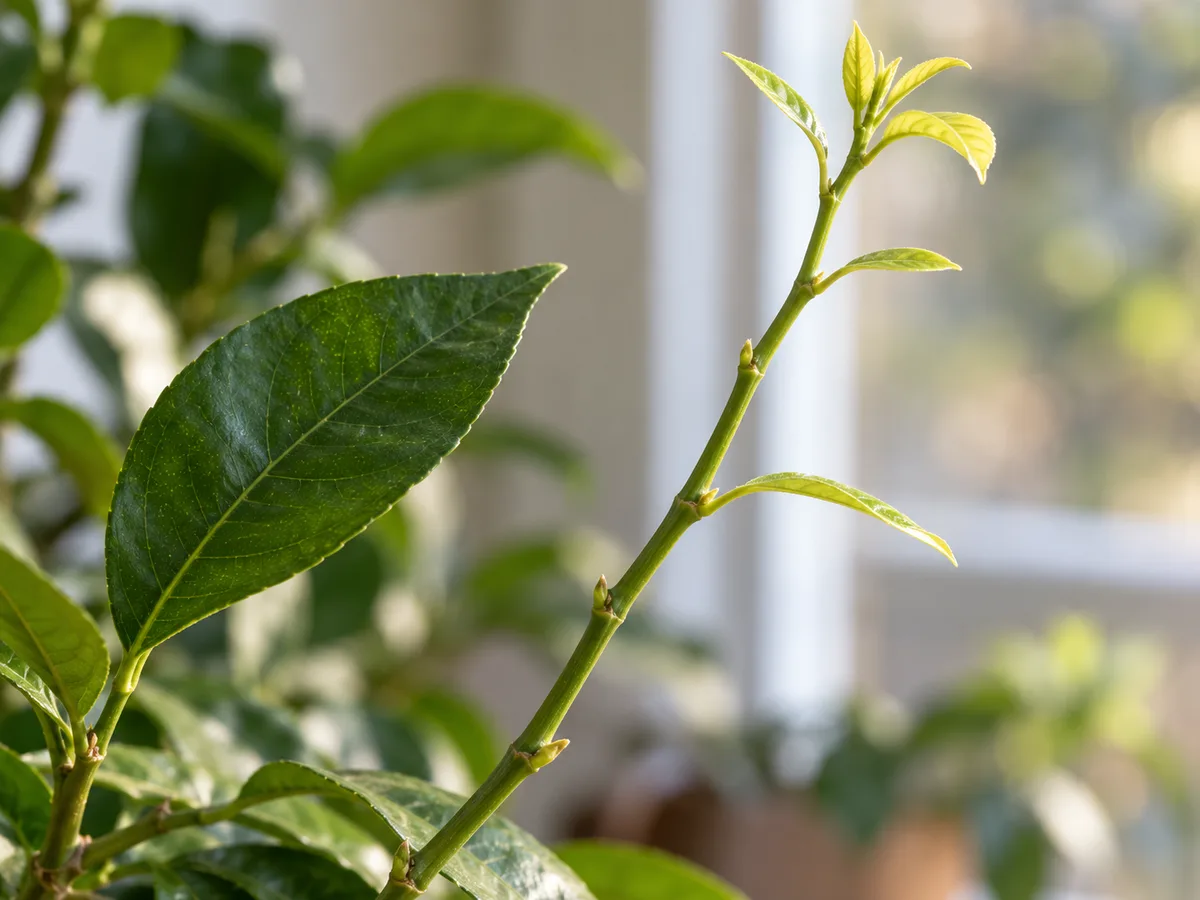
Stretched lemon shoots show wide internode gaps and small pale leaves — compare with firm dark-green mature foliage on the same tree.
Typical signs include:
- Long bare gaps between leaves along the newest green shoots, while older wood still carries normal dense foliage
- Smaller, thinner, paler new leaves that feel soft instead of leathery and dark green
- A hard lean of whole branches or the entire canopy toward the brightest window or wall
- Vigorous upright water sprouts shooting straight up through the canopy with thorns and wide leaf spacing
- No flowers or fruit on the stretched flushes despite active shoot extension
- One-sided fullness where the sun-facing side holds leaves and the shaded side goes bare
Fast extension with weak tissue is etiolation, not vigor. A lemon pushing a meter of soft green shoot in a dim living room is spending stored energy it cannot replace without enough photons.
Why Lemon Tree gets leggy
A full-sun tree living in partial light
Citrus evolved for open sunny positions, and indoor or shaded lemons simply cannot build compact wood without direct sun on the leaves. The physiology is well documented: when usable light falls short, plants elongate stems to reach a brighter zone, producing longer internodes and smaller leaves. On lemon this shows as reaching green shoots with two or three times the normal gap between leaves.
Common triggers are north-facing rooms, shaded patios under eaves, trees parked several feet back from glass, and winter days when a sill that worked in July delivers a fraction of the light in January. Meyer types are explicit about the threshold: at least eight hours of direct sunlight for best growth and bloom, and true lemons are no less demanding — the Lemon Tree light guide maps window orientation to that target.
Overwintering in a warm dim room
Cold-climate growers create legginess every autumn by bringing trees indoors into heated living rooms with poor light. Warmth keeps the tree trying to grow while photons are scarce, so it pushes a flush of pale stretched shoots all winter. Cool bright overwintering — a frost-free sunroom or bright porch around 10 to 15°C — slows growth to match the available light and holds the canopy compact. The Lemon Tree overview covers frost protection and the indoor move in detail.
Heavy nitrogen without enough sun
Nitrogen drives soft vegetative extension, so a lemon fed generously in a dim position stretches faster than an unfed one. This never substitutes for light; it amplifies the weak growth. Hold the citrus feed until the tree sits in genuine sun and shows compact new leaves, then resume the small regular doses on the Lemon Tree fertilizer schedule.
No pinching, so shoots run long
Lemon shoots extend from the tip bud unless that tip is stopped. Left alone, each new shoot runs long and bare before branching. Regular pinching — nipping the growing tip once a new branch reaches 10 to 15 cm — forces side buds low on the shoot and builds the bushy fruiting canopy lemons are prized for. Trees that never get pinched look leggy even in decent light.
How to confirm the cause
Work through these checks before cutting anything:
- Sun hours on the leaves. Over a normal day, count how many hours direct sun actually lands on the foliage — not room brightness. Under six hours with stretched new shoots confirms the diagnosis. Deep shade plus compact old growth and stretch only on new flushes is the classic pattern.
- Compare new growth to old. Are the youngest leaves smaller, paler, and farther apart than foliage from when the tree lived in sun? Is the deep-green gloss missing on recent flushes?
- Check the lean. Strong one-sided reach toward a window or open sky confirms active light-seeking rather than a root problem.
- Find the graft union and rule out suckers. Look for the diagonal scar on the lower trunk where the fruiting lemon meets its rootstock. Shoots from below that line are suckers stealing vigor, not sun-driven stretch — remove all shoot growth below the graft as soon as it appears. Stretch from above the union is this guide’s problem.
- Rule out wet roots. Stretch plus firm green shoots and a normal dry-down rhythm means light stress. Stretch plus constantly wet mix, sour smell, or leaf drop while soil stays damp points to overlapping water trouble — cross-check overwatering and root rot before heavy pruning.
- Season check. Did the stretch begin after the autumn move indoors or during the darkest winter months? Overwintering growth is almost always light-driven.
If long internodes, small pale new leaves, and window-leaning appear together on wood above the graft, insufficient direct sun is confirmed. You do not need to unpot for this diagnosis.
The first fix to try
Move the tree to full sun — one careful relocation, not a bundle of treatments.
For most growers that means an unshaded south-facing position outdoors after frost risk passes, or the sunniest window or sunroom indoors. If the tree spent months in dim conditions, acclimate it: start with morning sun and filtered midday light for the first week, then step into full exposure over the second week. Nursery guidance warns that a sudden jump into harsh sun shocks the tree, recommending an hour or two of direct light for the first week before the final full-sun position — leaves raised behind glass scorch easily.
Rotate container trees a quarter turn every week so all sides hold foliage instead of one side going bare. Give the tree one to two weeks in the new spot before pruning or feeding, and judge the watering rhythm fresh: brighter sun dries pots faster, so check with the finger test to the second knuckle and read the Lemon Tree watering rhythm rather than keeping the dim-corner calendar.
Step-by-step recovery
Once the placement is fixed and new leaves emerge tighter together, rebuild the canopy:
- Watch the new nodes first. After two weeks in full sun, the newest leaves should sit closer together and feel firmer and darker. That confirms the placement works — prune only after you see it.
- Pinch soft new shoots. When green shoots reach 10 to 15 cm, nip the growing tip. This is the core habit that keeps lemons bushy: regular pinching encourages bushy growth nearer the middle of the tree and can be done through the growing season. Full hand technique lives on the Lemon Tree pruning page.
- Cut back the worst stretched wood. Shorten bare leggy branches above an outward-facing healthy bud or side branch, using clean sterilized secateurs. Work selectively: reshape one or two of the longest shoots per session rather than stripping the canopy, because citrus stores excess food in its leaves and removing too much leaf may cost the fruit crop. Large structural cuts are best timed for late winter just before spring growth or after harvest.
- Remove suckers and crossing wood. Cut rootstock suckers flush at their base, take out dead or crossing branches, and clear shoots emerging below the graft. Wear gloves and eye protection — juvenile lemon wood carries sharp thorns, and thorns on young fruiting wood are normal rather than a disease symptom.
- Restart feeding only in sun. Once compact growth is underway, resume small regular citrus feeds through active growth per the fertilizer schedule. Never use a heavy dose to push a shaded tree — it produces more of the weak tissue you just removed.
- Repot only if roots demand it. Stretch alone never justifies a bigger pot. Repot in early spring only when roots circle densely or water runs straight through — see repotting and soil for mix and timing.
Site selection, pruning, and watering together determine citrus health, as cultural practices such as site selection and pruning are central to plant health — treat this recovery as repositioning the tree correctly first, then shaping it.
Recovery timeline
Existing stretched internodes never shorten. Old bare sections stay bare; judge everything by new growth.
| Phase | What to expect |
|---|---|
| Weeks 1–2 | Little visible change; watch for firmer darker leaf tips and faster soil dry-down |
| Weeks 3–5 | New leaves emerge larger, closer together, with returning gloss after pinching |
| Weeks 6–10 | Side shoots break below pinch points; canopy starts filling during warm growth |
| Next flush | Short compact shoots with flower buds on mature wood if sun stays strong |
| Winter | Slow or no rebound in dim rooms; hold in the brightest cool spot rather than forcing growth |
If new flushes still stretch after six weeks in apparent full sun, the position is still too shaded — move closer to open sky or add a full-spectrum grow light rather than waiting for adaptation.
Worsening signs: continued leaf drop with wet sour soil, blackening shoot tips spreading downward, or soft bark at the soil line. Those point to root or cold damage layered over low light — follow root rot before further pruning.
Lookalike symptoms to rule out
| Pattern | Shoots and spacing | Leaves | Soil and context | Likely cause | Next step |
|---|---|---|---|---|---|
| Sun etiolation | Long gaps on new shoots, hard lean | Small pale new leaves, gloss loss | Normal dry-down | Too little direct sun | This guide |
| Rootstock suckers | Extra-vigorous upright shoots from trunk base | Often smaller, sometimes different shape | Any | Below-graft growth | Remove promptly; not a light fix |
| Early low light | Compact stems, no dramatic stretch | Pale leaves, no blooms | Normal | Light just below threshold | Not enough light |
| Overwatering | May not stretch | Yellow older leaves, drop while wet | Heavy, stays damp | Wet roots | Overwatering |
| Nutrient deficiency | Normal spacing | Uniform yellow-green new leaves with green veins | Normal moisture, alkaline mix | Iron or manganese lockout | Yellow leaves |
| Scale or honeydew | Normal spacing, sticky residue | Yellowing, sooty film | Normal | Sap-feeding pests | Check undersides; prune worst, treat |
Mistakes to avoid
- Pruning before fixing light. Cut shoots stretch right back if the canopy stays shaded — brightness first, secateurs second.
- Jumping from a dim room to full midday sun in one day. Bleached papery patches on shade-grown leaves follow sudden moves; acclimate over one to two weeks.
- Stripping the canopy bare. Heavy defoliation removes the tree’s stored energy and the coming fruit; thin selectively and keep productive leaf.
- Feeding a shaded tree to fix stretch. Nutrients cannot replace photons and push weaker, leggier flushes.
- Ignoring suckers while shaping the top. Every sucker left below the graft steals vigor from the fruiting wood you are trying to rebuild.
- Repotting, relocating, and hard-pruning on the same day. One change at a time lets you read the tree’s response and avoids compounding shock.
How to prevent it next time
Keep the lemon where direct sun genuinely reaches the leaves for six to eight hours daily, year-round — not where the pot looks best in the room. Outdoors, a sunny wind-sheltered wall suits it; indoors, the brightest frost-free window plus a grow light through winter beats a warm dim living room. The light guide maps positions to that target.
Pinch every vigorous new shoot at 10 to 15 cm through the growing season so branching stays low and dense. Remove suckers the week they appear. Match watering to how fast the pot dries in that sun level, and keep the citrus feed on its small regular rhythm only while the tree grows in strong light.
Because lemon foliage, peel, and oils are toxic to cats, dogs, and horses, site the sunniest warm-season positions away from pet browsing areas and wear gloves around thorny wood — full placement notes sit on the Lemon Tree overview.
When to worry
Stretch alone is a care correction, not an emergency, and it reverses on new growth once sun is adequate. Worry when legginess pairs with soil that never dries, blackening shoot tips, bark softening at the base, or near-total leaf drop — those patterns suggest root failure or cold injury layered over low light. Trees that keep stretching after a genuine six-week full-sun upgrade are still under-lit; add open-sky hours or artificial light rather than pruning harder.
If growth stalls entirely with pale new leaves and green veins in an alkaline mix, the accompanying issue may be micronutrient lockout rather than pure etiolation — compare with yellow leaves and slow growth before changing the feed.
Related Lemon Tree guides
Use this page as the stretch morphology, sucker separation, and pinch-pruning hub; follow the link that matches what you need:
- Lemon Tree overview - species baseline, sun demand, and frost protection
- Not enough light - placement diagnostics before severe stretch
- Lemon Tree light - sun-hour targets, window orientation, grow lights
- Lemon Tree pruning - cut placement, timing, and canopy shaping
- Lemon Tree propagation - grafting and cutting backup for reshaped trees
- Lemon Tree watering - dry-down rhythm as sun exposure changes
- Overwatering - wet-soil overlap in dim positions
- Root rot - soft base and sour soil when stretch pairs with decline
- Yellow leaves - nutrient lockout versus etiolation paleness
- Slow growth - stalled canopy when light is only part of the story
FAQs
How can I confirm leggy growth on Lemon Tree?
Compare new shoots to older wood: confirmed etiolation shows longer gaps between leaves on the newest growth, smaller paler leaves, and a lean toward the brightest window. If the whole canopy is evenly sparse with yellowing older leaves and wet soil, check the overwatering guide first.
Are fast vertical shoots on my lemon suckers or leggy growth?
Check where the shoot starts: growth from below the diagonal graft scar low on the trunk is a rootstock sucker and should be removed promptly, while stretched growth from upper fruiting wood with wide internode gaps is sun-driven legginess. Suckers are often extra-vigorous and thorny, and they steal energy from the fruiting top.
Will stretched lemon branches fill back in after more sun?
No. Existing elongated internodes never shorten, so bare stretched sections stay bare even in perfect light. Judge recovery only by new growth: shorter gaps between leaves, larger deep-green leaves, and sideshoots forming after pinching. Prune the worst bare wood once that new growth confirms the fix.
When should I prune a leggy lemon tree?
Fix the light first and wait one to two weeks until new tip growth looks tighter and greener. Then shape selectively, ideally around late winter before the spring flush or after harvest, and never strip large amounts of leaf at once because citrus stores energy in its foliage. Pinch soft new shoots when they reach 10 to 15 cm to force branching.
How do I prevent leggy growth on Lemon Tree?
Give six to eight hours of direct sun on the leaves year-round, overwinter indoors in the coolest bright frost-free spot you have rather than a warm dim room, pinch new shoots at 10 to 15 cm, and remove rootstock suckers as soon as they appear. Recheck sun hours each season as buildings and trees change the shade pattern.
Conclusion
Leggy growth on Lemon Tree is a sun problem wearing a pruning disguise. Confirm stretch with long internodes, small pale new leaves, and a lean toward the brightest light; separate true etiolation from below-graft suckers; move the tree into genuine full sun with gradual acclimation; then pinch and selectively prune only after compact new growth proves the placement works. Old bare sections never refill — judge success by tight dark-green flushes and returning bloom on the new wood.
How we wrote and verified this guide: Recommendations were checked against Missouri Botanical Garden, Four Winds Growers, UC IPM, GardenAdvice, The Spruce, UMD Extension, and ASPCA references cited inline. Author: sai-ananth. Reviewer: LeafyPixels Review Board. Methodology: plant problem guidance is reviewed against botanical references, extension resources, and LeafyPixels plant-care data before publication. Claims validation: claims-validator-v1 pass with inline external links documented below. Last reviewed: 2026-09-02.