Overwatering on Lemon Tree: Causes, Checks & Fixes
Quick answer
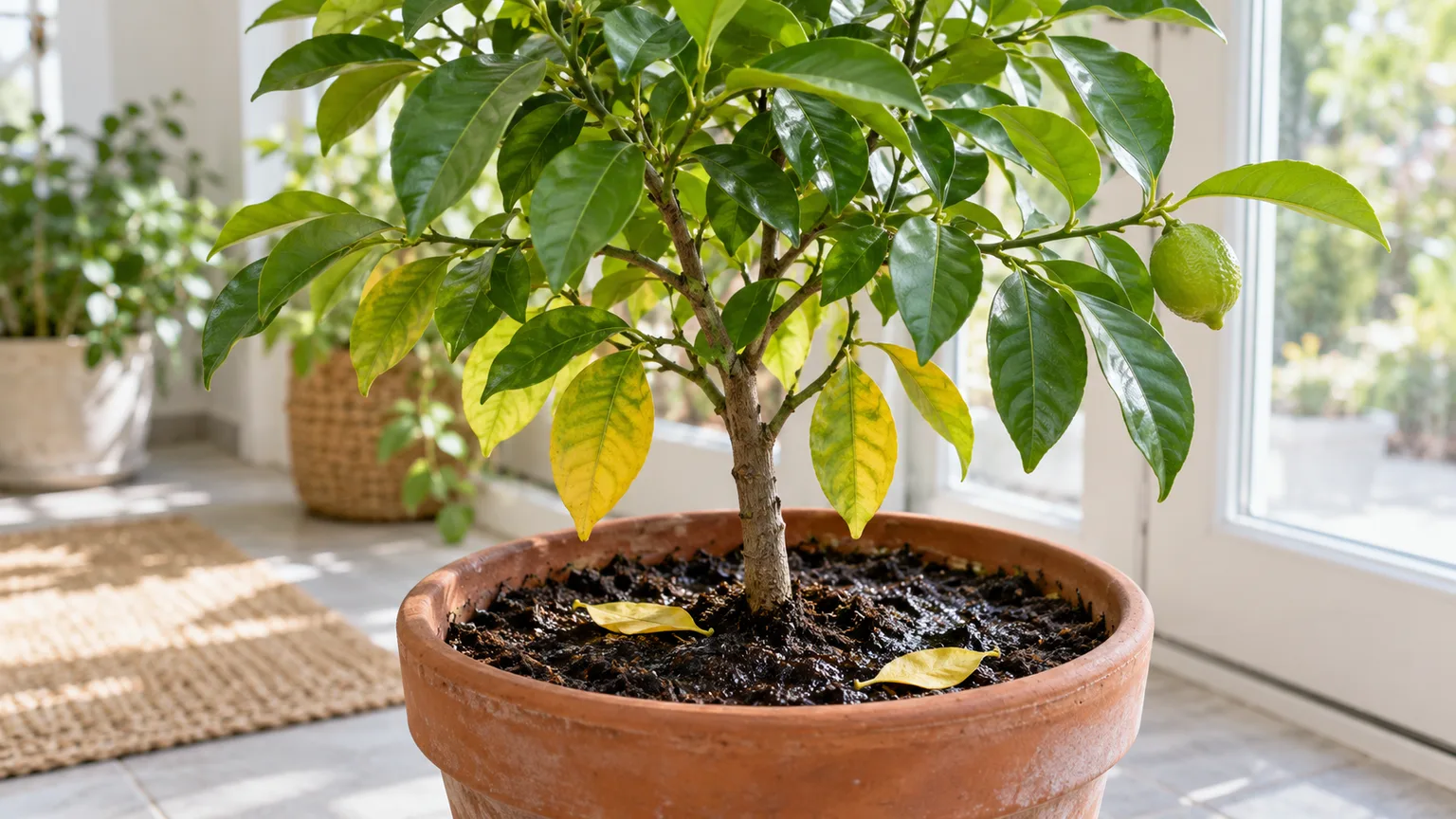
Overwatering on a lemon tree usually shows as yellowing leaves and leaf drop while the soil stays wet for days. First fix: stop watering, empty any saucer or cachepot, and let the upper 5–8 cm of mix dry before watering again.
Overwatering on Lemon Tree: Causes, Checks & Fixes
This guide covers overwatering on Lemon Tree. See also the general Overwatering guide, watering, and light pages for this plant.
Overwatering on Lemon Tree: Causes, Checks & Fixes
Quick answer
An overwatered lemon tree turns yellow and drops leaves while its soil stays wet for days after watering. Pot weight is your fastest clue: if the container still feels heavy and the mix is damp 5–8 cm down, the tree does not need water no matter what the surface looks like. First fix: stop watering, empty the saucer or cachepot completely, and let the root zone drain and breathe before you change anything else. For how chronic wetness damages roots in general, see our overwatering guide. On a lemon tree, the pattern usually shows up as yellow lower leaves, premature fruit or blossom drop, and sometimes split fruit on an otherwise vigorous tree.
What overwatering looks like on a lemon tree
Lemon trees are evergreen citrus with glossy, firm leaves, so overwatering rarely causes a gentle fade. Instead, green-looking leaves yellow quickly, often starting on the lower canopy, then drop while the soil is still visibly moist. New flush growth may emerge pale or stunted, and developing fruitlets or blossoms can fall in larger numbers than the tree’s normal self-thinning. In wet containers the mix may smell sour, and tiny fungus gnats hover over the surface.
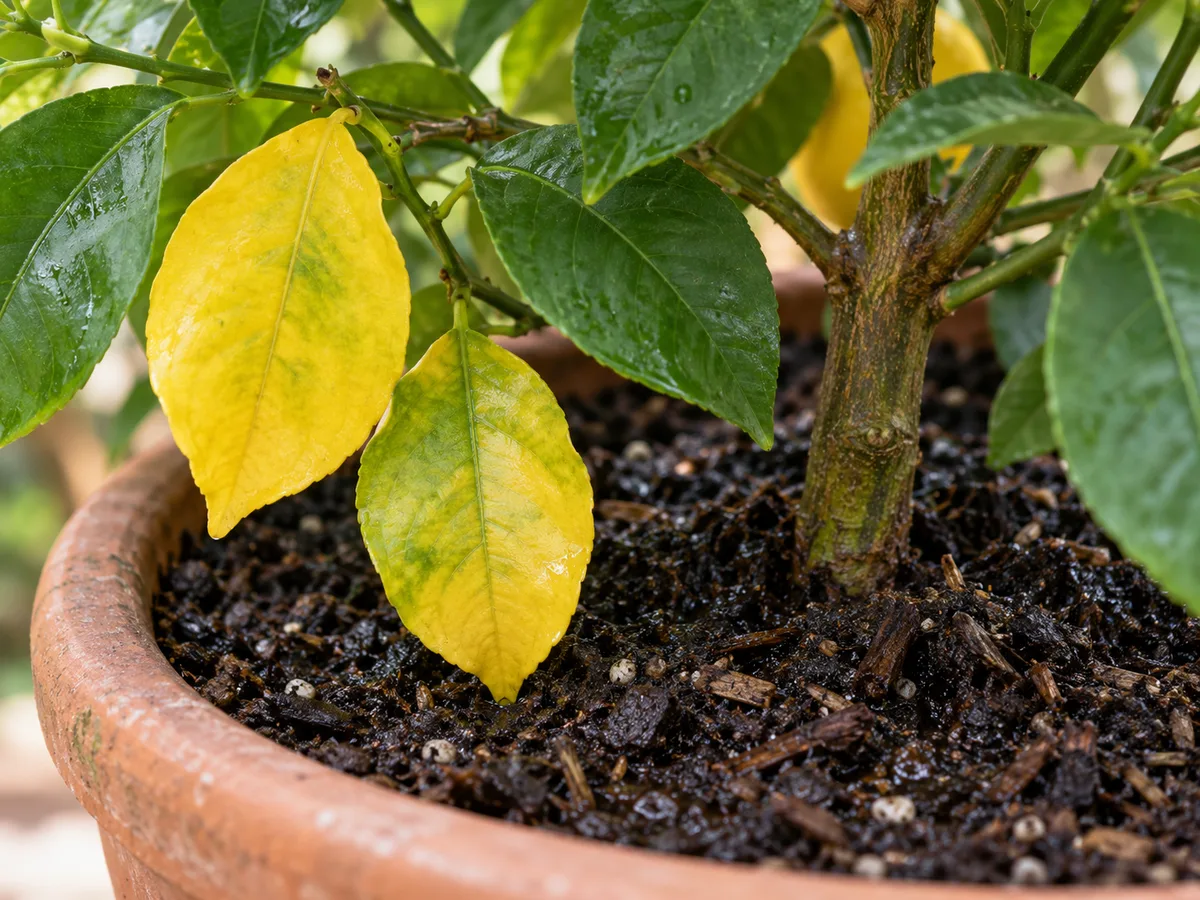
Overwatering signs on a lemon tree: yellowing lower leaves and a saturated root zone. Compare with firm green new growth on the same tree.
Two citrus-specific tells separate overwatering from ordinary stress. First, too much water can make lemon skins split open before the fruit drops, which drought and light problems do not do. Second, branches may feel oddly weak or bend under fruit weight while the soil is wet, because the root system is failing to anchor and feed the canopy. If you see split fruit plus yellow leaves on wet soil, treat it as overwatering until proven otherwise.
Why lemon trees stay too wet
Lemon trees are thirsty in hot active growth but hate wet feet, and most indoor and terrace failures come from the container rather than the watering can. A coarse citrus mix that drains freely is non-negotiable; dense bagged potting soil or a pot with one clogged hole keeps the lower root ball saturated long after the top dries. Oversized containers are a classic trap on this species because a young tree cannot drink a large volume of mix fast enough, and the unused soil turns airless.
Routine habits finish the job. Saucers left full, nursery pots sitting inside watertight cachepots, and drip trays on balcony floors all hold the root zone in standing water. Cool, dim winter quarters slow the tree’s water use to a fraction of summer rates, so a schedule that worked in July drowns the same tree in January. Citrus culture guidance stresses that site selection, soil preparation, and watering discipline work together for plant health, and the container is the “site” for a potted lemon. Our lemon tree watering guide sets the baseline rhythm this page troubleshoots.
The graft union and root flare check
Almost every home lemon tree is a grafted nursery tree, with the fruiting cultivar joined onto a hardy rootstock. The graft union, a visible knob or scar low on the trunk, must stay above the soil line. When trees are repotted too deep or mulch is piled against the trunk, the union and root flare sit in constant moisture, bark softens, and decline follows even when watering volume looks reasonable. This check is meaningless on seed-grown houseplants but decisive on citrus.
Uncover the base: brush mix away until you see the trunk widen into surface roots. If you find the graft scar buried, circling roots above it, or dark damp bark at the soil line, the planting depth itself is part of the overwatering problem. Scoop excess mix off, keep the flare exposed, and never bury it again at repotting time. Our lemon tree repotting guide shows the correct depth; pair it with the lemon tree soil guide when the mix itself holds too much water.
How to confirm before you act
Work in this order so you do not mistake a wet root zone for thirst:
- Lift the pot. A container that still feels heavy days after watering means water remains in the root zone. Compare against how it feels right before a normal watering.
- Check the drain path. Look under the pot for blocked holes and standing water in the saucer, cachepot, or drip tray. Blocked drainage confirms the mechanism.
- Probe 5–8 cm deep. Push a finger or wooden skewer into the mix to the depth lemon trees are checked at rather than trusting the surface. Damp and cool at depth means wait.
- Smell and watch. Sour-smelling mix, surface mold, or fungus gnats all indicate the soil has stayed wet too long. Note them before disturbing the roots.
- Read the canopy. Yellowing leaves that drop while soil is moist point to overwatering; curling dry-edged leaves on light, dry soil point the other way.
Only unpot if several checks above fail. Slip the root ball out, look for brown mushy roots and a rotten smell, and compare against root rot on lemon tree if the damage looks advanced. If roots are mostly pale and firm, you caught simple overwatering and the fix below is enough.
First fix to try
Stop watering and get the root zone draining: empty every saucer and cachepot, confirm the holes run free, and move the tree where air circulates.
Do this before fertilizing, pruning, or repotting. A waterlogged lemon tree is damaged by fertilizer salts rather than helped by them, so feeding can wait until recovery is underway. Give the pot a full dry-down: no water until the upper 5–8 cm approaches dry and the container feels noticeably lighter.
Step-by-step recovery
Once the pot has lightened and the top layer dries, water deeply until excess flows freely from the holes, then empty the saucer within minutes. Resume the check-first rhythm instead of a calendar schedule, and adjust for rainfall if the tree sits outdoors in a wet spell. Allow the top few inches to dry between waterings and use a citrus potting mix in a container with generous drainage holes; discard soggy degraded medium and repot into fresh dry material if the old mix never dries.
Indoors for winter, move the tree to the brightest cool spot available and stretch the interval further. Good light drives water use, and our lemon tree light guide explains why a dim room plus a summer schedule is a common drowning combination. If the tree dropped many leaves, resist hard pruning to “balance” it; leafless wood still uses almost no water, and cuts add stress. Remove only clearly dead, brittle twigs after new buds show where living tissue remains.
Flowers, fruitlets, and split fruit
A lemon tree that has set more fruit than its roots can support sheds the excess naturally, so a few pea-sized fruitlets falling after bloom is normal thinning, not a watering verdict. Overwatering looks different: larger fruit drops alongside yellow leaves and wet soil, blossoms fall with wilted-looking foliage, and skins crack open on the branch. Treat fruit split plus wet soil as confirmation, then apply the dry-down fix rather than feeding the tree to “hold” its crop.
Young and recently moved trees are the most dramatic droppers because their canopies outpace their root systems. Stabilize water and light first, and expect the next bloom cycle, not the current one, to show the improvement. Persistent drop across two cycles with firm roots and correct watering belongs on slow growth on lemon tree or a nutrition check instead.
Lookalike symptoms on lemon trees
| What you see | More likely | How to tell |
|---|---|---|
| Yellow leaves, wet heavy soil, gnats or sour mix | Overwatering (this page) | Pot stays heavy; leaves drop while moist |
| Yellow leaves, light dry soil, curled wilted foliage | Underwatering | Pot is light; mix dry at depth; tree perks after deep watering |
| Yellow leaves with firm roots, wet soil, mushy brown roots, sour rot smell | Root rot | Roots dark and slimy; stem base may soften |
| Uniform pale or veined-yellow new leaves, correct watering | Nutrient or pH issue; see yellow leaves | Pattern follows leaf age or veins, not soil moisture |
| Sticky residue, distorted new shoots, visible insects | Aphids or other pests | Inspect shoot tips and leaf undersides |
| Wilting despite moist soil with gnats everywhere | Fungus gnats plus wet mix | Larvae in top layer; adults hovering |
Overwatering is the most common single cause when curl and yellow appear together on citrus, but confirm with the pot-weight test rather than symptoms alone. If leaves droop without yellowing, compare against drooping leaves and wilting before deciding.
Mistakes that make it worse
- Watering “a little daily” so the top never dries and the bottom never drains.
- Leaving the nursery pot inside a decorative cachepot with an inch of hidden water.
- Fertilizing a waterlogged tree, which burns compromised roots instead of greening leaves.
- Repotting immediately into a much larger container, adding more wet mix the roots cannot use.
- Mulching thickly against the trunk, which holds moisture on bark and is not recommended around citrus.
- Moving a wet, stressed tree from shade to harsh sun in one step and scorching the remaining canopy.
How to prevent it next time
Build the setup so overwatering is difficult. Pot in a coarse citrus mix, keep the graft union and root flare above the soil line, and choose a container with multiple free-flowing holes that you check each season. Water deeply, drain fully, and empty saucers every time; then wait for the upper layer to approach dry before repeating. Our lemon tree overview and the problems hub put this rhythm alongside every other issue on the species.
Seasonal adjustment matters more for citrus than for most houseplants. Reduce frequency as light and temperatures fall, skip irrigation after meaningful rain, and watch container trees more closely than in-ground ones because pots swing faster. When surface mold appears between waterings, treat it as an early warning and compare notes with mold on soil rather than scraping it off and repeating the schedule.
When to use this page vs other lemon tree guides
- Lemon tree watering — the routine schedule and dry-down method; use it once this rescue is complete.
- Root rot on lemon tree — use when roots are mushy, the mix smells rotten, or decline continues after a full dry-down.
- Yellow leaves on lemon tree — use when yellowing follows veins or leaf age rather than soil moisture.
- Lemon tree problems hub — browse all 16 recorded issues when symptoms overlap.
Related Lemon Tree guides
- Lemon Tree overview — sun, soil, and container basics for the species.
- Lemon Tree watering — the check-first rhythm that prevents repeat episodes.
- Lemon Tree soil — coarse citrus mix and drainage this tree needs.
- Lemon Tree light — why bright placement drives healthy water use.
- Root Rot on Lemon Tree — next step if roots are already decaying.
- Yellow Leaves on Lemon Tree — nutrient and pH causes that mimic wet-soil yellowing.
- Underwatering on Lemon Tree — the dry-side mirror image with light-pot checks.
- Lemon Tree problems — full issue index for this plant.
Related tool
Use the Plant Watering Calculator to set a check-first watering rhythm for overwatering recovery on this plant before changing anything else.