Drooping Leaves on Lemon Tree: Causes, Checks & Fixes
Quick answer
Drooping leaves on a lemon tree (Citrus limon) most often mean a water-uptake problem: too-dry mix, waterlogged mix suffocating roots, or transplant shock after repotting or moving. Check moisture 5-8 cm deep and lift the pot; water deeply only when that layer is approaching dry. If the mix is soggy, let it dry and fix drainage before feeding or spraying anything.
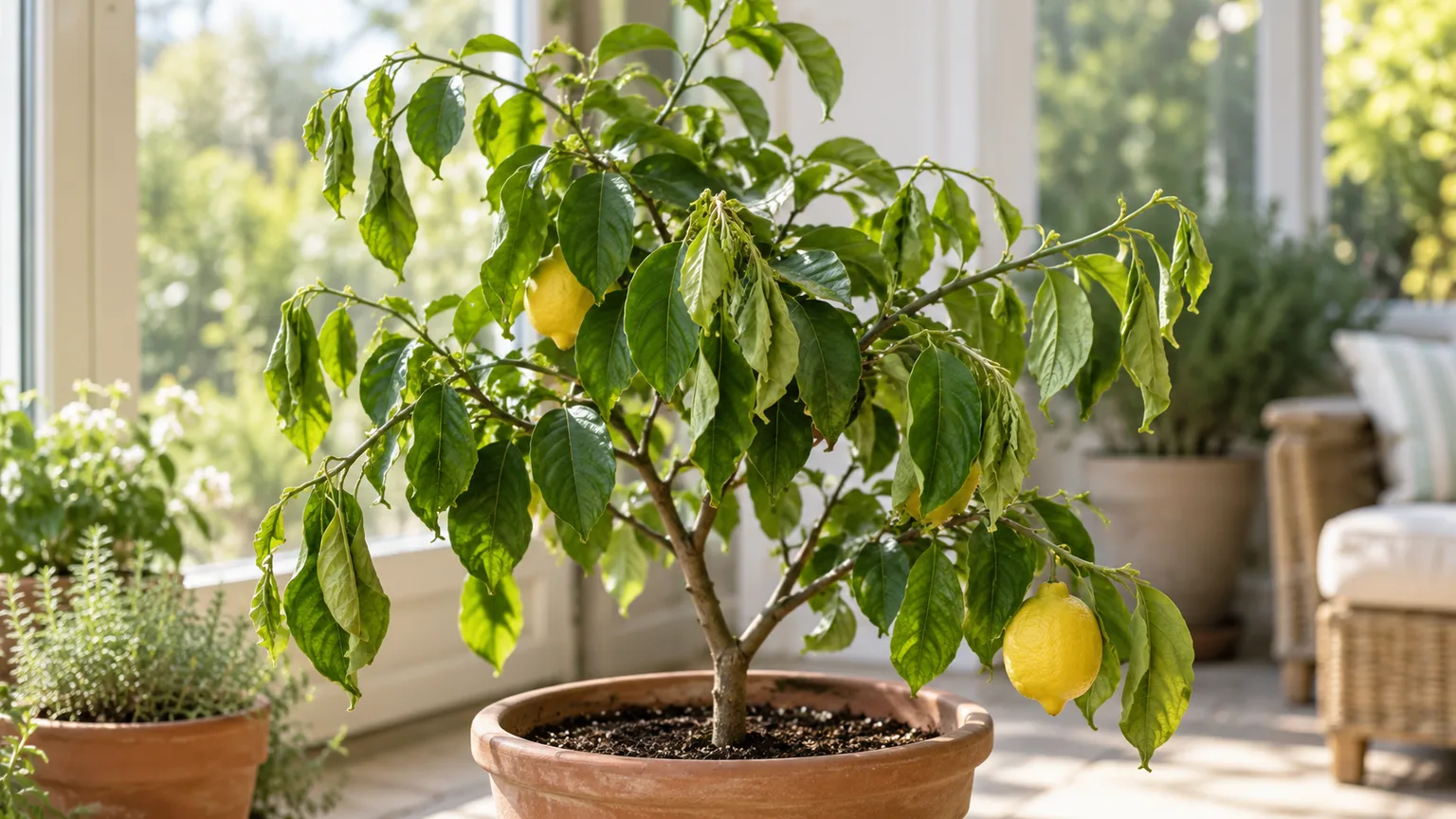
Drooping Leaves on Lemon Tree: Causes, Checks & Fixes
This guide covers drooping leaves on Lemon Tree. See also the general Drooping Leaves guide, watering, and light pages for this plant.
Drooping Leaves on Lemon Tree: Causes, Checks & Fixes
Quick answer
A lemon tree holds its glossy evergreen leaves out stiffly when its roots can deliver water faster than the canopy loses it. When uptake stalls, the whole canopy sags at once — leaves hang limp from their stalks, still green but lifeless. For how this water-uptake failure works in general, see our drooping leaves guide. On lemon, the pattern almost always traces to the root zone: a container that dried too far, a mix staying soggy and airless, or roots disturbed by repotting or a move.
First step: check moisture 5–8 cm deep and lift the pot. If that layer is dry and the pot feels light, water deeply until it drains freely. If it is soggy and heavy, do not water — let it dry and fix drainage first. One targeted correction, then watch for 24–48 hours before changing anything else.
What drooping looks like on a lemon tree
Lemon leaves droop differently from soft houseplant foliage. Healthy leaves are stiff, elliptical, and slightly glossy on jointed stalks; when turgor fails, the blade hangs downward from the stalk joint and the whole canopy looks deflated rather than wilted at the edges. New flush growth — the soft reddish-tinged shoots — folds first, while older leathery leaves sag a day or two later.
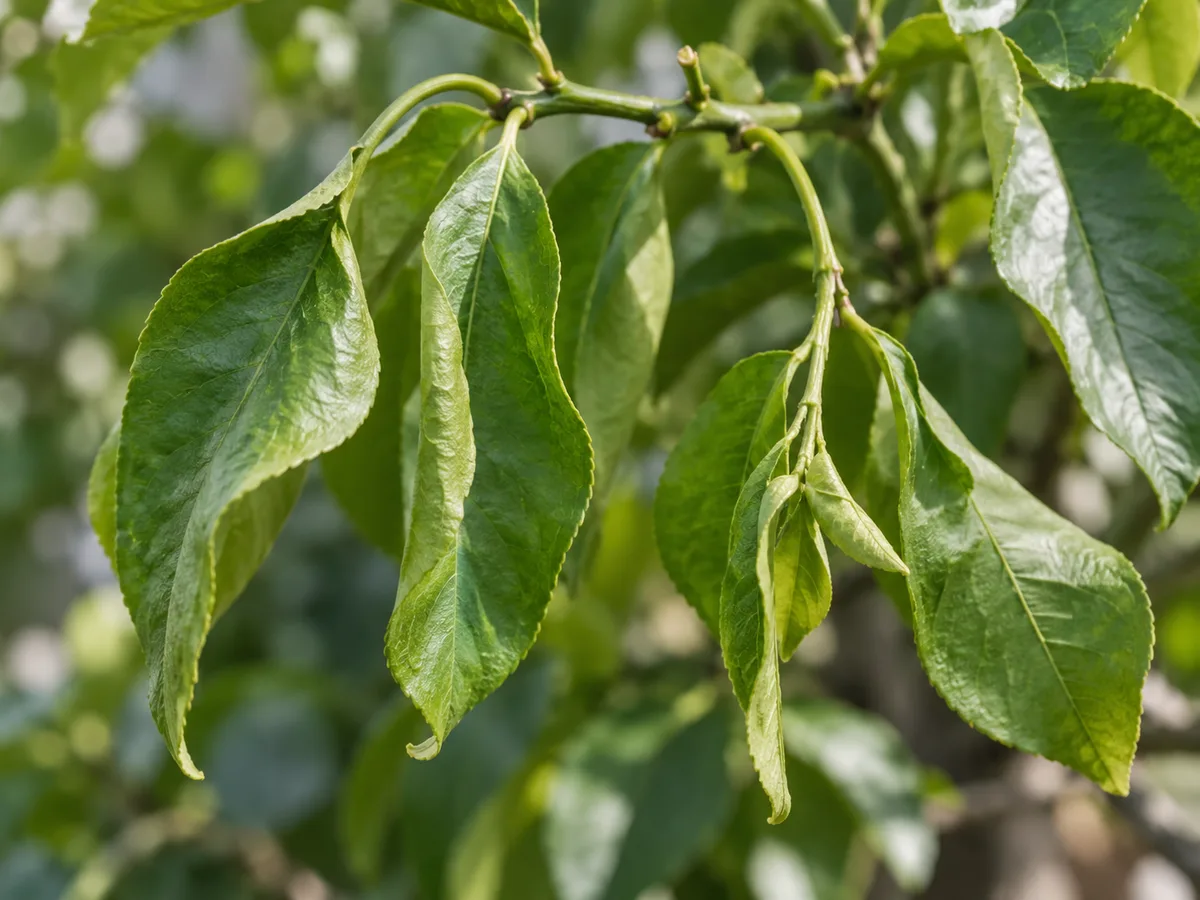
Close-up: limp blades hanging from their stalk joints with new flush folding first — classic turgor loss, not chewing or spotting.
Two details separate lemon droop from lookalikes. First, citrus often sheds blossoms and pea-sized fruitlets alongside the droop, because the tree abandons fruit it cannot supply with water. Second, the stems stay green and firm in simple water stress — soft, darkening twigs mean the problem has moved past thirst into root decay (see root rot).
Why lemon trees droop: the citrus-specific causes
The container dried past the citrus limit
Lemon is a sun-driven evergreen that transpires hard in heat, and a container holds only a day or two of water in summer. When the mix dries completely, fine feeder roots desiccate and leaves lose turgor within hours — curling first, then hanging. UF/IFAS notes that thorough watering is critical from planting through fruit-bearing years and that new trees need water 2–3 times per week for about four weeks, with rainfall factored in (UF/IFAS home citrus watering). A tree that was fine in May can droop every afternoon by July simply because nobody increased the frequency.
The mix is wet but the roots cannot drink
This is the confusing one: drooping leaves on soggy soil. Saturated mix drives air out of the root zone, feeder roots suffocate and decay, and the damaged root system cannot move water upward — so the canopy sags exactly as if it were dry. Expect this after heavy rain on a saucer left full, a peat-heavy mix with no perlite or bark, or a pot with blocked drainage. Sour-smelling mix, yellowing leaves that drop while the soil is still wet, and soft darkened roots confirm it; the overwatering page walks through the full dry-down rescue.
Transplant and relocation shock
Lemon feeder roots are fine and brittle, and any repotting, root pruning, or bare-rooting breaks the very roots that absorb water. Until they regrow — days to a couple of weeks — the canopy loses moisture faster than the roots replace it, so leaves droop even in damp mix. The same sag follows an abrupt indoor-outdoor move or a cold snap, because foliage raised behind glass or in stable warmth suddenly faces wind, sun, and temperature swings it was not conditioned for. Mild shock with firm stems is self-limiting; keep conditions steady rather than repotting again or feeding.
Heat, cold, and the indoor-overwinter trap
Lemon grows best around 18–30°C and stalls below about 10°C, when cold-damaged roots and slow metabolism mimic drought from the top. Indoors for winter, the reverse trap applies: a hot, dim room beside a radiator drives transpiration while weak light stalls photosynthesis, so the tree sheds leaves it cannot support. Cool, bright winter quarters beat a hot, dim room every time. If your tree droops each winter indoors, read not enough light before adding water.
Pests draining new growth
Sap-feeders rarely cause whole-canopy droop alone, but a heavy colony on the soft flush — aphids clustering on shoot tips, spider mites stippling leaf undersides, or scale insects along the stems — weakens the exact shoots that fold first. Check the undersides of the youngest leaves and the joints where honeydew turns sticky and sooty. Treat pests as a compounding cause: fix the water story first, then deal with the insects, since a drought-stressed tree cannot outgrow feeding damage.
Nutrient hunger masquerading as wilt
Chronic nitrogen shortage or iron and magnesium shortfall (common above pH 6.5) thins the canopy into pale, small leaves that hang limply and drop early. Yellow leaves with green veins point to micronutrient chlorosis rather than thirst (citrus chlorosis causes). Do not fertilize a drooping tree to test this theory — feeding drought-stressed or waterlogged roots burns them. Correct water and drainage first, confirm new growth is emerging, and only then feed with a complete citrus fertilizer per UF/IFAS home citrus guidance (UF/IFAS EDIS home citrus).
How to confirm the cause
Work in this order — root zone, then recent history, then foliage clues:
- Probe 5–8 cm deep near the trunk and lift the pot. Dry and light means underwatering; soggy and heavy means overwatering. A skewer pushed to the bottom that comes out damp tells you the lower root ball is still wet even when the surface looks dry.
- Check drainage. Is the saucer holding water? Do holes run freely, or has mix compacted into a brick that water sheets off? Tip the pot: roots circling densely or poking from holes suggest a severely root-bound ball — see the repotting timing in the soil guide.
- Replay the last two weeks. Repotted, moved indoors or out, a cold night near freezing, a heatwave with missed waterings, or a heavy feed on dry roots? Transplant and relocation shock explain droop that starts within days of the event.
- Read the leaves. Curling plus dry edges equals too dry; yellowing plus drop on wet soil equals too wet; pale new leaves with green veins equals nutrient/pH trouble; sticky residue, webbing, or bumps along stems equals pests.
- Sniff and squeeze. Sour mix odor, dark mushy roots at the pot edge, or twigs that bend soft instead of snapping firm point to root rot — skip to urgent care below.
The first fix to try
Water correctly once, based on what the probe told you. Dry mix: soak slowly until water flows from the drainage holes, empty the saucer after 20 minutes, and shade a container tree through the hottest afternoon while it recovers. Soggy mix: do not water at all — empty the saucer, move the pot under cover if rain threatens, and let the upper layer dry before the next drink. UC’s citrus program frames this as cultural care first: sun, drainage, and steady water before chemistry (UC IPM citrus).
Do not stack a second intervention the same day. No fertilizer, no repotting, no oil spray — a stressed citrus root system cannot use any of them, and each adds injury. Recheck turgor the next morning: leaves that lift overnight confirm a water diagnosis.
Step-by-step recovery
- Stabilize the canopy. Move a container tree out of blasting afternoon sun for two to three days and shelter it from strong wind, which strips moisture faster than damaged roots can replace. Keep it bright — deep shade stalls recovery.
- Restore the watering rhythm. Water deeply, then wait until the upper 5–8 cm approaches dry before watering again, judging by finger test and pot weight. In hot weather check containers several times a week; always subtract recent rainfall (UF/IFAS home citrus watering).
- Fix the mix if it stays wet. If the pot is still heavy days after watering, the mix is the problem, not your schedule. At the next suitable moment (early spring is ideal), move up only one pot size into a coarse citrus blend — roughly 60% quality potting mix with pine bark and perlite or pumice — and never bury the root flare. Details live in the soil guide.
- Prune only the clearly dead. Snip twigs that are brown and brittle right back to live wood; leave limp-but-green growth alone until new flush proves what survived. Remove rootstock suckers shooting from below the graft union, since they steal water from the lemon cultivar.
- Feed only on recovery. Once firm new leaves are expanding, resume small regular doses of complete citrus fertilizer through active growth. If older leaves yellowed during the episode, the fertilizer guide covers rates without burning recovering roots.
Recovery timeline
- 12–48 hours: Simple underwatering reverses fast — leaves lift, starting with the youngest. No response in two days means the cause is not simple thirst.
- 1–2 weeks: Transplant shock stabilizes as feeder roots regrow; minor leaf and blossom drop during this window is normal triage, not failure.
- 3–6 weeks: Firm new flush with normal-sized leaves signals full recovery. Yellowed or crisped leaves never re-green — they will drop and be replaced.
- Warning signs: spreading yellow-drop on wet soil, soft stems, sour mix, or dieback creeping down twigs mean root decay is advancing — treat as root rot immediately.
When to use this page vs other lemon tree guides
- Underwatering — go here when the probe is bone-dry and the fix is purely a watering schedule.
- Overwatering — go here when the pot stays heavy and you need the full dry-down and drainage rescue.
- Root rot — go here for sour mix, mushy roots, and unpot-and-trim surgery.
- Wilting — go here when heat or a missed watering flattens the canopy suddenly but the mix routine was otherwise fine.
- Yellow leaves — go here when yellowing dominates and droop is secondary, especially interveinal chlorosis.
- Watering guide — go here for the long-term rhythm once this episode resolves.
Mistakes to avoid
- Watering on a calendar. A lemon in a 30 cm terracotta pot in August and the same tree in a cool October room have nothing in common — probe every time.
- Misting the leaves instead of watering the roots. Misting does not restore turgor and wet foliage invites fungal trouble; prioritize the root zone and airflow.
- Fertilizing a drooping tree. Salts on damaged roots burn them. Hold all feed until new growth looks healthy.
- Repotting on day one. Unpotting a shocked tree breaks the remaining feeder roots. Repot only for confirmed rot, brick-hard mix, or a severely root-bound ball.
- Leaving the saucer full “so it can drink.” Citrus roots need air between drinks; standing water is how a dry-day rescue becomes a rot case.
- Ignoring thorns and pets during the rescue. Lemon twigs commonly carry sharp thorns — wear gloves and eye protection when handling the canopy, and keep pruned leaves and peel away from cats, dogs, and horses, since lemon plant material contains essential oils and psoralens the ASPCA lists as toxic (ASPCA lemon toxicity).
How to prevent it next time
Site the tree where it gets 6–8 hours of direct sun — strong light drives the sturdy growth that resists every other stress, a point Missouri Botanical Garden emphasizes for container citrus (MOBOT Citrus limon). Keep it in a fast-draining citrus mix, water by probe rather than schedule, and acclimate gradually across every indoor-outdoor move over 7–10 days. Refresh the surface mix annually and repot young containers every 2–3 years in early spring before growth surges. Weekly checks of new flush, leaf undersides, and pot weight catch the next episode while it is still a one-watering fix — and the problems hub maps every related guide if new symptoms appear.
Related lemon tree guides
- Lemon tree overview — full care profile: sun, soil, feeding, and frost protection.
- Watering — the long-term deep-watering rhythm after this episode.
- Soil — coarse citrus mix that drains freely but holds even moisture.
- Light — holding 6–8 hours of direct sun, including indoor-overwinter placement.
- Fertilizer — small regular citrus feeds once new growth resumes.
- Underwatering vs overwatering — the two schedules this page helps you tell apart.
- Root rot — when soggy droop has progressed to decay.
Related tool
Use the Plant Problem Diagnosis Tool to narrow causes for drooping leaves on this plant before changing multiple variables at once.