Wilting on Lemon Tree: Causes, Checks & Fixes
Quick answer
Wilting on a lemon tree means leaves have lost turgor faster than roots can replace water—and on citrus the cause splits evenly between too-dry soil and drowned, rotting roots. First step: push your finger 5–8 cm into the mix and lift the pot for weight before you add a drop of water.
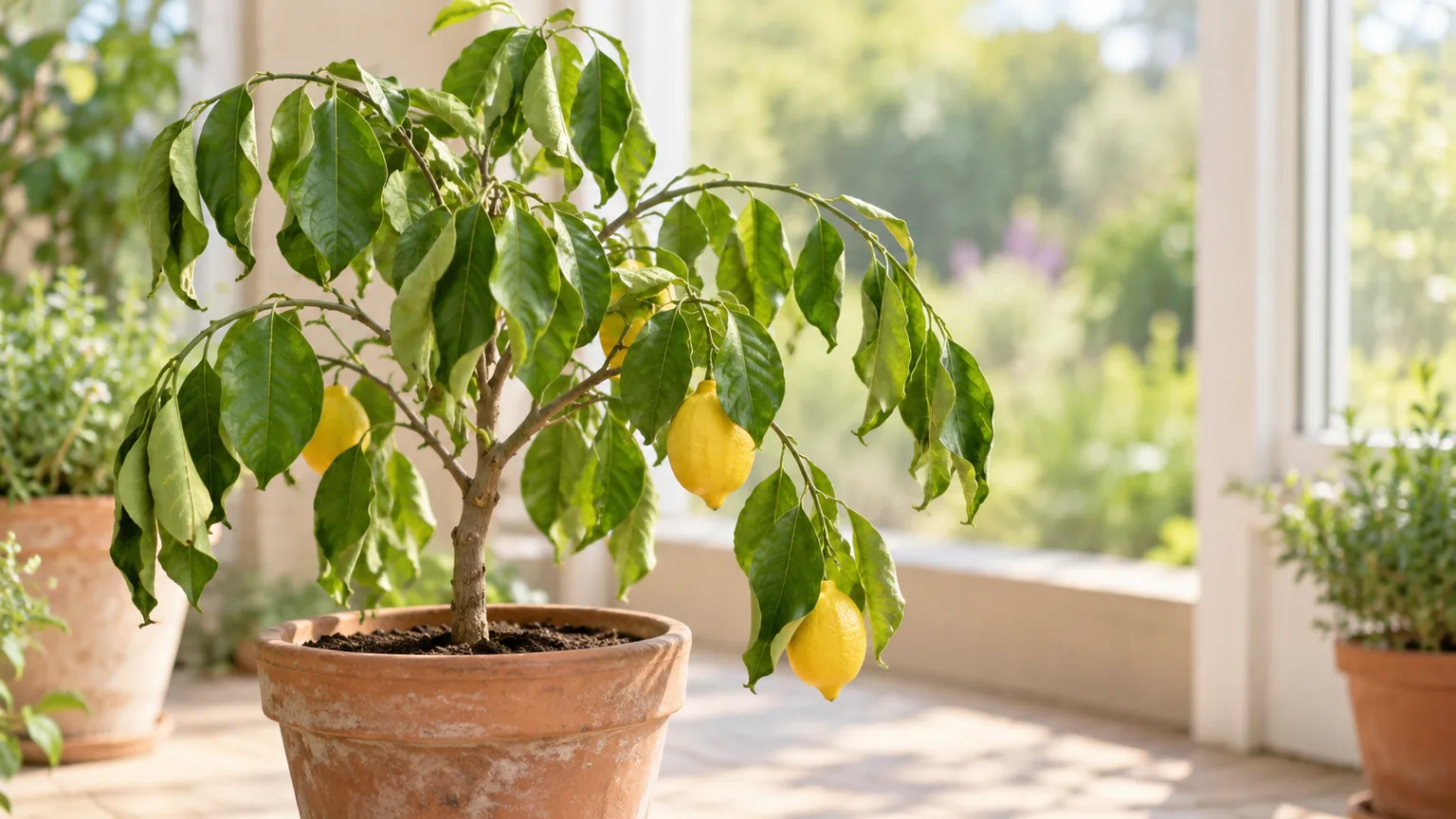
Wilting on Lemon Tree: Causes, Checks & Fixes
This guide covers wilting on Lemon Tree. See also the general Wilting guide, watering, and light pages for this plant.
Wilting on Lemon Tree: Causes, Checks & Fixes
Quick answer
A wilting lemon tree (Citrus × limon) is losing water from its leaves faster than its roots can supply it—and on this species the two most common reasons are exact opposites. Dry, shrunken container mix starves roots of water, while waterlogged mix suffocates and rots the same roots so they cannot take water up at all. Both look like limp, hanging foliage from across the room, which is why pouring water on every wilted lemon is the most damaging reflex in citrus care.
First step: push your finger 5–8 cm (2–3 inches) into the mix and lift the pot for weight—before you water, feed, prune, or move anything. A light pot with dry, crumbly soil means one deep drink. A heavy pot with damp soil means stop watering and inspect roots and drainage instead. For the mechanics of wilt in general, see our wilting guide. On a lemon tree, the pattern that follows almost always traces to the citrus-specific causes below.
By sai-ananth · Reviewed by LeafyPixels Review Board · Last expert review: September 2026
What wilting looks like on a lemon tree
Healthy lemon foliage is evergreen, firm, and held out from the twigs; new flush growth is tender but upright within a day or two of emerging. True wilt on this tree is a whole-shoot event rather than a single spotted leaf:
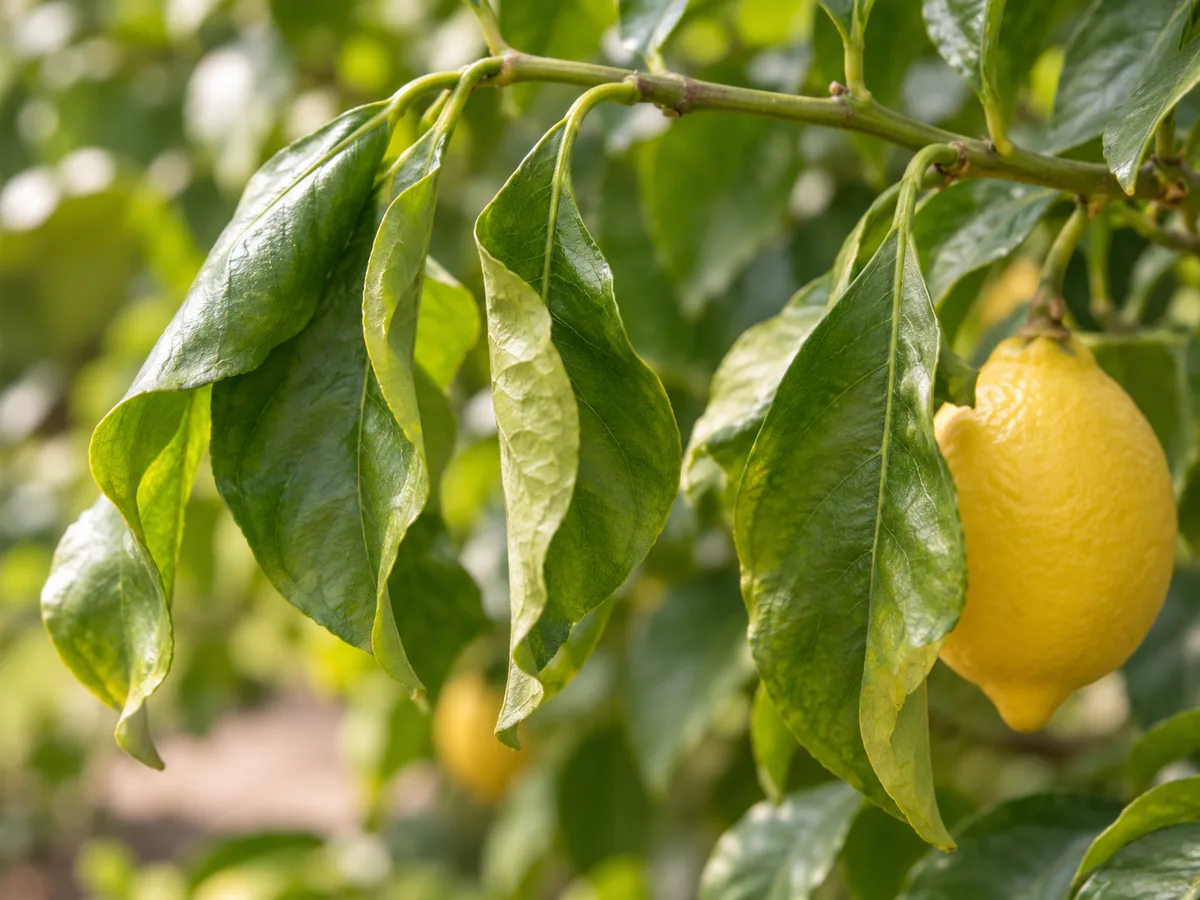
Wilting symptoms on Lemon Tree - compare with healthy tissue on the same plant.
- Shoots and young leaves hang downward instead of angling outward, often across the entire canopy at once
- Leaf blades feel soft and limp rather than crisp; severe cases turn papery at the margins
- Flower buds and marble-sized fruitlets drop alongside or just after the wilt—citrus sheds reproductive growth first under water stress
- Older leaves may yellow and fall while the wilt persists, especially when roots are damaged rather than merely dry
Because a lemon is a sun-loving evergreen fruit tree rather than a foliage houseplant, its wilt rarely comes alone. Watch what accompanies it: dry-pot wilt brings dull, curling leaves that still feel thin; wet-pot wilt brings limp leaves on heavy soil, sometimes with yellow leaves spreading from older growth inward. That companion pattern is your fastest diagnostic clue.
Normal vs. alarming:
- A light afternoon flag on a hot day that recovers by evening is heat response, not crisis
- Wilt that persists into a cool morning means the root zone—not the weather—is the problem
- Wilt plus leaf and fruit drop within days of moving the tree indoors is relocation shock layered on changed watering needs
When to use this page vs other lemon tree guides
This page is the triage entry for limp, hanging foliage: it tells you whether the wilt is a dry-pot, wet-pot, weather, or root-damage problem and which single fix comes first.
- Underwatering — go here when the probe comes out dry and the pot is light; it carries the full rehydration ladder
- Overwatering — go here when soil stays wet for days; it covers the dry-down rhythm in detail
- Root rot — go here when roots are brown and mushy or the base smells sour; it covers trim-and-repot surgery
- Drooping leaves — go here when foliage hangs but stays firm and green without classic wilt softness
- Yellow leaves — go here when discoloration dominates and wilt is secondary
- Lemon tree watering guide — go here for the long-term seasonal schedule after the crisis passes
- All lemon tree problems — browse the full issue list when symptoms do not fit any single page
Why lemon trees wilt
Dry container mix (most common in pots)
Container lemons dry out far faster than owners expect, especially in terracotta or small pots during hot, windy weather. NC State Extension notes that lemons need plenty of water during the growing season, and active trees in full sun can empty a pot’s reserves in a day or two. Water-deficient citrus leaves dry and turn brown as soft tissue between veins collapses—so margins crisp while the leaf still hangs. Peat-heavy mix that has dried completely can turn hydrophobic: water runs down the gap between root ball and pot wall while the center stays powder-dry, and the tree wilts the day after you “watered” it.
Waterlogged mix and Phytophthora root damage
The mirror image is more dangerous. Soggy mix suffocates fine feeder roots within days, and prolonged wetness invites Phytophthora root and crown rot. UC IPM describes the result as a slow decline: leaves turn dull green or yellow and may drop while the root center softens and water uptake collapses. Because the damaged roots cannot move water, the canopy wilts while the soil is wet—the signature paradox of this cause. UGA Extension warns that Phytophthora lifecycles are intimately tied to water, with swimming spores spreading in saturated soil, and calls adequate drainage essential for control. Saucers left full, oversized pots, and dense garden soil are the usual enablers; see the overwatering guide for the full drainage checklist.
Heat, cold, and the indoor move
Lemons fruit best with sustained warmth but wilt at both temperature extremes—citrus is particularly susceptible to cold damage, with Eureka lemon ranked among the most cold-sensitive scions, and container roots bake beside hot paving on scorching afternoons. Treat container trees as frost-tender and move them under protection before cold nights. Two lemon-specific traps stand out. First, a sudden indoor move for winter combines dimmer light, warm dry air from central heating, and soil that stays wet far longer than it did outdoors—leaves wilt and drop within days. Second, reflected heat beside paving or walls can cook container roots on summer afternoons even when morning watering seemed generous. Distinguish these by timing: weather wilt follows a heatwave, cold snap, or relocation within 48 hours.
Transplant shock and root disturbance
Lemons dislike root disturbance and establish best when planted young in a permanent position. Repotting, planting out, or rough handling tears the fine feeder roots that supply the canopy, and the tree wilts despite perfect soil moisture. Recovery is slowest in the first weeks after the move, so check moisture at depth rather than watering on schedule while new feeder roots form. Container trees due a larger pot every few years often wilt first from circling, root-bound balls that shed water—lift the root ball and check before assuming disease.
Salt buildup and fertilizer burn
Excess fertilizer salts draw water away from roots by osmosis, producing wilt on moist soil that mimics both drought and rot. UF/IFAS notes that many salinity-induced symptoms resemble drought stress, including reduced root growth and small leaves before visible leaf burn appears. Suspect this when wilt follows a heavy feeding, the pot rim shows white crust, or irrigation water is hard or softened. Citrus is particularly sensitive to fertilizing drought-stressed or waterlogged roots, so never feed a wilted tree until moisture is corrected—see the fertilizer guide for safe timing.
How to confirm the cause
Work in this order; each step takes under a minute and rules out one major cause:
- Probe and lift. Push a finger 5–8 cm into the mix near the trunk and halfway to the pot rim, then lift the pot. Dry and light means thirst; damp and heavy means excess water or drainage failure. The target feel is moist like a wrung-out sponge, not wet.
- Check the exits. Confirm drainage holes are open and no saucer water has stood for more than an hour. Tip a suspect pot and look for blackened, mushy roots at the holes or a sour smell.
- Read the leaves. Thin, curling, crisp-edged wilt on dry soil points to underwatering; soft, limp wilt on wet soil with spreading yellow points to root damage. Overwatered container foliage often feels soft and limp while underwatered foliage turns crispy and light.
- Inspect the base. Pull mulch back from the trunk and check the graft union and soil line. Soggy bark, oozing gum, or bark slipping off at the crown signals crown rot—stop and follow the root rot guide.
- Replay recent events. Repot, planting, heatwave, cold night, indoor move, or a heavy feeding in the last one to three weeks outranks chronic-care theories. Match the timeline before changing anything else.
The first fix to try
Correct only the confirmed moisture error—one deep fix, then wait and watch. If the probe is dry: water slowly until it drains freely from the bottom, empty the saucer after 30 minutes, and soak a hydrophobic root ball by standing the pot in a bucket for 20 minutes. If the probe is damp: do not water at all—empty the saucer, move the pot into sun and airflow, and let the upper mix dry before the next drink. Do not fertilize, repot, or spray on day one; a wilted lemon cannot use extra inputs and each one obscures the response signal.
Step-by-step recovery
- Stabilize moisture. For dry wilt, give one thorough soaking and return to checking the top 5–8 cm before each watering per the watering guide. For wet wilt, hold all water until the upper layer approaches dryness, then resume with smaller, drainage-checked drinks.
- Restore drainage. Clear blocked holes, discard saucer water, and replace any waterlogged surface layer with coarse citrus mix. Trees sitting in dense garden soil benefit from a raised mound that keeps the crown above standing water.
- Triage the canopy. Remove only fully brown, crisp leaves and any dropped buds or fruitlets from the soil surface. Leave limp-but-green foliage attached—it may recover, and premature stripping costs the tree energy reserves.
- Check roots if wet wilt persists past a week. Slide the root ball out: white-tipped firm roots mean the tree is recovering—repot gently and continue dry-down. Brown, mushy, sour-smelling roots confirm rot; trim to firm tissue and follow the root rot guide.
- Reset the environment. Return indoor trees to the brightest cool spot available, shield container roots from scorching afternoon sun, and protect from frost—lemon is frost-tender and needs winter protection outside its hardy range. Keep light strong and steady while the tree rebuilds fine roots.
- Feed only on recovery. Wait until new shoot tips emerge and hold firm for two weeks, then resume light citrus feeding per the fertilizer guide. Feeding a still-wilted tree burns the very roots it needs.
Recovery timeline
- Hours: dry-pot wilt on healthy roots usually firms up within hours of a deep soak; leaves that stay limp after 24 hours suggest root damage, not simple thirst
- One to two weeks: bud and fruitlet drop should stop; new flush growth holds upright through the afternoon
- Three to six weeks: firm new shoot tips and clean green flush confirm recovery; persistent yellowing with wet soil means rot treatment failed—escalate
- One season: root-bound or transplant-shocked trees rebuild feeder roots slowly; expect lighter fruit set this cycle even after foliage recovers
Lookalike symptoms
| What you see | More likely | Go here |
|---|---|---|
| Limp wilt, dry light pot, crisp margins | Underwatering | Rehydration ladder |
| Limp wilt, heavy wet pot, no sour smell yet | Overwatering | Dry-down protocol |
| Wilt plus sour soil, mushy roots, gum at base | Root rot | Root surgery |
| Foliage hangs but stays firm and green | Drooping leaves | Turgor-vs-structure check |
| Yellow mottling without softness | Yellow leaves | Nutrient diagnosis |
| Pale thin growth in a dim corner | Not enough light | Light correction |
Mistakes to avoid
- Watering on sight. Adding water to a heavy, damp pot drowns the remaining healthy roots and accelerates rot.
- Feeding a wilted tree. Fertilizer salts on damaged roots cause chemical burn; citrus feeding resumes only after new growth holds.
- Repotting on day one. Unpotting a merely thirsty tree adds transplant shock to a solved problem—reserve repotting for confirmed rot, hydrophobic mix, or severe root-binding.
- Misting instead of watering. Surface misting wets leaves while the root ball stays dry; always verify moisture at depth.
- Burying the graft union. Soil or mulch piled against the trunk traps moisture at the crown and invites the very rot that causes wet-pot wilt.
How to prevent wilting next time
Build the routine around the lemon’s citrus biology: deep roots that demand both moisture and air. Water deeply, then let the upper 5–8 cm dry before the next drink, following the seasonal rhythm in the watering guide and the coarse, fast-draining blend in the soil guide. Keep full sun, since dim trees use less water and stay soggy longer. Move containers under cover before cold rain spells, empty saucers every time, and flush accumulated salts with a deep clear-water drench two or three times a year. Inspect the graft union and trunk base each season; catching soggy bark early is what separates a one-week wilt from a lost tree.
When to worry
Wilt is routine when a dry pot firms up after one deep watering. Escalate when the canopy wilts on wet soil for more than a week, green leaves yellow and drop in waves, gum oozes from the trunk base, or the root ball smells sour—these point to advancing crown or root rot that home dry-down alone may not reverse. If the entire canopy collapses with bark damage at the soil line, the tree may not be saveable; a nursery or extension clinic can confirm before you invest in surgery. Partial wilt with firm wood and white root tips is almost always recoverable with patience.
Related Lemon Tree guides
- Lemon Tree overview — sun, soil, and citrus growth habits behind every wilt diagnosis
- Lemon Tree watering — seasonal deep-watering rhythm and the 5–8 cm check
- Lemon Tree soil — coarse citrus mix that holds moisture without drowning roots
- Underwatering on Lemon Tree — dry-pot rehydration when the probe comes out dusty
- Overwatering on Lemon Tree — wet-pot dry-down before rot sets in
- Root rot on Lemon Tree — trim-and-repot protocol when roots have failed
- Drooping leaves on Lemon Tree — firm-hang foliage without classic wilt
- Yellow leaves on Lemon Tree — discoloration-first diagnosis
- All Lemon Tree problems — browse every issue on this species
Related tool
Use the Plant Problem Diagnosis Tool to narrow causes for wilting on this plant before changing multiple variables at once.
Author: sai-ananth · Reviewer: LeafyPixels Review Board · Reviewed: 2026-09-04 · Methodology: Plant problem guidance is reviewed against botanical references, extension resources, and LeafyPixels plant-care data before publication.