Mealybugs on Lemon Tree: Causes, Checks & Fixes
Quick answer
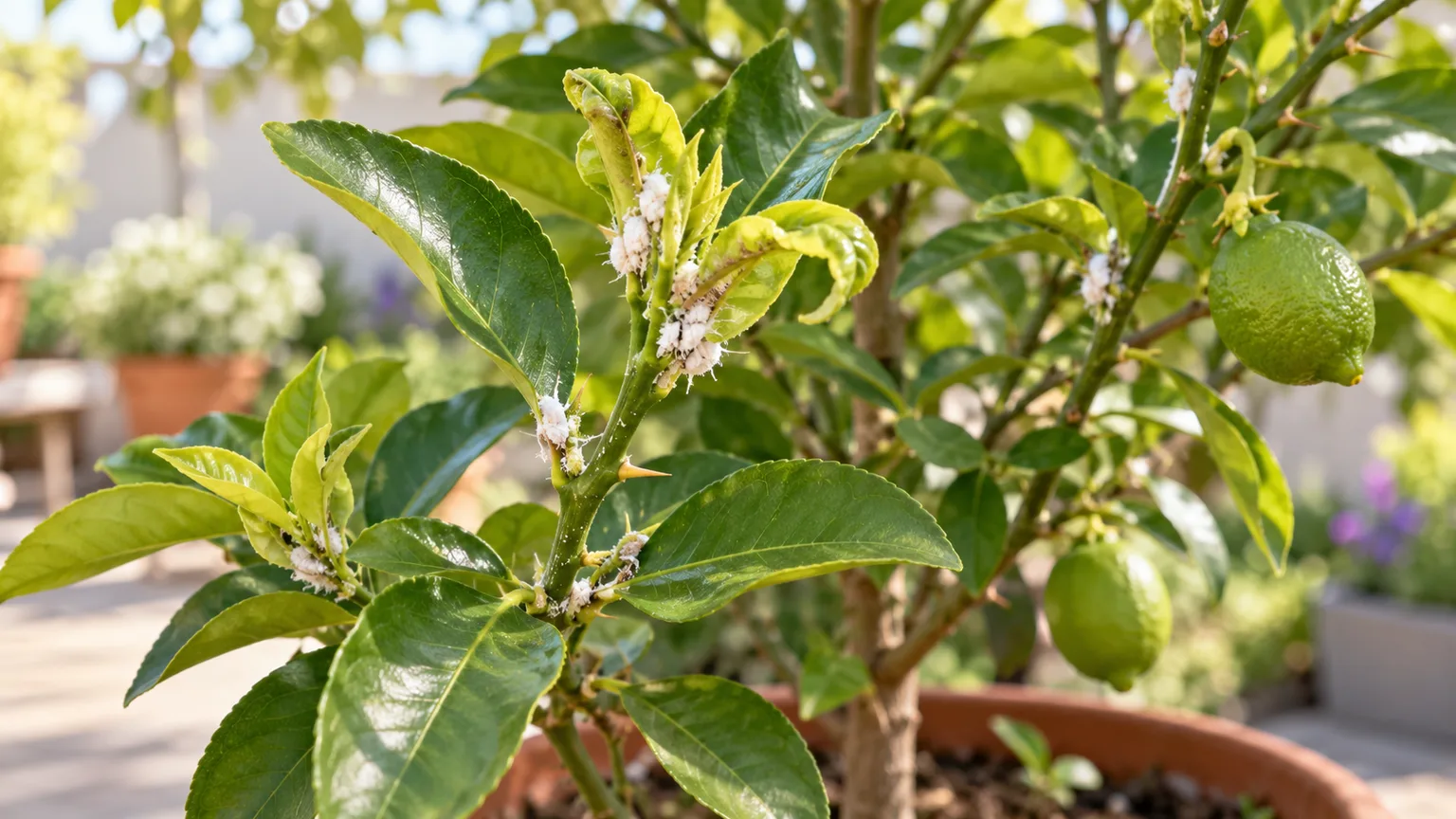
White cottony clusters in leaf axils, on new flush, or where fruit meets the stem usually mean citrus mealybug. First step: isolate the tree and dab every visible cluster with a cotton swab dipped in rubbing alcohol before you spray anything.
Mealybugs on Lemon Tree: Causes, Checks & Fixes
This guide covers mealybugs on Lemon Tree. See also the general Mealybugs guide, watering, and light pages for this plant.
Mealybugs on Lemon Tree: Causes, Checks & Fixes
Quick answer
If you see white cottony clumps tucked into leaf axils, on soft new shoots, or where young fruit meets the stem, your lemon tree almost certainly has citrus mealybug — not mildew or spray residue. Sticky leaves, black sooty coating, and ants marching up the trunk seal the diagnosis. For how mealybugs feed in general, see our mealybug pest guide — on a lemon tree the pattern centers on new flush and fruit stems, which is where yield damage starts.
First step: isolate the tree and dab every visible cluster with a cotton swab dipped in rubbing alcohol. Alcohol dissolves the protective wax so follow-up sprays can reach the insects. Do this before any broad spray, so you can see what the spot treatment alone achieves.
What mealybugs look like on a lemon tree
On citrus the culprit is usually the citrus mealybug, Planococcus citri — soft, oval, pinkish insects hidden under fluffy white wax, often with a faint darker line down the back. Adults are only about 1/16 to 1/8 inch long, so what you notice first is the cottony mass, not the insect. Each female can lay 300 to 600 eggs in a dense waxy egg sac, and crawlers hatching from it spread to every crevice within weeks.
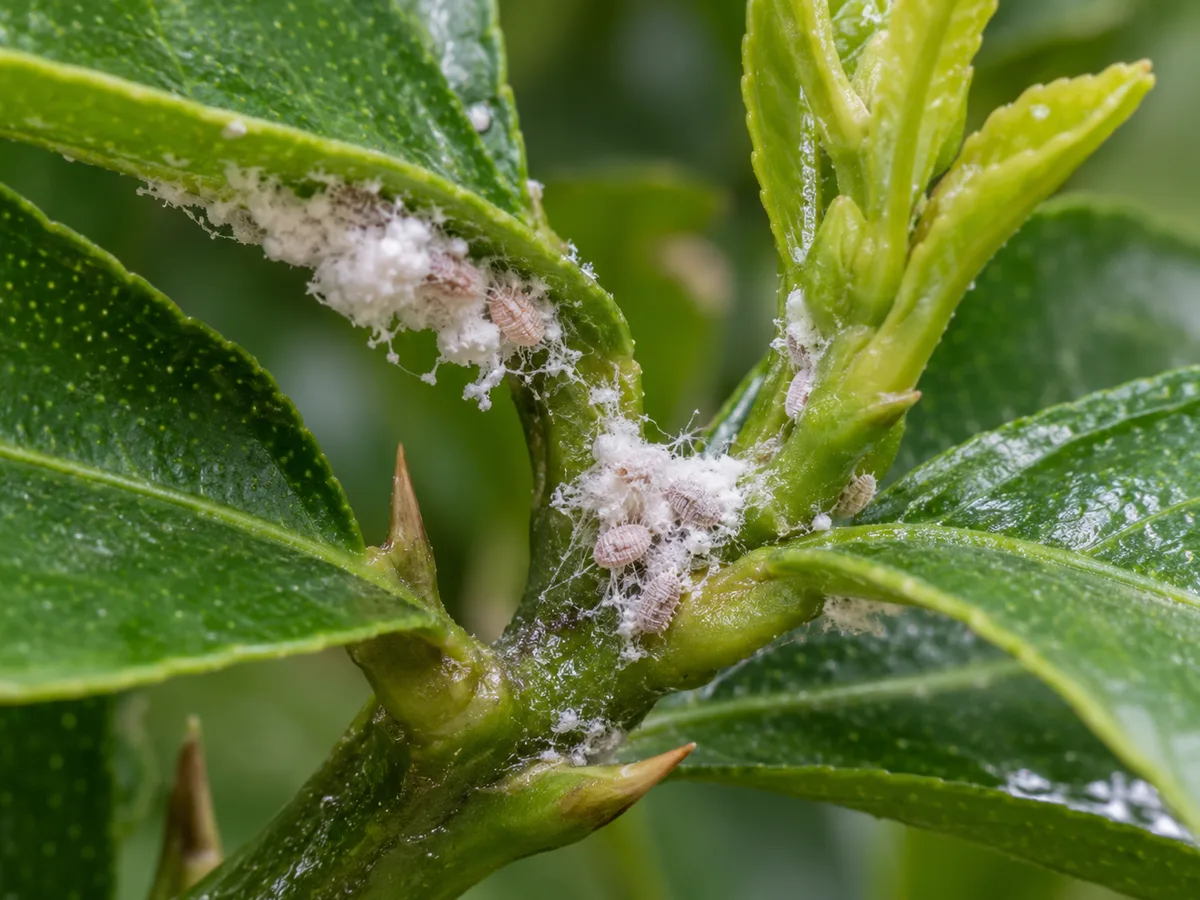
White cottony egg masses and waxy adults packed into a lemon leaf axil — compare with clean axils on uninfested shoots.
Lemon-specific signs to look for:
- Cottony masses in leaf axils, along midribs on leaf undersides, and in bark crevices
- Clusters where the fruit stem meets the branch — a heavy cluster here can trigger fruit drop
- Sticky honeydew on upper leaves and hard lumps or discoloration on developing fruit
- Black sooty mold growing on the honeydew, dulling glossy lemon foliage
- Wilting, yellowing, or distorted new flush and premature leaf or fruit drop as numbers build
- Ants patrolling stems and trunk, farming the mealybugs for honeydew and carrying crawlers to new shoots
Check the lemon tree watering rhythm at the same time — a tree already stressed by waterlogged mix drops damaged leaves faster and pushes the weak regrowth mealybugs prefer.
Why lemon trees get mealybugs
Soft citrus flush is ideal food. Lemon trees push tender new growth in waves through the warm months, and mealybugs settle exactly there — on expanding leaves, thorn bases, and young stems. A tree fed heavily with nitrogen during active growth produces extra-succulent shoots that support faster colony buildup, so match feeding to the lemon tree fertilizer guide rather than pushing flush ahead of the season.
Fruit clusters and evergreen cover shelter colonies. Unlike deciduous fruit trees, a lemon holds its leaves year-round, so overlapping foliage, bark fissures, and persistent fruit give mealybugs undisturbed hiding places through every season. Colonies tucked where fruit meets the stem are easy to miss until honeydew appears on leaves below.
Ants protect and spread them. Outdoor and patio trees commonly host ants that feed on honeydew; in return the ants move crawlers to fresh shoots and defend colonies from predators such as lady beetles, lacewings, and the mealybug destroyer beetle. If ants are constant on the trunk, expect the mealybug population to grow faster than spot treatment alone can suppress.
Indoor overwintering concentrates risk. Lemon trees moved into a cool, bright frost-free room for winter sit close together in still air with no natural enemies present. A light summer infestation hidden in bark crevices can explode on the first warm indoor flush — inspect every axil and crevice before the move, not after sticky leaves appear in January.
New plants import them. Nursery stock, gifted cuttings, and shared greenhouse benches are the usual entry route, since wingless females travel by crawling or by hitching rides with ants, birds, and people. Quarantine every newcomer for two to three weeks before placing it near a clean lemon.
How to confirm before you treat
Work in this order so you treat the real pest at the right scale:
- Axil and flush scan — Part the newest shoots and look into every leaf axil, thorn base, and unfurling tip for cottony masses or pinkish oval bodies under wax.
- Fruit-stem check — Examine each point where fruit or fruitlets join the branch; colonies here matter most for yield.
- Honeydew wipe — Run a fingertip along an upper leaf. Tackiness that returns within a day means active sap feeders above, even if you have not found them yet.
- Ant trail follow — Ants streaming up the trunk usually lead straight to the largest colony; follow them before you wash trails away.
- Graft union and suckers — Check the graft union and any vigorous shoots from below it. Rootstock suckers push the softest growth on the tree and often host the densest clusters — prune suckers anyway, but note what you find on them.
- Honeydew producers vs. hard bumps — Confirm the white masses are waxy and cottony (mealybugs) rather than hard immobile bumps, which point to armored or soft scale and a different treatment path.
Confirmed diagnosis — cottony wax masses plus honeydew, sooty mold, or ants on flush or fruit stems. Suspected — sticky leaves with no visible clusters yet; recheck axils and bark crevices with a magnifier in three days before spraying the whole canopy.
First fix: isolate, swab, then rinse
Isolate the tree from other citrus and houseplants until no new clusters appear for at least three weeks. Mealybug crawlers walk or hitchhike to neighbors quickly at patio spacing.
Dab every visible cluster with a cotton swab dipped in rubbing alcohol. Alcohol cuts through the waxy armor that shields adults and egg sacs from sprays — NC State Extension recommends this as the first move on lightly infested plants. Press the swab into axils, thorn bases, and fruit-stem joints rather than just touching the surface fluff.
Rinse the canopy with a firm water stream the next morning, aiming at leaf undersides and stem joints. High-pressure water knocks loose survivors and washes honeydew that would otherwise grow sooty mold. Let foliage dry in good airflow before evening, since lemon foliage that stays wet invites fungal problems — keep the lemon tree light and airflow position open around the canopy while it dries.
Repeat the swab-and-inspect round weekly for at least three weeks. Eggs hidden in waxy sacs survive contact sprays and hatch later, so one thorough pass is never enough — plan for two to three weekly rounds minimum.
Step-by-step recovery for heavier infestations
When clusters cover most flush, honeydew coats whole branches, or fruit is dropping, escalate in this order:
- Prune the worst shoots. Clip heavily encrusted flush tips and any sucker growth below the graft, sealing cuttings in a bag for disposal — do not compost them. This removes the densest egg sacs in one move. Make structural cuts per the lemon tree pruning guide and disinfect blades between cuts.
- Wash with mild soapy water. After pruning, wash remaining foliage with about 2% plain soap solution, not detergent, to strip residual wax and honeydew. Rinse soap off within an hour or two on hot days to avoid leaf burn.
- Apply insecticidal soap or horticultural oil. If live mealybugs persist a week later, use a labeled insecticidal soap or superior horticultural oil spray, coating leaf undersides and crotches thoroughly. Treat when crawlers are present if you can time it, and repeat per the label — contact sprays only kill insects they reach.
- Control the ants. Grease bands, sticky trunk barriers, or bait stations that do not harm beneficial insects cut the ant protection racket. Without ant defense, predators like lacewings and mealybug destroyers reassert control outdoors.
- Reserve systemics for last resort. Products such as imidacloprid move through sap and take weeks to work, and they threaten pollinators on a flowering lemon. Discuss timing and fruit preharvest intervals with a local extension office before using any systemic on a fruiting tree.
Wear gloves and eye protection around thorny twigs during every handling step, and keep children and pets away from wet spray deposits until dry. Lemon foliage, peel, and plant oils are toxic to cats, dogs, and horses, so collect fallen leaves and fruit during cleanup rather than leaving them where animals forage.
Lookalikes that fool lemon growers
| What you see | Likely cause | Key check |
|---|---|---|
| White cottony masses in axils and on flush | Mealybugs (this page) | Waxy fluff wipes away; sticky honeydew and ants nearby |
| Hard brown bumps on stems that do not move | Scale insects | Shell-like covers scrape off to reveal tissue; no cottony ovisacs |
| Small black or green soft insects on bud tips | Aphids | Pear-shaped, clustered on the very youngest tips; curl new leaves |
| Fine webbing with yellow stippling | Spider mites | Hot dry air; tap leaf over paper for moving specks |
| White powdery film, no insects or stickiness | Powdery mildew pattern | Fungal coating without honeydew, ants, or cottony masses |
| Uniform yellowing on older leaves, wet mix | Overwatering or root rot | No insects; check 5–8 cm soil depth and root firmness first |
| Pale new leaves, poor fruiting, no pests | Nutrition or soil pH issue | Whole-canopy pattern, not clustered colonies |
Recovery timeline
Week one after the first alcohol round, existing cottony masses dry and no fresh honeydew appears on upper leaves. Weeks two to three, weekly re-checks should find fewer live insects as hatched crawlers get swabbed before they lay new egg sacs. Clean, undistorted flush emerging by week four is the real success signal — monitor trunk and lower branches from spring onward since citrus mealybug pressure peaks in warm months.
Distorted leaves that hardened during feeding will not reshape, and fruitlets that dropped are gone for the season. Sooty mold weathers off gradually once honeydew stops; gently wipe market-bound fruit rather than scrubbing hard enough to bruise rind. If new clusters keep appearing after three full weekly rounds, the reservoir is likely bark crevices, a neighboring infested plant, or an uncontrolled ant highway — find that source rather than running a fourth identical spray.
Mistakes to avoid
- Spraying the whole canopy before spot-treating. Blanket oil on a lightly infested lemon risks leaf burn and kills the predators doing free work for you.
- One treatment and done. Egg sacs hatch over days to weeks; skipping follow-ups restarts the outbreak.
- Fertilizing to push through the damage. Extra nitrogen during infestation grows more of the tender tissue mealybugs want. Stabilize the pest first, then resume the normal citrus feed schedule.
- Ignoring ants. Colonies rebound indefinitely while ants farm them — address the trunk traffic, not just the insects.
- Using detergent or high-heat oil sprays. Detergents strip lemon leaf cuticles and midday oil in heat scorches foliage. Use true insecticidal soap or labeled horticultural oil in cool morning hours, and patch-test sensitive foliage first.
- Composting pruned clusters. Bag and trash infested shoots; crawlers walk out of an open compost pile.
How to prevent it next time
Keep the tree in full sun with 6–8 hours of direct light and the fast-draining citrus mix drying in the upper 5–8 cm between deep waterings — vigorous, firm growth tolerates light feeding pressure far better than stressed flush. Inspect axils, thorn bases, and fruit-stem joints weekly from spring through autumn, and always quarantine newcomers for two to three weeks.
Break the ant connection with trunk barriers on patio trees, and rinse dusty foliage occasionally so honeydew never accumulates unnoticed. When the tree comes indoors for winter, give it the brightest frost-free spot with airflow around the canopy and recheck crevices monthly — indoor stillness is what turns a handful of survivors into a January outbreak.
When to use this page vs other lemon tree guides
- Lemon tree problems hub — Start here when you are unsure which pest or disorder you have.
- Lemon tree overview — Use for whole-tree care context: sun, frost protection, and container culture.
- Aphids on lemon tree — Use when insects are pear-shaped and clustered on bud tips with curled new leaves rather than cottony masses.
- Spider mites on lemon tree — Use for stippled leaves and fine webbing in hot dry air rather than honeydew and wax.
- Yellow leaves on lemon tree — Use when yellowing is canopy-wide without insects, pointing to water or nutrition causes.
Related lemon tree guides
- Lemon tree overview — sun, frost protection, and container basics that keep growth firm and less inviting to sap feeders.
- Lemon tree problems hub — browse every documented issue on this species when symptoms overlap.
- Lemon tree watering — deep-watering and 5–8 cm dry-down checks that separate pest stress from root stress.
- Lemon tree light — full-sun placement and indoor overwintering light that drives sturdy flush.
- Lemon tree soil — fast-draining citrus mix and pH 5.5–6.5 that prevent the weak growth pests exploit.
- Lemon tree fertilizer — citrus feeding schedule that avoids the soft nitrogen flush mealybugs prefer.
- Lemon tree pruning — sucker removal and canopy shaping that eliminate colony reservoirs.
- Aphids on lemon tree — closest sap-feeder lookalike with honeydew and ants but no cottony wax.
- Spider mites on lemon tree — dry-air pest with stippling and webbing instead of honeydew.
- Yellow leaves on lemon tree — nutrient and watering yellowing without insect clusters.
- Overwatering on lemon tree — rule-out guide when leaves yellow on wet mix with no pests found.
- Root rot on lemon tree — emergency path when roots are soft and dark rather than insects on shoots.