Fungus Gnats on Lemon Tree: Causes, Checks & Fixes
Quick answer
Fungus gnats on a lemon tree mean the top layer of mix is staying wet enough to breed flies. Let the upper 5–8 cm dry out and empty the saucer after every watering. Add yellow sticky traps and a Bti soil drench, and expect clear improvement within 3–4 weeks.
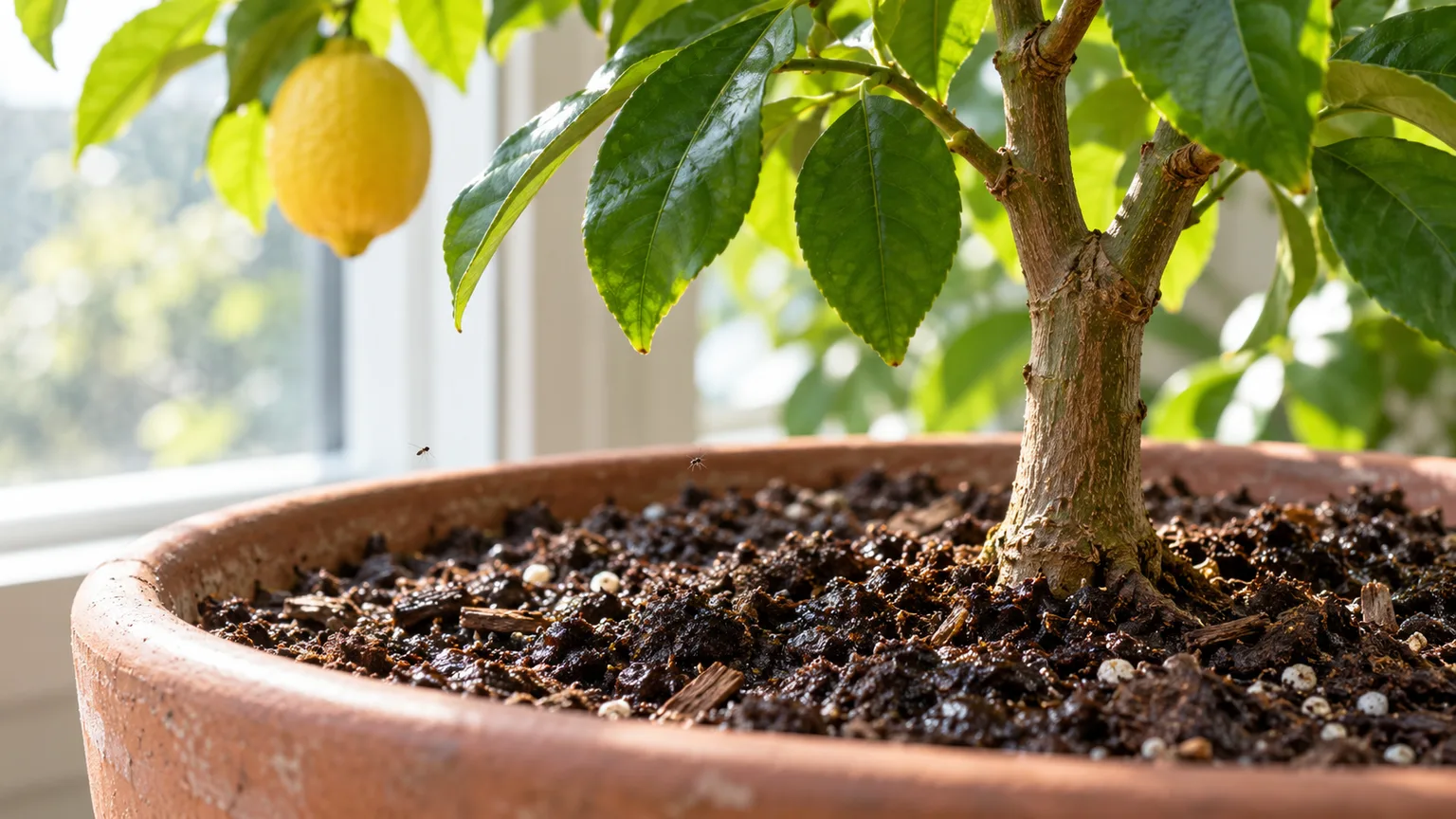
Fungus Gnats on Lemon Tree: Causes, Checks & Fixes
This guide covers fungus gnats on Lemon Tree. See also the general Fungus Gnats guide, watering, and light pages for this plant.
Fungus Gnats on Lemon Tree: Causes, Checks & Fixes
Quick answer
Fungus gnats hovering over a lemon tree are telling you the surface of the mix never dries. Adults are a nuisance; the translucent larvae in the top few centimetres feed on fungi and organic matter, and in large numbers they chew fine root hairs. For the general mechanics of how chronic wet mix damages roots, see our overwatering guide. On a lemon tree, the pattern usually shows up in a heavy container of peat-rich citrus mix that is watered little and often, especially on trees overwintered indoors.
Do one thing first: let the upper 5–8 cm of mix dry out and empty the saucer or cachepot after every watering. Then set traps and treat the soil so the breeding cycle breaks within three to four weeks.
What fungus gnats look like on a lemon tree
On Citrus limon you will notice a faint cloud of tiny dark flies lifting off the soil each time you water, move the pot, or brush the low canopy. The adults are slender, mosquito-like flies about 1/16 to 1/8 inch long, weak fliers that drift rather than dart. They rest on the mix surface, the rim of the pot, and nearby windows, which is why an indoor lemon tree can make the problem feel bigger than it is: the flies gather exactly where you sit.
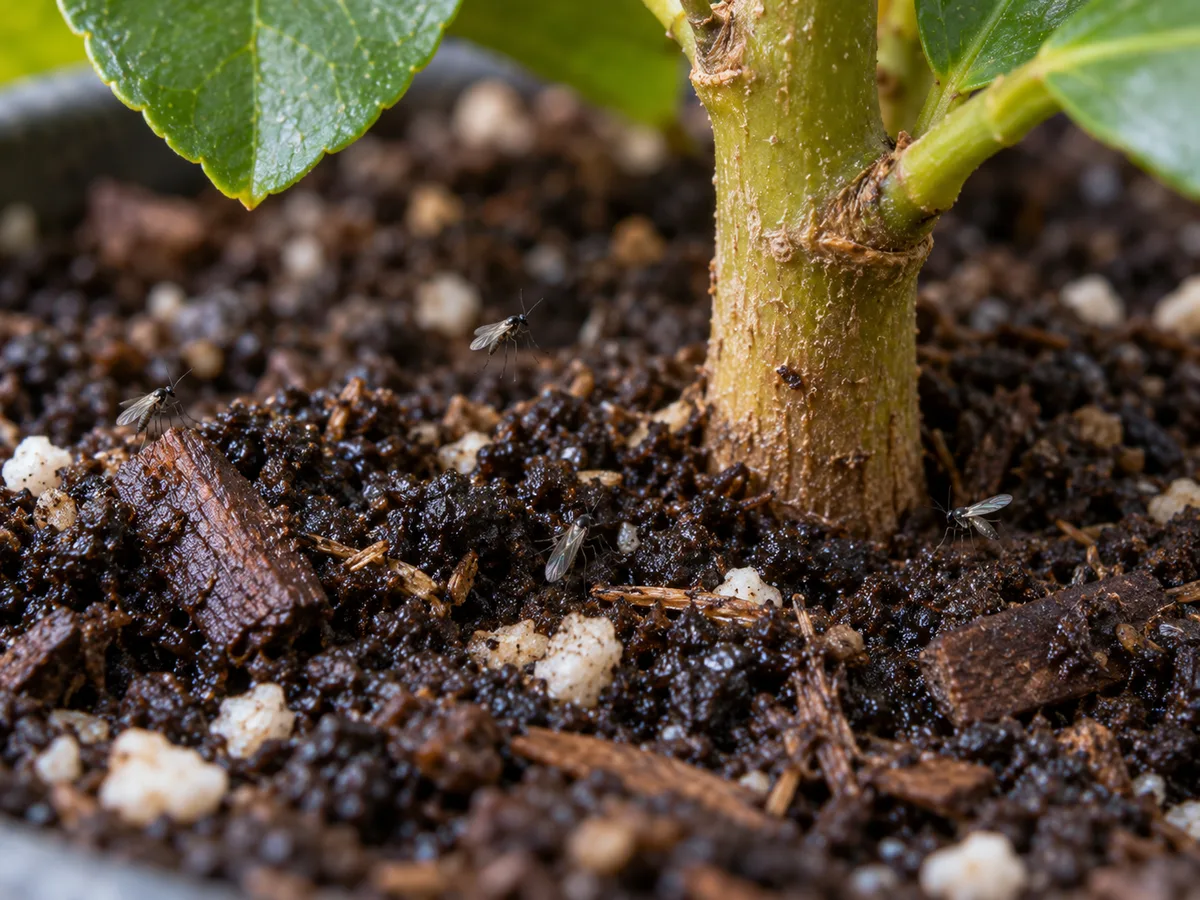
Close-up of adult gnats and moist surface mix at the base of a potted lemon tree; larvae hide just below this layer.
The tree itself rarely shows classic gnat damage at first. A mature grafted lemon tolerates some larval nibbling, so the earliest plant-side clues are indirect: the surface stays dark and damp for days, a faint musty smell rises after watering, and a white or grey film of algae or mold creeps across the top of the mix. Seedlings, fresh cuttings, or a recently repotted young graft are the exception. Their fine feeder roots sit exactly where larvae feed, and seedling collapse under heavy larval pressure is the one gnat outcome worth taking seriously on citrus.
Why indoor lemon trees get fungus gnats
Lemon trees invite gnats through their watering rhythm, not their leaves. A container lemon needs deep drinks, yet the top layer of a moisture-holding citrus mix can stay soggy for days while the deeper root ball is merely moist. Female gnats lay up to 200 eggs into the cracks of damp mix, usually in the top 2–3 inches, so a pot that is sprinkled every day or two becomes a permanent nursery. Our lemon tree watering guide sets the correct rhythm of deep watering followed by a real dry-down; gnats appear when that rhythm slips into frequent sips.
Three lemon-specific habits make it worse. First, trees brought inside for winter keep a summer-sized pot of mix but drink far less in cool, dim conditions, so the surface never dries. Second, decorative cachepots and deep saucers hold perched water against the drainage holes, which is exactly the moist, organically rich condition larvae need. Third, lemon trees drop spent blossoms, tiny fruitlets, and sticky honeydew-coated leaves onto the mix, and that debris grows the fungi larvae eat. A tree fed with heavy, incompletely composted organic top dressings stays attractive even longer, which is why UC IPM warns against raw organic matter in potting media.
How to confirm the cause
Work through these checks in order before treating anything.
- The tap test. Tap the side of the pot sharply and watch the surface. A puff of tiny dark flies that settles straight back onto the mix means fungus gnats. Strong, fast fliers circling fallen fruit instead suggest fruit flies, a different problem with a different fix.
- Trap for 48 hours. Cut a yellow sticky trap into small squares, mount them on skewers just above the soil, and count after two days. Yellow sticky traps both confirm the diagnosis and track whether your fix is working. Dozens of tiny dark flies confirm gnats; almost nothing on the card points elsewhere.
- Check the top layer. Scoop the upper 5 cm of mix. Gnat larvae are translucent white worms with shiny black heads living in that band. If the layer is cool, dark, and smells sour, the breeding habitat is confirmed and the lemon tree soil mix likely needs a drainage review.
- Lift the debris. Fallen blossoms, fruitlets, and leaf litter matted on the surface feed mold. Clear it and note whether the mix beneath is algae-coated, which is prime larval food.
- Rule out root rot. If the tree is wilting while the mix is wet, or leaves are yellowing despite damp soil, unpot one edge and inspect the feeder roots. White, firm roots mean gnats plus wet soil; brown, mushy, sour-smelling roots mean root rot on your lemon tree is the main diagnosis and gnats are the side effect.
Skip the potato-chunk test unless trap counts are ambiguous: raw potato pieces pressed into the mix attract larvae for inspection, but on a thirsty citrus the drying test plus sticky traps already answer the question.
The first fix to try
Let the top 5–8 cm of mix dry completely, and empty the saucer or cachepot every time you water. That single correction removes the egg-laying habitat, and extension guidance puts drying between waterings first because most of the gnat life cycle happens in that damp band. Push a finger or wooden chopstick to full depth before each drink; water only when the upper layer is approaching dry, then water deeply until it drains freely, as described in the lemon tree watering guide. Do not mist the canopy or sprinkle the surface in between, since both re-wet exactly the layer you are trying to dry.
Keep the tree in strong light while it dries. A lemon in full sun with 6–8 hours of direct light transpires and dries its pot far faster than one parked in a dim corner, and light keeps the canopy growing while roots recover. If the pot sits in a cachepot, lift the nursery pot out after watering, discard the runoff, and only return it once dripping stops.
Step-by-step recovery
Once the surface is drying between drinks, attack the remaining life stages in this order.
Week 1: trap the adults. Keep yellow sticky traps in the pot and one at window height nearby. Replace cards as they fill. Trap counts should fall within days; if they climb instead, some other pot in the room is breeding flies and needs the same treatment.
Weeks 1–4: drench the larvae. Apply Bacillus thuringiensis subspecies israelensis (Bti, sold as Mosquito Bits or Gnatrol) as a soil drench mixed exactly per label. Bti is one of the biological controls UC IPM lists for container media, alongside Steinernema nematodes and Hypoaspis predatory mites, and it targets larvae without spraying the foliage or fruit. Repeat at the label interval for at least three to four weeks to catch each overlapping generation of the three-to-four-week life cycle.
Week 2: refresh the surface. Scrape off the top 2–3 cm of algae-coated mix and any matted debris, and replace it with fresh, pasteurized citrus mix or coarse perlite-heavy topping. This removes eggs and fungal food in one move. Avoid sealing the pot with a thick decorative mulch afterward, since trapped moisture restarts the cycle.
Only if severe: consider repotting. Repot only when the mix stays soggy for a week despite correct watering, smells sour throughout, or roots look brown and mushy. Citrus resents unnecessary root disturbance, so a same-size refresh with fast-draining mix beats a bigger pot. Full repotting guidance for lemon trees covers timing in early spring before vigorous growth.
Judge recovery by falling trap counts plus firm, glossy new leaves. Gnat larvae do not scar foliage the way mites or thrips do, so new growth is your scoreboard, and a practical soil-soak and monitoring routine kept up for a full month prevents the classic rebound in week three.
What not to do
Do not spray the canopy with insecticide for a soil problem. Foliage sprays miss the larvae entirely and risk residue on fruit you plan to eat; insecticides generally are not recommended for home fungus gnat management. Do not fertilize a stressed, gnat-ridden tree to “help it recover” either. Feeding drought-style salts into damaged feeder roots burns them, and our lemon tree fertilizing notes say to hold feed until active growth resumes.
Do not drown the pot one more time “to flush the gnats out.” Brown, collapsing larvae wash nowhere useful, and saturation spreads any root-decay fungi already present. And do not stack repotting, root pruning, and drenches on the same day. A lemon tree handles one intervention at a time; pick drying plus traps first, then layer the Bti drench, then judge.
When to worry
A healthy mature lemon with gnats and firm green leaves is an annoyance with a straightforward fix. Escalate when any of these appear: seedlings or new grafts wilting with no dry spell in sight, a sour or rotten smell from the drainage holes, leaves yellowing and dropping while the mix stays wet, or white larvae writhing visibly across the surface despite two weeks of drying. Those signs point to overwatering damage or outright root rot rather than gnats alone. Compare against mold on the soil too, since surface mold and gnats share the same wet-top cause and often arrive together.
How to prevent it next time
Prevention is a watering habit plus a potting habit. Water on the finger test, not the calendar: deep drink, full drain, saucer emptied, then wait until the upper 5–8 cm approaches dry. Citrus growers who adjust irrigation after real rainfall rather than watering on schedule have fewer soggy-surface days, and the same logic applies to your indoor pot after a humid week. Keep the tree in its sunniest spot so the mix cycles properly, and review the free-draining citrus mix recipe at every repot rather than reusing tired, compacted media.
Buy only pasteurized container mix, store opened bags sealed and off damp floors, and quarantine every new plant for two weeks with its own sticky trap before grouping it with the lemon. Clear fallen blossoms and fruitlets weekly so fungi never get a foothold, and give indoor trees airflow rather than misting, since moving air dries the exact layer gnats need. Full background on the pest’s habits lives on our fungus gnats hub; everything above is how those habits play out specifically on a potted lemon.
Related lemon tree guides
- Lemon tree overview — sun, soil, and watering basics that set the dry-down rhythm gnats hate.
- Lemon tree problems hub — browse every diagnosed issue when gnats are only one symptom.
- Watering a lemon tree — use when pots stay damp for days; sets the finger-test depth.
- Lemon tree soil mix — use when mix compacts or drains slowly; fixes the habitat itself.
- Overwatering on lemon tree — use when leaves yellow and drop while soil stays wet.
- Mold on lemon tree soil — use when the surface films over; shares the wet-top cause.
- Root rot on lemon tree — use when roots smell sour or the tree wilts in wet mix.
- Yellow leaves on lemon tree — use when gnat-era yellowing needs a differential diagnosis.
Related tool
Use the Plant Problem Diagnosis Tool to narrow causes for fungus gnats on this plant before changing multiple variables at once.