Mold on Soil on Lemon Tree: Causes, Checks & Fixes
Quick answer
White or gray fuzz on lemon tree soil is usually harmless saprophytic fungus feeding on damp organic mix, not a disease attacking the roots. Scrape off the top 2-3 cm of affected mix, then hold off watering until the upper 5-8 cm is dry before watering deeply again.
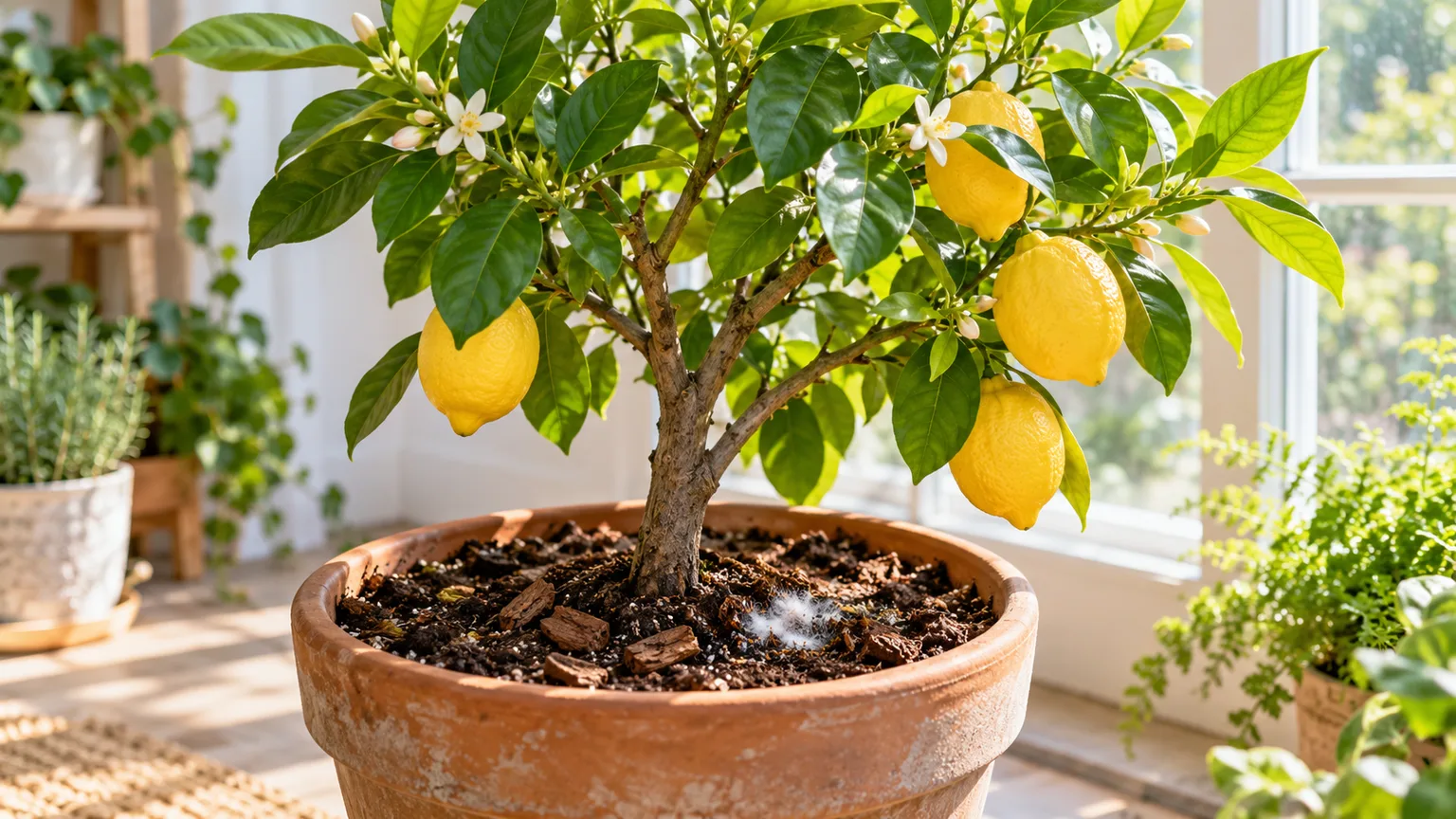
Mold on Soil on Lemon Tree: Causes, Checks & Fixes
This guide covers mold on soil on Lemon Tree. See also the general Mold on Soil guide, watering, and light pages for this plant.
Mold on Soil on Lemon Tree: Causes, Checks & Fixes
Quick answer
Your potted lemon tree (Citrus limon) has white or gray fuzz spreading across the soil surface, and you want to know whether the tree is in danger. In most cases it is not: the fuzz is a saprophytic fungus living on damp organic matter in the mix, not a citrus disease attacking the roots.
First step: scrape off the top 2-3 cm of moldy mix with a spoon, then do not water again until the upper 5-8 cm feels dry. That single correction removes the visible growth and breaks the damp-surface cycle that grew it. If the leaves stay glossy and the mix smells earthy, you are adjusting a watering habit, not rescuing a dying tree. For how constant wetness damages roots in general, see our soil health guide. On lemon trees, the pattern usually shows up as surface fuzz on a peat-heavy container mix that never gets its citrus dry-down between waterings.
What mold on soil looks like on a lemon tree
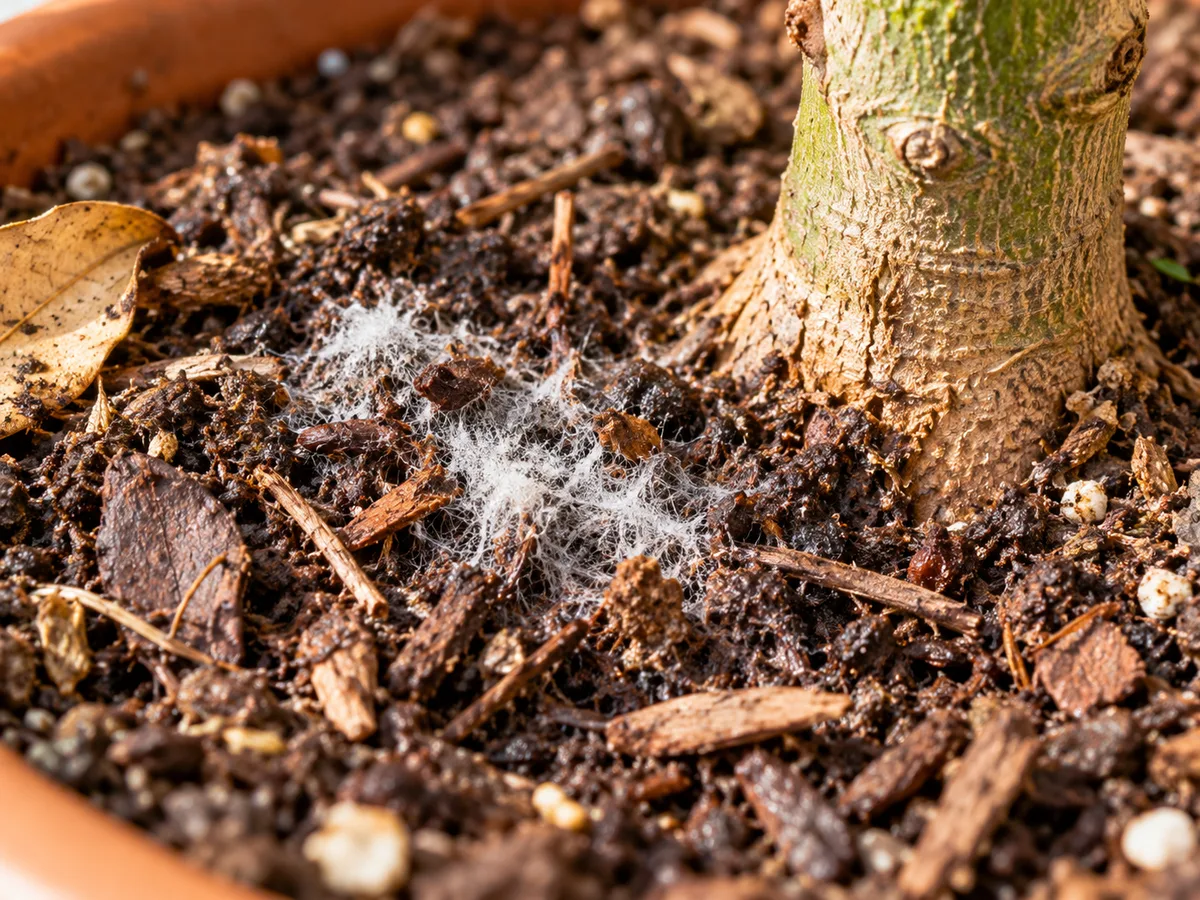
White saprophytic fuzz on lemon tree container mix — compare with firm feeder roots and an earthy smell below the surface.
Container citrus shows mold a little differently from small foliage houseplants, because the pot is large, the mix is chunky, and debris collects on the surface:
Typical harmless surface mold:
- White, gray, or pale tan cottony patches on top of the mix, sometimes threading between bark chips
- Growth thickest where fallen leaves, spent blossoms, or dropped fruitlets sit rotting on the surface
- Mix surface still cool and damp days after watering while the canopy looks normal
- White threads through the top centimeter that vanish when you stir the surface dry
Signs the wetness behind the mold is hurting the tree:
- Leaves yellowing or dropping while the soil is still wet — a classic overwatering signal on citrus
- A sour or swampy smell from the drainage holes instead of an earthy potting-mix scent
- Small dark flies rising every time you disturb the pot — fungus gnats breeding in the same damp layer
- Mold returning within days of scraping, even though you watered only once
- Soft shoot tips or stalled new growth during what should be active warm-season growth
Because a lemon tree is a vigorous evergreen, the canopy can look fine for weeks while the root zone stays too wet. Do not dismiss fast-returning mold as cosmetic on a container citrus.
When to use this page vs other lemon tree guides
This page is the symptom-first entry for fuzzy growth on the soil of a lemon pot. Use it to identify the surface growth and decide the first correction.
- Overwatering — go here when the pot stays heavy, leaves yellow while wet, or you need the full citrus dry-down rhythm
- Root rot — go here when the mix smells sour, roots probe soft and dark, or the tree wilts despite wet soil
- Fungus gnats — go here when small flies swarm the pot alongside the mold
- Watering guide — go here for the long-term deep-watering schedule after mold clears
- Soil guide — go here when peat-heavy mix stays soggy and you need a coarser citrus blend
- Yellow leaves — go here when foliage discoloration, not soil fuzz, is the main symptom
Why lemon trees get mold on soil
A lemon tree is a sun-loving fruit tree that needs 6-8 hours of direct light and a free-draining root zone, with deep watering followed by partial drying. Mold appears whenever the surface never gets that drying phase. The usual container-citrus triggers:
Small frequent sips instead of deep drinks. Dribbling a little water every day keeps the top centimeter permanently damp while the lower root ball swings between dry and wet. Citrus prefers the opposite: a thorough soaking, then a real dry-down of the upper 5-8 cm before watering again.
Saucer water and blocked drainage. A container lemon moved onto a patio saucer for summer, then left sitting in runoff, wicks moisture back up to the surface for days. UC IPM lists drainage and watering practice among the core cultural factors in citrus health.
Peat-heavy general potting mix. Standard indoor mix without enough bark and perlite holds surface moisture far longer than the coarse citrus blend (roughly 60% potting mix, 20% bark, 20% perlite or pumice) a lemon tree expects.
The overwintered indoor lemon trap. A tree brought inside for frost protection sits in a cool, dim room drinking far less, yet keeps its summer watering schedule. Evaporation collapses, airflow drops, and the surface stays damp for weeks — prime mold season for container citrus.
Surface debris and mulch. Fallen leaves, spent flowers, dropped fruitlets, and decorative moss give surface fungi extra dead material to digest while holding moisture against the soil.
The mold itself is usually not pathogenic. The risk is what it reports: a root zone staying wet in a species built for sun, air movement, and drainage.
How to confirm the cause
Work through these checks in order before scraping, feeding, or repotting:
- Finger test at citrus depth — Push a finger 5-8 cm into the mix, not just the top crust. Cool, clinging soil days after watering confirms the layer lemon roots care about is too wet.
- Pot weight — Lift the container. A heavy pot long after watering means saturation through the root ball, not just surface fuzz.
- Saucer and drainage check — Look for standing water in the saucer and confirm holes run freely. A dry surface over a flooded saucer still counts as overwatered.
- Smell check — Earthy is normal. Sour or rotten from the holes points toward anaerobic decay — escalate to the root rot guide.
- Salt crust vs mold — Lemon trees fed regularly with citrus fertilizer often develop a hard white mineral crust. Crust scrapes off as dry crystals with no threads; mold is fuzzy and smears. Texture and location separate the two faster than any spray.
- Root flare check — Brush mix away from the trunk base. The flare should sit slightly above the soil, never buried. Mold matted against a buried trunk stays damp against bark that should stay dry.
- Gnat check — Tap the pot and watch for tiny flies. Swarms mean larvae are feeding in the same damp organic layer as the mold — see fungus gnats.
- Light and season context — Mold arriving in a dim winter room, or on a shaded balcony after rainy weeks, strongly implicates low evaporation plus unchanged watering. UF/IFAS advises accounting for rainfall before watering citrus rather than watering on schedule.
If leaves are firm and glossy, the trunk flare is exposed, and the smell is earthy, you are dealing with surface fungus on wet mix — not citrus disease.
Lookalike comparison
| What you see | Likely cause | How to tell apart |
|---|---|---|
| Fuzzy white/gray threads on damp mix | Saprophytic surface mold | Smears when touched; soil beneath is damp and earthy |
| Hard white/tan crust, no fuzz | Fertilizer or hard-water salt buildup | Scrapes off as dry crystals; common on regularly fed citrus |
| Smooth green film | Algae on constantly wet surface | Same moisture fix; needs stronger sun and airflow |
| White cottony clumps on stems or leaf joints | Mealybugs, not soil mold | Insects have shape and sticky residue; see mealybugs |
| Fine white powder on leaves | Powdery mildew on foliage | Leaf symptom, not soil; different treatment path |
| White chunks mixed through the pot | Perlite in the mix | Hard granules with no smell and no spreading |
First fix for lemon tree
Scrape off the top 2-3 cm of moldy mix with a spoon and throw it in the trash, then withhold water until the upper 5-8 cm tests dry.
Extension guidance for indoor-plant soil fungus recommends discarding the affected upper layer rather than stirring spores back in. Clear fallen leaves, blossoms, and fruitlets off the surface at the same time, and empty the saucer completely. Leave the tree where it is — strong light and airflow dry the fresh surface faster than relocating it to shade.
One action, then observe. This tells you whether the problem was a damp surface or something deeper.
Step-by-step recovery
If mold was cosmetic and the root zone smells earthy:
- Wait until a finger at 5-8 cm depth feels dry, and the pot feels noticeably lighter.
- Water deeply until it runs from the drainage holes, then empty the saucer within half an hour.
- Return to the watering rhythm: deep soak, partial dry-down, repeat — never daily sips.
- Keep the tree in its sunniest position; not enough light slows evaporation and invites recurrence.
If mold returns within a week:
- Scrape again and replace the top layer with dry, coarse citrus mix per the soil guide.
- Verify drainage holes are fully open and the pot is not sitting in a cachepot of trapped water.
- Thin any decorative mulch or moss topping that holds surface moisture.
- Check the trunk flare is exposed above the mix line.
If fungus gnats appear with mold:
- Let the top few centimeters dry completely between waterings to break the gnat cycle.
- Add yellow sticky traps for adults and strip surface debris where larvae feed.
- Follow the fungus gnats guide if flies persist after two weeks of dry-down.
If the mix smells sour or leaves yellow while wet:
Stop surface fixes. Unpot enough to inspect feeder roots: white-tan and firm means the tree can recover with corrected watering; soft dark roots with a sour smell mean rot is underway — follow the root rot guide before the canopy collapses.
Mistakes to avoid
- Scraping mold without changing watering — the fuzz returns within days on a surface that never dries.
- Fertilizing a stressed, waterlogged tree — roots sitting in saturated mix cannot use feed, and salts add a crust that mimics mold. Feed only actively growing trees in draining mix.
- Spraying fungicide or peroxide as the first response — surface treatments do not fix drainage, saucer water, or a peat-heavy mix.
- Watering on a calendar through winter — an overwintered indoor lemon in cool, dim conditions may need water far less often than its summer schedule.
- Burying the trunk when topping up soil — added mix that covers the root flare holds moisture against bark and invites crown problems.
- Repotting on day one for mild mold — cosmetic fuzz usually clears with scraping and dry-down; save repotting for recurring mold, soggy mix, or suspected rot.
- Ignoring the saucer — runoff left standing re-wets the whole column from below no matter how careful the top watering is.
Recovery timeline
Surface mold usually stops spreading within a week of scraping plus a proper dry-down, and the fresh surface looks clean within one to two watering cycles. Expect:
- No new fuzz after the first deep watering with same-day saucer emptying
- A lighter pot and dry upper layer between drinks
- Firm new leaves with normal deep-green color
- Existing leaves holding rather than dropping
New fuzz within days, persistent gnats, or yellowing foliage mean the moisture fix was incomplete — revisit drainage, mix coarseness, and light before treating anything else. Remember that a lemon in a cool winter room dries far slower than the same tree in summer sun, so judge by finger test, not by days elapsed.
How to prevent it next time
Build the pot environment around citrus biology — sun, drainage, and real dry-downs:
- Water deeply only when the upper 5-8 cm approaches dry, and factor in recent rain for outdoor trees.
- Keep the tree in 6-8 hours of direct sun with open airflow around the pot.
- Use coarse, slightly acidic citrus mix and confirm fast drainage after every repot.
- Empty saucers after every watering; never let the pot sit in runoff.
- Refresh the tired top layer of mix each spring instead of burying the flare deeper.
- Clear fallen leaves, blossoms, and fruitlets off the surface weekly.
- Reduce watering frequency when the tree moves indoors for winter, and favor a cool, bright spot over a hot, dim room.
- Feed with citrus fertilizer only during active growth in draining mix, and flush salts if crust builds up.
Follow the watering guide and soil guide for the long-term routine once the surface is clean.
When to worry
Treat mold as urgent when:
- The mix smells sour or swampy from the drainage holes
- Leaves yellow or drop while the soil is still wet
- Shoots wilt even though the pot feels heavy
- Mold, gnats, and stalled growth appear together
- Scraping plus corrected watering fails twice in a row
Those combinations point to root-zone decay rather than surface fungus. Inspect roots promptly per the root rot guide — container citrus declines fast once feeder roots are damaged, but catches it early when mold is the first visible clue.
Mild fuzz on an otherwise vigorous tree in draining mix is low urgency. Fix the watering habit and it usually resolves without losing leaves or fruit.
FAQs
Can I still eat lemons from a tree with mold on its soil?
Yes — surface soil mold does not contaminate the fruit. Wash harvested lemons normally and fix the damp mix so the tree keeps the vigor it needs to ripen good fruit.
Should I repot my lemon tree because of soil mold?
Usually not. Scraping plus a real dry-down clears mild cases. Repot only when mold returns within days, the mix stays soggy, drainage is blocked, or root inspection shows soft dark roots.
Is white mold on lemon tree soil dangerous to pets?
The soil fungus itself is not the documented hazard — lemon foliage, peel, and plant material contain essential oils and psoralens that are toxic to cats, dogs, and horses. Keep pets from chewing leaves or fallen fruit regardless of mold.
Why does mold keep coming back on my indoor overwintering lemon?
Cool dim rooms collapse evaporation while owners keep summer watering habits, so the surface never dries. Cut watering frequency, maximize window light, add gentle airflow, and keep the pot out of a water-filled saucer until spring.
Does cinnamon or hydrogen peroxide fix soil mold on citrus?
They may suppress surface fuzz briefly, but neither corrects the wet mix, blocked drainage, or dim conditions that grew it. Scrape, dry the root zone properly, and fix light and drainage first — reserve additives for stubborn recurrence, not the opening move.
Related lemon tree guides
- Lemon Tree overview — sun, citrus mix, and container basics
- All Lemon Tree problems — full symptom index for citrus
- Watering — deep-soak rhythm with the 5-8 cm check
- Soil — coarse citrus blend that dries between drinks
- Overwatering — heavy pots, yellow leaves, and saucer traps
- Root rot — sour mix and soft roots when mold signals deeper trouble
- Fungus gnats — companion pest breeding in the same damp layer
- Not enough light — dim rooms that slow evaporation
- Yellow leaves — foliage symptoms that separate stress from surface mold
- Fertilizer — citrus feeding without salt-crust buildup
Related tool
Use the Plant Problem Diagnosis Tool to narrow causes for mold on soil on this plant before changing multiple variables at once.