Low Humidity on Lemon Tree: Causes, Checks & Fixes
Quick answer
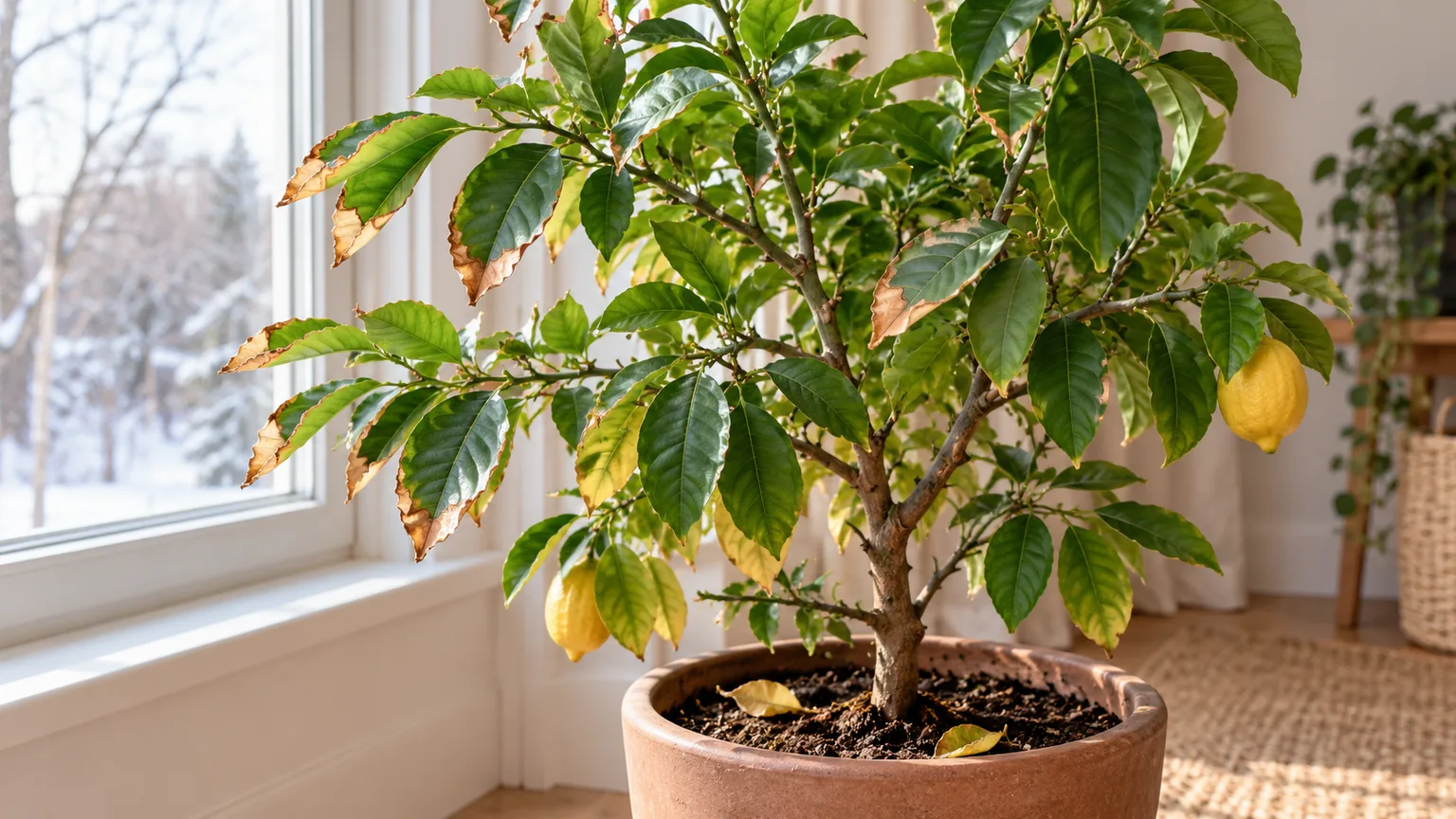
Low humidity on a lemon tree shows up as crisp brown leaf edges plus sudden leaf, bud, or young-fruit drop while the soil is still reasonably moist, usually after the tree moves indoors for winter. First step: move the tree away from heater vents and hot drafts into the brightest cool spot you have, then raise local humidity with a gravel tray or humidifier.
Low Humidity on Lemon Tree: Causes, Checks & Fixes
This guide covers low humidity on Lemon Tree. See also the general Low Humidity guide, watering, and light pages for this plant.
Low Humidity on Lemon Tree: Causes, Checks & Fixes
Quick answer
A lemon tree hit by dry indoor air crisps at the leaf edges first, then starts shedding otherwise green leaves, buds, or marble-sized fruitlets even though the potting mix is still damp. This is the classic overwintering complaint: citrus wants a more humid atmosphere than centrally heated homes usually provide, and the shock often lands within weeks of moving a terrace tree indoors.
First step: get the tree out of the dry-air blast zone. Move it away from heater vents, radiators, fireplaces, and hot window glass into the brightest cool spot available. Do that before buying gadgets or changing water and fertilizer, because no humidifier compensates for leaves sitting in a stream of furnace air.
For how dry air injures houseplant foliage in general, see our low humidity hub. On a lemon tree, the pattern usually shows up as edge-crisped glossy leaves plus sudden indoor leaf drop on a sun-loving evergreen that kept every leaf outdoors all summer.
What low humidity looks like on a lemon tree
On Citrus limon the damage has a recognizable signature. Leaf margins turn tan and papery while the center of the blade stays green, and the crisped edge feels dry and brittle rather than soft or water-soaked. Older interior leaves yellow and drop first, but in a bad dry spell recently hardened new flush growth crisps at the tips too.
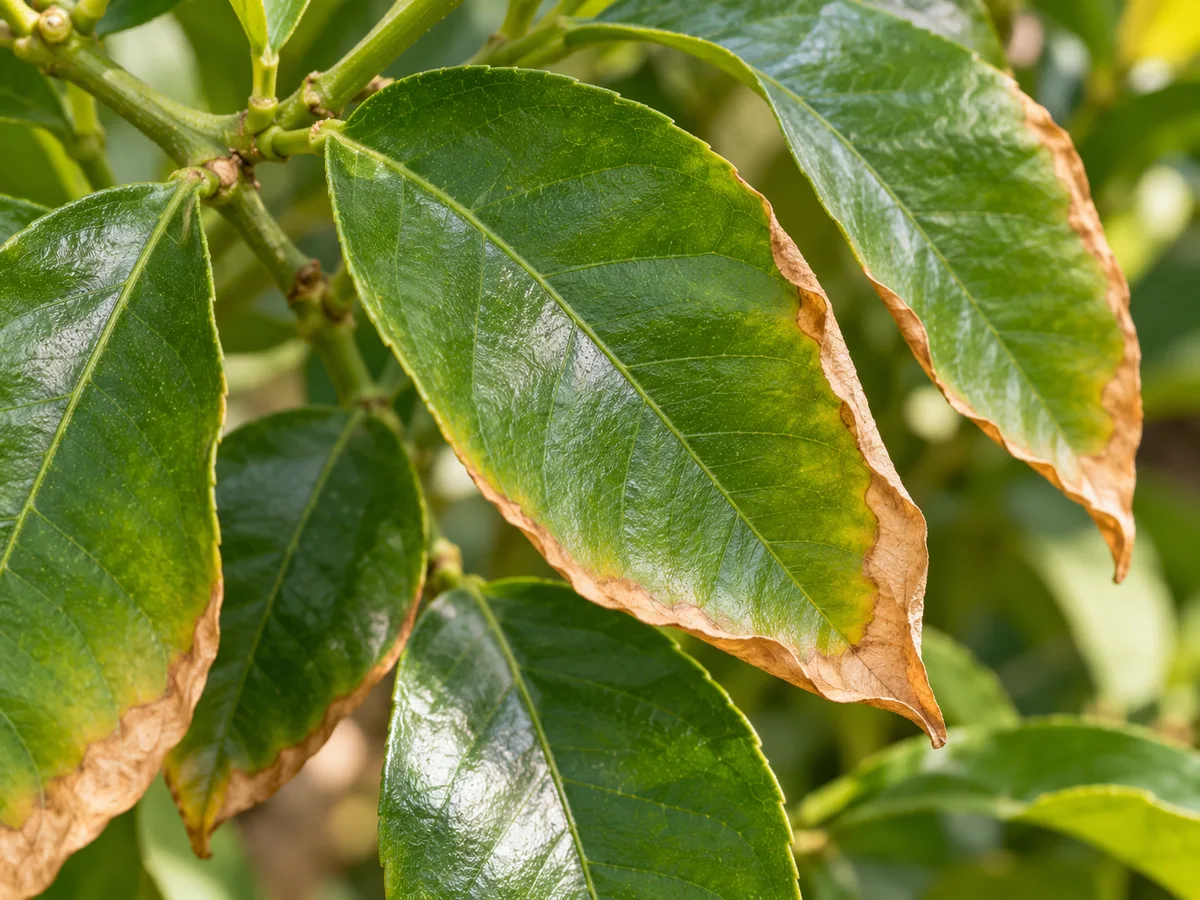
Crisp brown margins on glossy lemon leaves with green centers - the classic dry-air signature before leaves drop.
Buds and young fruitlets are the next casualties. Flower buds that formed in late winter may dry and fall unopened, and pea-sized lemons abort after a sudden move into hot dry air. This is distinct from poor pollination drop: humidity-stressed buds look desiccated, with papery petals, rather than simply failing to set. Glossy evergreen foliage that dulls, cups slightly inward, and sheds from the inside of the canopy while twigs stay green and flexible is textbook dry air on citrus, not decline of the whole tree.
Why indoor lemon trees dry out: the overwintering trap
A lemon tree is a subtropical evergreen fruit tree, not a tropical foliage plant, and its calendar creates the trap. It spends summer outdoors in sun and breeze holding a full canopy, then gets carried into a heated living room in autumn where light halves and humidity can fall below 30 percent. Cool or fluctuating temperatures, dry air, and cold draughts cause citrus to drop leaves and fail to flower — and a lemon tree moved straight from terrace to furnace room gets all three at once.
Three lemon-specific factors make it worse than on the average houseplant:
The evergreen canopy transpires all winter. Citrus should keep its leaves through winter, which means it needs light, humidity, and steady watering together. A deciduous plant can ride out dry heated air half-dormant; your lemon keeps pumping water out of hundreds of glossy leaves while short days limit replacement.
Heater vents target exactly where the tree sits. Lemon trees are large and get parked where they fit — beside the patio door, over the floor vent, next to the radiator under the big window. Every one of those positions bathes foliage in moving hot air that strips leaf moisture far faster than still room air at the same humidity reading.
The light crash multiplies the damage. A tree that fruited in 6 to 8 hours of direct sun now sits in a dim corner, so it cannot photosynthesize enough to replace shed leaves. Dry air plus dim light is the combination that defoliates indoor citrus; either stress alone is usually survivable. Compare notes with not enough light on lemon tree if the canopy is thinning in a dark room.
How to confirm it is dry air, not watering
Dry-air damage and watering faults overlap on citrus, so run this check before treating:
- Feel the mix at depth. Push a finger 5 to 8 cm into the container mix, the depth in the lemon tree watering guide. If that layer is slightly moist but edges still crisp and leaves still fall, suspect the air, not the roots. Soggy mix with yellowing points to overwatering on lemon tree instead.
- Map where damage sits. Crisping worst on the vent-facing side, near radiators, or against hot glass while the room-facing side looks fine is an air problem. Uniform wilt with dry, shrunken mix is underwatering on lemon tree — and underwatered leaves feel limp before they crisp.
- Check the newest growth and buds. Dry air aborts buds and crisps young leaf tips while twigs stay pliable. Soft blackened shoot tips with wet soil suggest root trouble; see root rot on lemon tree if the root ball smells sour.
- Look under the leaves for mites. Dry heated rooms are mite rooms. Hold white paper under a branch, tap sharply, and watch for crawling specks. Stippled, dusty-looking leaves with fine webbing at the leaf axils mean spider mites on lemon tree are compounding the humidity stress.
- Review the timeline. Damage starting one to three weeks after moving indoors for winter, or when the heating first kicks on, is the dry-air fingerprint. Gradual decline through summer outdoors is a different problem — start with the lemon tree problems hub.
The first fix to try
Move the tree away from every heat source and cold draft into the brightest cool position you have — directly in front of your sunniest window, but pulled back from hot glass and at least a meter from any vent or radiator. Cool and bright beats warm and dim every time for overwintering citrus; a frost-free porch, glazed balcony, or cool bright room around 10 to 15°C with strong light is ideal if available.
Do only this first, then wait three to four days. If fresh leaf drop slows, you have confirmed the diagnosis and can build the humidity setup below on solid ground.
Step-by-step recovery
Once the tree is out of the blast zone, work through these in order:
Set up steady local humidity. Stand the pot on a tray of gravel or clay pellets with water held just below the pebble surface so the compost never wicks it up — the standard citrus humidity method of a gravel tray kept below waterlogging level. For a large tree in a very dry room, a room humidifier near (not blasting at) the canopy does more than any pebble tray; running a humidifier through winter plus pebble trays raises the relative humidity citrus needs. Grouping it with other plants helps a little.
Mist wisely or not at all. Misting is beneficial in the morning so leaves dry before cool evenings, but it buys minutes of relief, not hours. Treat it as a supplement to the tray or humidifier, never the whole strategy.
Recheck watering separately. Dry air does not excuse soggy roots — giving citrus enough water is critical from planting through the fruit-bearing years, yet winter indoor trees use far less than summer outdoor ones. Water deeply when the upper 5 to 8 cm dries, let excess drain fully, and never leave the pot standing in water.
Wash the foliage. Rinse leaves top and underside with lukewarm water every week or two through winter. This knocks back dust and early mites — periodic foliage washing deters scale, whitefly, and spider mites on indoor citrus — and slightly raises canopy humidity for an hour afterward.
Trim only dead tissue. Snip fully brown edges and remove fallen leaves from the pot surface, but leave partly green blades working. Crisp margins never heal, so judge recovery by new flushes that emerge clean and hold, not by old leaves improving.
Hold fertilizer and repotting. Do not feed a shedding, stressed tree and do not repot midwinter unless roots are clearly failing. Resume citrus feed when strong new growth holds in spring, per the lemon tree fertilizer guide.
Spider mites love this exact situation
The one pest to rule out on every dry-air lemon is the mite complex. Citrus red mite and related mites are established indoor citrus pests, and warm dry rooms let populations explode while the tree is too stressed to outgrow them. Suspect mites when glossy leaves turn dull with pale stipple dots, fine silk appears where leaf meets twig, and damage spreads fastest on the warmest side of the canopy.
Confirm with the white-paper tap test above, then start with weekly forceful lukewarm rinses of leaf undersides — the safest first move on an edible fruit tree indoors. Escalate to horticultural oil or insecticidal soap only with a confirmed infestation, following label rates exactly and keeping sprays off open fruit you plan to eat. Full ID and treatment steps are in the spider mite guide linked below.
Lookalikes to rule out
- Underwatering: whole leaves wilt limp first and mix pulls away from the pot; dry-air leaves crisp while stems stay turgid.
- Overwatering and root rot: persistent yellowing with wet mix, heavy leaf drop, sometimes sour soil smell — even humidity-stressed trees rot if overwatered in winter.
- Cold damage: blackened or water-soaked patches after a frosty night near glass, not papery tan edges; lemon needs frost protection for container roots.
- Brown tips: salt and fertilizer burn browns tips symmetrically across the canopy regardless of vent position; dry air follows the airflow map.
- Wilting and drooping: heat wilt recovers overnight while dry-air crisp never un-crisps.
Mistakes to avoid
Do not seal the tree in a plastic tent or tiny bathroom to force humidity — stagnant wet air invites sooty mold and scale while blocking the light citrus demands. Do not overwater to compensate for crispy leaves; winter root rot kills more indoor lemons than dry air does. Do not prune hard in response to leaf drop, since flowers and young fruit form on productive shoots you would be cutting away — light shaping guidance is in the lemon tree pruning guide. And do not blast a humidifier directly into the canopy overnight, which leaves foliage wet in cool air.
Recovery timeline
Leaf drop usually slows within one to two weeks of leaving the blast zone with steadier humidity. Expect no visible improvement in already-crisped leaves — watch instead for buds holding instead of aborting and new flushes emerging glossy. A moderately defoliated tree releafs over four to eight weeks once spring light returns, provided twigs stayed green and flexible. If bare twigs turn brittle and snap, or no buds swell by late spring, that wood is dead — prune back to living tissue and reassess light and roots via the lemon tree overview.
How to prevent it next winter
Harden the tree off in stages each autumn: move it to shade outdoors for a week, then into its cool bright winter spot before the heating runs constantly. Keep that spot reserved all season — away from vents, with the gravel tray in place from day one rather than after damage appears. Run the humidifier from the week heating starts, check mites monthly with the paper test, and keep watering matched to the cooler room per the lemon tree soil and watering rhythm. When nights stay reliably above about 10°C, reverse the process gradually so foliage raised indoors does not scorch in sudden full sun.
When to use this page vs other Lemon Tree guides
- This page: crisp edges plus leaf, bud, or fruitlet drop in heated indoor air with reasonably moist mix.
- Lemon tree watering guide: use when the mix is clearly too wet or too dry at 5 to 8 cm deep.
- Not enough light: use when thinning happens in a dim room with leggy pale shoots rather than crisp edges.
- Spider mites guide below: use when stippling, webbing, or paper-test specks confirm mites as the main driver.
- Lemon tree problems hub: browse all 16 documented issues when the pattern does not match this page.
Related Lemon Tree guides
- Lemon Tree overview — sun, soil, frost protection, and thorn and pet-safety basics
- Lemon Tree watering — the 5 to 8 cm check that separates dry air from dry roots
- Lemon Tree light — giving indoor trees the bright cool spot they need
- Lemon Tree soil — fast-draining citrus mix that prevents winter root rot
- Brown tips on Lemon Tree — salt and fertilizer burn vs humidity crisp
- Spider mites on Lemon Tree — confirming and clearing mites in dry rooms
- Underwatering on Lemon Tree — limp wilt vs dry-air crisp
- Wilting on Lemon Tree — heat and water wilt that recovers overnight
Related tool
Use the Humidity Calculator to narrow causes for low humidity on this plant before changing multiple variables at once.