Drooping Leaves on Lithops: Causes, Checks & Fixes
Quick answer
A Lithops that looks droopy is usually overwatered, mid leaf-renewal, or thirsty in season. Stop watering, squeeze the body gently, and check the growth cycle before doing anything else.
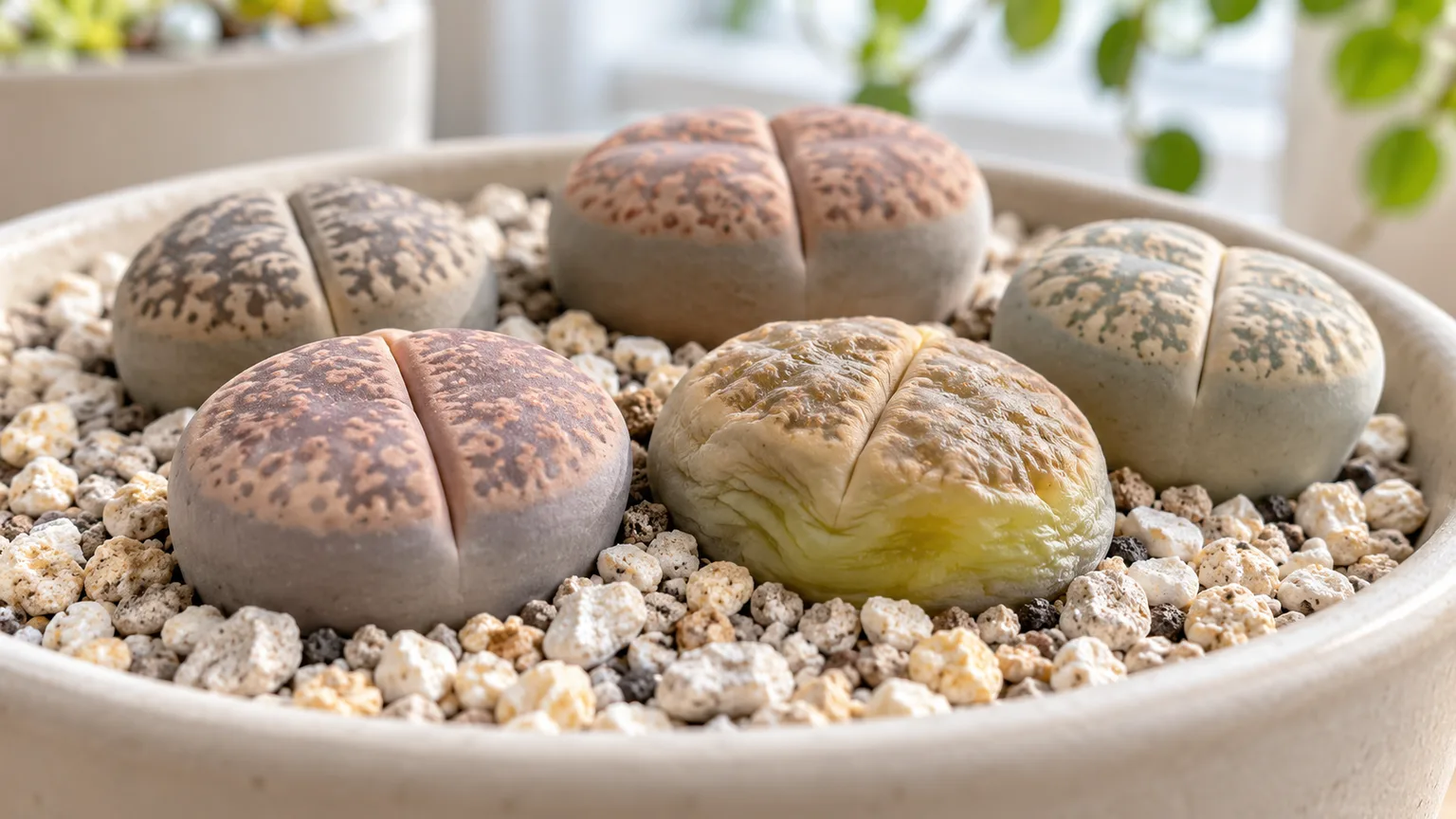
Drooping Leaves on Lithops: Causes, Checks & Fixes
This guide covers drooping leaves on Lithops. See also the general Drooping Leaves guide, watering, and light pages for this plant.
Drooping Leaves on Lithops: Causes, Checks & Fixes
Quick answer
Lithops do not droop the way leafy houseplants do. A “droopy” living stone is usually a paired leaf body that has gone soft and slumped from too much water, wrinkled and sunk from thirst in season, or stretched tall and leaned from weak light.
First step: stop watering and gently squeeze the body. Firm means you likely have thirst, light, or a normal seasonal phase. Soft, translucent, or sour-smelling means excess water and possible rot, and every extra day of wet grit makes rescue harder.
For how drooping works in ordinary leafy houseplants, see our drooping leaves guide. On Lithops, the pattern usually shows up as a sinking or leaning stone-like body rather than hanging foliage, so the checks below are built around the plant’s paired-leaf anatomy.
What drooping looks like on Lithops
Each Lithops plant is a single pair of fused, stone-like leaves with a central fissure, sitting almost at soil level and usually only about an inch above the grit (NC State Extension). Because there are no stems or hanging leaves, “drooping” on this plant means one of four things: the body sinks lower into the mix, the two halves spread or lean apart, the whole plant tilts sideways, or the flanks go wrinkled and deflated.
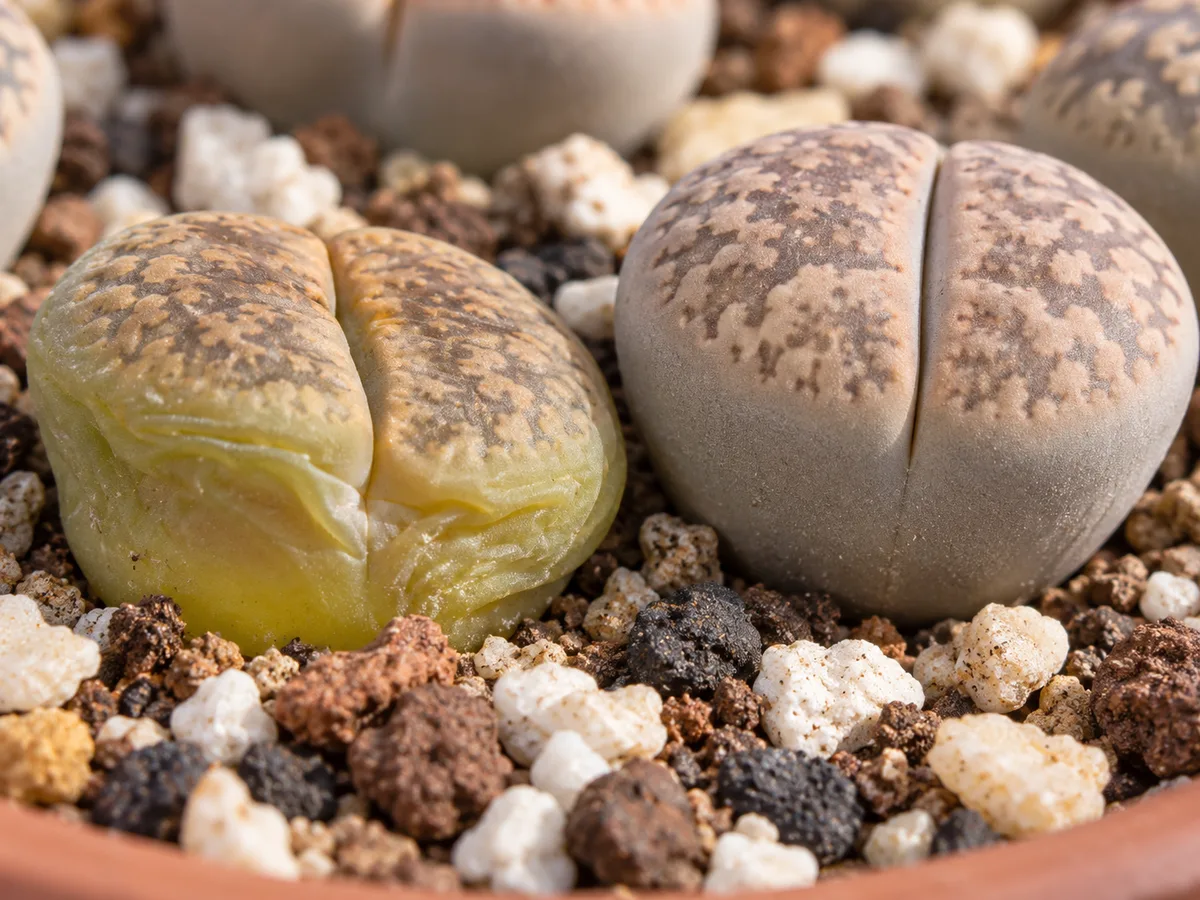
Soft flanks and a sinking body on Lithops, compared against firm healthy tissue on a neighboring head.
A thirsty Lithops in its watering season wrinkles finely on the flanks but still feels hard when you press it lightly, and it often sits slightly lower while staying upright. An overwatered one looks swollen or glassy first, then softens, yellows, and may split along the sides as cells take up more water than the skin can hold (Succulent Alley). A light-starved plant stretches upward and pales instead of slumping, which looks like leaning rather than wilting. During the annual leaf renewal, the old pair naturally papering over the new pair inside can look deflated, and that is normal rather than a problem.
Why a Lithops slumps: the paired-body squeeze test
Forget stems and petioles. Diagnosis on Lithops starts with your fingertip. Wash your hands, then press one flank of the body very gently. There are only two answers that matter.
Firm but wrinkled means the water-storage tissue is intact and the plant is either thirsty in season or feeding a new leaf pair from the old one. These plants store enough water in their thick paired leaves to survive months without rain, so fine wrinkling alone is not proof of drought. Note when you last watered and whether the fissure shows a new pair pushing up before deciding.
Soft, squishy, or translucent means excess water has overwhelmed the tissue. NC State Extension lists yellowing and mushy leaves, brown spots, splitting, and root rot as the direct consequences of overwatering living stones. Mushy tissue that collapses when touched, a dark waterlogged base, or a plant that rocks loose in the grit means roots have likely failed and the body is running on stored water. Do not water a soft Lithops “to perk it up”; that is how overwatering on Lithops turns into root rot on Lithops.
The leaf-renewal calendar that fakes drooping
Lithops grow one new leaf pair per year, and the old pair dies back while feeding the new growth inside (NC State Extension). During winter and early spring the old leaves thin, wrinkle, and can look alarmingly deflated while the new pair forms. Watering during this phase keeps the old leaves alive too long and weakens the plant, which is the classic beginner mistake (PlantGeh).
Check the calendar before you check the watering can. NC State Extension describes the rhythm plainly: water from late spring to early summer, stop during summer dormancy, soak about every two weeks in late summer during active growth and bloom, and give no water at all through winter and early spring while old leaves die and new leaves form. A wrinkled, sinking Lithops in winter is usually on schedule. The same appearance in late summer after weeks of dry grit usually means a real drink is due. When in doubt, the Lithops watering guide maps each phase to what the body should look like.
Weak light and the leaning stone
Insufficient light causes etiolation: the body stretches taller than its normal squat profile, pales, and leans toward the window. New growers read this lean as drooping, but the squeeze test tells the truth because an etiolated Lithops still feels firm. Living stones want roughly four to five hours of morning sun with afternoon shade, and full sun where it does not scorch.
If your plant is tall, pale, and leaning but hard, move it into stronger light gradually over two to three weeks rather than baking it in one afternoon. A sudden jump from a dim shelf to harsh midday sun scorches the flanks, and scorched tissue never recovers its pattern. Compare notes with not enough light on Lithops and leggy growth on Lithops to confirm the light angle before changing water.
How to confirm the cause at home
Work in this order so one check does not contaminate the next:
- Squeeze test - Firm points to thirst, light, or renewal. Soft or translucent points to excess water.
- Season check - Winter or early spring wrinkling with a new pair visible in the fissure is renewal. Late-summer wrinkling on bone-dry grit is thirst.
- Grit check - Push a dry toothpick to the bottom of the pot. Damp mix plus a soft body confirms overwatering; powder-dry mix plus a firm wrinkled body confirms thirst.
- Base inspection - Lift the pot and look at the drainage hole and soil line. Dark, glassy, or sour-smelling base tissue means rot is active.
- Anchor test - Nudge the body very gently. A healthy taproot holds it steady; a plant that wobbles or lifts out has lost roots and needs the unpotting check below.
If the plant lifts out or the base is dark and smells off, unpot it over newspaper, shake off the grit, and look at the taproot. White or tan firm roots can recover. Brown mush with a sour smell is rot: trim to firm tissue with a clean blade, dust the cut with sulfur or cinnamon if you have it, and let the plant callus in open air for several days before it touches dry grit again. Full sequencing is in the root rot on Lithops guide.
The first fix to try
Stop all watering and move the plant to bright, airy light while you read the squeeze test. That single pause is the whole first fix because every Lithops problem except genuine seasonal thirst gets worse with another drink. Set the pot where air moves, keep rain and mist off the body, and give yourself three to five days of observation.
- Soft body on damp grit: keep it dry, and unpot for the root inspection above if it does not start firming.
- Firm wrinkled body in the active-growth window on dry grit: give one deep seasonal soak and then wait.
- Firm wrinkled body in winter or renewal: do nothing. Let the old pair finish feeding the new one.
- Firm stretched leaning body: fix the light gradually, not the water.
One targeted correction first, then watch. Stacking a repot, a soak, and a feed in the same weekend masks which change worked and usually finishes a stressed living stone.
Step-by-step recovery
Once the first pause has told you which pattern you have, follow the matching track.
Overwatered but roots alive: keep the plant dry for at least two to three weeks, longer in cool weather. Do not mist; Lithops take no water through the body in any useful amount, and surface moisture invites the mold on soil on Lithops cycle. When the grit is dry all the way down and the body has firmed, resume with a light seasonal soak rather than a drench (Garden for Indoor).
Rotted roots: after trimming and callusing, replant into completely dry mineral grit, roughly 80 to 90 percent pumice, coarse sand, and fine gravel with only a little cactus mix, in a shallow pot with drainage. Wait a week before the first light watering, and only in the active-growth window. Out-of-season rootless plants should sit dry until the season turns.
Thirsty in season: water from below or soak until a little runs from the drainage hole, then let the pot dry fully before repeating. A healthy body plumps over several days, not hours. If it never plumps, suspect dead roots rather than more thirst.
Etiolated: correct light over weeks, accept that the stretched shape is permanent, and judge success by new compact growth at the center, not by the old body shrinking back.
Recovery on Lithops is measured in weeks to months because the plant grows so slowly. Stable firmness and a clean new leaf pair emerging from the fissure are the win conditions. A split side or a translucent patch scars over or dries out; it does not un-split.
Lookalike symptoms and when to switch guides
| What you see | Likely cause | Key check |
|---|---|---|
| Soft, glassy, splitting body on damp grit | Overwatering | Squeeze test fails; see overwatering on Lithops |
| Brown mush at base, sour smell, loose plant | Root rot | Unpot and inspect taproot; see root rot on Lithops |
| Fine wrinkles, firm body, dry grit in late summer | Underwatering | One seasonal soak plumps it; see underwatering on Lithops |
| Limp look plus yellowing all over | General decline | Compare with wilting on Lithops and yellow leaves on Lithops |
| Tall pale lean, firm body, dim spot | Low light | Light history; see not enough light on Lithops |
| Papery old pair, new pair inside, winter | Normal renewal | Do not water; confirm rhythm in Lithops watering |
Mistakes to avoid
Do not water a soft Lithops to “perk it up”; soft means too much water already. Do not mist the body, which keeps the fissure damp and invites splitting and fungal spots without reaching the roots. Do not repot into rich peat-heavy mix, which holds the moisture that mineral grit is meant to shed; the Lithops soil guide shows the mineral ratio that keeps the taproot breathing. Do not fertilize a slumping plant, since feed cannot fix water or light problems and burns compromised roots. And do not peel the papery old leaves during renewal; they are still feeding the new pair, and tearing them opens wounds.
Lithops care cross-check
Drooping is almost always cultural on this species, so audit the setup: brightest safe window or grow light, shallow breathable pot with drainage, gritty mineral mix, and water only inside the growth window. Keep nights above about 40°F, since cold plus damp grit stalls roots fast (NC State Extension). The genus evolved in the arid sandy hills and stony ridges of southern Africa (Kew Plants of the World Online), so when the pot stays wet longer than a few days, the container or mix is wrong for the plant, not the other way around. The Lithops overview, Lithops light, and Lithops problems hub tie the full routine together.
When to worry
Escalate when the body turns fully translucent like jelly, when dark rot climbs from the base, when several heads in a cluster soften within days of each other, or when a sour or fermented smell rises from the grit. A single head lost to rot does not always doom its neighbors; unpot the cluster, separate firm heads, and repot them into fresh dry grit. If every head is mush from crown to taproot, the plant is not saveable, and the honest move is replacing it with a sharper mix and a stricter calendar. Pests such as mealybugs and spider mites can weaken a plant already stressed by water, so scan the fissure while you inspect; the mealybugs on Lithops and spider mites on Lithops guides show where they hide on stone-like bodies.
When to use this page vs other Lithops guides
- Lithops watering guide - Use for the seasonal soak-or-dry calendar behind most slumps.
- Lithops problems hub - Browse all 16 common issues on this species.
- Overwatering on Lithops - Use when the squeeze test says soft and the grit stays damp.
- Root Rot on Lithops - Use when the base darkens, smells, or the plant lifts loose.
- Underwatering on Lithops - Use when a firm wrinkled body in season needs a real drink.