Wilting on Lithops: Causes, Checks & Fixes
Quick answer
A wrinkled Lithops is usually thirsty in the right season, rotting from wrong-season water, or simply papering old leaves to feed the new pair. Withhold water first, then read wrinkle direction and body firmness: firm with side wrinkles usually wants a seasonal soak, while soft, translucent, or sour-smelling bodies mean rot — no water will fix that.

Wilting on Lithops: Causes, Checks & Fixes
This guide covers wilting on Lithops. See also the general Wilting guide, watering, and light pages for this plant.
Wilting on Lithops: Causes, Checks & Fixes
Quick answer
A wrinkled, sunken Lithops is usually one of three things: thirsty in the right season, rotting from water given in the wrong season, or simply papering its old leaves to feed the new pair growing inside. First, withhold water and run the squeeze test — press the body flanks very gently with a fingertip. Firm with fine side wrinkles points to thirst; soft, translucent, or sour-smelling points to rot, and no amount of water fixes rot.
For how lost turgor works in plants generally, see our wilting symptom guide. On Lithops the pattern is inverted from most houseplants: these are stemless living stones that survive months on stored water, so the calendar matters more than the watering can. Read the body before you reach for water, because one wrong-season soak during leaf replacement can finish a plant that thirst alone never would.
What wilting looks like on Lithops
Lithops has no stems or true leaves to droop — each plant is two succulent leaves fused together into a single stone-like body with a fissure across the top. So “wilting” here means the body loses its tight, pebble-firm fullness: the flat top sinks or dimples, fine wrinkles crease the side walls, the whole head sits lower in the grit, and colors look dull and dusty instead of taut and patterned. Lithops sits in the Aizoaceae family from the arid zones of southern Africa, and its paired, stone-like leaves evolved to shrink below soil level in drought — mild wrinkling is a designed survival posture, not always a cry for help.
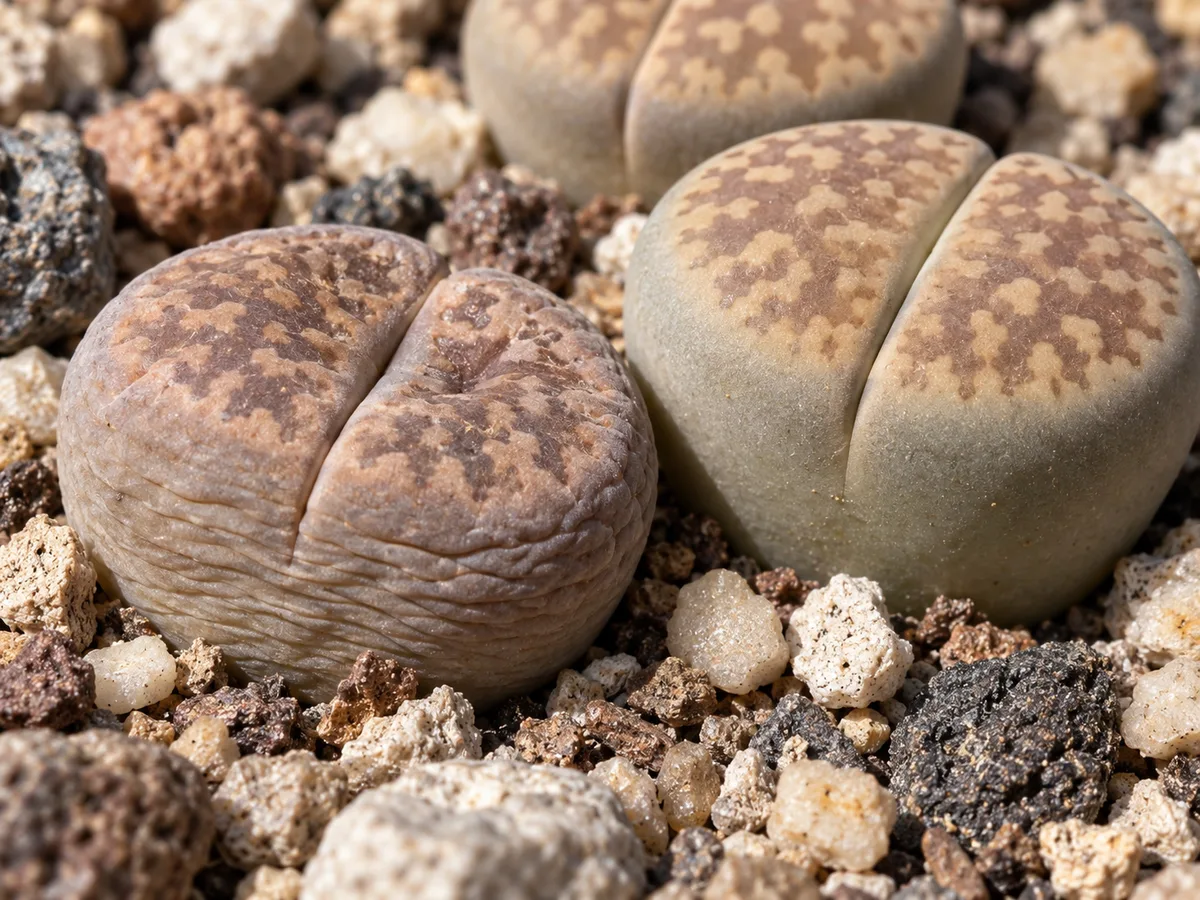
Wrinkled flanks and a sunken crown on Lithops — compare firm thirst wrinkles against soft translucent rot tissue before watering.
Severe cases look different from simple thirst. Overwatered bodies turn yellowish-translucent, feel soft or jelly-like, and may split or burst along the flanks. A rotting plant often smells faintly sour at the soil line and wobbles loosely in the mix because the taproot has died back. If you see brown edematous blotches or a body that weeps when touched, skip every watering instruction on this page and go straight to the unpotting steps under recovery.
Why Lithops wilt: the leaf-pair cycle decides everything
Every mature Lithops replaces its entire above-ground body once a year. A new leaf pair grows inside the old one, draining the old pair’s stored water until the old leaves turn papery and peel away. During that transfer window — roughly late winter into spring for indoor growers — the plant should look shriveled. Watering then refills the old leaves so they cannot finish feeding the new pair, and the old leaves stay big and choke off the new leaves. Most first-year losses trace to this exact mistake, not to neglect.
Outside the transfer window, Lithops grow in autumn and winter and rest through summer, which is the reverse of a cactus calendar. Wilting in autumn with a bone-dry mineral mix is usually honest thirst during the active window. Wilting in summer heat is often protective dormancy shrinkage — the plant is sitting out the dry season as it evolved to do, and soaking it “to help” invites collar rot. Wilting in late winter while papering is the cycle working correctly, and the worst response is interrupting it.
Wrong-season water kills through the taproot. Lithops grows an abrupt taproot beneath the body that needs a gritty, fast-draining mix and days of dry air between drinks. Organic-rich potting soil, a deep glazed pot with no drainage, or a topdressing of moss that traps moisture keeps that root zone wet for weeks, and the body collapses from the base upward even though the top still looks like a stone. Light matters too: a plant starved of sun stretches tall and pale, and that stretched tissue wilts faster and rots easier. Give 4–6 hours of direct sunlight daily on a bright sill, shifting gradually so a dim plant does not scorch.
The wrinkle-direction test: thirsty vs rotting
Growers of living stones use wrinkle direction as the fastest field diagnosis, and it holds up well. Fine horizontal wrinkles creasing across the flanks and top of a still-firm body usually mean the plant has drawn down its stored water — classic thirst, especially in the autumn window. Soft vertical wrinkles running down the sides of a body that feels puffy, translucent, or mushy point the other way: the cells took up more water than the tissue could hold, a pattern tied to vertical wrinkles on overwatered plants that show up alongside yellowing and soft spots.
Confirm with the squeeze test. A thirsty Lithops feels like a firm grape — it gives almost nothing under gentle pressure. A rotting one feels like an overripe berry, denting easily or weeping fluid. Then check the fissure: if the center crack is widening with a firm new pair visible inside and the outer leaves are drying evenly from the edges, you are watching the annual replacement, not a disease — leave it alone. If the fissure gapes with brown mush inside, or one old leaf stays fat while its twin dries, water interrupted the transfer and you need the recovery steps below.
How to confirm the cause at home
Work through these checks in order before changing anything:
- Squeeze gently. Firm body with flank wrinkles means thirst or normal papering. Soft, translucent, or denting tissue means excess water and possible rot — do not water.
- Read the fissure. New pair emerging evenly inside drying old leaves is the normal cycle. Mush, odor, or one-sided swelling inside the crack is rot or interrupted transfer.
- Probe the mix to the bottom. Push a dry wooden skewer to the pot base. Lithops mix should be dry all the way down between waterings; dampness weeks after the last drink means the pot or mix is wrong, and persistent wetness explains the wilt better than thirst does.
- Lift and sniff at the collar. A sour or mushroomy smell at the soil line, or a body that rocks loosely, signals taproot death. A firmly anchored plant with dry grit points to simple underwatering in season.
- Check the calendar and light. Autumn wilt after weeks dry in bright light is thirst. Summer wilt in heat is usually dormancy. Winter-spring shriveling while papering is the transfer window — treat it as underwatering only if the body is firm and no new pair is forming.
- Unpot only on suspicion of rot. If the body is soft or smells off, slide the plant out and inspect roots: white and firm is alive, brown and slimy is dead. Do not unpot a firm papering plant just to look — you will break the fine roots it needs for the autumn window.
First fix for a wilting Lithops
Withhold all water and complete the squeeze, fissure, and skewer checks above before adding a single drop. This one pause prevents both failure modes: it stops rot from advancing in a wet plant and stops you from “rescuing” a papering plant mid-transfer. Most Lithops advice fails because owners water first and diagnose later; on living stones the order must reverse. Once the three checks point clearly to thirst in the active window, give one deep seasonal soak and then leave the plant alone — and if they point to rot or the transfer window, keep the plant dry and move to the recovery steps that match.
Step-by-step recovery by cause
If the body is firm with thirst wrinkles in autumn or early winter: water deeply once in the morning so excess evaporates fast, let the pot drain completely, and return the plant to its bright spot. Expect the flanks to smooth out over several days. Do not repeat for at least a week or two, and only when the grit is dry to the base again. Track the rhythm with the Lithops watering guide rather than a fixed weekly schedule.
If the plant is papering old leaves onto a new pair: do nothing except provide bright light and dry air. Let the old leaves crisp fully until they peel away like paper; the new pair feeds entirely from them. Resume watering only once the husks are completely dry. If one old leaf stays fat while the other dries, the transfer was interrupted rather than clean — check the lookalike table below to route it correctly.
If the body is soft, translucent, or smells sour: unpot immediately over newspaper and shake off all mix. Trim brown mushy roots with sterilized scissors back to white firm tissue, dust nothing, and lay the plant on dry grit in bright indirect air for several days until all cuts callus. Repot into a shallow terracotta pot with drainage using a mineral-heavy mix, bury the body just above the soil line, and withhold water for at least a week before the lightest sip. If no firm root or core tissue remains, the plant is finished — compost it and sterilize the pot. For the full root-level protocol, use the rot row in the lookalike table to reach the dedicated guide.
If summer heat wilted a dormant plant with dry grit: move it to bright indirect light with airflow rather than deep shade, and give at most a light surface sip only if flanks wrinkle severely — enough to moisten the top half inch, not a full soak. Resume normal autumn watering when nights cool and the fissure begins to open for bloom. Heat-wilted plants pair well with a check of mold on soil on Lithops if humidity has been high, since damp stale air invites surface problems even without watering.
Recovery timeline: what honest recovery looks like
A thirsty Lithops in season firms up within days of one correct soak and looks fully plump within one to two weeks. Papering plants work on a slower clock: the old pair may take four to eight weeks to crisp completely, and watering impatience is the only thing that can spoil it. Rot recovery is measured in weeks to months — new white root tips and a body that stops softening are the first wins, and visible plumping may wait until the next active window.
Watch the newest tissue, not the old. Progress means the plant stops softening, the fissure area stays clean and dry, and any new pair emerges firm with crisp patterning. Warning signs mean escalation: spreading translucency, fresh splitting after watering, sour odor, or a body that detaches from its roots. Old papery husks and faint thirst lines on the flanks never “heal” — they are spent tissue — so judge everything by what the living center does next. If growth stalls for a full season with no firming, compare with slow growth on Lithops to check whether light or mix is the deeper limiter.
Lookalikes: wilting vs splitting, sunburn, and pests
| What you see | More likely | Where to go |
|---|---|---|
| Whole body wrinkled but firm, grit bone-dry, autumn | Underwatering in season | Underwatering on Lithops |
| Body soft, translucent, splitting or bursting after watering | Overwatering, cell damage | Overwatering on Lithops |
| Base mushy, plant loose, sour smell | Root rot from wet mix | Root rot on Lithops |
| Tall stretched body, pale color, leaning to light | Too little light weakening tissue | Not enough light on Lithops |
| Whole head slumped with intact firm bodies nearby | General posture collapse, not turgor loss in one head | Drooping leaves on Lithops |
| White cotton tufts in the fissure with sticky residue | Mealybugs, not wilt | Mealybugs on Lithops |
Sunburn deserves a special note because it mimics wilt: a plant moved abruptly from dim shelf to full sun can bleach and cave on the sunward side within days. That damage is one-sided and papery, while true wilt is symmetrical. Shade acclimation over one to two weeks prevents it, and scorched patches never regain pattern — only the next leaf pair comes in clean.
Mistakes that kill wilting Lithops
- Watering on a schedule. Lithops runs on seasons, not weekdays. A calendar drink during the transfer window or summer dormancy rots plants that needed nothing.
- Misting the body. Surface water sits in the fissure and invites rot without ever reaching the taproot. Water the grit, never the crown.
- Repotting a papering plant. Breaking fine roots mid-transfer starves the new pair from both ends. Repot only in early active growth when the mix has visibly failed.
- Using moisture-holding soil. Standard potting mix stays wet for weeks around a taproot built for quartz grit. If the skewer test never comes out dry, the mix — not your watering — is the disease.
- Fertilizing a stressed plant. A wilted body cannot use feed, and salts in damp mix burn the few living roots left. Skip fertilizer entirely until the plant firms up and the new pair is established.
- Stacking rescue treatments. Unpotting, trimming, repotting, soaking, and spraying in one afternoon compounds every injury. Do one intervention, then give the plant dry bright weeks to answer.
Lithops care cross-check
Anchor recovery to the plant’s real baseline from the Lithops overview: maximum bright light with gradual acclimation, a mineral mix of pumice, coarse sand, and fine gravel that dries within days, and a shallow breathable pot with drainage. Browse the full Lithops problems hub if more than one symptom is present — combined stretching plus wilting usually means light failed first and watering failed second. Keep winter air cool and dry, keep summer nearly rainless, and let the grit, the fissure, and the squeeze test — never the calendar — call each watering decision.
Related Lithops guides
- Lithops overview — baseline light, gritty mix, and seasonal rhythm for the whole plant.
- Lithops problems hub — browse all 16 recorded issues when symptoms overlap.
- Underwatering on Lithops — use when the body is firm, wrinkled, and dry in the active window.
- Overwatering on Lithops — use when bodies are soft, translucent, or splitting after drinks.
- Root rot on Lithops — use when the base is mushy, loose, or sour-smelling.
- Drooping leaves on Lithops — use when whole heads slump rather than wrinkle.
- Not enough light on Lithops — use when stretching and paleness accompany the wilt.
Use this wilting page when the question is turgor — firm vs soft, thirst vs rot, water now vs wait. Use the sibling pages above when the primary clue is posture, light shape, or visible decay rather than wrinkle texture.
Related tool
Use the Plant Watering Calculator to time your next soak for wilting on this plant — enter pot size and grit mix so the tool spaces drinks by actual dry-down instead of a fixed weekly schedule.