Malabar Spinach Fertilizer Guide: Feed Poi Saag Vines
Malabar Spinach Fertilizer Guide: Feed Poi Saag Vines
Malabar Spinach Fertilizer Guide: Feed Poi Saag Vines
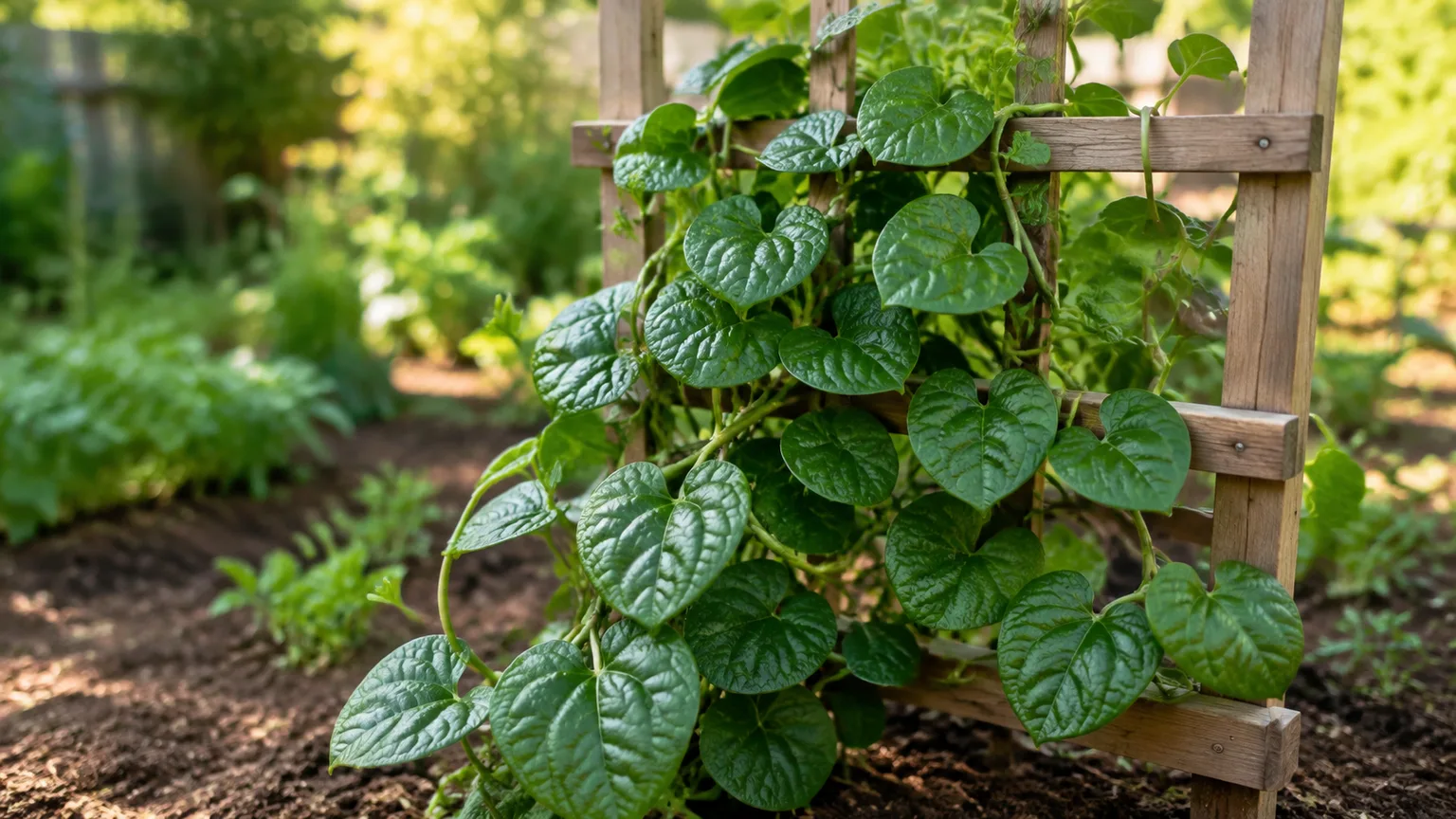
Malabar spinach (Basella alba)—poi saag, vine spinach, or Ceylon spinach—is grown for thick, semi-succulent leaves and tender stem tips on a heat-loving twining vine, not for a single fruit or head. That harvest rhythm should drive every feeding decision on a terrace grow bag or kitchen-garden trellis. A fast summer climber can look deep green while staying short if compost was skipped at planting, if cool nights stall uptake, or if a small pot is fed like a manure-rich field pit.
The practical rule for most growers is build fertility with mature compost and a moisture-retentive mix first, then add bottled fertilizer only to fill a gap you can see or measure. On many Indian beds that already received well-rotted FYM, extra bagged feed stays light; on a balcony container it is usually essential because nutrients leave every time water drains.
This page covers when, what, and how much to feed Malabar spinach vines. For mix recipes and pH, use the Malabar Spinach soil guide. For moisture that moves nutrients into roots, see Malabar Spinach watering. For sowing windows, trellis setup, and how poi saag differs from palak, start at the Malabar Spinach overview.
Malabar Spinach Fertilizer: The Quick Answer
Compost-Rich Soil Before Bottled Feed
NC State Extension describes Malabar spinach in well-drained, moisture-retentive soil rich in organic matter, noting that although the plant tolerates fairly poor soils, it does much better in rich soils when summer heat kicks in. Fork mature compost or well-rotted manure into beds or pots before sowing or transplanting, then treat soluble fertilizer as a supplement—not a substitute for that organic base.
Nitrogen-Forward Feeds During Active Summer Growth
Leaf quality depends on steady vegetative growth while nights stay warm. Epic Gardening recommends a high-nitrogen fertilizer to promote healthy leaf growth on this vine, starting in fertile spring soil and continuing on a three- to four-week schedule through the active warm season. Match that rhythm to visible vine expansion and regular picking, not to a cool-season spinach calendar.
Why Vine Spinach Feeding Differs From Palak
Heat-Season Basella alba vs Cool-Season Spinacia oleracea
Do not copy feeding advice meant for winter palak (Spinacia oleracea). True spinach is a cool-season rosette with a short productive window; Malabar spinach is a frost-tender tropical vine that often waits for summer heat before it sizes up. University of Wisconsin-Madison Extension notes little progress while night temperatures stay below about 60°F (16°C)—feeding heavily during that stall mostly raises salt risk without producing tender leaves.
Repeated Leaf and Tip Harvests on a Fast Climber
NC State Extension highlights rapid growth once temperatures get hot on a sturdy trellis. Every cut of glossy foliage exports nitrogen and potassium from a root zone that may be only a few litres in a container. Nutrition should track ongoing leaf production, not a one-time preseason dump copied from root crops or dormant ornamentals.
What Malabar Spinach Draws From the Root Zone
Nitrogen for Glossy Leaf Expansion
Nitrogen drives chlorophyll and new leaf tissue—the edible crop on Basella alba. Uniformly pale older leaves, thin new shoots, and a vine that climbs slowly despite full sun and even moisture often point to low nitrogen after you rule out cool weather stall. Wisconsin Extension lists fertile, moist, well drained soils as the baseline; compost-rich mixes usually supply steady nitrogen when they were built correctly at planting.
Phosphorus, Potassium, and Micronutrients on Long Vines
Phosphorus supports root establishment after germination; potassium helps overall vigor on long stems that may reach several metres in one warm season. Malabar spinach does not need an extreme “bloom booster” middle number for kitchen harvests—you are delaying stress flowering, not chasing seed set. A balanced vegetable formula at planting plus moderate nitrogen-forward top-ups during peak vine run fits this species better than fruiting-crop schedules aimed at tomatoes or gourds.
Compost-First Bed and Pot Prep
FYM, Mature Compost, and Neem Cake in Indian Kitchen Gardens
Terrace growers often fill large pots with compost-heavy mixes similar to the hub’s 50/30/20 loam-compost-perlite blend described in the Malabar Spinach soil guide. Well-rotted cow manure (FYM) worked into pits or grow bags before transplant supplies slow nitrogen through the warm season; neem cake or similar organic amendments can supplement micronutrients when used at modest package rates, not as a substitute for drainage and even watering.
Extension Baseline: Organic Matter and Rich Soils
NC State Extension stresses high organic matter and rich soils for best performance, even though the species survives leaner ground. That is your signal to invest fertility before heat arrives: compost incorporation, optional slow-release vegetable granules at label rates for the pot volume, then lighter soluble feeds only once vines actively climb. Pair bed prep with the Malabar Spinach light guide so pale leaves are not misread as nitrogen deficiency when the real issue is cool nights or deep shade.
Stage-by-Stage Feeding Calendar
Think in stages tied to warmth and harvest, not one calendar for every bed size.
Seedlings and Transplant Week
Scarified seed started indoors needs little beyond a compost-rich medium until roots fill the cell. Avoid strong soluble feeds on tender cotyledons. Transplant into final soil or pots before vines tangle, as covered in the Malabar Spinach propagation guide. If the final mix included mature compost and any slow-release charge at planting, hold bottled feed until new growth accelerates in true summer heat.
Main Vine Climb and First Harvests
When stems race up the trellis and you begin picking young leaves, nutrition should be steady and moderate. A sensible home pattern—after compost at planting—is half-strength balanced or nitrogen-forward liquid vegetable feed every three to four weeks while growth is vigorous, in line with Epic Gardening’s Malabar spinach feeding interval. Apply near the root zone, not as overhead sprays on dense foliage, and water first if the mix is dry.
Peak Picking Weeks Through Monsoon Heat
During repeated harvests of poi saag, the vine exports nutrients in every handful you cut. Maintain the interval you established at vine run, adjusting only if older leaves yellow uniformly and new tips stay small and watering is correct. Light compost top-dressing every few weeks on terrace pots—without burying stems—can supplement bottled feed with lower salt risk. Redirect excess vegetative energy with timely picks and training from the Malabar Spinach pruning guide rather than chasing length with more nitrogen alone.
Terrace Grow Bags vs In-Ground Trellis Beds
Container Leaching and Slow-Release Patterns
Containers have a small root volume and no surrounding soil bank to mine for nutrients. Heavy monsoon rain can wash nitrogen from raised beds and grow bags faster than in-ground plots. Many terrace growers combine slow-release vegetable fertilizer at transplant with dilute soluble feed every three to four weeks during active growth—Penn State Extension suggests slow-release at planting and soluble feed every two to four weeks for container vegetables—never stacking full-strength weekly liquids on top of a fresh slow-release charge without reading the label.
Field Pits With Manure History
In-ground kitchen gardens that receive annual FYM or compost may need only the compost-first pattern extension sources describe for Basella alba: rich organic soil at prep, then light side-dressing if leaves pale mid-season. The error on terraces is copying field kilograms-per-pit charts from commercial manuals into a single 30–40 L grow bag.
Choosing Organic, Slow-Release, and Soluble Products
Vegetable-Labelled NPK and Half-Strength Liquids
Choose products labelled for vegetables, follow dilution and frequency on the label, and measure by pot volume or bed area rather than guessing. Epic Gardening suggests high-nitrogen products for leaf-forward growth; a balanced formula such as 10-10-10 used at half strength on a schedule is a common home pattern when leaves—not flowers—are the goal. Never apply dry fertilizer to dry, cracked soil; water first, feed second, then water lightly to settle—see Malabar Spinach watering.
Top-Dress Compost Without Salt Crust
Mature compost worked lightly into the surface supplies slow nitrogen and improves moisture retention in heat. Avoid repeated thick layers that smother stems at the soil line or create anaerobic pockets. If white salt crust appears on the pot rim, pause bottled feed, flush with plain water where drainage is good, and resume at half strength only when new growth looks normal.
India Sowing Windows and When to Feed
Pre-Monsoon and Post-Frost Warm-Up
On most plains, growers sow after frost risk passes—often February–March for early summer harvest or again when nights stay warm for monsoon plantings. Fertilizer timing should follow active vine expansion, not the calendar alone. For early sowings, compost at bed prep plus any slow-release used at transplant, then soluble feeds on the three- to four-week schedule once the vine is clearly climbing in heat.
Cool Spring: Wait for Growth Before Heavy Doses
NC State Extension notes disappointing growth when temperatures stay below 80°F (27°C). A bright but cool spring site can look well lit yet produce a small vine until true summer arrives—extra nitrogen during that stall rarely fixes the problem and can burn roots in cold, wet mix. Match feeding to the Malabar Spinach light guide and patience through the warm-up.
Warning Signs of Too Little or Too Much Fertilizer
Pale Leaves vs Stress Flowering and Bitterness
Older leaves turning uniformly yellow while new growth is small, a vine that stops climbing despite full sun and even moisture, and thin, dull foliage can point to low fertility after you rule out drought and cool weather. Wisconsin Extension links dry soil to early flowering, after which leaves turn bitter—fertilizer cannot restore tender poi saag once that shift happens. Fix moisture and harvest timing before chasing nitrogen.
Salt Burn on Semi-Succulent Foliage
Crusty white salts on the soil surface, brown leaf margins, and sudden scorch after a strong dose suggest excess soluble fertilizer or stacked products. Pause feeding, restore even watering, and resume at half strength only when new tips look healthy. Semi-succulent Malabar spinach leaves show burn faster than waxy houseplant foliage.
When to use this page vs other Malabar Spinach guides
Use this fertilizer guide when leaves look pale, vine growth stalls in warm weather, or you are planning a feeding calendar for a new terrace pot. Use Malabar Spinach watering when wilting, sour soil, or stress flowering is the main issue. Use Malabar Spinach soil before sowing to fix drainage and compost ratios. Use Malabar Spinach light when vines are leggy in shade or stalled in cool spring brightness. Use Malabar Spinach repotting for seedling moves into final trellis pots—not as a mid-season fertility fix.
Related Malabar Spinach guides
- Malabar spinach overview — species identity, warm-season sowing, trellis basics, and poi saag vs palak.
- Malabar Spinach watering — even moisture through peak heat; links to stress flowering.
- Malabar Spinach soil — fertile, moisture-retentive mixes and pH for Basella alba roots.
- Malabar Spinach light — full sun needs when interpreting pale, slow vines.
- Malabar Spinach pruning — harvest cuts that keep the trellis productive without excess nitrogen push.
Conclusion
Good Malabar spinach nutrition is compost-first, nitrogen-forward during active heat, and timed to repeated leaf harvests on a fast vine. Build fertility before summer growth takes off, use vegetable feeds at sensible intervals once stems climb, and taper as cool weather or stress flowering ends the leaf stage. Read the leaves, the pot label, and the weather together—tender poi saag comes from aligned sun, moisture, harvest timing, and measured feeding, not from the strongest bottle on the shelf.
Try the Fertilizer Dilution Calculator with malabar spinach pre-selected to check dilution before you feed a terrace pot.