Malabar Spinach Watering Guide: Moisture Checks & Schedule
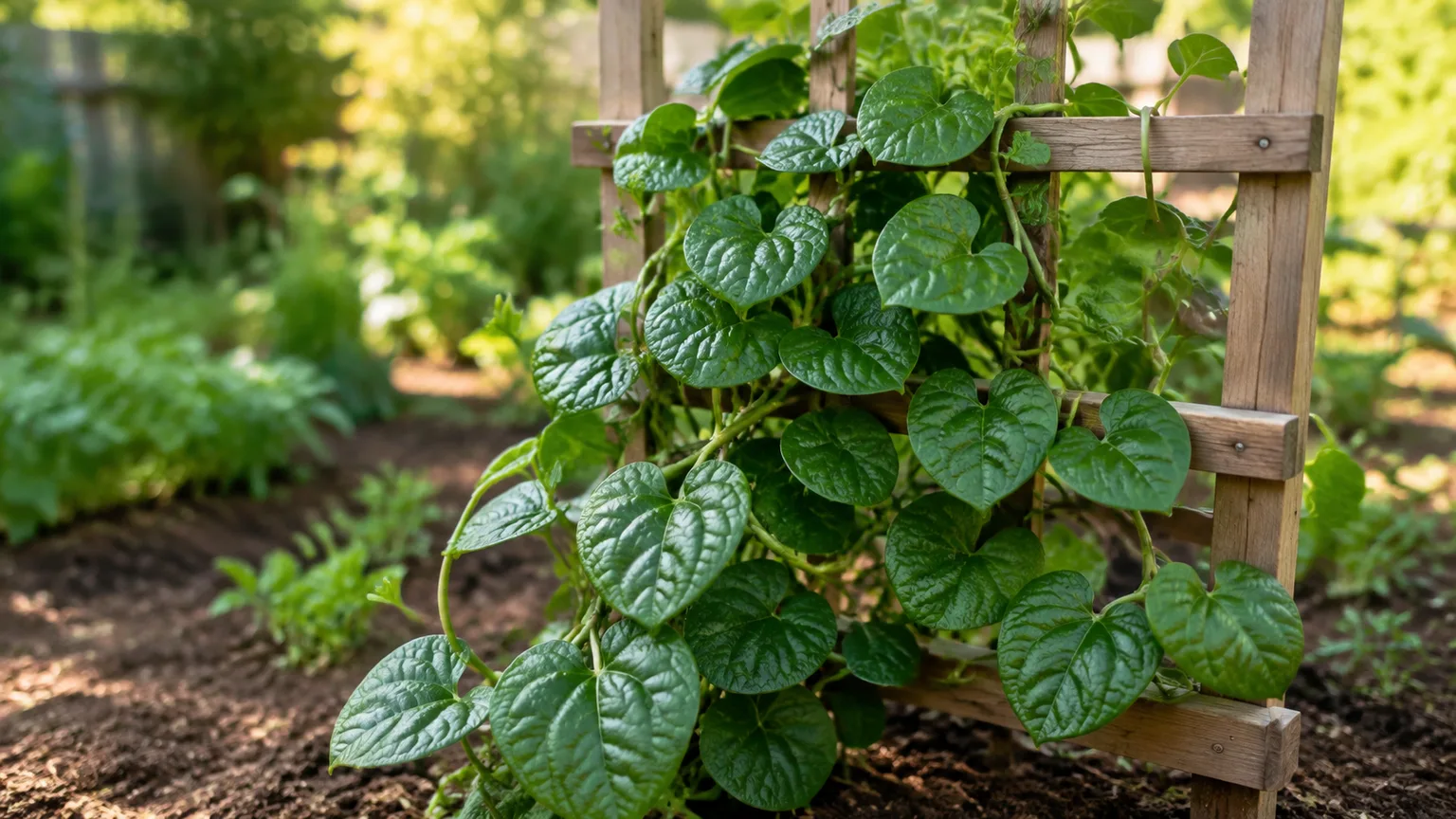
Malabar Spinach Watering Guide: Moisture Checks & Schedule
Malabar Spinach Watering Guide: Moisture Checks & Schedule
Malabar spinach watering: the quick answer
Malabar spinach (Basella alba), also sold as poi saag, vine spinach, or Indian spinach, is a heat-season twining vine with thick, semi-succulent leaves—not a cool-weather palak bed crop like true spinach (Spinacia oleracea). NC State Extension describes a plant that thrives in warm, sunny sites when roots sit in well-drained, moisture-retentive, organic-rich soil and warns that dry soil or extreme heat can push it into flower, after which leaves turn bitter. University of Wisconsin-Madison Extension adds that Malabar spinach does best in fertile, moist, well drained soils and that you should provide consistent moisture through the season, because plants tend to go to flower if the soil gets too dry.
The practical rule for this species: check the upper 2–3 cm (about an inch) of mix or soil and water deeply when that layer begins to dry—not on a fixed weekday, and not after letting the root zone bake through a heat wave. In peak summer on a sunny terrace, many growers check every 1–2 days; during cool, slow-growth weeks, the same vine may need water only every few days. Pair watering with the Malabar spinach soil guide so moisture can drain instead of pooling, and with the overview for trellis setup and warm-season sowing.
Why even moisture matters for Basella alba (and not true spinach)
If you have grown winter palak, your instinct may be wrong here. True spinach wants cool soil and tolerates drying somewhat between drinks in mild weather. Malabar spinach is built for tropical Asian heat and humidity; it grows little until nights stay warm and accelerates once summer temperatures climb. NC State Extension notes disappointing growth when temperatures stay below about 80°F (27°C) and strong performance in high heat into the 90s°F, provided soil stays moist. That combination—high leaf area on a climbing vine, full sun, and fast summer growth—means water demand rises with heat, not with calendar month alone.
Fast vines transpire more than rosette greens
A supported Malabar spinach vine can cover a trellis in one warm season, with NC State Extension describing stems that commonly reach many feet when happy. More leaf surface in full sun means more water lost to transpiration than a low rosette occupying the same square foot. University of Wisconsin-Madison Extension recommends growing edible vines on a sturdy trellis partly because trained plants are easier to manage; keeping foliage off damp ground also reduces slug contact, but the trade-off is that exposed leaves dry faster on windy terraces. Epic Gardening summarizes the species need as consistent soil moisture, with mulch to limit evaporation during hot, dry spells.
Drought triggers flowering—and bitter leaves
Watering Malabar spinach is not only about leaf turgor. University of Wisconsin-Madison Extension reports that Basella is stimulated to produce flowers under dry conditions (and certain day lengths), which is why flowering is uncommon when the plant is grown as a summer vegetable in the Midwest. NC State Extension lists the same consequence for gardeners: dry soil or extremely high temperatures cause flowering, which leads to bitter leaves. Once the vine shifts toward bloom, harvest quality drops even if you soak the bed afterward. Steady moisture through summer is therefore a crop-quality strategy, not mere pampering. If bitter flavor is already showing, see harvest timing in the pruning guide and plan a fresh sowing next warm season rather than chasing leaves on a flowering plant.
How often to water Malabar spinach
There is no honest universal schedule for how often to water Malabar spinach. Pot volume, mix composition, trellis size, wind, and whether rain is filling the bed all change the interval. Use a check-first rhythm: probe moisture, then water deeply only when the upper root zone is beginning to dry.
In-ground beds and raised plots
In garden loam with compost and good drainage, many in-ground vines in active summer growth need deep irrigation every 2–4 days in hot, dry weather, and less when cool nights slow growth. NC State Extension emphasizes moisture-retentive but well-drained soil; the goal is even dampness, not alternate flooding and drought. After a deep soak, water should penetrate past the feeder roots without leaving the bed waterlogged for days. If your native soil is heavy clay, amend and mound rows as described in the soil guide so you can water generously without suffocating roots.
Containers, grow bags, and terrace pots
Containers dry faster than in-ground plantings—sometimes daily on a west-facing terrace in May–June heat. Shallow pots are a poor match for a large vine; the hub notes that a container too shallow to anchor a trellis and hold moisture is a common reason vines wilt between waterings. Choose a deep grow bag or pot, use a moisture-retentive mix with perlite or coarse sand for aeration, and expect to check every 1–2 days in peak season. Epic Gardening suggests deep watering with soaker hoses or drip in hot, dry climates and generous mulch to buffer swings.
Monsoon and humid tropical weeks
In India and similar climates, heavy monsoon rain can supply much of the water for in-ground vines if drainage is good. Ease off supplemental irrigation when soil stays cool and damp at depth for days, but do not assume rain reached a covered balcony pot or a vine under eaves. Conversely, a brief dry break between monsoon spells can still stress a fast-growing vine—resume checks rather than skipping them for a whole month. High humidity reduces evaporation but does not eliminate the need for drainage; saturated clay still risks yellow lower leaves and soft stems at the soil line.
How to check if Malabar spinach needs water
Surface color lies, especially in peat-heavy potting mixes. Malabar spinach rewards growers who verify moisture at depth.
Finger and knuckle test at 2–3 cm
Press a finger or knuckle 2–3 cm into the mix along the inside edge of the pot or just outside the root ball in a bed—the depth echoed in the Malabar spinach hub. Water when that layer feels dry rather than cool and clingy. If it is still damp, wait even if the top looks pale. For large grow bags, check two spots; one side can dry faster in wind.
Leaf feel, wilt timing, and pot weight
Healthy leaves are glossy and firm. Midday limpness on hot days can be normal if plants recover by evening. Dull, limp leaves that stay wilted into the evening, plus mix pulling away from pot walls, point to underwatering. Lift smaller pots after a full drain; a light container after several warm days usually means it is time to soak. Do not confuse wilting with overwatering: yellow lower leaves and sour-smelling soil while stems stay soft at the base mean too much water, not too little.
The best way to water Malabar spinach vines
Morning, soil-line irrigation
Morning watering at the soil line keeps semi-succulent foliage drier overnight than routine overhead spraying on dense vines—a point aligned with grower notes on the hub. Apply water slowly until it moves through the root zone; in pots, stop when excess runs from drainage holes and empty the saucer so roots are not sitting in stale water. Epic Gardening advises avoiding overhead watering when you can to limit foliar disease risk; if you must use a sprinkler, do it early so leaves dry quickly.
Mulch and drainage that hold moisture without sogginess
A 2–5 cm layer of straw, dried leaves, or compost mulch on beds and the tops of grow bags cuts evaporation and keeps the upper soil from crusting. Mulch does not fix poor drainage: if water pools for hours, improve structure before the next deep soak. University of Wisconsin-Madison Extension notes stems root readily where they touch moist soil; that is useful for propagation but can also wander outside the bed if the perimeter stays constantly wet—water the main root zone, not every stray runner unless you intend to root them.
Signs you are overwatering Malabar spinach
Malabar spinach wants moisture, not a swamp. Chronic saturation drives:
- Persistently wet soil with a sour or anaerobic smell
- Yellowing lower leaves while newer growth looks pale or stunted
- Soft stems at the soil line on young plants
- Edema-like blistering on thick leaves in cool, wet weather (less common than on houseplants, but possible when nights are cool and soil stays sodden)
If several signs appear together, pause irrigation, confirm drainage holes are open, and let the upper half of the root zone dry slightly before the next measured soak. Repot into fresher, airier mix if the plant is young and the container has no exit for water—details overlap with the repotting guide.
Signs of underwatering and drought stress
Underwatering shows up faster on terraces than in sunken beds:
- Leaves dull and limp that do not perk up by evening
- Early flower spikes in leaf axils, followed by smaller, tougher, bitter foliage
- Dry mix shrinking from pot edges; trellis weight may tip a light grow bag
- Slowed new shoot growth even when days are hot and sunny
A single dry afternoon rarely kills a established vine; repeat boom-and-bust cycles are what trigger flowering. After drought stress, return to even moisture and harvest young tips; do not compensate with daily shallow splashes that wet only the surface.
Seasonal watering: cool spring, peak summer, and slowing fall
Cool spring: University of Wisconsin-Madison Extension warns that plants will not grow much until heat arrives and that night temperatures consistently below 60°F (16°C) stall progress. Water less often while growth is minimal—enough to prevent desiccation, not enough to keep cold soil soggy.
Peak summer: This is when NC State Extension’s “soil must be kept moist” guidance matters most. Check frequently, mulch, and favor deep drinks.
Late season / cooling fall: As growth slows before frost, lengthen the interval between soaks. In frost-free zones where vines persist, reduce water in the cool months to match slower metabolism; in most regions the crop ends with frost and is resown next year.
Watering after sowing, transplanting, and on a new trellis
Seeds and seedlings: Keep the seedbed evenly moist, not flooded, until germination. University of Wisconsin-Madison Extension suggests soaking seeds overnight and scarifying hard coats; steady surface moisture supports emergence without crusting.
Transplants: Water in thoroughly at planting, then maintain even moisture for the first 1–2 weeks while roots reach outward—similar to avoiding transplant shock covered in the light guide when hardening off to full sun.
New trellis plantings: Install support at planting so you do not disturb roots later. Water at the base of the post or cage so the developing root ball stays consistently damp as the vine climbs.
When to use this page vs other Malabar Spinach guides
Use this watering page when you are deciding how much and how often to irrigate, diagnosing wilting versus sour soil, or trying to prevent drought-driven flowering and bitter leaves. For sun exposure and heat tolerance, read the light guide. For mix recipes, pH, and drainage, use the soil guide. For nitrogen timing and leaf color, see fertilizer. Propagation covers cuttings and stem rooting in water; repotting covers grow-bag upgrades and end-of-season turnover.
Related Malabar Spinach guides
- Malabar spinach overview — species identity, trellis planning, and warm-season sowing windows
- Malabar spinach light — full sun needs and heat-linked growth
- Malabar spinach soil — moisture-retentive mixes that still drain
- Malabar spinach fertilizer — feeding leafy vines without salt buildup
- Malabar spinach pruning — harvesting tips and managing flowering shoots
Conclusion
Malabar spinach rewards steady summer moisture in well-drained, organic-rich soil, not the “let it dry completely” rhythm many houseplant guides teach. Check 2–3 cm down, water deeply at the soil line in the morning when that layer dries, and use mulch to smooth hot-day swings—especially in pots and grow bags. Watch for early flowers and bitter leaves as drought signals, and for yellow lower foliage and sour soil as too-wet warnings. Get the overview trellis and sowing plan in place, then return here whenever heat, rain, or container size changes how fast your vine drinks.