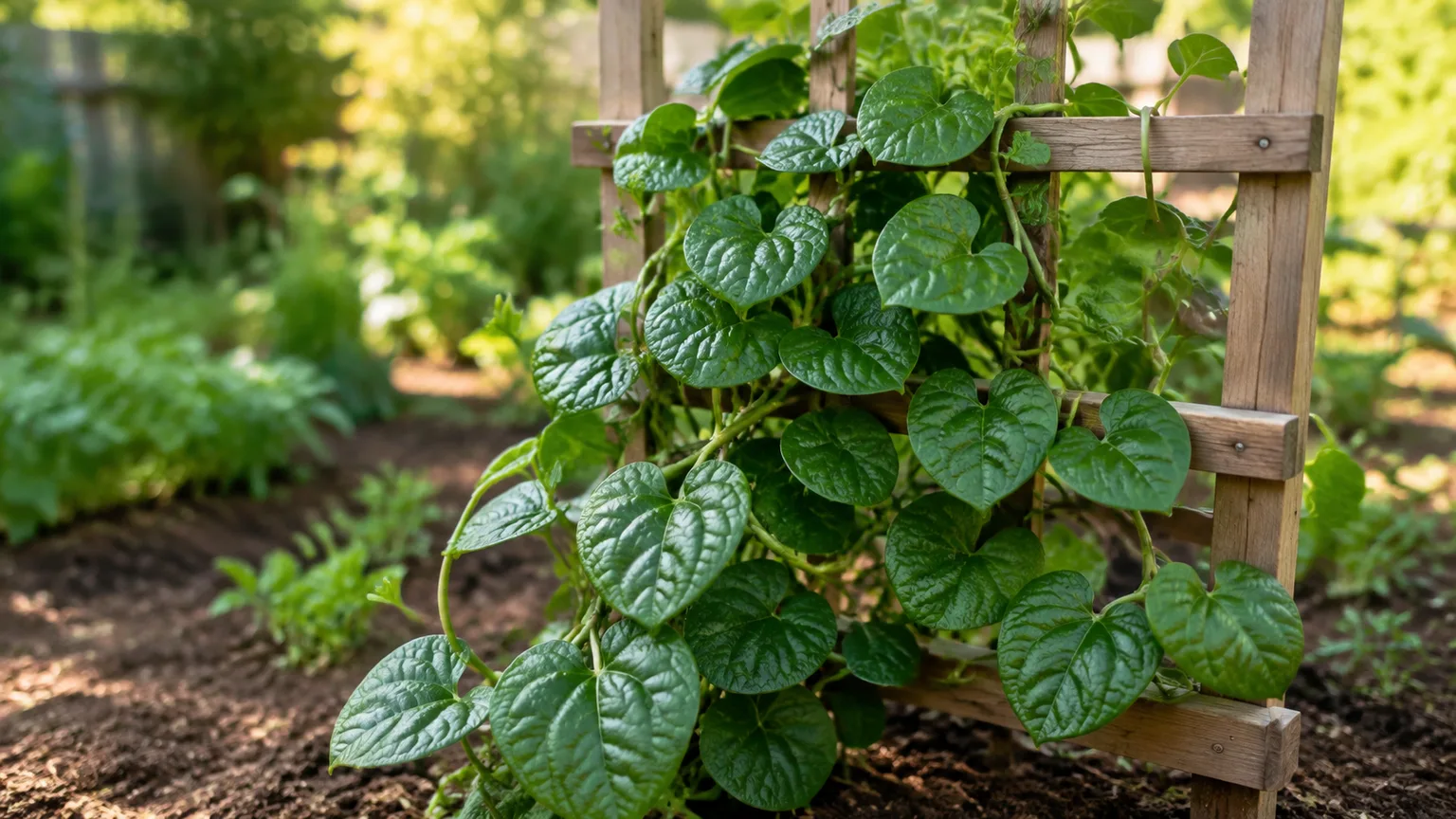
Browse general houseplant problems or use our diagnosis tool for Malabar Spinach.
Malabar Spinach problems
Use the guides below to diagnose and fix common issues on Malabar Spinach. Each problem page explains why it happens on this species and what to do first.
Keep the root zone consistently moist through the warm growing season, but never waterlogged. Heat-loving vines transpire quickly in full sun, yet saturated soil encourages stress flowering and bitter leaves. In practice, water check every 1–2 days in containers or peak summer heat; water when the upper 2–3 cm begins to dry. Press a finger 2–3 cm into the mix; water when it feels dry rather than cool and damp. Increase during hot, dry spells when vines are actively climbing; ease back only when cool weather slows growth or rain keeps beds wet.
What light does Malabar Spinach need?
Malabar Spinach needs bright, indirect light for steady indoor growth.
Is Malabar Spinach toxic to pets?
Malabar Spinach is toxic to cats and dogs. Keep out of reach of curious pets and choose pet-safe alternatives for accessible spots.
How do I propagate Malabar Spinach?
Propagate Malabar Spinach from healthy stem or root divisions during active growth.
What soil is best for Malabar Spinach?
Use humus-rich, moisture-retentive, well-drained loam or container mix. NC State Extension recommends fertile organic soil with good drainage; acid to near-neutral pH suits most plantings. A good mix includes 50% quality potting mix or garden loam, 30% mature compost, 20% perlite, coarse sand, or fine bark for aeration. Moist but well-drained; drought or soggy, compacted mixes both stress the vine.
When should I repot Malabar Spinach?
Repot Malabar Spinach sow or transplant once into a final bed, large pot, or grow bag with trellis support; replace after frost or when the crop finishes, ideally in warm season, after frost risk has passed and soil and nights are steadily mild. Signs it needs a bigger pot: seedlings are root-bound in small cells before transplant, a container is too shallow to anchor a trellis and hold moisture, the vine dries out severely between waterings in peak heat.
How this Malabar Spinach problems guide is reviewed?
Written by Sai AnanthLead content writer at LeafyPixels. B.Pharmacy graduate from Andhra University with a background in pharmacognosy, turned indoor gardening writer after a long-time plant hobby became a research-led resource for home growers.View Sai Ananth's profile · Reviewed by LeafyPixels Review Board
This Malabar Spinach problems problem guide was researched and written by Sai AnanthLead content writer at LeafyPixels. B.Pharmacy graduate from Andhra University with a background in pharmacognosy, turned indoor gardening writer after a long-time plant hobby became a research-led resource for home growers.View Sai Ananth's profile. Problems symptoms on Malabar Spinach, lookalike causes, and step-by-step fixes are cross-checked against extension pest, disease, and care references before publication.
We prioritize sources that hold up under scrutiny:
University cooperative extension bulletins and fact sheets (Penn State, Clemson, UMD, NC State, and similar programs)
Botanical garden and horticultural society publications
Peer-reviewed plant science and veterinary toxicology references where pet safety matters (including ASPCA Animal Poison Control)
Established reference works on indoor plant culture
The LeafyPixels editorial team then reviews the draft for clarity, step-by-step usefulness, and fit with real apartment and home conditions-not ideal greenhouse setups. When guidance changes materially, we update the page and note the revision date.
Sources used
Brooklyn Botanic Garden — Red-Stemmed Malabar Spinach (n.d.) Rubra cultivar, ornamental trellis use, and summer productivity in hot climates. [Online]. Available at: https://www.bbg.org/article/red-stemmed_malabar_spinach (Accessed: 1 March 2024).
NC State Extension — Basella alba (n.d.) Vine habit, heat tolerance, sun and soil needs, frost sensitivity, seed scarification, flowering under stress, and edible uses. [Online]. Available at: https://plants.ces.ncsu.edu/plants/basella-alba/ (Accessed: 1 March 2024).
University of Wisconsin-Madison Extension — Malabar spinach (n.d.) Distinction from true spinach, warm-season culture, trellis harvest, mucilaginous leaves, propagation, and bitter foliage after flowering. [Online]. Available at: https://hort.extension.wisc.edu/articles/malabar-spinach-basella-alba/ (Accessed: 1 March 2024).