Malabar Spinach Repotting Guide: Containers & Timing
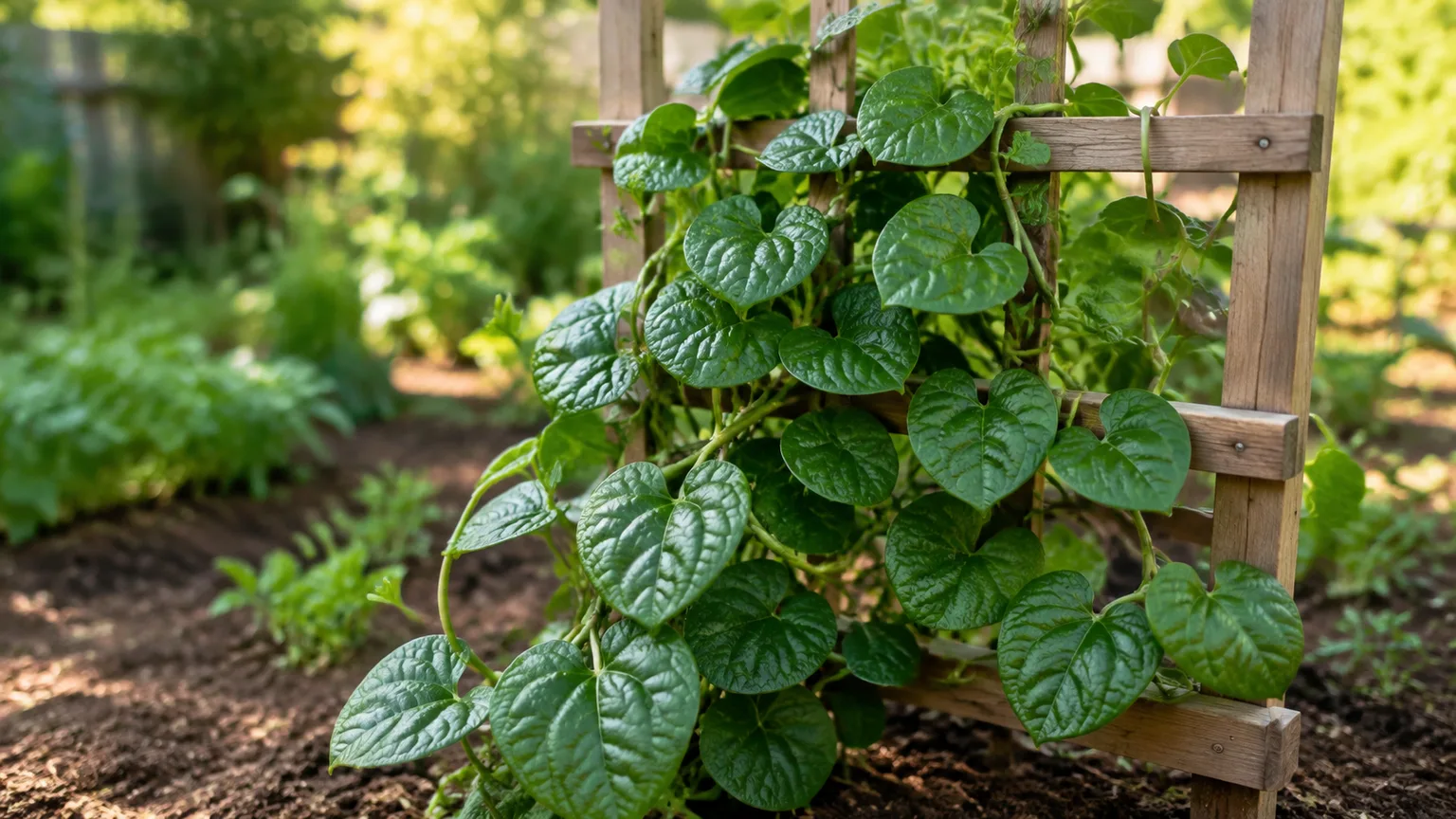
Malabar Spinach Repotting Guide: Containers & Timing
Malabar Spinach Repotting Guide: Containers & Timing
Most online repotting advice assumes a long-lived houseplant you upsize every spring. Malabar spinach (Basella alba, poi saag or vine spinach) is a fast, frost-tender twining vine grown for summer leaves—not a perennial foliage pot on a yearly refresh schedule. The practical question is whether to sow straight into a trellised final container, or move a warm-started seedling once into a grow bag or pot deep enough to anchor support and hold moisture through hot days.
NC State Extension describes a vigorous climber that can reach many feet in a warm season, needs fertile moisture-retentive soil, and suffers in cool weather. University of Wisconsin-Madison Extension notes the crop is very frost sensitive, should not go outdoors until weeks after the last frost, and will not grow much until summer heat—especially when nights stay below about 60 °F (16 °C). This guide covers when a container truly needs upsizing, how to transplant without triggering stress flowering, and when composting the finished vine and sowing again beats chasing another pot size.
The quick answer for poi saag on a terrace
Plan one main move into a large, drained container or grow bag with a trellis already in place. Start seed indoors 6–8 weeks before your last frost if your season is short, harden seedlings off, then transplant when soil and nights are steadily warm—not during a cool snap. Wisconsin Extension recommends spacing transplants at least a foot apart; on a balcony, that usually means one vine per roomy pot rather than crowding several twining stems that will compete for water.
Use at least about 19–23 L (5 gallons) of mix and 30–45 cm (12–18 inches) of depth so roots and a stake or netting share the same stable volume—aligned with container vegetable guidance for larger vining crops. Pre-moisten mix, set seedlings at the same depth as before, water thoroughly once, then keep moisture even through summer. Malabar spinach rarely benefits from repeated upsizing like a monstera; when the vine finishes after frost or heavy flowering, replace the crop in fresh mix next warm season.
Why Malabar spinach repotting is not houseplant repotting
Houseplant repotting refreshes a perennial root system for years of growth. Malabar spinach is typically grown as a warm-season annual outside the frost-free tropics, completing its useful leaf phase in one hot window. NC State lists it as a frost-tender perennial often treated as an annual, with growth disappointing when temperatures remain below about 80 °F (27 °C). Disturbed roots plus dry soil or extreme heat can push the vine into flower, after which leaves turn bitter—the same stress pathway Wisconsin Extension links to dry conditions.
Heat vine vs cool-season palak
True spinach (Spinacia oleracea, palak) wants cool weather and shallow, frequent moves in spring. Malabar spinach is unrelated and thrives when palak bolts. If you repot on a “cool-month houseplant calendar,” you may park a heat-loving vine in a cold, wet pot weeks before it can grow. Match timing to summer, not winter terrace cycles—see Malabar spinach light for why full sun on a railing accelerates drying after any move.
One final home with support built in
NC State advises a sturdy trellis or fence because the plant climbs rapidly once heat arrives. Re-digging a mature vine to add a post later disturbs roots at the worst moment. Treat repotting as infrastructure day: pot, mix, drainage, and vertical support go in together. For the full crop picture, start with the Malabar spinach overview.
Signs your Malabar spinach needs a bigger pot or bed
Repot or transplant when evidence points to root or volume limits, not every yellow lower leaf. Useful triggers include:
- Seedlings root-bound in small cells or cups before the warm transplant window opens.
- Mix drying within hours on mild days despite thorough watering—common when a fast vine outgrows a shallow nursery pot.
- No room to insert a trellis stake without snapping brittle stems woven through the old rim.
- Stalled growth in warm weather while watering and light otherwise look adequate (confirm heat before blaming the pot alone).
- Salt-crusted or collapsed mix that no longer absorbs water evenly—a refresh into new soil rather than a marginal size bump.
General container practice still applies when you do move plants: use clean pots with drainage, loosen circling roots gently, and avoid burying stems deeper than they grew before—principles echoed in NC State’s Extension Gardener Handbook on container plants.
Direct sowing in the final container vs transplanting seedlings
You can direct sow after frost into a prepared trellised pot, scarifying hard seed coats as NC State recommends. Brooklyn Botanic Garden likewise suggests sowing in situ after frost or starting indoors eight weeks ahead, hardening off, and transplanting one foot apart.
Direct sowing wins when:
- Your terrace already has a final-sized grow bag ready with compost-rich mix.
- You want to avoid any root disturbance right before a heat wave.
- Birds or heavy rain make module protection unnecessary.
Transplanting wins when:
- You need to gain weeks in short warm seasons.
- Germination is easier in a warm indoor tray than on a still-cool railing.
- You are lining up Rubra red-stemmed seedlings with ornamental companions on a trellis, as BBG describes for edible vertical displays.
Either way, the “repot” is usually into the same large home the vine will keep all summer—not a chain of progressively larger decorative pots.
Best season to repot or transplant Basella alba
Align any move with post-frost warmth. Wisconsin Extension warns against outdoor planting until a few weeks after all frost danger has passed, and notes little progress while nights stay cool. NC State adds the plant is very sensitive to frost and cool temperatures.
Frost, soil warmth, and night temperatures
Morning transplants reduce midday wilting on soft stems. Avoid moving vines when:
- A late cool front is forecast after an early warm spell.
- Seedlings are already wilting from dry cells—water an hour before, not during, the move.
- You see stress flowering starting; bitterness follows regardless of pot size.
India and tropical timing notes
In much of India, the reliable window is often after the last cool snap and into pre-monsoon or monsoon warmth, depending on region—always anchor to local frost risk (minimal in the plains) and to night warmth, not the calendar alone. Monsoon cloudiness still demands drainage; do not repot into a sealed decorative planter without holes. If March nights on a Bangalore terrace stay mild, an early move can work; if stems sit cold and wet, wait.
Container size, depth, and grow bags for twining vines
Malabar spinach can ramble 3 m or more in one season on good support. Roots need volume to match transpiration from thick, semi-succulent leaves—not the tiny cups used for quick salad greens.
Minimum volume for one productive vine
For one actively harvested vine on a trellis, aim for at least 19–23 L (5 gallons) and 30–45 cm (12–18 inches) depth, consistent with Wisconsin container vegetable guidance for larger crops. Wider grow bags (45–60 cm) tolerate missed waterings better than tall narrow pots that dry in bands.
Why shallow pots fail in peak summer
Shallow trays dry from the top where roots explore first, triggering the dry-soil flowering NC State warns about. Oversized pots with a single tiny seedling stay cold and soggy in unheated spring weather—skip that jump. Step up once from a 10 cm cell to a 25–35 cm finished pot or bag.
Install the trellis before or during the move
Set stakes, netting, or a frame in the pot before backfilling around roots when possible. Drive supports to the bottom of the bag so the vine’s weight does not pull a late-added stake through loose mix. NC State notes stems root where they touch moist soil; keep stray runners off neighboring pots unless you intend to fill a second trellis via propagation. Training early reduces crown damage compared with wrestling a mature vine onto new strings mid-July.
Soil and mix when you repot Malabar spinach
Use the same priorities as your Malabar spinach soil guide: humus-rich, moisture-retentive, well-drained mix with compost and aeration. NC State calls for organic matter and warns against waterlogging. When repotting, fresh mix replaces depleted media and restores air pockets—similar in spirit to refreshing container plantings for long-term health, even though this vine finishes in months.
A practical blend matches hub data: roughly 50% quality potting mix or loam, 30% mature compost, and 20% perlite or coarse sand. Pre-moisten before filling. Wisconsin container guidance recommends filling the container completely with mix for optimal drainage—do not layer gravel that impedes water movement.
Step-by-step: transplant from cells to a final pot
- Water lightly an hour before so the root ball holds together.
- Place trellis hardware and add moist mix to one-third depth.
- Slide the seedling out by pushing from the drainage hole; support the root ball, not the fleshy stem.
- Loosen only circling outer roots; avoid bare-rooting soft seedlings.
- Set at the same depth as in the cell—burying the crown invites rot at the soil line.
- Backfill, firm gently, and water until excess drains. Empty saucers.
- Shade the hottest afternoon for a day or two if transplant coincides with a sudden heat spike.
Handling soft stems and succulent leaves
Twining stems bruise easily. If a leader snaps, train a side shoot and read Malabar spinach pruning for how to redirect growth without stripping the whole plant.
Post-repot watering and fertility
Expect transplant shock—slight wilting or paused growth for several days after root disturbance, as described in Gardening Know How’s transplant shock overview. Recovery is fastest when nights are warm and moisture stays even.
For the first week:
- Check the upper 2–3 cm of mix and water when it begins to dry, per Malabar spinach watering.
- Avoid foliar soaking at night on dense vines.
- Delay strong fertilizer for about a week unless the mix is sterile and compost-free; then follow Malabar spinach fertilizer for steady summer feeding.
If wilting persists with wet mix, inspect drainage and stem rot at buried nodes before assuming the plant needs yet another pot.
Common repotting mistakes that trigger flowering or stall growth
- Transplanting into cold soil weeks before heat—vines sit stagnant and vulnerable to rot.
- Skipping the trellis, then wrenching roots mid-season to add posts.
- Letting cells dry during the move, combining drought stress with flowering cues NC State associates with dry soil.
- Repotting into sealed pots without drainage on monsoon terraces.
- Moving flowering plants hoping to restore leaf sweetness—bitterness follows bloom regardless of volume.
- Treating Malabar spinach like a perennial houseplant on a yearly upsize calendar instead of sowing fresh seed.
When not to repot—start fresh seed instead
Skip the move when:
- Flowers and berries are forming and leaves are already bitter—harvest seed or compost via propagation notes.
- Frost is weeks away and the vine is finishing; plan next year’s sowing.
- The issue is too little sun (leggy, pale growth)—fix placement per light before changing containers.
- Pests or disease saturate old mix; sterilize or replace containers per Wisconsin container guidance rather than repotting into contaminated media.
Often the best “repot” for poi saag is fresh mix and new seed when the warm window opens again.
When to use this page vs other Malabar Spinach guides
Use this repotting guide when you are moving seedlings into a trellised final container, upsizing because roots or drying speed demand it, or deciding between transplant, direct sow, or a new batch. For steady moisture checks after a move, start with Malabar spinach watering. For mix recipes and pH, see Malabar spinach soil. For seed scarification, cuttings, and re-sowing, read Malabar spinach propagation. For seasonal sun on a railing, see Malabar spinach light. For the full crop picture, open the Malabar spinach overview.
Related Malabar Spinach guides
- Malabar spinach overview — heat-season identity, trellis culture, and cluster roadmap.
- Malabar spinach watering — moisture rhythm that prevents stress flowering after transplant.
- Malabar spinach soil — compost-rich mixes that drain without flash-drying.
- Malabar spinach propagation — when to sow direct in the final pot instead of moving seedlings.
- Malabar spinach pruning — redirecting vines after broken leaders post-repot.
Conclusion
Malabar spinach repotting is a single warm-season move into a trellised, well-drained home—not a yearly houseplant ritual. Sow in the final large container when you can; otherwise transplant young seedlings once while nights are warm, install support before growth explodes, and keep moisture even to delay flowering. When frost, bitterness, or a spent vine arrives, sow poi saag again in fresh mix rather than chasing endless upsizes. Get timing, container depth, and gentle root handling right, and you will spend less time rescuing wilted transplants and more time harvesting glossy summer leaves.