Malabar Spinach Pruning Guide: Harvest Cuts, Tips & Vine
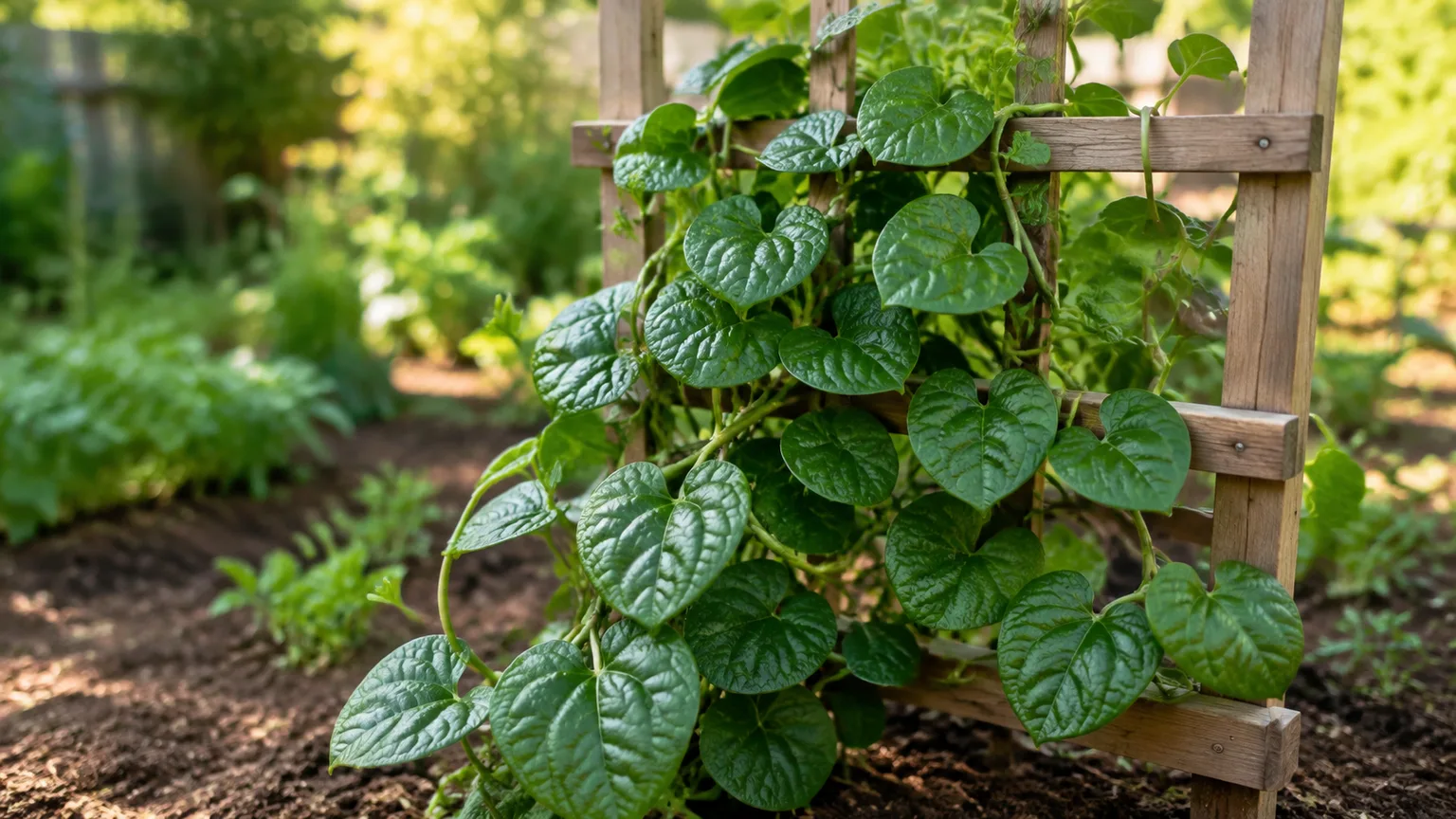
Malabar Spinach Pruning Guide: Harvest Cuts, Tips & Vine Shape
Malabar Spinach Pruning Guide: Harvest Cuts, Tips & Vine Shape
First, snip only yellow, torn, or clearly diseased leaves—and any soft, rotting stem tissue at the soil line—with clean kitchen scissors or bypass pruners. Work from the bottom of the vine upward and bag badly mildewed foliage instead of dropping it under the trellis. Do not take kitchen harvests or shorten healthy leaders until that cleanup is finished and stems are trained onto support.
Malabar spinach (Basella alba—poi saag, vine spinach, Ceylon spinach) is a fast twining leafy vine, not cool-season palak (Spinacia oleracea) and not a woody plant you rejuvenate on old wood. University of Wisconsin-Madison Extension describes culture for hot weather when true spinach fails. Home “pruning” is really harvest-driven vine management: you pick young leaves and tender shoot tips for the kitchen, trim back sprawls that leave foliage on wet soil, and shorten stems that outgrow a trellis so the plant stays dense and leafy. For sowing timing, trellis setup, and whole-plant habits, start with the Malabar Spinach overview.
Quick answer
After removing failing tissue, your first productive cut is one young leaf or a short tender tip (roughly 2–4 inches of stem with small leaves), taken from a supported vine that has several nodes of healthy growth. Wisconsin Extension notes leaves can be eaten throughout the season, but once plants start flowering, leaves become bitter—so frequent tip and leaf harvests are also your best tool to delay that shift. NC State Extension links dry soil or extreme heat to flowering and bitter leaves; pruning cannot override drought stress or cool nights. Stabilise Malabar spinach watering and light before expecting a thinned vine to refill with tender foliage.
What Malabar spinach pruning actually means
Unlike hedge shrubs or houseplant canes, Malabar spinach has no lignified framework to maintain across years. In frost-prone climates you grow it as a warm-season annual; in frost-free zones it may persist as a tender perennial, but kitchen quality still depends on leafy shoots, not old wood.
Growers usually combine four jobs:
Sanitation removes yellow leaves, mildewed patches, and rotting stem bases before pests spread. Harvest cuts take glossy leaves and tender tips—the crop you would cook anyway. Canopy management shortens stems that sprawl on damp ground or shade their own leaves on a crowded trellis. Shape control trims leaders that outgrow a post or railing so the vine stays pickable.
Wisconsin Extension advises growing the crop on a sturdy trellis rather than letting vines ramble, keeping semi-succulent leaves cleaner and easier to harvest. NC State Extension recommends a sturdy trellis or fence because the plant can grow rapidly in heat. Unmanaged sprawls mat on wet monsoon soil and encourage slug damage and general stress—the situation trellis training and light trimming aim to prevent.
Harvest cuts vs shape pruning
| Goal | What you cut | Where | Season |
|---|---|---|---|
| Kitchen harvest | Young leaves; tender stem tips | Leaf petiole or stem just above a node | Every few days once vines establish |
| Density / bushiness | Soft shoot tips after a pick | Just above a leaf node on lateral stems | Warm mornings during active growth |
| Trellis control | Overlong leaders; ground sprawls | Above a node; redirect onto support | As needed |
| Sanitation | Yellow, mildewed, or torn leaves | Petiole base or stem junction | Anytime you spot damage |
| End of season | Whole vine (optional) | Soil line after final picks | Before frost or when bitter and flowering |
Do not apply true spinach pruning logic to this species—palak rosettes regrow from a crown in cool weather; Malabar spinach elongates on twining stems in summer heat.
When to prune or harvest Malabar spinach
Best window for picks and shape cuts
Schedule regular harvests when nights stay warm and the vine is actively twining—typically late spring through summer and monsoon on Indian terraces once soil and air have warmed. Wisconsin Extension states plants will not grow much until summer heat and stall when night temperatures stay below about 60 °F (16 °C). NC State Extension notes growth is disappointing when temperatures remain below about 80 °F (27 °C)—pruning judgments follow that same active-growth window, not cool shoulder seasons.
Work in the cooler part of the day on a dry morning so cut surfaces dry quickly on fleshy stems. Avoid stripping large leaf batches when seedlings are still rooting in, soil is saturated after heavy rain, or vines are wilting from midday heat—stacked stresses push flowering faster than harvest alone.
What you can remove anytime
Fully yellow leaves, badly torn foliage, and stems that are soft, water-soaked, or sour-smelling at the soil line can be removed whenever you see them. NC State Extension lists no major disease problems on healthy vines, but crowded, wet foliage still invites slug damage and general decline—sanitation is cheap insurance.
If most leaves look pale while heat and moisture seem fine, read Malabar spinach light and watering before blaming harvest technique alone.
What to check before you cut
Spend thirty seconds on the whole plant:
- Trellis attachment — Are leaders tied or twined onto support without crushing stems? A heavy vine snapping in wind needs ties, not harder picking.
- Soil moisture — Is the upper 2–3 cm drying evenly? Wisconsin Extension warns that dry soil tends to trigger flowering, after which leaves turn bitter.
- Flowering cues — Short spikes in leaf axils, smaller new leaves, or a shift toward elongation and fewer tender tips mean leaf quality is dropping; harvest aggressively while tips are still mild, then plan resowing.
- Ground contact — Stems rooting on damp soil (NC State Extension notes vines root where stems touch moist soil) can escape beds; trim sprawls or lift them onto the trellis.
- Tool cleanliness — Wipe blades with 70% isopropyl alcohol between plants when mildew or rot is present (Iowa State Extension).
The first cut to make
After sanitation, select one young, glossy leaf or a short tender tip (a few inches of stem with small leaves) from a lateral shoot on the trellis face—not the only remaining leader on a sparse seedling. Cut the petiole close to the stem or snip the tip just above a leaf node, leaving at least one healthy node below your cut so side shoots can branch.
Wait three to five days and watch the stem: if a new bud or side shoot appears near the node, your timing and cut height were appropriate. This single conservative pick confirms regrowth before you take a larger kitchen harvest.
How to prune and harvest Malabar spinach step by step
Leaf-and-tip harvest (cut-and-come-again)
- Hold a young leaf up and trace the petiole to the vine.
- Snip with clean kitchen scissors or bypass snips.
- For tips, cut just above a node, taking only the softest few inches.
- Move along the trellis, alternating sides so you do not strip one face bare.
- Rinse leaves after picking; grit collects in thick blades.
Wisconsin Extension describes mild, slightly peppery leaves with mucilaginous cooked texture—frequent picking is normal kitchen care, not optional “extra” pruning.
Trellis shape and density
When leaders outgrow a post or railing, shorten them above a node and tuck the remaining stem back onto support. Wisconsin Extension states you may prune as much as needed by cutting off leaves and stems to keep the desired shape or denser growth—think manageable picking height, not formal topiary.
On ornamental Rubra plantings, Brooklyn Botanic Garden highlights red-stemmed types as heat-season ornamental edibles on trellises; the same harvest-and-trim rhythm keeps color and leaf cover through summer.
Ground sprawls and edge control
Cut back stems lying on wet soil or wandering into paths. Each cut should sit above a healthy node so the vine can rebranch toward the trellis. If you want more plants, set a trimmed tip in water or moist mix—see Malabar spinach propagation—rather than leaving every sprawled stem to root in unplanned spots.
How much you can safely remove at once
Malabar spinach tolerates frequent light harvests better than one aggressive shear. On a young vine with only a few nodes, limit each session to about one-third of the leafy length, leaving enough foliage to photosynthesise. On a mature summer vine in rich, moist soil, daily small picks of outer leaves and tips are normal—as long as new shoots keep appearing.
If you remove most leaves in one pass, expect slower regrowth, more visible stress flowering, and bitter regrowth. Pruning cannot replace a fresh sowing when a vine has already shifted to heavy bloom.
Where to cut
- Leaves — Snip the petiole near the main stem without gouging into the vine.
- Tips — Cut just above a leaf node; new shoots often emerge from the node below.
- Overlong laterals — Shorten to a node facing the trellis face you want to fill.
- Failing tissue — Remove back to firm, green stem; if rot reaches the crown, discard the plant and resow.
NC State Extension describes thick, semi-succulent, alternately arranged leaves on a twining vine—cuts should be clean on soft stems, not torn by dull blades.
What not to cut
- Do not strip every leaf from a thin seedling still establishing roots.
- Avoid harvesting all tips on a sparse vine if no side nodes remain to branch.
- Do not cut into hard, woody-looking base tissue hoping for rejuvenation—this is an annual-style leafy vine, not a shrub.
- Skip cosmetic shearing when soil is bone dry or nights are cool; fix watering first.
- Do not confuse flower spikes with tender tips—once bloom dominates, leaf flavor declines; harvest remaining mild tips, then plan a new planting.
Pruning after flowering starts
Inconspicuous white or pink flowers in leaf axils are followed by purple-black berries that stain badly (Wisconsin Extension). Leaves picked after heavy flowering are often bitter and smaller. You can still snip mild tips if any remain, but the practical fix is succession sowing or propagation from younger vines—not harder pruning on a reproductive plant.
Dry soil and short-day stress can push flowering even in the Midwest garden (Wisconsin Extension); on terraces, uneven irrigation is the usual trigger.
Using prunings for cuttings
Trimmed tender tips root readily in water or moist mix (Wisconsin Extension). Choose healthy, non-flowering shoots 4–6 inches long, remove lower leaves, and place them in bright indirect light until roots form. This is optional—kitchen harvest already produces useful trimmings—but helpful if a container vine outgrows its first trellis mid-season.
Aftercare after pruning
Water at the soil line so the root zone stays evenly moist after foliage loss—dense vines transpire quickly in full sun. Hold off on heavy fertilizer for several days after an unusually hard trim; let new shoots appear first. Re-tie leaders within a week as twining stems pull toward light.
If you removed substantial leaf area on a dark container in peak afternoon heat, check that soil moisture—not harvest alone—was the stress driver. Rich, well-drained mix details sit in the Malabar spinach soil guide.
Recovery timeline and signs pruning worked
In warm weather with even moisture, new side shoots and glossy leaves often appear within several days to two weeks after moderate tip harvests. Brooklyn Botanic Garden notes red-stemmed types can grow very rapidly in tropical heat when conditions suit the species—recovery can look almost immediate when heat and water align.
Positive signs include tender tips regrowing, fuller lateral branching along the trellis, and delayed flower spikes compared with an unharvested vine. Warning signs you cut too hard or timed poorly include no new shoots for more than ten days, widespread flowering after a heavy strip, and bitter new leaves even before obvious bloom.
Mistakes to avoid
- Treating Malabar spinach like cool-season palak and harvesting during cold, slow growth
- Letting vines sprawl on wet soil instead of trellis training and light edge trims
- Waiting until flowering to make the first pick
- Stripping most leaves while soil is dry—flowering and bitterness follow drought (NC State Extension)
- Composting heavily mildewed foliage under the same trellis in humid weather
- Using dull blades that crush soft stems
- Expecting a frost-killed or bitter autumn vine to behave like a new sowing—install trellis at repotting or transplant time and start fresh seed next warm window
When not to prune
Skip large harvest batches when seedlings are still rooting in, frost threatens, soil is waterlogged, or vines are recovering from transplant wilt. Remove only diseased tissue in those moments.
Also delay cosmetic shortening if you cannot irrigate through an upcoming heat spike—combined heat and drought push flowering faster than any shaping cut. Finish the season by cutting the whole plant at the base once leaves turn bitter or frost arrives; there is no perennial woody frame to maintain through winter in most climates.
Related Malabar Spinach guides
- Malabar Spinach overview — poi saag identity, heat-season culture, and trellis planning
- Malabar Spinach light — full sun, terrace heat, and flowering pressure
- Malabar Spinach watering — even moisture to delay bitter flowering
- Malabar Spinach soil — fertility and drainage that support recovery
- Malabar Spinach fertilizer — feeding after establishment, not as a prune reflex
- Malabar Spinach propagation — tip cuttings and seed from berries
- Malabar Spinach repotting — final pot, grow bag, and trellis before major harvests