Malabar Spinach Light Needs: Full Sun & Terrace Tips
Malabar Spinach Light Needs: Full Sun & Terrace Tips
Malabar Spinach Light Needs: Full Sun & Terrace Tips
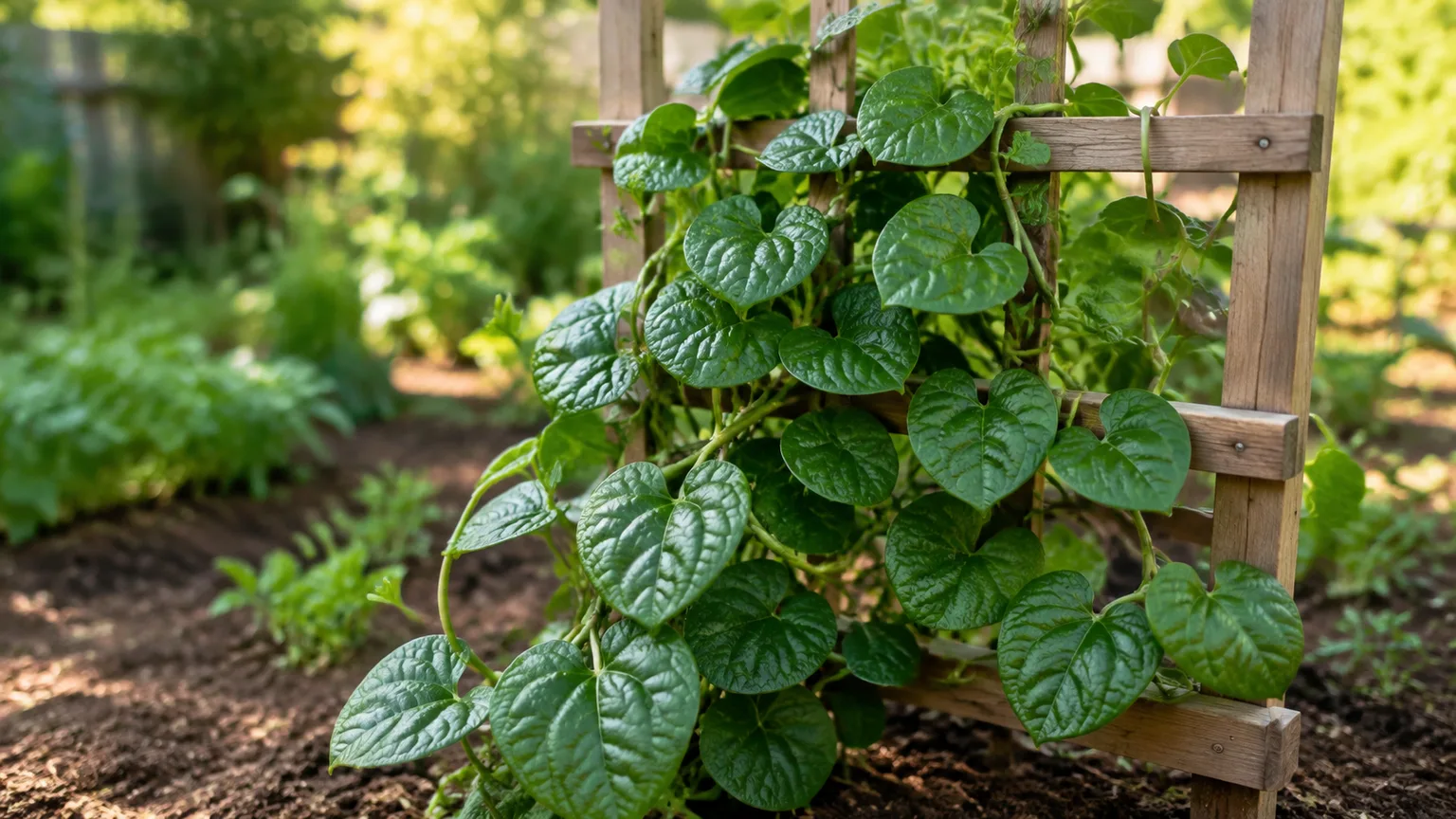
Malabar spinach (Basella alba), whether you call it poi saag, vine spinach, or Ceylon spinach, is a frost-tender tropical twining vine grown for thick, glossy leaves in summer heat—not a cool-season palak bed crop. It needs full sun on the leaf canopy and warm nights before it climbs with purpose. NC State Extension rates cultural light as full sun (six or more hours of direct sunlight a day) in a warm, sunny, sheltered site with fertile, moisture-retentive soil. If your vine sits in spring shade waiting for “spinach weather,” you will wait a long time; real growth tracks heat plus photons, not shade alone.
For sowing windows, trellis setup, and how Malabar spinach differs from Spinacia oleracea, start with the Malabar spinach overview. This page covers hours of direct sun, terrace and balcony placement in India and similar climates, seedling lighting, and the first fixes when vines look weak or bitter.
Malabar Spinach Light Needs: The Quick Answer
Plan for at least six hours of unobstructed direct sun on the upper leaf canopy each day—the extension baseline for Basella alba. University of Wisconsin-Madison Extension simply instructs growers to grow Malabar spinach in full sun on fertile, moist, well-drained soil with consistent moisture through the season. Editorial guides align: Epic Gardening describes full sun as six or more hours of summertime sunlight, noting vines are more vigorous in full sun than in partial shade.
The twist Malabar spinach teaches every poi saag grower: bright light without warmth still looks like failure. NC State Extension notes disappointing growth when temperatures remain below 80°F (27°C), while Wisconsin Extension reports little progress while night temperatures stay consistently below 60°F (16°C). On a cool March balcony in Bengaluru or a shaded Pune courtyard, the problem may be temperature, not missing noon sun. Once summer nights warm, the same pot often explodes upward on a trellis.
Full Sun Baseline for Poi Saag and Vine Spinach
“Full sun” means direct rays strike vine leaves, not just the pot rim. Run a shadow check: on a clear day, a sharp hand shadow on soil or foliage at morning, midday, and late afternoon signals usable direct light. Reflected brightness off a white wall helps, but it does not replace hours of sun on the semi-succulent leaves NC State describes as thick and glossy.
For leaf harvests, treat six hours as a minimum, not a target. Vines on open Indian terraces often receive eight to ten hours in the pre-monsoon window—ideal for repeated picking of tender tips. For ornamental Rubra on a post or fence, the same full-sun rule applies; Brooklyn Botanic Garden recommends humus-rich sandy loam in full sun for red-stemmed Malabar spinach on vertical supports.
Heat-Coupled Growth: Light Without Warmth Fails
Malabar spinach evolved in tropical Asia as a heat-season vegetable and ornamental vine (Wisconsin Extension). It tolerates high rainfall and humidity when roots stay moist (NC State Extension), but it is very sensitive to frost and cool temperatures. Do not interpret a small, pale seedling in a chilly, bright window as proof you need fertilizer—check night warmth and root moisture first, then revisit watering and soil once summer heat arrives.
How Much Light Malabar Spinach Actually Needs
Basella alba is a rapid climbing vine—NC State Extension describes a typical six-foot vine that can reach 30 feet in length in favorable warmth—with alternate, fleshy, pointed leaves built for bright, humid summers. Light fuels stem extension and repeated leaf flush; shade forces long, thin stems with smaller harvestable foliage, similar to other full-sun kitchen vines.
Extension Definition of Full Sun on Basella alba
NC State’s light rating—full sun, six or more hours of direct sunlight daily—pairs with heat and humidity resistance in the landscape notes. That combination is your terrace checklist: unblocked sun on the trellis plane plus warm soil after frost risk passes. Wisconsin Extension adds that transplants should go out once soil has warmed, and that plants will not grow much until the heat of summer when nights are mild.
Partial Shade Tolerance and Harvest Trade-Offs
Epic Gardening acknowledges Malabar spinach can grow in partial shade but will be more vigorous in full sun. Partial shade may keep a vine alive for ornamental coverage, yet leaf thickness and regrowth after cutting drop when the canopy spends much of the day in building shadow. If your goal is weekly poi saag harvests, partial shade is a compromise, not a plan.
Do not confuse partial shade with brief afternoon relief on a west-facing terrace during an extreme heat wave—established vines in moist soil often handle bright days better than dry, sun-baked containers. Light stress and drought stress both push flowering; see fertilizer only after placement and moisture are sane.
Why Malabar Spinach Is Not a Palak Substitute for Light Planning
True spinach (Spinacia oleracea) is a cool-season rosette that bolts when days lengthen and heat rises. Malabar spinach is unrelated—Basellaceae, not Chenopodiaceae—and Wisconsin Extension recommends it precisely because it grows in hot weather when true spinach does poorly. Trying to tuck poi saag into the same shaded winter bed you use for palak guarantees a confused season: the vine wants summer sun, not spinach timing.
Cool-Season True Spinach vs Heat-Season Vine Biology
If you sow Malabar spinach with winter greens, low temperatures stall the vine even under decent light. Conversely, sowing after frost into warmed soil and a sunny trellis matches how NC State describes quick growth once temperatures get hot. Short-season growers start seed indoors six to eight weeks before last frost (Wisconsin Extension), scarifying hard seed coats, then move plants into full outdoor sun after hardening—see propagation for timing detail.
Semi-Succulent Leaves and Trellis Exposure
Supported vines keep succulent leaves off damp soil and improve airflow (hub grower notes). Light reaches more leaf surface when stems climb vertically; a sprawling mat in partial shade often yields dirty, thinner leaves and harder harvests. Install the trellis at planting—before growth takes off—so you do not disturb roots later; train stems into the sunniest plane of the structure.
Seasonal Light Strategy for Indian Growers
On the plains and in many peninsular climates, the natural Malabar spinach window is post-frost through monsoon and pre-winter heat: sow or transplant when nights stay mild, then expect the heaviest climb in April–June sun. Hill stations and cool winters are poor fits unless you can guarantee warm microclimates and all-day sun.
Pre-Monsoon Terraces and Post-Frost Sowing Windows
Open south- or west-facing terraces usually outperform walled courtyards that lose afternoon rays to parapets and water tanks. Position grow bags or raised beds on the outer rail where the trellis top catches earliest sun. If seedlings sit in a nursery area with only morning light, move them to production sun before stems become leggy—harden off over several days by increasing exposure.
Monsoon Cloud Cover and Container Moves
Heavy cloud weeks reduce daily light integrals but rarely justify moving a healthy vine into deep shade. Instead, ensure drainage and airflow so lower leaves do not stay wet against soil—crowded shade plus moisture invites slug damage on succulent foliage. If a balcony roof cuts noon sun entirely, accept slower regrowth after harvest rather than expecting palak-like density.
Best Outdoor Placement: Terraces, Balconies, and Kitchen Gardens
Place Malabar spinach where new growth at the trellis top receives direct sun for most of the day. Human eyes adapt to dim interiors; vines do not. A “bright” living room looking onto a balcony is not the same as photons on chlorophyll at the leaf surface.
Shadow Checks at Morning, Noon, and Late Afternoon
Walk the site three times on a clear day. If any check fails to produce a readable shadow on the vine leaves, expect slow extension until weather warms—and still expect weak harvests if afternoon is permanently blocked. Neem or mango canopies that clear in pre-monsoon sun may help early season, then shade later; plan sowing accordingly.
Trellis Orientation and Rubra Ornamental Sites
Basella alba ‘Rubra’ adds red stems and pink-veined leaves for edible landscaping (NC State cultivar note; BBG). Give Rubra the same full sun as green types; color fades in deep shade. Pair with pruning to keep dense growth on the sunny face of the support.
Malabar Spinach Light for Containers and Grow Bags
Container culture magnifies light and heat swings. Dark pots on a sun-baked slab heat roots; paired with six-plus hours of sun, that can stress young transplants unless moisture stays even. Light and water work together on Basella alba.
Why Pot Height Changes Usable Sun on a Vine
A tall trellis on a low balcony may place upper stems in full sun while lower leaves live in parapet shadow. Harvest from the lit zone and train new tips upward. Shallow pots dry fast in full sun—pair bright placement with repotting into deep enough bags to anchor the trellis and hold moisture.
Pairing Bright Light With Steady Moisture
NC State Extension links dry soil or extremely high temperatures to flowering and bitter leaves. Epic Gardening likewise notes high frost sensitivity and best vigor once summer warmth settles. Full sun on dry mix is a stress cocktail—not “too much light” alone. Deep morning watering at the soil line keeps foliage drier than overhead sprinkling on dense vines.
Starting Seedlings: Windows, Grow Lights, and Hardening Off
Germination needs warmth more than intense light, but leggy seedlings appear when starts sit in weak winter windows. Use a full-spectrum grow light about 12–14 hours daily, keeping seedlings a few inches below the lamp until true leaves fill out.
Scarified Seed and Weak Winter Light
Wisconsin Extension recommends scarifying or soaking hard Malabar spinach seed and starting indoors six to eight weeks before last frost. Under low light, stems stretch before the vine can be moved outdoors. Supplement lamps beat a north window for stocky starts destined for full terrace sun.
Moving Transplants Into Full Sun Without Scorch
Harden seedlings by increasing outdoor hours over seven to ten days, beginning in morning sun and expanding toward all-day exposure. Semi-succulent leaves can bleach or crisp if a dark nursery flat jumps straight to a west wall in May. Move gradually; judge by new leaves, not old seed leaves.
Warning Signs of Too Little Light
Too little light on Malabar spinach rarely kills the vine in summer—it stalls, stretches, or flowers early when combined with other stress.
Cool Weather Stall vs True Shade Stress
If days are warm but nights cool, weak growth may be thermal, not shady. If nights are mild and the vine still produces long internodes and small leaves, suspect building shadow or a trellis lower half in permanent shade. Fix placement before increasing feed.
Leggy Stems and Early Stress Flowering
Wisconsin Extension notes dry conditions or short days can stimulate flowering, after which leaves turn bitter. Shade plus drought accelerates that shift. Regular harvest of tips in full sun encourages branching; bitter foliage after bloom is a sign to adjust light, moisture, and harvest timing, not to chase shade as a cure.
Warning Signs of Too Much Light (Usually Heat or Dry Soil)
Malabar spinach is heat-tolerant into the 90s °F when roots stay moist (NC State Extension). Scorched or wilted leaves on new transplants usually mean sudden exposure or dry root zone, not that full sun is wrong for the species.
Leaf Scorch on Young Transplants
Bleached patches on upper leaves after a abrupt move to a south terrace point to acclimation needs. Shade cloth for a few midday hours during the first week is a tool, not a permanent location. Established vines with deep, even moisture typically green up new growth in the same site.
When Afternoon Relief Helps Established Vines
On rare extreme heat days, brief afternoon shade for containers can prevent root overheating. Do not relocate a fruiting vine into a dim corridor—reduce heat load on the pot instead. Mature Malabar spinach in moist soil should remain in bright, all-day sun through the warm season.
When to use this page vs other Malabar Spinach guides
Use this page when you are choosing or troubleshooting sun exposure—terrace corners, trellis height, seedling hardening, or telling cool-season stall from true shade. For how often to water in full sun containers, read watering. For mix, pH, and drainage under bright exposure, see soil. For nitrogen and leaf color in high light, see fertilizer. For sowing, scarification, and cuttings, see propagation. For pot size and transplant timing, see repotting. For keeping dense growth on a sunny trellis, see pruning.
Related Malabar Spinach guides
- Overview — species identity, warm-season sowing, trellis basics, and how poi saag differs from palak.
- Watering — moisture checks when full sun dries containers quickly; links to stress flowering.
- Soil — fertile, moisture-retentive mixes that support sun-driven growth without waterlogging.
- Propagation — indoor starts under grow lights and moving plants into outdoor full sun.
- Pruning — harvest cuts that keep the sunny face of the vine productive.
Conclusion
Malabar spinach rewards full sun—six or more hours of direct light on the climbing canopy—plus summer warmth and even moisture. It is not a shade spinach substitute: cool nights and deep building shadow stall Basella alba even when days look bright. Give vines a sunny trellis, harden seedlings into real terrace sun, and read weak growth as a light-and-heat question before you change feed or abandon the crop. When placement, warmth, and watering align, thick poi saag leaves follow the photons up the support.