Best Soil for Malabar Spinach — Drainage, pH, and Mix
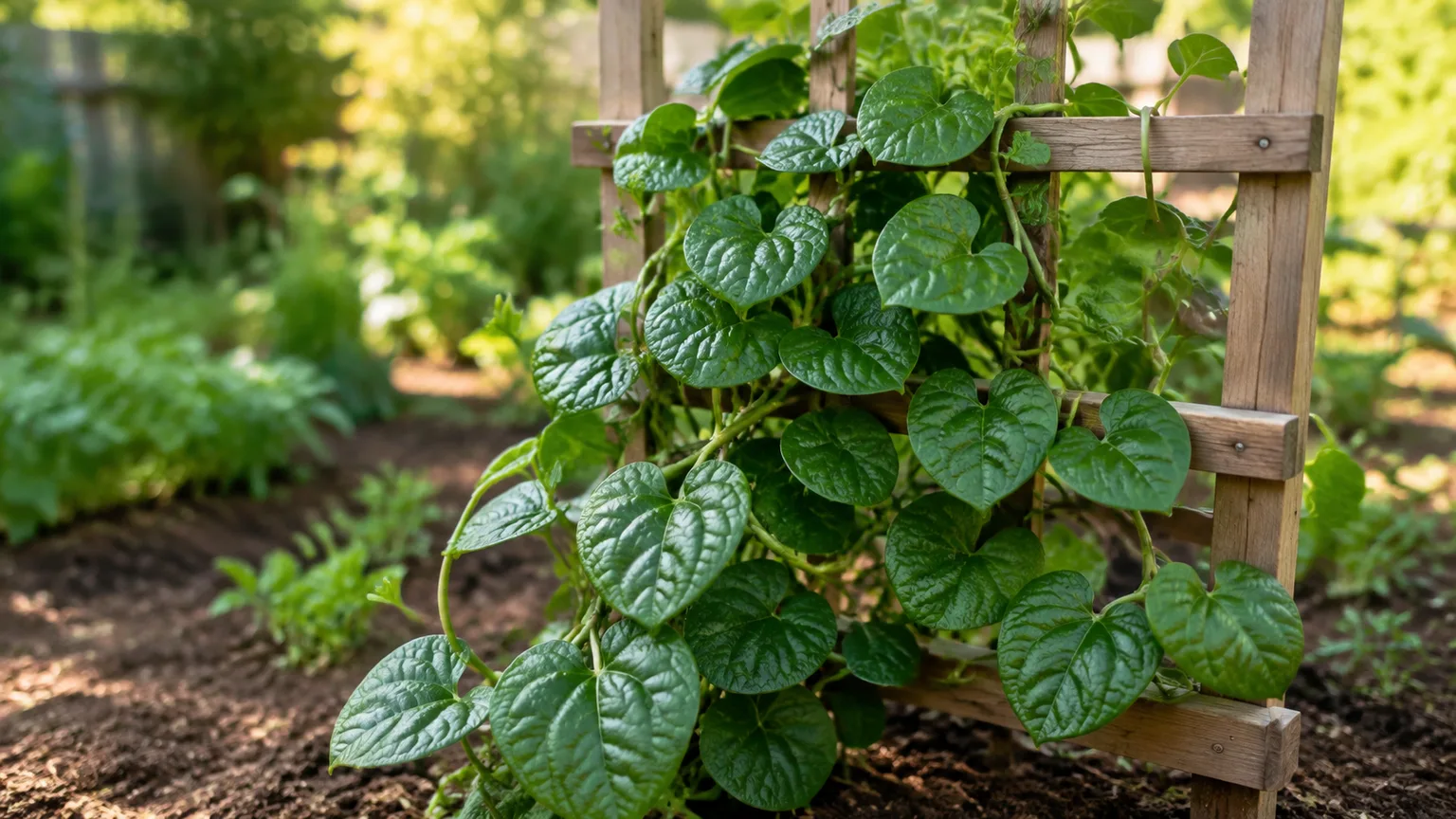
Best Soil for Malabar Spinach — Drainage, pH, and Mix
Best Soil for Malabar Spinach — Drainage, pH, and Mix
Malabar spinach (Basella alba) is a fast twining vine grown through summer heat, not a low rosette like palak (Spinacia oleracea). That difference shapes everything about soil: you are building a moisture-retentive root zone for a heavy transpiring climber, yet the mix must still drain well enough that monsoon rain or daily watering does not leave roots gasping for air. NC State Extension notes Malabar spinach needs well-drained, moisture-retentive soil rich in organic matter in a warm, sunny, sheltered spot—and that soil must stay moist through hot weather.
This page covers texture, compost, pH, containers, and drainage. For how often to water once the mix is right, use the Malabar Spinach watering guide. For the full seasonal picture, start with the Malabar Spinach overview.
What Basella alba roots need from the soil
University of Wisconsin-Madison Extension recommends fertile, moist, well-drained soils for Malabar spinach in full sun. The vine pulls a lot of water through thick, semi-succulent leaves on a hot terrace, so a dusty, fast-draining cactus mix will trigger drought stress. A waterlogged clay pocket will do the opposite—shut down root function and push the plant toward flowering, after which leaves turn bitter.
Heat-season vine, not cool-season palak
Cool-season spinach wants rich soil that stays cool and evenly moist in mild weather. Malabar spinach waits for warmed soil before it sizes up and prefers steady summer moisture instead. Wisconsin Extension adds that plants barely grow until summer heat arrives and struggle when nights stay below about 60 °F (16 °C). Soil preparation should match a post-frost, warm-season transplant or direct sow, not a winter palak bed.
NC State describes tolerance for high rainfall and fairly poor soils, with much stronger growth in rich mixes. Treat “tolerates poor soil” as survival language, not a target—edible leaf production on a trellis rewards compost and aeration.
Moisture-retentive versus genuinely well drained
“Moist but well drained” sounds contradictory until you think in layers. Organic matter and fine pores hold water plants can access; perlite, coarse sand, or bark chips create air channels so surplus water exits. NC State lists cultural needs as good drainage combined with moist conditions—exactly the pairing terrace growers must test in an empty pot before planting.
Dry soil is equally costly. NC State warns that dry soil or extreme heat can trigger flowering and bitter leaves. Soil structure and your watering routine work together; neither replaces the other.
Soil pH for poi saag and terrace growers
Extension ranges versus practical home targets
NC State records soil pH from acid below 6.0 through neutral 6.0–8.0, with textures from clay and high-organic matter to loam and sand. LeafyPixels hub data targets roughly 5.5–7.5 for poi saag across India and similar climates. Epic Gardening suggests a slightly acidic sweet spot near pH 6.5–6.8 for fastest leaf growth, while noting the vine can tolerate alkaline or poor soils with slower performance.
Do not chase a decimal on paper while ignoring structure. Compacted, sour soil at “ideal” pH still yellows vines. Fix drainage and tilth first; adjust pH only when a local soil test shows a real need.
Test and prepare soil before warm-season sowing
Walk the bed or fill a trial container with your proposed mix. Water until it runs from drainage holes, then watch whether the surface dries evenly without staying glossy for days. Dig a small hole after rain: soil that squeezes into a tight, shiny ribbon or smells sour needs compost and aeration before seed or seedlings go in.
Malabar spinach seed coats are hard—NC State recommends scarifying or soaking seed and sowing after frost risk passes in warm zones. Soil temperature matters as much as air temperature; transplant only after the mix warms, as Wisconsin Extension advises for garden planting once soil has warmed.
Install a sturdy trellis at planting time so you are not stabbing posts through established roots later. Supported vines keep edible leaves off damp ground and improve airflow around fleshy stems—soil preparation should include a firm anchor point, not just fertility.
In-ground beds and kitchen-garden plots
Clear weeds and spread mature compost across the whole planting strip rather than dumping fertilizer in a single planting hole surrounded by compacted native soil. NC State includes high organic matter among suitable soil textures; building humus through the bed width matches how far lateral roots explore in one warm season.
Compost and organic matter without sour pockets
Use compost that smells earthy, not ammonia-like. Fresh manure or unfinished green waste can heat, slump, and hold excess moisture—problematic when you need steady summer moisture without anaerobic pockets. In heavy clay, repeat moderate compost additions over seasons instead of one thick layer that traps water above impermeable subsoil.
Nitrogen-rich feeding belongs in the Malabar Spinach fertilizer guide once roots sit in a stable mix. Over-fertilizing soft growth in soggy soil invites more stress, not better harvests.
Trellis footing and stable root zones
NC State notes the vine can root where stems touch moist soil. That helps fill a trellis quickly but also means sprawling stems may escape planned beds. Keep the main root crown in prepared soil at the trellis base; train stems upward rather than letting the entire patch become a tangled ground mat on wet earth.
If you must improve drainage in an existing bed, loosen broadly and add compost on the surface between seasons rather than deep rototilling through heat-stressed vines mid-summer.
Container, grow-bag, and balcony mixes
Plain garden soil alone is a poor container choice. It compacts, sheds water down pot walls, and may carry pathogens. Use a peat-free vegetable or multipurpose potting mix as the base, then adjust for your climate.
A Malabar-spinach-friendly DIY blend
A workable starting point—aligned with LeafyPixels hub guidance—is about 50% quality potting mix or screened garden loam, 30% mature compost, and 20% perlite, coarse sand, or fine bark for aeration. Moisten components before blending; finished mix should hold together briefly when squeezed, then crumble when touched.
Epic Gardening describes preference for well-draining, loamy, nutrient-rich soil and recommends mulch on the surface to slow evaporation in hot weather. Cocopeat-heavy blends may stay wet longer in humid monsoon weeks; perlite-rich blends may need more frequent checks on a sunny railing. Adjust from observation, not a rigid recipe card. Try the Soil Mix Calculator with malabar-spinach pre-selected to compare proportions.
Pot depth, volume, and drainage for climbing vines
Shallow decorative pots tip under vine weight and dry out too fast for a plant that NC State says can grow rapidly once heat arrives. Choose grow bags or pots deep enough to anchor a trellis and hold moisture through a hot afternoon—often at least 30–40 cm deep with a wide mouth for root spread. Verify multiple open drainage holes; elevate containers so runoff leaves the saucer.
If water runs down the gap between a shrunken root ball and pot sides while the centre stays dry, top up with fresh moist mix or move the vine before chronic drought stress triggers early flowers. See the Malabar Spinach repotting guide for shifting seedlings from small cells into final supports without breaking roots.
Monsoon rain and drainage in India
Intense monsoon rain turns the critical question from “how much compost” to where water exits. Raised beds without lower outlets, balcony saucers left full, and grow bags sitting in puddles all mimic overwatering even when you skip the hose. Raise the root zone above paths, clear drainage channels before storms, and empty saucers after heavy rain.
Humid, wet foliage invites disease, but soggy soil starts at the roots. Morning irrigation at the soil line—covered in the Malabar Spinach watering guide—pairs with a mix that releases surplus water within hours. If lower leaves yellow while soil stays dark and wet, fix aeration and drainage before adding more nitrogen.
Summer poi saag on a terrace is realistic; trying to force the same vine through cool winter beds is not. Match soil work to warm-season sowing after frost risk passes, when nights stay mild enough for growth to resume.
Wrong soil: warning signs on Malabar spinach
Yellowing lower leaves with constantly wet soil often signal poor aeration or chronic saturation, not a simple hunger for fertilizer. Wilting despite wet mix suggests damaged roots—probe deeper than the surface before watering again. Early flowering with smaller, bitter leaves frequently follows drought or heat stress; NC State links dry soil to flowering and bitter foliage, so check whether your mix dries to dust between rains.
White or green mold on the surface after repeated top watering means the mix stays wet too long—open drainage, lighten the blend, and review watering rhythm. Slow summer growth in an apparently rich pot may mean nights are still cool, but also check for compacted, oxygen-poor mix or root issues such as nematodes in sandy soils—Epic Gardening notes root-knot nematodes can stunt vines in warm, moist conditions.
When to use this page vs other Malabar Spinach guides
Use this soil guide to choose bed versus container mix, interpret pH and organic matter, and fix drainage before warm-season planting. Use the Malabar Spinach watering guide for finger-depth checks and seasonal irrigation, the Malabar Spinach light guide for full-sun placement on a heat-soaked terrace, and the Malabar Spinach fertilizer guide for nitrogen once roots are healthy.
For seed scarification, cuttings, and trellis timing, see Malabar Spinach propagation. For shaping harvests without disturbing roots, use the Malabar Spinach pruning guide.
Related Malabar Spinach guides
The Malabar Spinach overview ties together trellis setup, harvest rhythm, and how poi saag differs from true spinach. The Malabar Spinach watering guide translates your mix’s drainage into a daily routine during peak summer transpiration.
Container growers can follow Malabar Spinach repotting when moving seedlings into final grow bags, and Malabar Spinach propagation to fill a trellis from tip cuttings that root in moist mix. If vines stay pale despite corrections, cross-check Malabar Spinach light before piling on more compost.
Conclusion
Good Malabar spinach soil is humus-rich, moisture-retentive, and honestly well drained—in ground, in raised beds, and especially in grow bags on a trellis. Aim for loam-like structure with mature compost, keep pH roughly 5.5–7.5 unless a soil test directs otherwise, and size containers so a fast summer vine does not bake dry between waterings.
Before you sow or transplant, run one simple test: water the empty pot or a soaked bed slice and watch whether surplus water leaves within a reasonable time. If it does not, fix outlets, raise the root zone, or lighten the mix—then plant poi saag into conditions that can stay moist without drowning through the hottest months.