Red Leaves on Marble Queen Pothos: Causes, Checks & Fixes
Quick answer
Red or reddish color on Marble Queen Pothos is stress pigment, not healthy variegation — this cultivar should only show green, white, and cream. The most common trigger is cold or a sudden move into strong direct sun. First, move the plant to stable bright indirect light at 18–29°C away from glass and vents, then check the root zone before changing anything else.
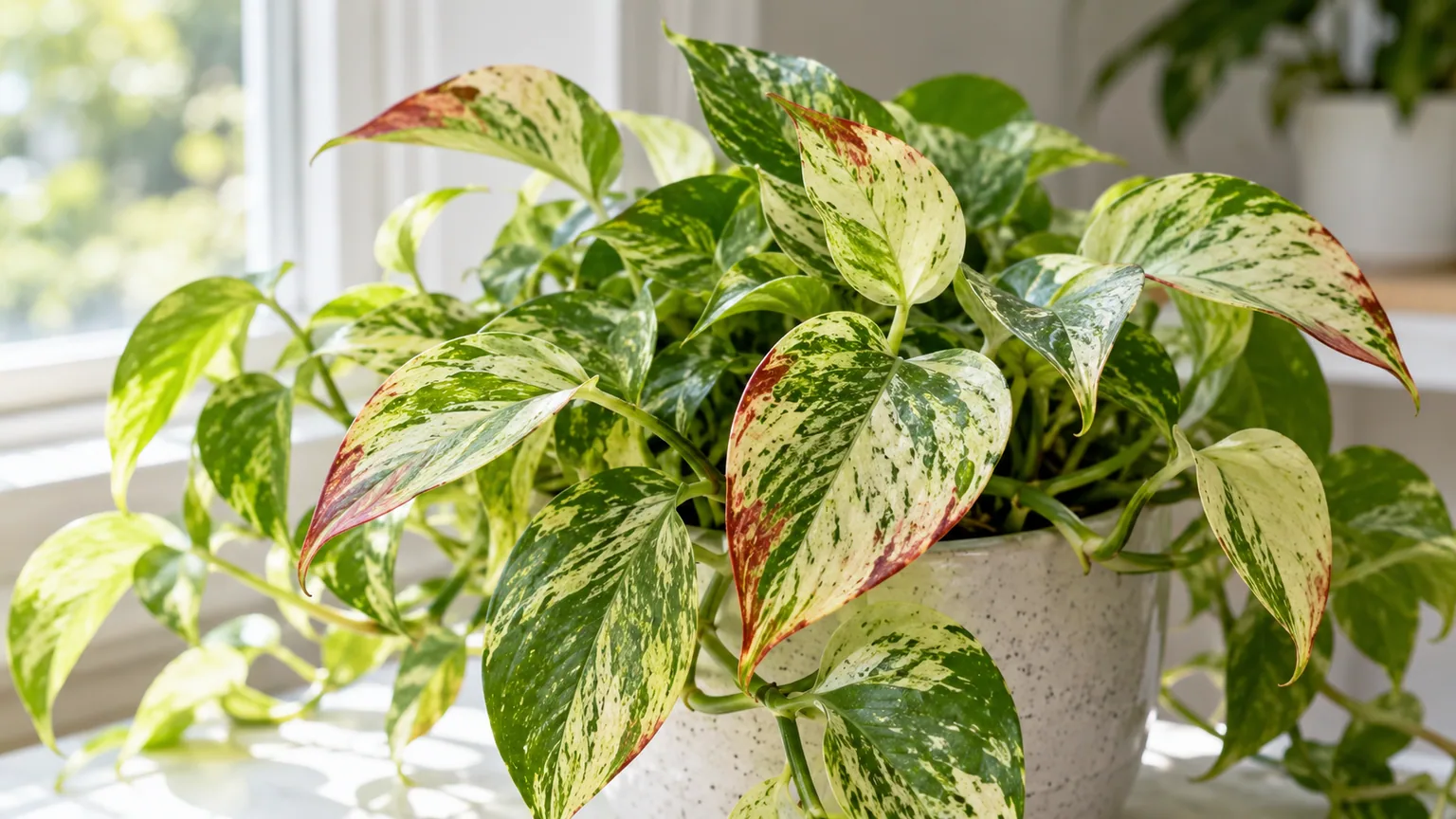
Red Leaves on Marble Queen Pothos: Causes, Checks & Fixes
This guide covers red leaves on Marble Queen Pothos. See also the general Red Leaves guide, watering, and light pages for this plant.
Red Leaves on Marble Queen Pothos: Causes, Checks & Fixes
Quick answer
Red or reddish color on Marble Queen Pothos is stress pigment, not variegation. A healthy Marble Queen shows only green, white, and cream — there is no red in its normal pattern, so treat new red as a signal, not a cultivar trait.
The most common trigger is cold: a vine hanging against winter glass, sitting in a draft, or chilled during transport. The second is a sudden move into strong direct sun, which the pale sections cannot handle. First step: move the plant to stable bright indirect light at 18–29°C, away from glass, radiators, and air-conditioner streams — and change nothing else for a week while you read the response.
For the general science of why leaves make red pigment, see our red leaves guide. On Marble Queen, the pattern almost always resolves to cold, sun, or wet cold roots, as described below.
What red looks like on Marble Queen Pothos
On this plant, stress red appears as a pinkish-red flush along leaf margins or across the white sections first, because those pale areas have the least chlorophyll to mask it. The green zones may take on a dull bronze cast at the same time. Firm, smooth tissue that holds its shape points to protective pigment; tissue that turns papery, bleached, water-soaked, or dark and soft points to actual injury from sunscorch or chilling.
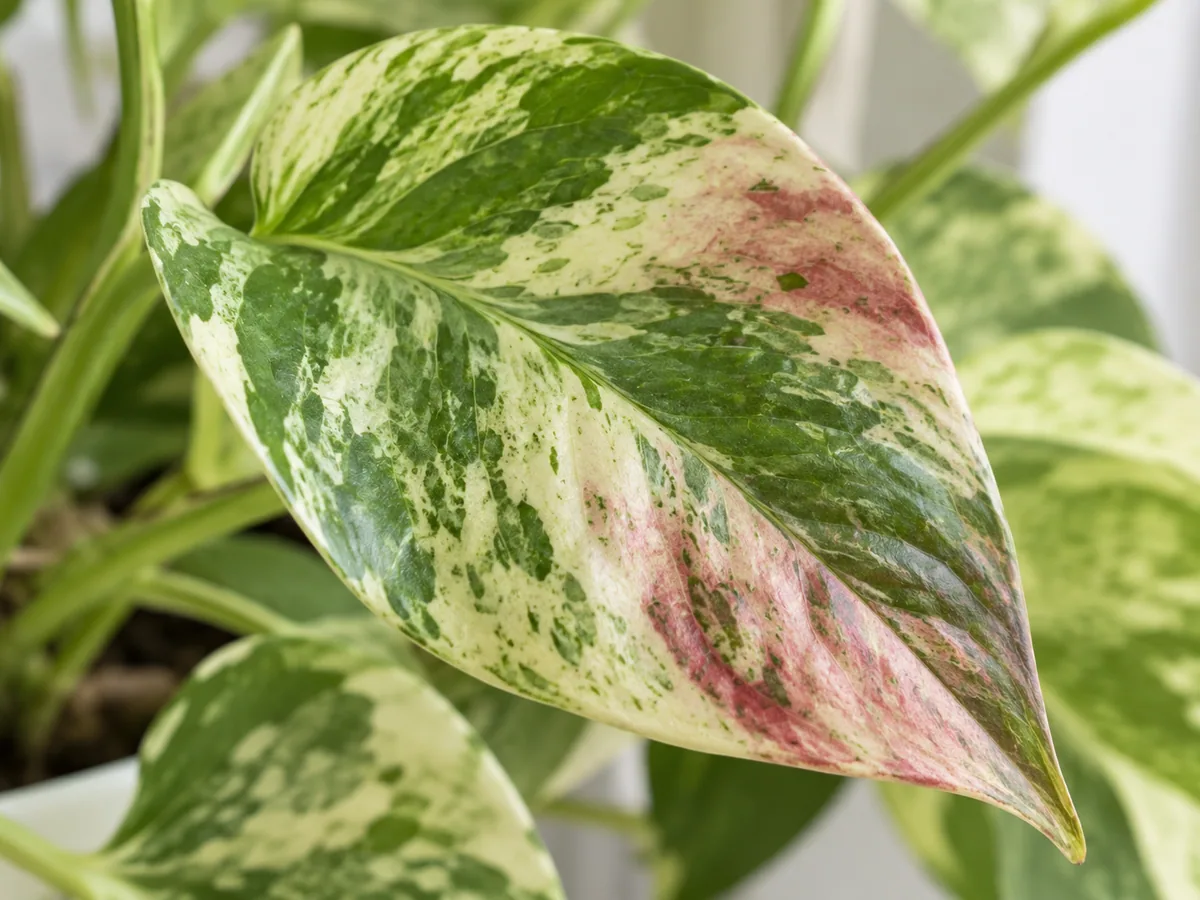
Close-up: reddish flush concentrated on pale variegated tissue with firm texture — protective pigment rather than dead tissue.
New leaves deserve their own rule. One brand-new leaf with a faint pink blush that fades as the leaf hardens is harmless juvenile pigment. Red that spreads across mature leaves, concentrates on the window-facing side, or follows a cold night is not.
Why Marble Queen turns red so readily
Marble Queen is one of the most heavily white-variegated Epipremnum aureum cultivars, and the Missouri Botanical Garden notes it needs bright light while staying sensitive to harsh exposure. All that white tissue contains little to no chlorophyll, so the plant photosynthesizes less per leaf and grows more slowly than green pothos types. When conditions turn stressful — cold, harsh sun, or roots that stop delivering — the plant produces red anthocyanin pigments as a shield, and the color shows through the pale tissue almost immediately.
That slow growth matters for diagnosis. Because a Marble Queen drinks slowly, its mix stays wet longer than a fast grower’s would, so cold plus wet roots overlap often in winter. Recovery is also slower: expect new leaves on a weeks-long cycle, not days. Judge everything by the newest growth, not by whether old red fades.
Cold and drafts: the most common trigger
Marble Queen is a tropical vine that grows best around 18–29°C (65–85°F) and sulks below about 10°C (50°F). Leaves resting against cold window glass can chill far below room temperature, and trailing vines are exposed to drafts along their whole length. The RHS advises considering cold drafts and sudden environmental changes when foliage deteriorates, and red flushing after a cold night fits that pattern exactly.
Confirm it by position: red concentrated on the glass-facing side, on the longest trailing stems nearest the window, or appearing within days of a cold snap, a move, or delivery in cold weather. Chilling injury may start red and then turn water-soaked, dark, or limp — that progression means tissue damage, not pigment. If only color is present and the leaf stays firm, the plant usually stabilizes once warmth returns; see heat and cold stress patterns for the broader temperature picture, and compare with purple leaves, which share the cold-root mechanism.
Too much direct sun on white sections
The same white tissue that makes Marble Queen beautiful burns quickly. A vine moved from dim shop light straight into several hours of direct afternoon sun often flushes red on the exposed side within days — protective pigment first, then bleached or tan scorch patches if exposure continues. The RHS notes that excessive direct sunlight can scorch houseplant foliage, and low-chlorophyll variegation lowers the threshold.
Distinguish pigment from scorch by texture: a smooth red flush that stays firm is acclimation color; areas turning pale, papery, or crisp brown are sunburn and will not recover. Our sunburn guide covers scorched white sections in detail, while faded leaves helps when the issue is too little light instead. The fix for suspected sun stress is gradual — a sheer curtain or a step back from the glass, not a move into a dark corner, which only trades one stress for leggy pale growth.
Water, roots, and the phosphorus trap
Red or purplish older leaves with stalled growth are often blamed on phosphorus deficiency, and the RHS confirms that pale, yellow, or reddish leaves can signal nutrient problems. But on Marble Queen, true deficiency is rare indoors; impaired uptake is the usual story. Cold wet mix, compacted soil, an oversized pot, or a blocked drainage hole keeps slow roots oxygen-starved, and cold roots absorb poorly even when fertilizer is present. The UC IPM houseplant guide links poor drainage and inappropriate watering to a wide range of foliage symptoms, which is why moisture evidence comes before any nutrient theory.
Check the root zone at depth with a finger or skewer, lift the pot to feel its weight, and confirm water flows freely from the drainage hole. If the mix is sour-smelling, soggy days after watering, or the stems feel soft at the base, treat it as a root problem per our overwatering guide and root rot guide — not a feeding problem. Marble Queen wants the top 3–5 cm dry between waterings, as the watering guide explains; in doubt, compare with yellow leaves, the classic wet-root signal on this plant.
How to confirm the cause
Work through these checks in order, changing nothing until you finish:
- Map the pattern. Which leaves — new, old, or window-facing? Red only on the exposed side implicates sun or cold glass; red on shaded older leaves with slow growth implicates roots.
- Reconstruct the last two weeks. Any move, new grow light, cold night, curtain removal, repot, or fertilizer dose? Timing usually names the cause.
- Feel the tissue. Firm and smooth means pigment; papery or bleached means sunscorch; water-soaked, dark, or limp means chilling injury.
- Test the root zone. Probe moisture at depth, lift the pot, and check drainage. Stable bright-indirect plants with dry-appropriate mix point back to a temperature event.
- Inspect for pests. Mites and thrips bronze foliage in ways beginners read as “red.” Check leaf undersides and new growth with magnification; Colorado State Extension’s houseplant pest guide describes the stippling, webbing, and distortion that separate pest damage from pigment.
The first fix, then what follows
First fix: stabilize the environment — bright indirect light, 18–29°C, away from glass and vents — and leave the plant alone for a week. This single correction resolves most cold- and sun-flush cases without adding new variables.
After that week, act on what you confirmed:
- If the mix stays wet or smells sour, unpot, trim only black mushy roots with clean tools, and repot into the airy perlite mix the soil guide recommends. Keep the same pot size unless roots are circling.
- If sunscorch is confirmed, hold the sheer-curtain position and protect the newest leaves; scorched patches will not heal, so further adjustment waits for new growth.
- If pests are confirmed, isolate the plant and treat per the pest identified — not with a broad pesticide cocktail on day one.
- Only when light, temperature, and moisture are stable and the plant is actively growing again should feeding resume, per the fertilizer routine at half strength. Cold roots plus fresh fertilizer equals salt stress.
Lookalikes worth ruling out
| What you see | More likely | Where to go |
|---|---|---|
| Red-brown spots with halos that enlarge | Leaf spot disease, not pigment | General diagnosis hub linked above |
| Fine stippling plus webbing on undersides | Spider mites bronzing | Spider mites |
| Brown crispy edges without red wash | Dry air or watering gaps | Brown tips and underwatering |
| Whole-leaf browning from the white zones outward | Scorch or root failure | Brown leaves |
| Red-purple older leaves, slow and pale | Cold-limited uptake | Purple leaves |
Recovery: what to expect
Reddened leaves usually keep their tint — pigment does not wash back out. Success looks like new leaves emerging clean, firm, and correctly marbled, with no fresh red spreading onto them. On a slow-growing Marble Queen that means watching across several weeks, not days.
Escalate if red zones turn black, water-soaked, or mushy; if stems soften at the base; or if more leaves fail each day despite stable conditions. Those signs mean tissue death or advancing root failure, and a local extension clinic can assess sharp photos plus your care history. Marble Queen roots readily from stem cuttings, so even a badly chilled vine can often be restarted from firm healthy nodes.
How to prevent it next time
Keep the vine in bright indirect light year-round — the light guide sets the target — and pull trailing stems back from glass before winter nights. Water by the top-centimeters test rather than the calendar, empty the cachepot after every watering, and repot on schedule into airy mix instead of upsizing into a waterlogged oversized pot; the repotting guide and problems hub cover timing. Start the heating season by checking the coldest leaf, not the thermostat: if the window-side foliage feels chilly to your hand, the plant feels it more.
Related Marble Queen Pothos guides
- Marble Queen Pothos overview — full care profile: light, water, soil, and growth habit.
- Problems hub — browse every diagnosed issue for this plant when red is not the only symptom.
- Purple leaves — use when older leaves skew purple rather than red; same cold-root workup.
- Sunburn and scorched leaves — use when red areas have turned bleached, tan, or papery.
- Brown leaves — use when whole leaves brown from the white zones outward.
- Overwatering and root rot — use when the mix stays wet or stems soften.
- Watering, light, and soil — the three care baselines behind most red-leaf cases.