Purple Leaves on Marble Queen Pothos: Causes, Checks & Fixes
Quick answer
Purple leaves on Marble Queen Pothos most often mean cold or draft stress, strong-light blush on the white variegation, or phosphorus trouble in a cold, wet, or long-unfed mix. First step: move the plant out of cold air into stable warmth and bright indirect light, then check feeding and repot history before fertilizing.
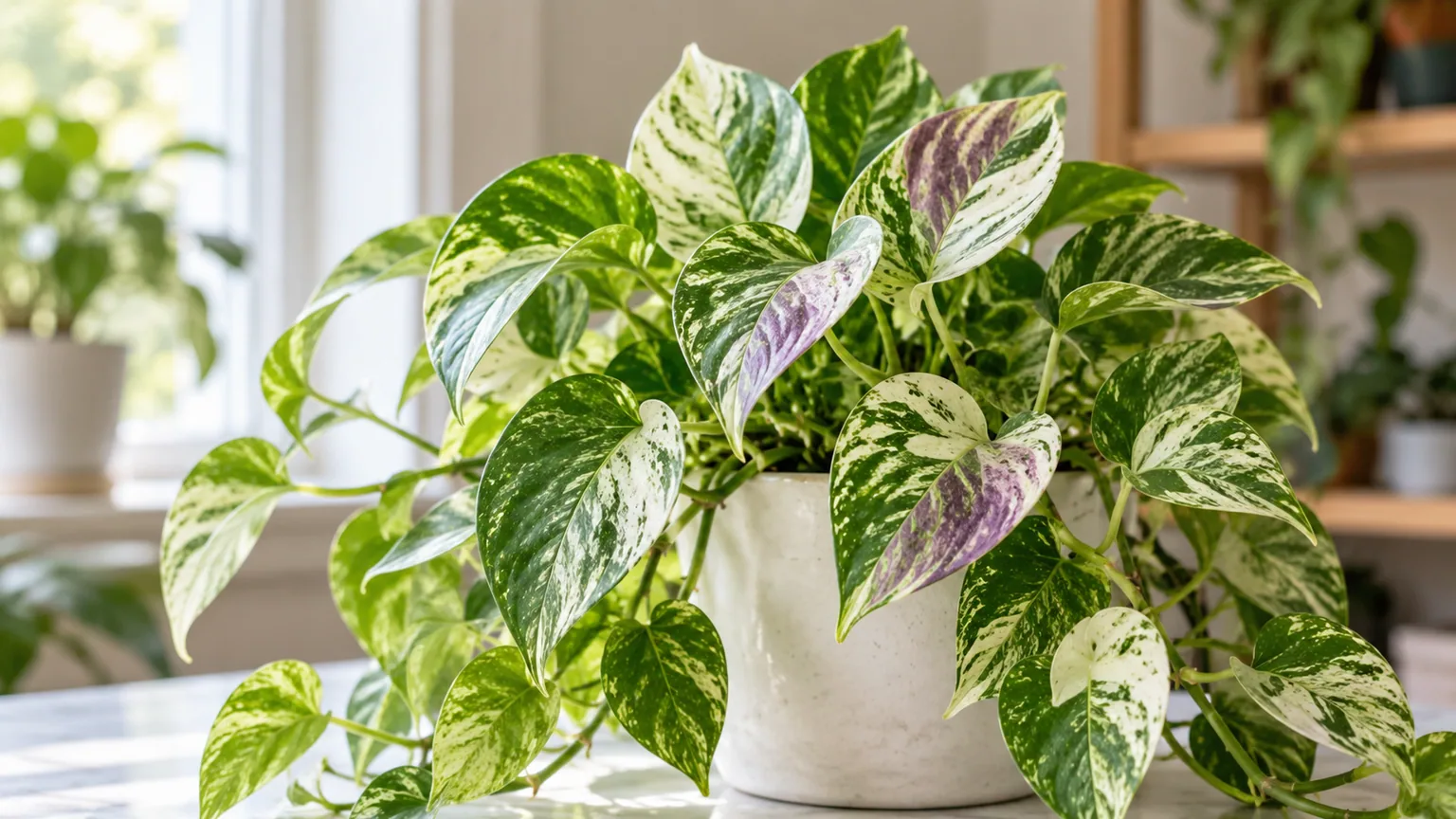
Purple Leaves on Marble Queen Pothos: Causes, Checks & Fixes
This guide covers purple leaves on Marble Queen Pothos. See also the general Purple Leaves guide, watering, and light pages for this plant.
Purple Leaves on Marble Queen Pothos: Causes, Checks & Fixes
Quick answer
Purple leaves on Marble Queen Pothos (Epipremnum aureum ‘Marble Queen’) most often trace to cold or draft stress, a pink-purple blush on the white variegation in strong light, or phosphorus trouble in a cold, wet, or long-unfed potting mix. First step: move the plant out of cold air into stable warmth (65–85°F) in bright indirect light, then check feeding and repot history before reaching for fertilizer. For the cultivar baseline, see the Marble Queen overview; for how purpling works across houseplants in general, see our purple leaves guide. On Marble Queen, the pattern usually shows up as cool-blushed undersides or pinked white sections rather than whole-plant decline.
What purple leaves look like on Marble Queen Pothos
On this cultivar, purpling rarely covers the whole plant evenly. Expect a dusky purple or plum tint along leaf undersides and veins, or a pinkish-purple blush across the creamy-white sections while the green zones stay green. Cold-triggered purpling often appears within days of a chill — leaves near a drafty window or vent color first, while sheltered inner leaves stay marbled. Stems may redden slightly at the nodes, but they should still feel firm.
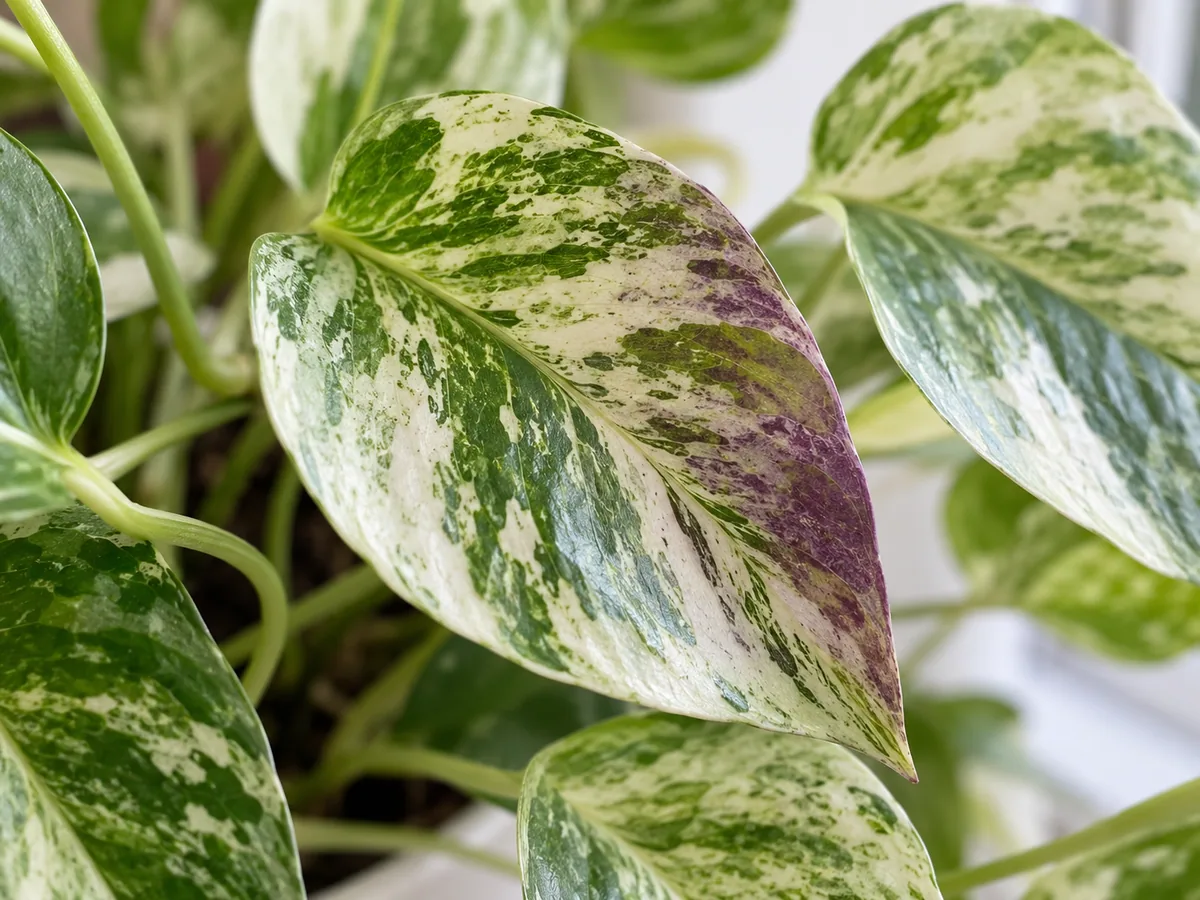
Purple Leaves on Marble Queen Pothos — dusky undersides and blushed white sections; compare with healthy marbling on the same vine.
Read the variegation, not just the color. A pink-purple cast confined to the white zones in a bright window is usually light blush on chlorophyll-free tissue. Purpling that starts on older, lower leaves while new tips stall is the classic mobile-nutrient pattern — phosphorus moves from old leaves to new growth when supply runs short. Purpling plus soft stems, blackening nodes, or a sour pot smell is no longer simple purpling; escalate to root rot.
Why Marble Queen Pothos turns purple
Cold and drafts are the leading trigger indoors. Pothos prefers nights between 60°F to 70°F and days of 70°F to 85°F, and Clemson Extension warns to keep plants away from air conditioning vents in the summer and from windowsills and heating vents in the winter. When temperatures dip, many plants load purple-reddish pigment (anthocyanins), often strongest on undersides and veins, and extension researchers note that cool weather triggers these protective purple pigments. A Marble Queen parked against winter glass or under an AC vent can blush purple almost overnight while the rest of its care looks correct.
Strong light pinks the white sections. The cream-white zones of Marble Queen carry little chlorophyll, so intense sun pushes them to produce screening pigments — a pink-lavender blush rather than true purple leaves. This cultivar wants bright, indirect light, because pothos leaves do not do well in direct sunlight. A south- or west-facing sill without a sheer curtain is the usual setup behind blushed white tissue.
Phosphorus shortage or lockout purples old leaves first. Phosphorus is a mobile macronutrient, so deficiency shows as dull dark-green foliage with purple-reddish tones on older leaves plus stunted new growth. On Marble Queen this rarely means the bag of fertilizer is at fault on day one — it usually means cold, soggy, or compacted mix has shut down uptake, or the plant has sat unfed and unrepotted for well over a year. UConn Extension cautions that cold soil is the most common look-alike for phosphorus deficiency, and true confirmation comes from a soil or tissue test — for a houseplant, feeding history and repot age are the practical stand-ins. Epic Gardening lists nutrient deficiencies among the core reasons pothos vines decline, behind light and watering faults.
Slow metabolism compounds everything. Marble Queen grows more slowly than solid-green pothos because its white tissue photosynthesizes less, so it uses water and nutrients more slowly. Mix that stays damp in a cool dim corner keeps roots chilly and oxygen-poor, which locks out phosphorus even when fertilizer is present. Lower light may cause variegated varieties to lose some of their coloring, and NC State Extension confirms that low light can cause loss of variegation — so a dim, cold corner delivers a double hit of faded marbling plus purple stress pigment.
Lookalike symptoms to rule out
| Pattern | Leaf look | Soil / pot | Stem / new growth | Likely cause | Next step |
|---|---|---|---|---|---|
| Purple undersides after a cold night, firm stems | Dusky plum on undersides, veins | Normal moisture | Firm, tips still growing | Cold / draft stress | Warm the spot → heat stress recovery basics in reverse |
| Pink blush only on white zones near a bright window | Cream areas pink-lavender, green zones normal | Normal | Firm, compact growth | Strong-light blush | Filter the light → sunburn-scorched leaves if edges crisp |
| Older lower leaves purple, new growth stunted | Dull green-purple on old leaves | Long-unfed or compacted mix | Small pale new leaves | Phosphorus shortage / lockout | Feed + refresh mix → nutrient lockout |
| Purple plus yellow crispy margins | Purple with scorched edges | Dry, light pot | Firm but wilted | Drought compounding stress | Deep soak once → underwatering |
| Red all over, not purple | True red wash on young leaves | Any | Fast growth in bright light | Cultivar red flush | Compare → red leaves |
| Purple after heavy feeding | Dark leaves, salt crust on surface | Crusty, wet-dry cycles | Burnt tips | Excess fertilizer | Flush and hold feed → fertilizer burn |
| Purple plus soft stems, sour smell | Spreading discoloration | Soggy, heavy pot | Softening nodes | Root failure | Unpot now → root rot |
How to confirm the cause
- Temperature history — Did purpling follow a cold snap, an open window, a move to a sill, or AC blasting? Nights under ~60°F (15°C) at the leaf surface implicate cold even when the thermostat reads higher.
- Draft mapping — Hold your hand where the purplest leaves sit. A vent stream, leaky window, or exterior door draft you can feel is enough to trigger blushing on the nearest leaves first.
- Light position — Purpling or pinking only on the window-facing side, strongest on white sections, points to light blush. Whole-vine purpling on the shaded side points away from light as the cause.
- Leaf age pattern — Oldest lower leaves purple while tips stall suggests mobile-nutrient (phosphorus) trouble. Newest leaves blushing while old leaves stay marbled suggests light or temperature on tender tissue.
- Feeding and repot history — No balanced feed for a full growing season, or no repot in two-plus years with compacted mix, supports deficiency or lockout. Recent heavy feeding argues against deficiency — check fertilizer burn instead.
- Moisture at depth — Push a finger 3–5 cm into the mix. Cold plus soggy at depth means roots cannot take up phosphorus regardless of feeding; water only when the soil is dry at that depth for this slow drinker.
- Stem and root spot-check — Firm stems with clean growing tips mean stress, not rot. Soft nodes, blackening, or sour smell mean the purple is a side symptom of root failure — switch to the root rot path.
First fix for Marble Queen Pothos (by confirmed cause)
Pick one path based on what you confirmed — do not repot, fertilize, and relocate on the same day.
If cold or draft stress is confirmed
Move the plant out of the cold stream today — away from the vent, off the winter sill, into a room that holds 65–85°F day and night. This single move resolves most Marble Queen purpling. Keep its bright, indirect light but choose a bright spot without the draft. Expect blushed leaves to relax within one to two weeks; judge by new growth, not instant re-greening.
If strong-light blush is confirmed
Filter the light, not the plant. Pull the pot back a few feet from south or west glass or hang a sheer curtain so the white sections get brightness without direct rays. Leave feeding and watering unchanged for a week and watch whether new leaves emerge with cleaner white-green marbling. If edges turn crisp brown instead of pink, treat it as scorch: see sunburn-scorched leaves.
If phosphorus shortage or lockout is confirmed
Warm and aerate the root zone first, feed second. Let cold wet mix dry to 3–5 cm, confirm the pot drains freely, and only then apply a balanced liquid fertilizer at half strength during spring or summer growth. If the mix is compacted, hydrophobic, or older than two years, repot into fresh standard pothos mix with 20–30% perlite (pH 6.0–6.5) rather than pouring feed onto failing roots. Full workflow: nutrient lockout and potassium deficiency if margins yellow alongside the purple.
If drought is compounding the purple
Water thoroughly until excess drains, empty the saucer within 30 minutes, and resume the normal dry-down rhythm. Details: underwatering on Marble Queen.
For all paths: do not fertilize a cold-stressed or soggy plant the same day you move it — feed only after warmth and moisture stabilize and new growth resumes.
Recovery timeline
| Phase | What to expect | Success signal |
|---|---|---|
| Days 1–3 | No new purpling after the move or light filter | Blush stops spreading to fresh leaves |
| Weeks 1–2 | Cold-blushed leaves fade toward normal marbling | Undersides lose the dusky tone; stems stay firm |
| Weeks 2–4 | New heart-shaped leaves emerge with clean green-white marbling | Newest leaf shows crisp variegation, not pink wash |
| Weeks 4–8 | Phosphorus-path plants green up new growth after feeding or repot | Larger new leaves; longer vines resume extending |
| Permanent | Old purpled leaves may keep a faint cast | Focus on apical tips, not salvaging every old blade |
Worsening signs: purpling climbs to new tips after warming, stems soften at nodes, white sections turn brown-crispy, or several leaves fail within a week — escalate to root rot.
What not to do
Do not blast a purpled Marble Queen with direct sun to “warm it up” — pale tissue scorches faster than it recovers. Do not fertilize cold or soggy roots; undeliverable salts worsen lockout and can burn the white sections. Do not repot and feed on the same stressed day unless the mix is sour, hydrophobic, or infested. When trimming spent leaves, keep debris away from pets — all Epipremnum aureum cultivars are toxic to cats and dogs.
How to prevent it next time
Keep night temperatures above 60°F and the pot out of vent streams and off freezing sills — check the light guide when choosing the new spot so brightness stays high without direct midday sun. Water on the pot’s rhythm, not the calendar: top 3–5 cm dry first, with a perlite-rich mix that breathes (see the soil guide). Feed monthly at half strength through spring and summer, skip feeding for stressed or dormant winter plants, and repot every one to two years before compaction locks out nutrients. Stable warmth, filtered brightness, and fresh mix keep anthocyanin pigments quiet and marbling crisp.
When to worry
Act quickly when:
- Stems soften or blacken at the nodes while leaves purple
- Sour smell rises from drainage holes or the mix stays wet for over a week
- Several leaves fail within days of the first purple tint
- New tips stall, blacken, or emerge distorted after you already warmed the plant
- White sections turn brown-crispy rather than pink — that is scorch, not blush
Slow purpling on firm vines with clean growing tips is a stress signal, not an emergency.
Related Marble Queen problems
Use this page as the purple-leaf differential hub; follow the link that matches what you confirmed:
- Marble Queen overview — cultivar care baseline and why this slow variegated grower stresses differently
- Red leaves on Marble Queen — true red flush vs. purple stress pigment
- Nutrient lockout on Marble Queen — when feed is present but roots cannot use it
- Potassium deficiency on Marble Queen — margin yellowing alongside purpling
- Fertilizer burn on Marble Queen — purpling after overfeeding, with salt crust
- Root rot on Marble Queen — soft stems and sour mix behind spreading discoloration
- Sunburn scorched leaves on Marble Queen — crisp brown edges vs. pink blush
- Marble Queen watering — dry-down rhythm that keeps cold wet feet away
- Marble Queen light — variegation-safe brightness without scorch
- Marble Queen problems — browse all issues on this species
Conclusion
Purple on Marble Queen Pothos is usually the plant’s stress pigment talking — cold air, strong light on white tissue, or phosphorus locked out by cold wet mix — not a mysterious disease. Read which leaves purpled and what changed in the room that week, apply one cause-matched first fix, and judge recovery by new marbled growth at the vine tips. If firm vines blush after a chill, warmth and filtered light settle it; if old leaves purple on a long-unfed plant, refresh the mix and feed in season.
How we wrote and verified this guide: Recommendations were checked against Clemson Cooperative Extension, UConn Extension, University of Minnesota Extension, NC State Extension, Missouri Botanical Garden, Penn State Extension, Gardening Know How, Epic Gardening, and ASPCA references cited inline. Author: sai-ananth. Reviewer: LeafyPixels Review Board. Methodology: plant problem guidance is reviewed against botanical references, extension resources, and LeafyPixels plant-care data before publication. Claims validation: claims-validator-v1 pass with inline external links documented below. Last reviewed: 2026-09-02.
When to use this page vs other Marble Queen Pothos guides
- Marble Queen Pothos watering guide — Use for routine moisture checks before assuming purple leaves is the main issue.
- Marble Queen Pothos problems hub — Browse all common issues on this species.
- Red Leaves on Marble Queen Pothos — Different entry point when the discoloration reads red rather than purple.
- Nutrient Lockout on Marble Queen Pothos — Different entry point when feed is present but the plant cannot use it.
- Root Rot on Marble Queen Pothos — Different entry point when stems soften and mix smells sour.