Nutrient Lockout on Marble Queen Pothos: Causes, Checks &
Quick answer
Nutrient lockout on Marble Queen Pothos means pale, stunted new growth and white-sector browning even though you have fed the plant — salts, wrong pH, or tired roots are blocking uptake, not an empty fertilizer bottle. First step: leach the pot thoroughly with plain room-temperature water until it drains freely, discard all saucer water, and hold all fertilizer until new marbled leaves emerge clean.
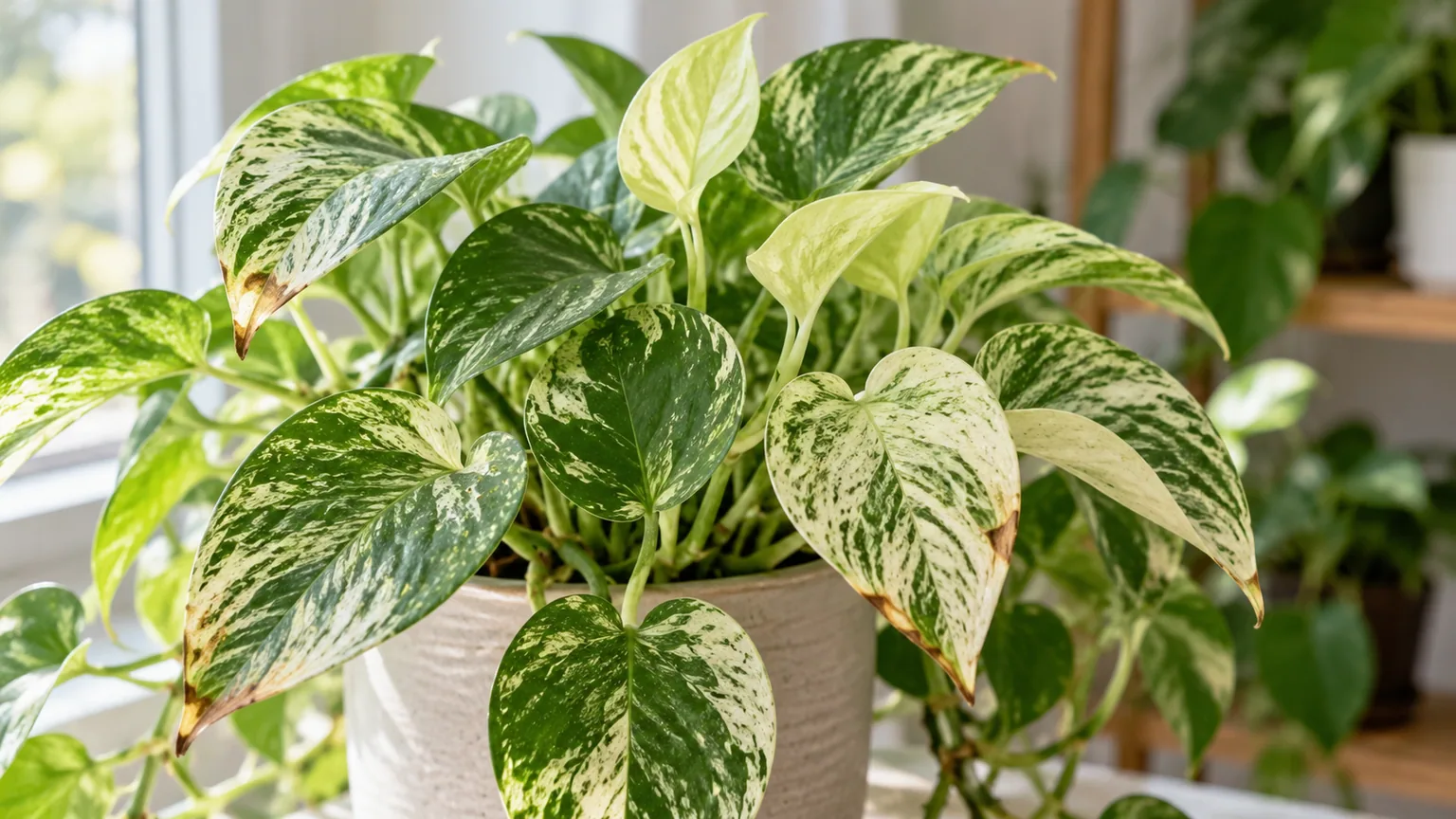
Nutrient Lockout on Marble Queen Pothos: Causes, Checks & Fixes
This guide covers nutrient lockout on Marble Queen Pothos. See also the general Nutrient Lockout guide, watering, and light pages for this plant.
Nutrient Lockout on Marble Queen Pothos: Causes, Checks & Fixes
Quick answer
Nutrient lockout on Marble Queen Pothos (Epipremnum aureum ‘Marble Queen’) means the roots cannot take up nutrients that are already in the pot — so new leaves emerge pale, small, or distorted even though you fed recently. On this slow-growing variegated cultivar, the usual blockers are accumulated fertilizer salts, pH drift outside the plant’s preferred slightly acidic range, or tired compacted mix plus weak roots. First step: leach the pot thoroughly with plain room-temperature water until water runs freely from the drainage holes, let it drain completely, discard all saucer water, and pause every fertilizer until the next leaves emerge with clean marbling. For how lockout differs from simple hunger in containers generally, see our nutrient lockout guide — on Marble Queen, the pattern usually shows up as white-sector browning plus stalled tips on a recently fed plant.
What nutrient lockout looks like on Marble Queen Pothos
Lockout mimics hunger, which is exactly why growers misread it and add more fertilizer. Expect a confusing mix: older leaves yellowing as if nitrogen-starved, newest leaves undersized or washed-out, and brown crisping concentrated on the white and cream sectors while green tissue still looks passable. Growth stalls at the vine tips even in the growing season, and the soil surface may carry a white or yellowish crust around the rim or drainage holes.
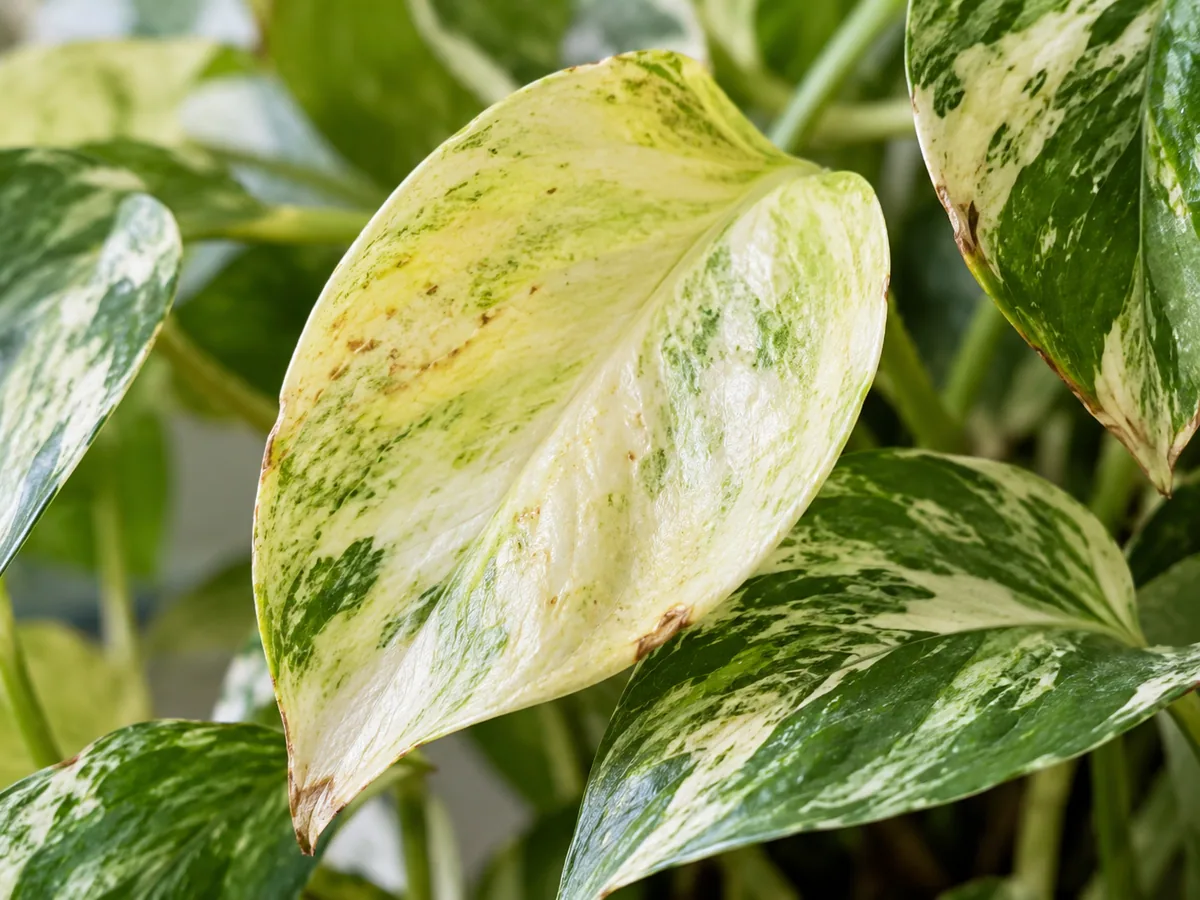
Nutrient lockout on Marble Queen Pothos — pale stunted new growth with browning on white sectors; compare newest leaves against older growth on the same vine.
The tell that separates lockout from true deficiency is history: the plant was fed, yet nothing improved. Deficiency-like yellowing that persists after recent feeding points to an uptake block rather than an empty pot. When that pattern pairs with crust, hard-water deposits, or a long feeding streak with no flushing, treat chemistry and roots as the prime suspects before you reach for supplements.
Why Marble Queen’s white marbling makes lockout look different
Marble Queen is not simply a green pothos with decoration. Its heavy white and cream marbling means less chlorophyll per leaf, slower photosynthesis, and lower nutrient throughput than all-green cultivars in the same window. NC State Extension describes pothos as a plant to fertilize every other month except when dormant in winter, and Marble Queen sits at the conservative end of even that gentle schedule.
That slow metabolism creates two Marble Queen-specific traps. First, a dose a Golden Pothos would metabolize in bright light lingers in Marble Queen’s smaller appetite and accumulates as soluble salts that reduce water uptake through osmotic stress. Second, thin variegated tissue desiccates faster than thick green blades, so salt stress scorches pale sectors first — brown margins on white patches while green areas still look fine. That asymmetry is diagnostic: whole-leaf uniform yellowing suggests watering or light trouble (see yellow leaves on Marble Queen), while white-first crisping on a recently fed plant leans toward salts and lockout (compare fertilizer burn on Marble Queen).
The three root-zone traps behind lockout on this cultivar
1. Salt buildup from feeding a light feeder like a fast grower. Monthly full-strength feeds, bloom boosters, or fertilizer at every watering stack salts faster than Marble Queen can use them — especially in small nursery pots with little buffering mix. Gardening Know How notes pothos does well with feeding only every other month in the growing season and lives long even unfed, which shows how easily enthusiasm overshoots this plant. White crust on the soil or pot rim means skip feeding and flush instead.
2. pH drift that locks out micronutrients. Marble Queen prefers mix around pH 6.0–6.5. Hard tap water pushes the root zone alkaline over months, locking out iron and manganese so new leaves emerge pale with green veins; conversely, old decomposed peat can swing acidic and restrict macronutrients. UF/IFAS production guidance targets media pH near 6.5–7.0 with foliage-weighted N-P-K ratios (UF/IFAS EP151) — home growers rarely need to chase decimals, but a runoff strip reading far outside the slightly-acidic band explains hunger on a fed plant. Cross-check soil too alkaline on Marble Queen when new growth shows interveinal chlorosis plus crust.
3. Tired, compacted mix plus weak roots. A plant sitting two or more years in the same pot often has dense, sour mix that holds water unevenly and starves roots of oxygen — and damaged roots cannot absorb nutrients no matter what the bottle promises. Overwatering history compounds this: chronically wet feet rot the fine feeder roots first. If the pot stays heavy days after watering or smells sour at the drain holes, read overwatering on Marble Queen and root rot on Marble Queen before blaming the fertilizer brand, and compare against compacted soil and wrong soil mix when water never seems to move correctly.
How to confirm lockout: vine-and-pot check
Work in this order — pattern, pot, chemistry, roots — so one observation narrows the next:
- Read the leaf geography. Lockout hits both generations at once: older leaves yellow as if starved while newest leaves stay small, pale, or distorted. White-sector burn before green-tissue damage is the Marble Queen signature of salt involvement.
- Audit feeding history. Fed within the last 4–6 weeks with no improvement? That favors lockout. Unfed for a full season with clean soil and firm roots? That favors true hunger — see iron deficiency and potassium deficiency for single-nutrient patterns.
- Inspect the soil surface and pot. White or yellowish crust, hard-water rings, or a glossy salt film all support the chemistry theory. A practical pothos testing workflow pairs this visual check with soil and pH tests before changing the feeding plan.
- Check moisture and weight. Push a finger 3–5 cm into the mix and lift the pot. Soggy depth plus a heavy pot implicates root stress alongside chemistry; a light pot with dry mix and no crust points elsewhere (see underwatering).
- Run a simple runoff pH check. Water lightly with plain water, collect a little drainage, and dip an inexpensive strip. Readings far above 7.0 or below 5.5 on a symptomatic, recently fed plant corroborate lockout rather than deficiency.
- Peek at roots only if decline continues. If flushing plus corrected watering does not halt spread within two weeks, or stems soften, slip the nursery pot off and look: firm white roots mean chemistry was the main story, while brown mushy roots with sour smell mean rot is co-driving the block.
Lookalike symptoms to rule out
| Pattern | Leaf look | Soil / pot | New growth | Likely cause | Next step |
|---|---|---|---|---|---|
| Pale all over, fed recently, crust present | Yellow older leaves plus small pale new leaves | Crust or salt film, any moisture | Stunted, distorted tips | Nutrient lockout | Leach pot; hold feed (this page) |
| Brown crisping 1–2 weeks after a strong feed | White sectors brown first, green mostly fine | Recent feed, possible crust | Burnt edges on unfurling leaves | Overfeed / salt burn | Flush; pause 4–6 weeks → fertilizer burn |
| Interveinal yellow new leaves, green veins, no crust | Young leaves pale between veins | Clean soil, firm roots | Small but otherwise firm | True iron issue | Adjust pH and trace nutrition → iron deficiency |
| Bottom-up yellowing, limp vines, heavy pot | Soft yellow, drops easily | Wet at 3–5 cm days later | Stalled, soft nodes | Wet roots / rot | Dry down; inspect roots → root rot |
| Green reversion, long gaps between nodes | New leaves mostly green, older leaves dull | Any moisture | Leggy stretch toward window | Low light | Brighten placement → not enough light |
| Uniform brown margins, no feed history | Crisp tips on oldest leaves first | Light pot, dry throughout | Thin but not distorted | Dry stress or age | Deep soak once → brown tips |
First fix for Marble Queen Pothos: leach the pot
Do one thing first: flush accumulated salts with plain water. Do not add fertilizer, supplements, or Epsom salts on the same day — stacking inputs into an already salty container deepens the chemistry problem.
- Move the pot to a sink or tub where free drainage is fine.
- Water slowly with plain room-temperature water until it runs freely from the bottom, then let it drain fully.
- Repeat two to three passes over 30–60 minutes so salts wash out rather than resettle. University of Maryland Extension recommends irrigating with clear water at a volume at least equal to the pot size when soluble salts run high.
- Discard every drop of saucer water within 30 minutes — standing drainage wicks salts straight back in.
- Return the plant to bright indirect light and do not feed. Penn State Extension’s baseline of watering pothos when dry with occasional balanced feeding is the rhythm to resume only after recovery.
Step-by-step recovery after the flush
Once the pot has drained, shift from correction to observation:
- Hold all fertilizer for four to six weeks. Watch the vine tips, not the old damage — the next leaves should emerge larger with balanced green-white marbling.
- Recheck runoff pH before resuming. If strips still read far outside 6.0–6.5, flush once more rather than feeding through the imbalance.
- Repot only if the mix is failing. Sour smell, dense compaction that never dries evenly, or a root mass circling the pot means fresh airy mix resets both structure and chemistry. Use standard potting mix with 20–30% perlite and wait four to six weeks after repotting before any liquid feed.
- Resume at half strength, conservatively. When new marbled growth looks clean and no crust returns, restart with half-strength balanced or foliage-weighted liquid every five to six weeks during active spring–summer growth. Detail the dose with the Marble Queen fertilizer guide.
- Propagate as backup if stems collapse. If a vine section softens beyond saving, take firm tip cuttings with at least one node and root in water — see the propagation guide — rather than pouring more products into a failing root zone.
Recovery timeline
| Phase | What to expect | Success signal |
|---|---|---|
| Days 1–3 | No new collapse after leaching; pot drains and lightens normally | Soil dries predictably at 3–5 cm; no additional leaves fail |
| Weeks 1–2 | Spread halts; remaining firm leaves hold color | Yellowing stops climbing toward vine tips |
| Weeks 2–5 | Next leaves at growing tips emerge larger with cleaner marbling | Newest leaf shows balanced green-white sectors, firm texture |
| Weeks 5–8 | Steady extension resumes in good light and season | Short internodes; no returning crust on soil surface |
| Permanent | Old browned or yellowed blades never re-green | Judge by apical new growth, not salvaged old foliage |
Worsening signs: yellowing climbs to every tip despite flushing, stems blacken at nodes, soil sours, or white marbling vanishes on all new leaves — escalate to root rot and unpot promptly.
What not to do
Do not feed more because pale leaves “look hungry” when you fed recently — extra fertilizer raises salts without fixing uptake. Do not layer Epsom salts, iron tonics, or bloom boosters into an unflushed pot. Do not repot, prune hard, relocate to harsh sun, and fertilize on the same day; pick the flush, read the response, then decide. And do not mistake white-sector scorch for thirst and water daily — Marble Queen uses water slowly, and soggy mix suffocates the very roots you need for recovery.
Keep chewed or fallen leaves away from pets: all Epipremnum aureum cultivars contain insoluble calcium oxalate crystals that irritate mouths, and concentrated fertilizer runoff is not safe for animals or children either. The ASPCA lists pothos as toxic to cats and dogs — store fertilizer and drainage out of reach.
How to prevent it next time
Feed for the plant you own, not the feeding calendar on the bottle. Half-strength balanced liquid every five to six weeks from mid-spring through early fall is plenty for most indoor Marble Queen plants; pause entirely from late fall through winter unless strong grow lights keep new marbled leaves coming. Water onto already-moist soil, never dry roots, and empty saucers every time. Flush with plain water whenever crust, hard-water rings, or white-sector tip burn reappear — waiting until whole leaves collapse turns a rinse into a rescue. Refresh the mix every one to two years so compaction never becomes the hidden blocker; the soil guide and repotting guide set the baseline. In hard-water homes, rotate in filtered or rainwater before increasing fertilizer strength.
When to worry
Move quickly when stems soften at nodes while soil chemistry already looks off, when several leaves fail within a week despite flushing, when the mix smells sour from the drain holes, or when every new leaf emerges distorted with burnt margins. Those combinations mean root failure is compounding lockout. A single pale leaf on an otherwise firm vine with clean new marbling at the tip is not urgent — note it and recheck at the next watering.
Related Marble Queen problems
Use this page as the lockout differential hub; follow the link that matches what you confirmed:
- Marble Queen overview - cultivar baseline: slow variegated growth and light-first care
- Fertilizer burn on Marble Queen - white-sector scorch right after a strong feed
- Iron deficiency on Marble Queen - interveinal chlorosis on new leaves with clean soil
- Potassium deficiency on Marble Queen - marginal necrosis patterns without salt history
- Soil too alkaline on Marble Queen - high-pH lockout of micronutrients
- Wrong soil mix on Marble Queen - airy aroid mix that prevents compaction lockout
- Compacted soil on Marble Queen - dense stale mix blocking uptake
- Root rot on Marble Queen - mushy roots co-driving the block
- Marble Queen fertilizer guide - half-strength schedule once recovery holds
Conclusion
Nutrient lockout on Marble Queen Pothos is a root-zone delivery failure, not an empty fertilizer bottle — salts, pH drift, or exhausted mix blocking a light feeder that was already easy to overfeed. Leach the pot once with plain water, discard all drainage, hold every feed until new leaves show crisp marbling, and only then resume half-strength feeding on a conservative schedule. Judge everything by the vine tips: clean new marbled growth means uptake is back, while old blemishes simply mark where the blockage bit hardest.
How we wrote and verified this guide: Recommendations were checked against University of Maryland Extension salt-toxicity and deficiency guidance, NC State and Penn State Extension pothos care, UF/IFAS Epipremnum production guidelines, and LeafyPixels Marble Queen plant-detail data cited inline. Author: sai-ananth. Reviewer: LeafyPixels Review Board. Methodology: plant problem guidance is reviewed against botanical references, extension resources, and LeafyPixels plant-care data before publication. Claims validation: claims-validator-v1 pass with inline external links documented below. Last reviewed: 2026-09-08.
When to use this page vs other Marble Queen Pothos guides
- Marble Queen Pothos fertilizer guide - Use for routine feeding schedules once lockout has cleared and new growth looks clean.
- Marble Queen Pothos problems hub - Browse all common issues on this species when the pattern is still unclear.
- Fertilizer Burn on Marble Queen Pothos - Different entry point when scorch follows a single recent feed rather than persistent hunger despite feeding.
- Iron Deficiency on Marble Queen Pothos - Different entry point when interveinal chlorosis appears on clean soil with no salt history.
- Soil Too Alkaline on Marble Queen Pothos - Different entry point when pH strips confirm the alkaline side of lockout.
Related Marble Queen Pothos guides
- Marble Queen Pothos overview
- Marble Queen Pothos watering
- Marble Queen Pothos light
- Marble Queen Pothos soil
- Marble Queen Pothos fertilizer
- Fertilizer Burn on Marble Queen Pothos
- Iron Deficiency on Marble Queen Pothos
- Root Rot on Marble Queen Pothos
- Marble Queen Pothos problems
Related tool
Use the Fertilizer Dilution Calculator with marble-queen-pothos pre-selected to mix half-strength doses correctly once your plant resumes feeding after lockout recovery.