Wrong Soil Mix on Marble Queen Pothos: Causes, Checks &
Quick answer
Wrong soil mix on Marble Queen Pothos usually means dense, unamended peat that stays wet for a week or gritty cactus mix that dries in a day. First, unpot the plant and inspect the root ball before changing water or fertilizer. Firm pale roots in bad mix need a repot into airy potting mix with 20 to 30 percent perlite; mushy brown roots mean rot has started.
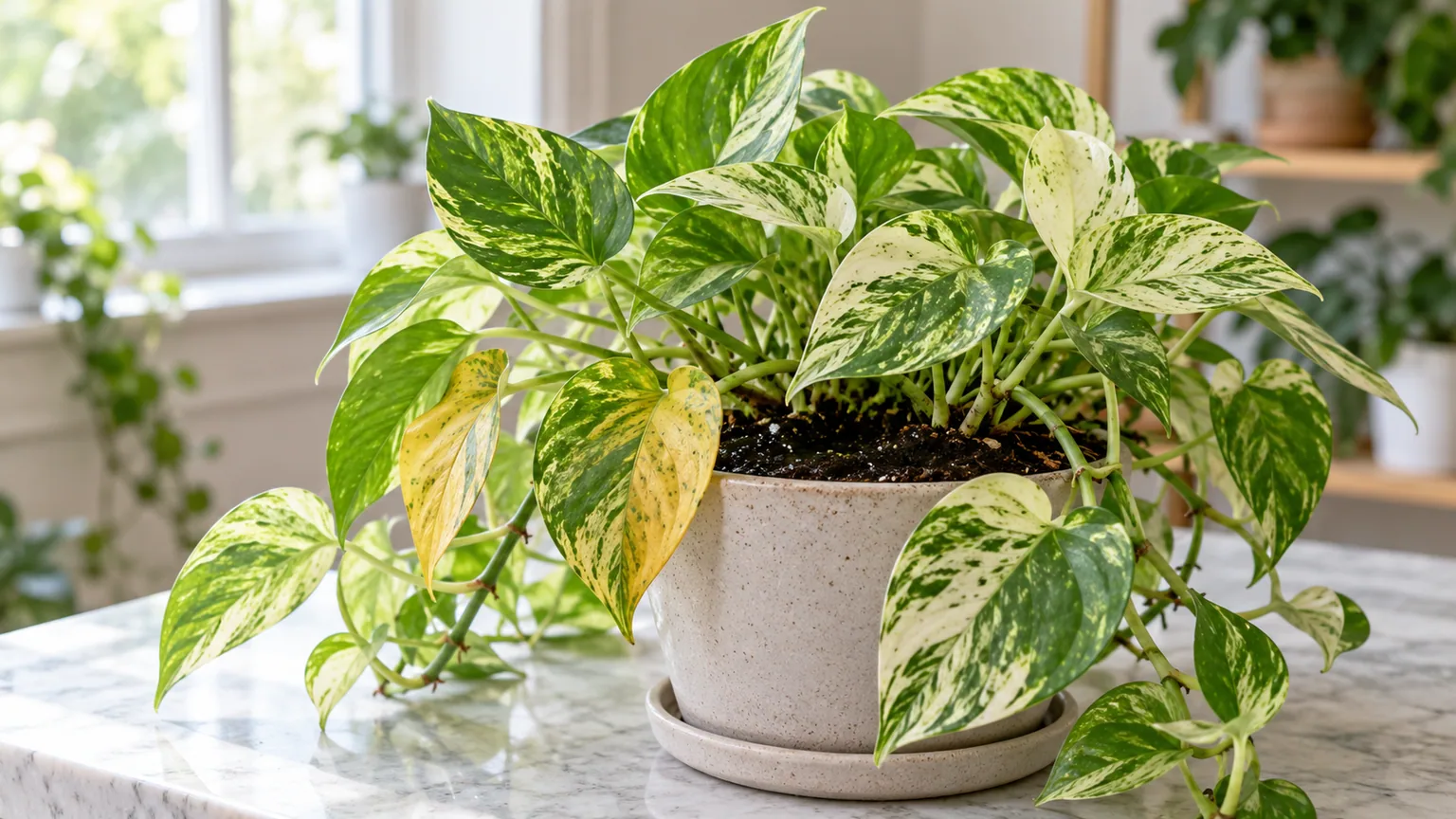
Wrong Soil Mix on Marble Queen Pothos: Causes, Checks & Fixes
This guide covers wrong soil mix on Marble Queen Pothos. See also the general Wrong Soil Mix guide, watering, and light pages for this plant.
Wrong Soil Mix on Marble Queen Pothos: Causes, Checks & Fixes
Quick answer
Wrong soil mix on Marble Queen Pothos (Epipremnum aureum ‘Marble Queen’) usually fails in one of two directions: dense, unamended peat that stays soggy for a week after watering, or gritty cactus-style mix that dries out within a day and starves the fine roots. This slow, white-variegated grower uses less water than Golden Pothos on the same schedule, so a heavy mix punishes it first while a too-lean mix scorches its pale leaf sections.
First step: unpot the plant and inspect the root ball before you change watering or fertilizer. Smell the mix, check whether roots are firm and pale or brown and mushy, and note how the texture feels. Firm roots in clearly wrong mix need a repot into airy blend; mushy roots mean rot is already active. For the full recipe and drainage setup, see the Marble Queen Pothos soil guide; for cultivar background, see the overview.
What wrong soil mix looks like on Marble Queen Pothos
On a healthy Marble Queen, each new leaf unfurls a little larger than the last with bold cream-white marbling, and the pot dries on a predictable rhythm of a few days. When the recipe is wrong, the variegation is the first thing to degrade: new leaves emerge smaller and greener, white sections develop crispy brown edges, and older leaves yellow one or two at a time while the vines stall.
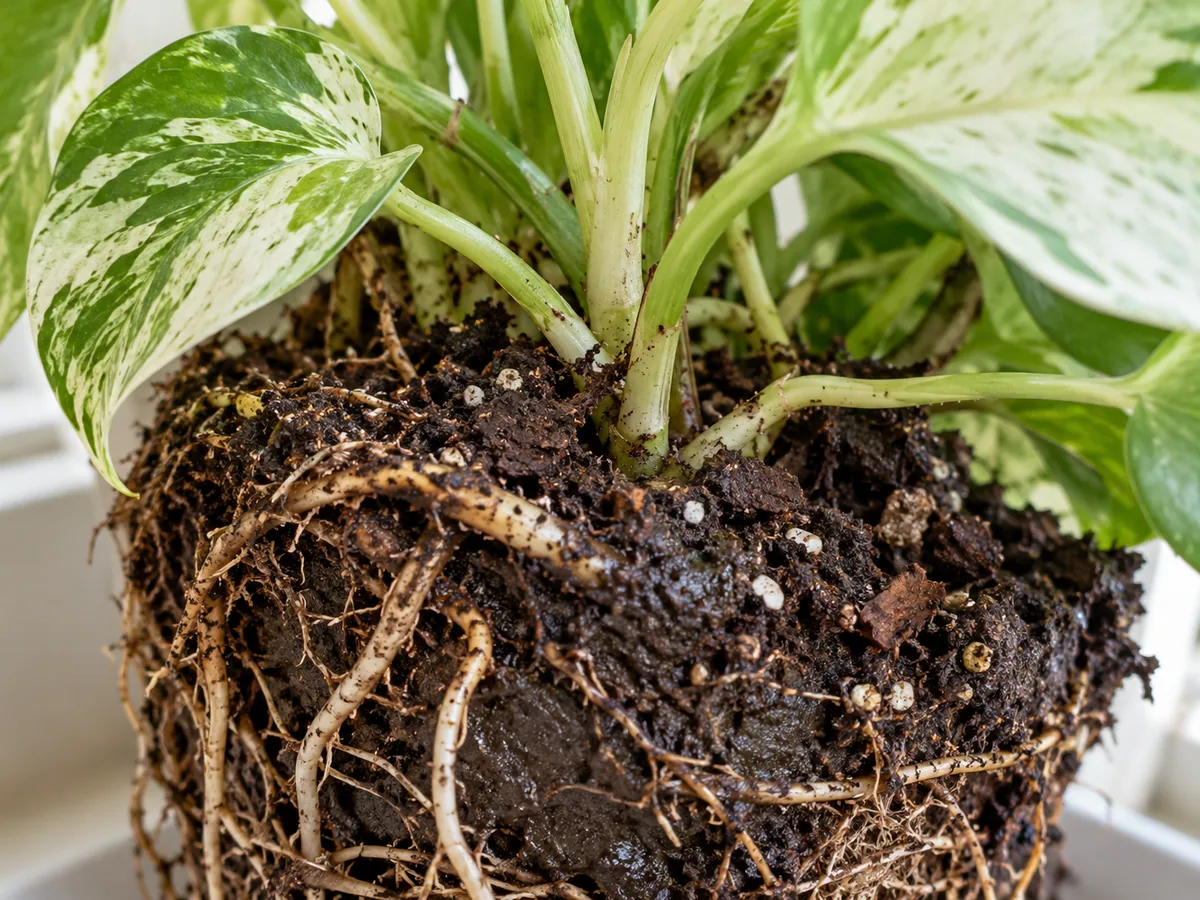
Wrong soil mix symptoms on Marble Queen Pothos - compare the stressed variegated foliage and dense mix with healthy tissue on the same plant.
At the pot level, the two failures look opposite. In a too-heavy mix, water sits on the surface, the pot stays heavy for a week, and you may catch a sour smell from the drain holes or gnats hovering over the damp surface. In a too-gritty mix, water races straight through to the saucer seconds after pouring, the root ball pulls away from the pot rim, and leaves go limp with papery white margins even though you watered yesterday. Either way, the plant reads as “thirsty” while the real fault sits in the mix structure.
The three wrong mixes Marble Queen usually ends up in
Most bad mixes trace back to a repot or a store-bought plant that was never repotted. Knowing which trap you fell into decides the fix.
Straight bagged peat with no perlite. The most common failure. Dense peat holds water in every pore and collapses further with each watering, leaving no air channels. Marble Queen’s fine feeder roots suffocate while the surface looks merely “moist.” Clemson HGIC advises potting pothos in an airy, well-draining soil mix and letting it dry between waterings — straight peat violates both halves of that guidance at once.
Cactus or succulent mix used straight from the bag. Well-meant but too lean. These blends drain so fast that the shallow pothos root ball never absorbs a full drink, and the chunks leave air gaps around fine roots. Marble Queen shows it quickly: limp vines on a light pot, white leaf sections crisping first. A lean mix can work only as a minority ingredient, never as the whole recipe.
Garden soil, oversized pots, or no drainage hole. Garden soil compacts into brick in containers and can carry pests; a pot far larger than the root ball holds a reservoir of wet mix the small root system cannot drink; and a hole-less cachepot traps every watering at the bottom. The RHS warns that an oversized container keeps compost wet for too long, risking root rot, and recommends an open, moisture-retentive but well-drained blend instead.
Why Marble Queen punishes bad mix faster than Golden Pothos
Same species, different margin for error. Marble Queen’s white-marbled sectors carry little chlorophyll, so the plant photosynthesizes and transpires more slowly than solid-green Golden Pothos in the same pot and light. That means a heavy mix stays wet even longer relative to what the plant drinks — the exact setup Missouri Botanical Garden flags when it notes that pothos roots rot in poorly drained soils despite the plant’s tough reputation.
The variegation also makes damage visible sooner. Where a green pothos quietly tolerates a week of wet feet, Marble Queen’s white zones yellow and brown at the edges within days because they have almost no photosynthetic reserve to ride out stress. In a too-gritty mix the reverse happens: the thin white tissue desiccates first, crisping while green sections still look acceptable. Either direction, read the palest leaves as your early-warning gauge — they report root trouble before the rest of the vine does.
Growth habit matters too. In its native habitat this vine climbs tree trunks by aerial rootlets, rooting into loose bark and leaf litter that is damp but never compacted. A dense peat brick is the furthest thing from that loose, airy anchor, which is why node roots circle the surface instead of penetrating the mix on struggling plants.
How to confirm the mix is the problem
Run these checks in order on watering day, before you decide to repot. For the general mechanics of how bad structure starves roots, see our wrong soil mix symptom hub. On Marble Queen specifically, confirm with the tests below.
- Time the drain. Water slowly until it runs from the holes. If water sheets off the surface or pours straight through in seconds, structure is wrong. Healthy airy mix absorbs steadily and finishes draining within a minute or two.
- Chopstick the core. A day after watering, push a dry wooden chopstick to the bottom. Soggy coating means too heavy; bone-dry and dusty means too gritty or hydrophobic. The top 3–5 cm should be approaching dry while the depths hold slight moisture.
- Lift and sniff. A pot that stays heavy for 7+ days holds too much water for this slow drinker. A sour or musty smell from the drain holes confirms anaerobic decay has begun.
- Tip it out. Slide the root ball free and look. Firm pale roots threading through dense dark mush point to heavy mix; a crumbly ball that falls apart with shriveled roots points to gritty mix. Brown-black slime with soft vine bases is root rot on Marble Queen Pothos — treat that as the emergency, not just a recipe issue.
- Read the newest leaf. Smaller, greener new growth on wet mix confirms suffocation; crispy white edges on a fast-drying mix confirms chronic underwatering in disguise. Cross-check pure watering rhythm with the Marble Queen Pothos watering guide before committing to a repot.
Lookalike symptoms on Marble Queen Pothos
Wrong mix mimics watering and feeding problems because they all end in yellow leaves. Use this table, and open the Marble Queen Pothos problems hub if more than one pattern fits.
| What you see | More likely | How to tell apart |
|---|---|---|
| Yellowing on wet, heavy mix that never dries | Overwatering | Mix itself is loose and airy but watered too often; structure passes the squeeze test |
| Limp vines on light, fast-drying mix | Underwatering | Recipe is actually correct but drinks go too long apart; soak revives the plant quickly |
| Mushy brown roots with sour smell and soft stems | Root rot | Tissue is already decaying; needs trim and rescue, not just a recipe swap |
| White crust on surface with normal texture below | Nutrient lockout or fertilizer burn | Structure drains fine; salts are the problem — flush rather than repot |
| Hard pale surface that sheds water | Compacted soil | Recipe was right once but aged into brick; aeration may save it without a full repot |
| Mold film with otherwise firm growth | Mold on soil | Surface-only dampness; mix beneath is loose and the plant is not stalling |
| Roots circling a crumbly ball that dries in a day | Pot too small or poor potting setup | Recipe suits pothos but volume or drainage design is wrong — upsize or fix holes |
First fix for Marble Queen Pothos
Unpot the plant and inspect the root ball today; change nothing else until you have seen the roots. This single check separates a recipe problem (firm pale roots, wrong texture) from active rot (brown mush, sour smell, soft vine bases) and from a watering-schedule problem (good mix, bad rhythm). Everything downstream — aerate, repot, or adjust watering — depends on what the roots tell you, so resist repotting blind or pouring fertilizer on a stalled plant hoping feeding restarts growth.
Step-by-step recovery
If roots are firm and pale but the mix is clearly wrong, repot into the right blend:
- Mix the replacement first. Combine 70–80% quality indoor potting mix with 20–30% perlite, plus a handful of fine orchid bark if you tend to overwater. Penn State Extension recommends a good quality soilless potting mix that drains well for pothos, and experts cite perlite, bark, and sand as the aeration ingredients that keep roots breathing.
- Choose the right pot. Pick a container only slightly larger than the root ball with open drainage holes — never a giant pot “to grow into” and never a hole-less cachepot as the primary home. Empty any decorative outer cover within 30 minutes of watering.
- Move the plant gently. Tease away as much old mix as comes freely without tearing roots. Do not wash the root ball under a hard stream or prune healthy pale roots; trim only tissue that is clearly brown and mushy, cutting back to firm white with clean scissors.
- Pot at the same depth. Set the vine bases exactly where they sat before — burying stems invites rot at the soil line on this vine. Fill loosely and tap the pot to settle; never press the mix down hard.
- Water once, then wait. Soak slowly until water runs clear from the holes, drain fully, and do not water again until the top 3–5 cm feel dry. Penn State cautions that excess water upon repotting adds additional stress, so restraint in the first two weeks matters more than extra attention. Aim for a neutral to slightly acidic potting soil around pH 6.1–6.8, which standard peat-perlite blends naturally provide.
If roots are mushy with soft stems, follow the rot rescue sequence in the root rot guide instead, and take variegated node cuttings as insurance before you compost anything.
Recovery timeline
Expect stillness before progress. For the first 1–2 weeks after repotting, the plant may drop one more older leaf as it adjusts — normal shedding, not failure. Weeks 3–6 should bring a new leaf that unfurls larger than the previous stunted ones, with sharper white marbling. That single leaf is your proof the roots are breathing again.
Full rhythm returns over 2–3 months: steadier unfurling and vines resuming their trailing extension. Bright indirect light speeds recovery because the plant can finally use the water it drinks — placement detail lives in the Marble Queen Pothos light guide. If yellowing accelerates instead, or no new growth appears after 6 weeks, unpot and recheck; rot may have been hiding in the core.
Mistakes to avoid
Do not repot into a much larger pot “so it lasts longer” — the extra wet mix suffocates exactly the fine roots you are trying to save. Do not layer gravel at the bottom believing it improves drainage; it just raises the soggy zone closer to the roots. Do not fertilize a freshly repotted, stressed plant — feeding cannot fix structure and salts burn tender new root tips. And do not repot, prune hard, and relocate the plant all on the same day; let it stabilize in its familiar bright spot after the root work, following the rhythm in the repotting guide.
How to prevent it next time
Prevention is recipe plus pot discipline. Start every pothos with standard mix cut with 20–30% perlite — NC State’s baseline is a well-drained potting medium that dries between drinks — and refresh the top 2–3 cm annually as peat breaks down. Repot fully every 1–2 years in spring before the mix collapses. Water against the top 3–5 cm dry test rather than the calendar, pour slowly so water absorbs instead of channeling, and keep the nursery pot breathable inside any decorative cover so the weight check stays honest.
When to use this page vs other Marble Queen Pothos guides
Use this page when the recipe or container is the suspect — pooling or racing water, a brick-hard or dust-dry core, garden soil in the pot, or no drainage hole. Use compacted soil when the recipe was right once but aged into a hard pan, and the watering guide when the mix is healthy but your schedule needs tuning. If roots are already mushy with soft stems, skip to the root rot guide; the mix failed first, but rot is now the active emergency.
Related Marble Queen Pothos guides
- Marble Queen Pothos soil — use when choosing or blending a fresh airy recipe from scratch.
- Marble Queen Pothos watering — use when the mix is healthy and you need the dry-down rhythm right.
- Root rot on Marble Queen Pothos — use when bad mix has progressed to mushy roots and soft stems.
- Overwatering on Marble Queen Pothos — use when the schedule, not the structure, keeps the pot wet.
- Yellow leaves on Marble Queen Pothos — use when yellowing is the main symptom and mix structure seems fine.
- Compacted soil on Marble Queen Pothos — use when good mix aged into a hard pan rather than starting wrong.
- Marble Queen Pothos problems — browse all common issues on this species when patterns overlap.
Related tool
Use the Plant Problem Diagnosis Tool to narrow causes for wrong soil mix on this plant before changing multiple variables at once.