Exposed Roots on Marigold: Causes, Checks & Fixes
Quick answer
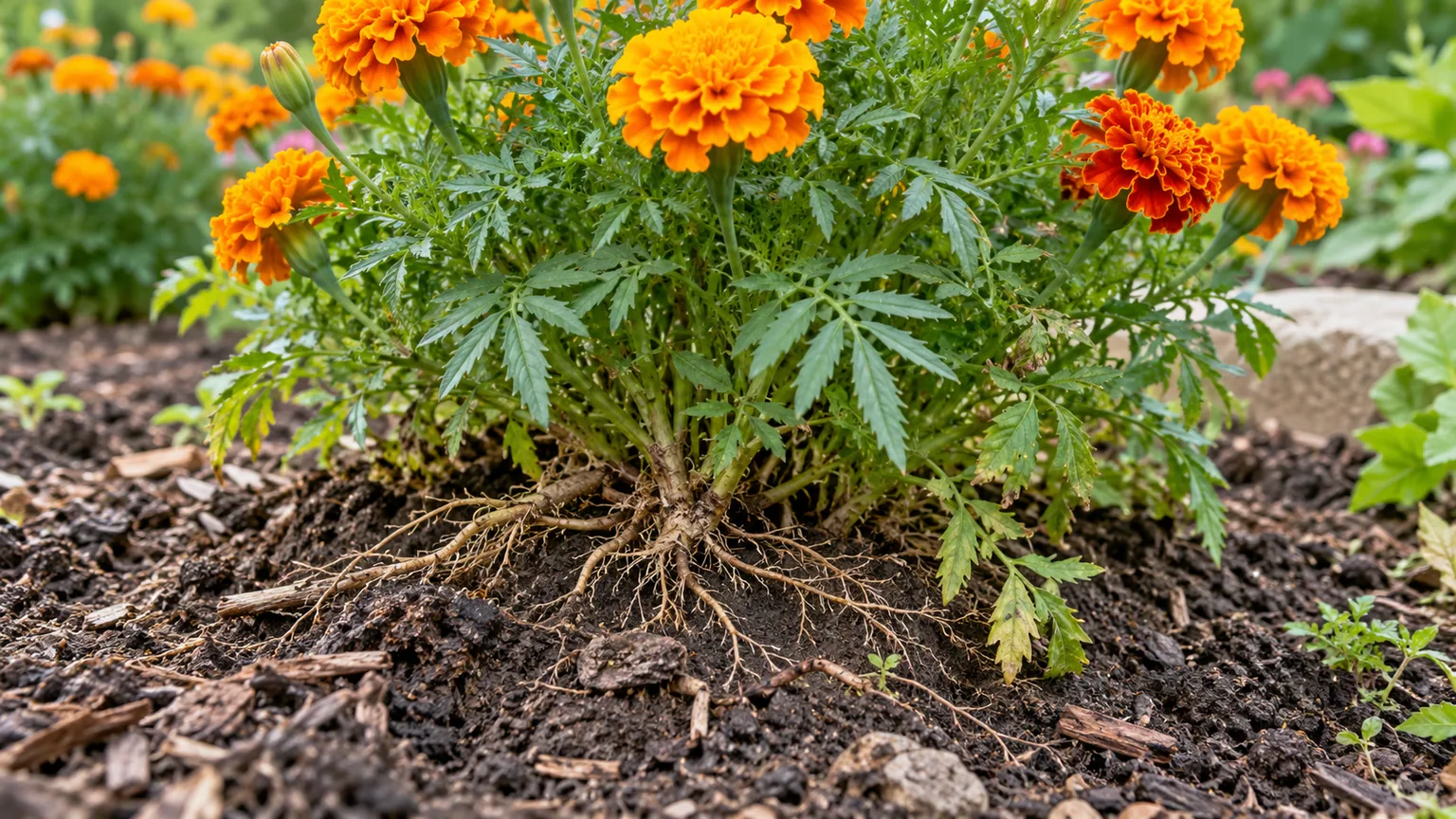
Exposed roots on marigold are usually shallow fibrous Tagetes roots left bare by heavy watering, settled transplant mix, or wind-rock on tall stems. If the roots are firm and pale, re-cover them with matching mix at the original planting depth and fix the erosion cause. Soft, dark, or foul-smelling roots mean rot, not exposure.
Exposed Roots on Marigold: Causes, Checks & Fixes
This guide covers exposed roots on Marigold. See also the general Exposed Roots guide, watering, and light pages for this plant.
Exposed Roots on Marigold: Causes, Checks & Fixes
Quick answer
If you can see pale, firm roots at the surface around your marigold, the usual story is simple: this plant builds a shallow, fibrous Tagetes root mat, and heavy overhead watering, a settled transplant hole, or wind-rock on a tall stem has washed or loosened the covering soil. First, gently re-cover the healthy roots with matching mix back to the original planting depth - then fix whatever stripped the soil away.
That one action solves most cases. Marigolds are sun-loving annuals that want full sun and evenly moist, well-drained soil, and bare surface roots dry out and stall blooming fast in that kind of heat. For how chronic wet mix damages roots in general, see our exposed roots guide. On marigold, the pattern usually shows up as a ring of fine roots around the stem base or along the bed surface after storms, with the plant otherwise upright - quite different from the wilt-plus-mush picture of true rot. Start with the marigold overview if you are unsure which problem you are looking at.
What exposed roots look like on marigold
On marigold, exposure rarely looks dramatic at first. You will notice fine, hair-like roots threading across the soil surface near the stem, or a pale root mat visible at the pot rim or bed edge where soil has dropped a centimeter or two. The stem base itself stays firm and green, and leaves usually look normal until the bare roots start drying - then lower leaves may dull or wilt at midday even though you watered recently.
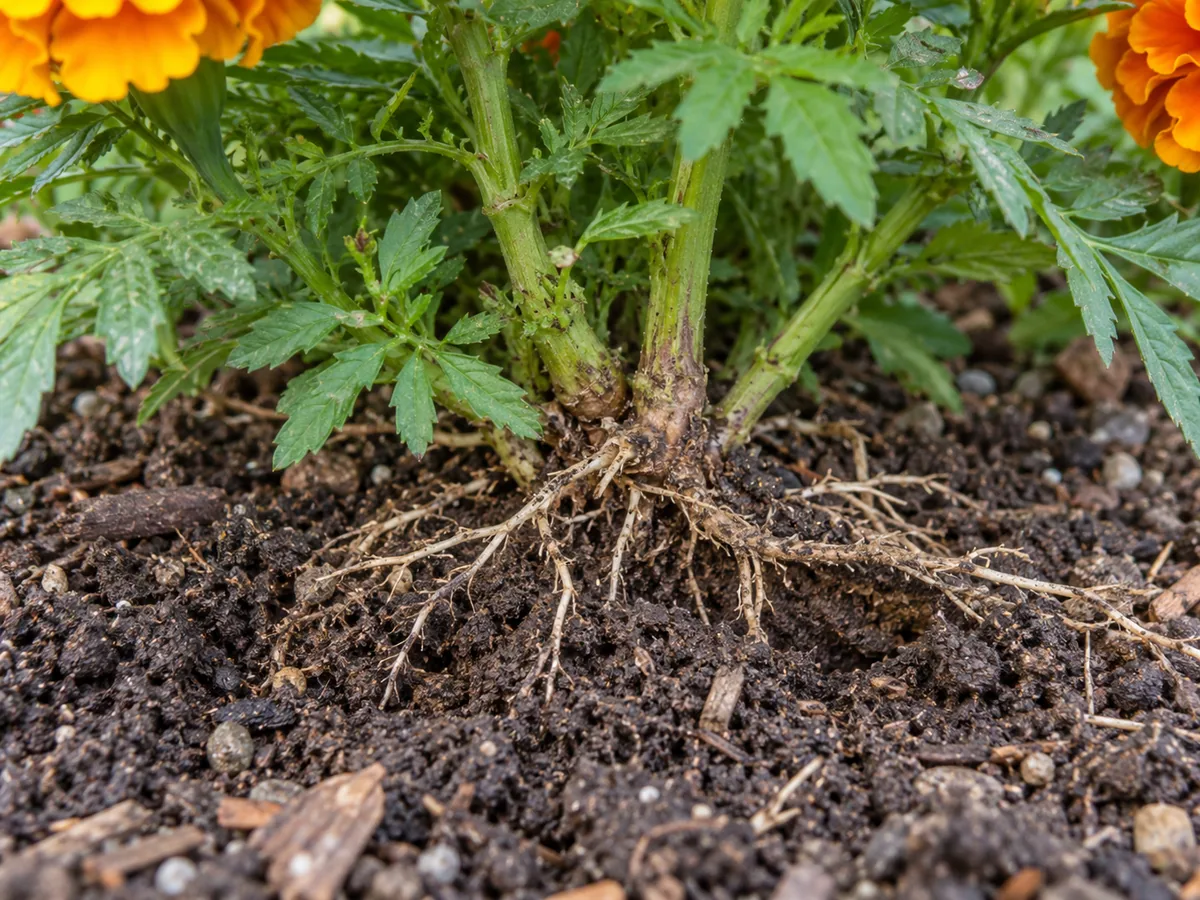
Close-up: fine fibrous Tagetes roots threading across the surface after the covering soil washed away - firm and pale means re-cover, dark and mushy means rot.
Tall African types (Tagetes erecta) show a second signature: the whole plant leans or rocks after wind or heavy rain, with a loosened collar of soil around the stem. NC State Extension notes these plants run 1 to 4 feet tall and tall varieties may need staking or sheltered sites - that height is exactly why wind-rock exposes their crowns while dwarf French types stay put.
Why marigold roots end up exposed
A shallow fibrous mat in fast-draining top soil
Marigolds feed mostly through the top few inches of soil. That shallow mat is efficient in a sunny bed, but it means any soil loss at the surface immediately uncovers working roots. Beds that get blasted with a hose, pounded by monsoon-style downpours, or watered overhead every evening erode exactly where marigold roots live. Compare with the lean, well-drained soil this plant prefers: good drainage is non-negotiable, but drainage plus erosion leaves roots with neither cover nor consistent moisture.
Transplant settling after planting too shallow
Bedding marigolds are often slipped into fluffy, freshly worked soil that then slumps an inch or two after the first deep waterings. If the transplant went in with its root ball already sitting high, settling leaves a pedestal of roots in the air. The correct depth is unglamorous: the top of the root ball level with the surrounding soil surface. Seed-grown plants have the opposite start - seeds sit almost on the surface and need only the lightest covering - so young seedlings can also end up perched if they were never firmed in (RASNetwork Gardening).
Wind-rock on tall African stems
A three-foot African marigold in full bloom is a sail. Each gust levers the stem against the crown, widening a gap around the base and working soil away from the upper roots. Staking is not cosmetic on these varieties; it is root protection, which is why extension guidance flags wind shelter for tall types (NC State Extension).
Pots and compacted beds that push roots upward
In containers, repeated watering compacts the lower mix while the crown stays high, and fine roots colonize the only loose zone - the very surface. In beds, a hardpan or a compacted layer does the same thing: roots refuse to drive down, spread sideways instead, and appear at the surface after the next rain. If the whole pot feels light within a day of watering or the bed sheds water sideways, the mix is part of the problem - check the wrong soil mix guide before you just pile on more soil.
How to confirm the cause
Work through these in order before adding soil:
- Feel the roots. Firm, pale tan or whitish roots with no smell are healthy and simply uncovered. Dark, mushy, or sour-smelling roots are root rot, and burying them makes it worse - compare against healthy versus rotted root signs.
- Read the soil level. A visible drop between the bed surface and the pot rim, a crater around the stem, or mulch washed into piles all point to erosion or settling. Uniform soil with roots still pushing up suggests binding or a compacted layer below instead.
- Wiggle test. A plant that rocks freely at the base has wind-loosened its crown - stake it. A plant that sits solid but shows surface roots is dealing with mix or watering, not wind.
- Check the stem base. Firm and green means exposure. Soft, dark, or pinched tissue at the soil line points toward crown rot or damping off on seedlings, which need a different response.
- Review watering. Daily overhead blasts and fast hose streams erode; gentle base watering that soaks without displacing soil does not. Match your method to the evidence in the bed.
The first fix to try
Re-cover healthy roots with matching mix at the original planting depth. Use the same lean, free-draining blend the plant already grows in - standard potting soil with perlite for pots, or the bed soil lightened with a little compost. Mound it just enough to bury the bare roots with the stem base exactly where it was, firm gently to remove air pockets, and water slowly at the base so the new soil settles without washing away again.
Do not bury the stem deeper than it originally grew, and do not use rich manure or heavy garden clay as the patch - excess nitrogen pushes leafy growth with fewer flowers, and dense material suffocates the very roots you just rescued. One modest top-up, then observe.
Step-by-step recovery
- Confirm roots are firm and odor-free using the checks above.
- Re-cover to the original depth with matching mix and firm lightly.
- Water slowly at the base until the patch is moist but not puddled.
- Pull mulch into a light ring 3-5 cm deep, kept a finger’s width back from the stem so the crown stays dry.
- Stake tall African stems loosely with a cane and soft tie so wind cannot re-loosen the crown.
- Switch erosion-causing watering to a gentle base soak or drip pattern.
- If roots were mushy or foul, stop here instead: trim dead roots with clean scissors, repot or replant into fresh draining mix, and follow the root rot guide rather than covering them up.
Recovery timeline
Marigolds are fast annuals - Gardening Know How notes seeds germinate in just three to four days in warmth, and established plants rebound on a similar hurry-up rhythm. Expect midday wilting to ease within a few days of re-covering, and fresh buds within two to three weeks while the plant blooms through its normal season (University of Minnesota Extension).
Judge progress by turgid afternoon foliage and new flower buds, not by the buried roots themselves. Warning signs mean reassess: spreading stem-base softness, yellowing that climbs despite moist soil, or a sour smell from the patch all signal rot underneath rather than simple exposure.
Lookalike symptoms
| What you see | Likely issue | How to tell it apart |
|---|---|---|
| Roots visible + plant wilts even in moist soil, sour smell | Root rot | Roots dark and mushy, not just bare |
| Soft dark stem base on seedlings that topple | Damping off | Seedlings collapse at the soil line; older plants unaffected |
| Soft spreading decay at the crown of mature plants | Crown rot | Stem tissue itself is damaged, not just uncovered roots |
| Water runs off, soil rock-hard, roots surfacing | Compacted soil | Probe meets resistance an inch down; re-covering alone fails |
| Seedlings tall, pale, flopping with surface roots | Leggy seedlings | Stretch from weak light, not erosion - fix light first |
Mistakes to avoid
- Burying the stem deeper to “anchor” the plant. Marigold stems buried above their original line stay damp and invite crown decay. Cover roots, not stem.
- Piling fresh manure or fertilizer on bare roots. A stressed plant cannot use it, and excess nitrogen trades flowers for leaves. Feed only once steady new buds return, per the plant’s normal rhythm.
- Blasting the repair with a hose. The same jet that exposed the roots will strip your patch in one watering. Always settle repair soil with a gentle soak.
- Mulching against the stem. A mulch volcano holds moisture on the crown and causes exactly the rot you were trying to prevent. Keep the ring back from direct contact.
- Repotting or dividing on day one. Simple exposure is a top-dressing job, not a transplant job. Unpotting adds shock unless rot or severe binding is confirmed.
Marigold care cross-check
Exposure often flags a routine that drifted. Cross-check the basics: full sun of six or more hours for strong compact growth, base watering that wets the root zone without carving craters, and lean draining mix rather than moisture-holding heaviness (Old Farmer’s Almanac). Seedlings started indoors move out only after frost risk passes and harden off first, since a tender transplant in cold wet soil stalls while its hole settles around it. Full-season context lives on the marigold problems hub.
When to worry
Simple bare roots on a firm, upright plant are a same-week job, not an emergency. Treat it as urgent if the stem base softens, the plant wilts in moist soil, damage spreads visibly within days, or several neighboring plants fail together - those patterns point to rot or wilt disease rather than erosion, and covering them buys nothing.
FAQs
How can I confirm exposed roots on my marigold are healthy?
Healthy marigold roots are firm and pale tan or whitish with no sour smell, and the plant still perks up after watering. Dark mushy roots with a rotten odor mean root or crown rot, so follow the rot guide instead of just adding soil.
What should I check first when I see marigold roots above the soil?
Check whether the soil level dropped from watering erosion or transplant settling, whether the plant rocks loosely in wind, and whether roots are firm or mushy. These three checks separate simple exposure from rot, binding, or stem damage.
Will re-covered marigold roots recover and grow normally?
Yes, firm exposed roots recover well once re-covered at the original depth and protected with mulch, usually pushing steady new buds within two to three weeks. Roots that were mushy, black, or foul-smelling will not recover, so trim dead tissue first.
When are exposed roots on marigold urgent?
Act the same day if the stem base is soft, the plant wilts despite moist soil, roots smell sour, or a tall African marigold is flopping loose after wind. Simple bare roots on a firm, upright plant can wait for your next watering day.
How do I prevent marigold roots from becoming exposed again?
Plant transplants with the root ball level with the soil surface, water at the base instead of blasting the bed, and hold a light mulch ring back from the stem. Stake tall African types in windy spots so rocking never loosens the crown.
Related Marigold guides
- Marigold overview - full-season care, sun, and bloom rhythm; start here before treating any single symptom
- All marigold problems - hub for matching your pattern against every covered issue
- Watering - base-watering method that wets roots without eroding surface soil
- Soil - lean draining mix recipes that resist both compaction and washout
- Root rot - use when roots are mushy or sour instead of merely bare
- Compacted soil - use when a hard layer forces roots sideways to the surface
- Wrong soil mix - use when the mix itself stays soggy or sets like concrete
- Crown rot - use when the stem base, not just the roots, is soft or discolored
- Damping off - use for collapsing seedlings rather than established plants
- Leggy seedlings - use when weak light, not erosion, left seedlings floppy and shallow
Related tool
Use the Plant Problem Diagnosis Tool to narrow causes for exposed roots on this plant before changing multiple variables at once.