Aphids on Papaya: Symptoms, Virus Risks & Organic Fixes
Quick answer
Aphids on Papaya (Carica papaya) cluster on the tender undersides of young leaves, growing tips, and flower stalks to suck phloem sap, causing puckered, cupped foliage and sticky honeydew. More critically, aphids are transient vectors of Papaya Ringspot Virus (PRSV). First step: isolate the plant, wash off colonies with a firm stream of lukewarm water, and apply insecticidal soap or neem oil during early morning or evening to avoid heat scorch.
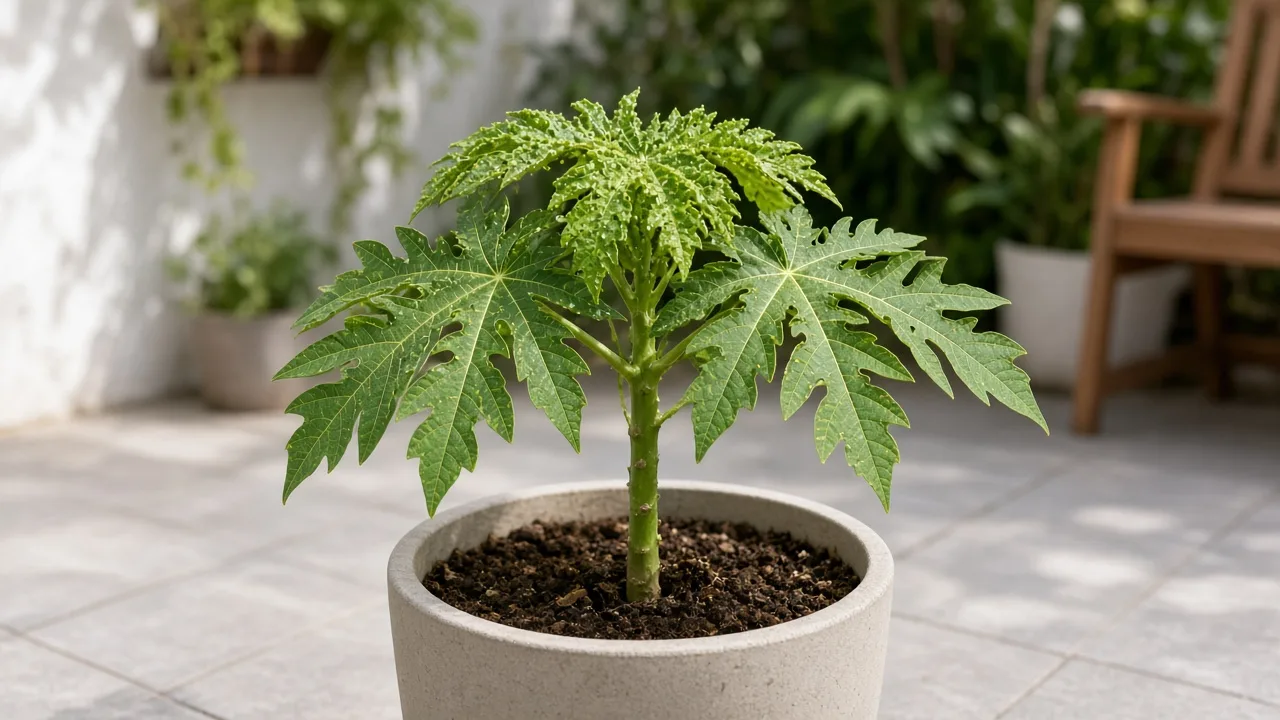
Aphids on Papaya: Diagnosis, PRSV Virus Warnings & Safe Control
This guide covers aphids on Papaya. See also the general Aphids guide, watering, and light pages for this plant.
Aphids on Papaya: Diagnosis, PRSV Virus Warnings & Safe Control
Quick answer
Aphids on Papaya (Carica papaya) congregate on the tender, expanding tissue of the apical crown: the undersides of young palmately lobed leaves, petioles, and emerging flower buds. By inserting piercing-sucking mouthparts into phloem vessels, aphids rob the fast-growing tropical herb of moisture and photoassimilates, leading to cupped, puckered leaf blades, distorted apical margins, and sticky coatings of honeydew that attract black sooty mold. For universal insect biology and non-crop lifecycle details, consult our global aphids guide.
Your first fix is mechanical removal followed by organic contact treatment: take the plant to a wash station and blast the colonies off the leaf undersides with a moderate jet of lukewarm water. Then, spray the undersides thoroughly with insecticidal soap (potassium salts of fatty acids) or cold-pressed neem oil in the early morning or evening. Never apply oil or soap sprays during the heat of the day (above 85°F / 29°C) to avoid severe chemical leaf scorch.
The critical threat: Papaya Ringspot Virus (PRSV)
While direct aphid feeding weakens young papaya seedlings, the most critical agricultural and botanical threat posed by aphids is viral transmission. According to research from the University of Hawaii CTAHR, aphids—including the melon aphid (Aphis gossypii) and green peach aphid (Myzus persicae)—transmit Papaya Ringspot Virus (PRSV) in a non-persistent (stylet-borne) manner.
- Non-persistent transmission: Aphids do not even need to colonize the papaya plant to transmit the disease; transient winged adults landing briefly to ‘test probe’ the leaf can introduce virus particles in under 30 seconds.
- Viral symptoms to watch for:
- Young crown leaves display a yellow, mottled mosaic pattern and blistered, rugose puckering.
- Leaves become narrow, ribbon-like, and deformed (termed ‘shoestringing’).
- Stems and long petioles develop dark green, water-soaked oily streaks.
- Fruit develops circular green ringspots that ripen into yellow bullseyes.
- Managing the risk: Keep aphid populations strictly controlled, deploy yellow sticky cards to intercept incoming winged adults, and remove any confirmed PRSV-infected plants immediately to protect neighboring specimens.
What aphids look like on Papaya
Unlike tough woody trees, Carica papaya is a giant semi-woody herbaceous plant with rapid cell division, making its succulent new shoots a magnet for sap-sucking pests:
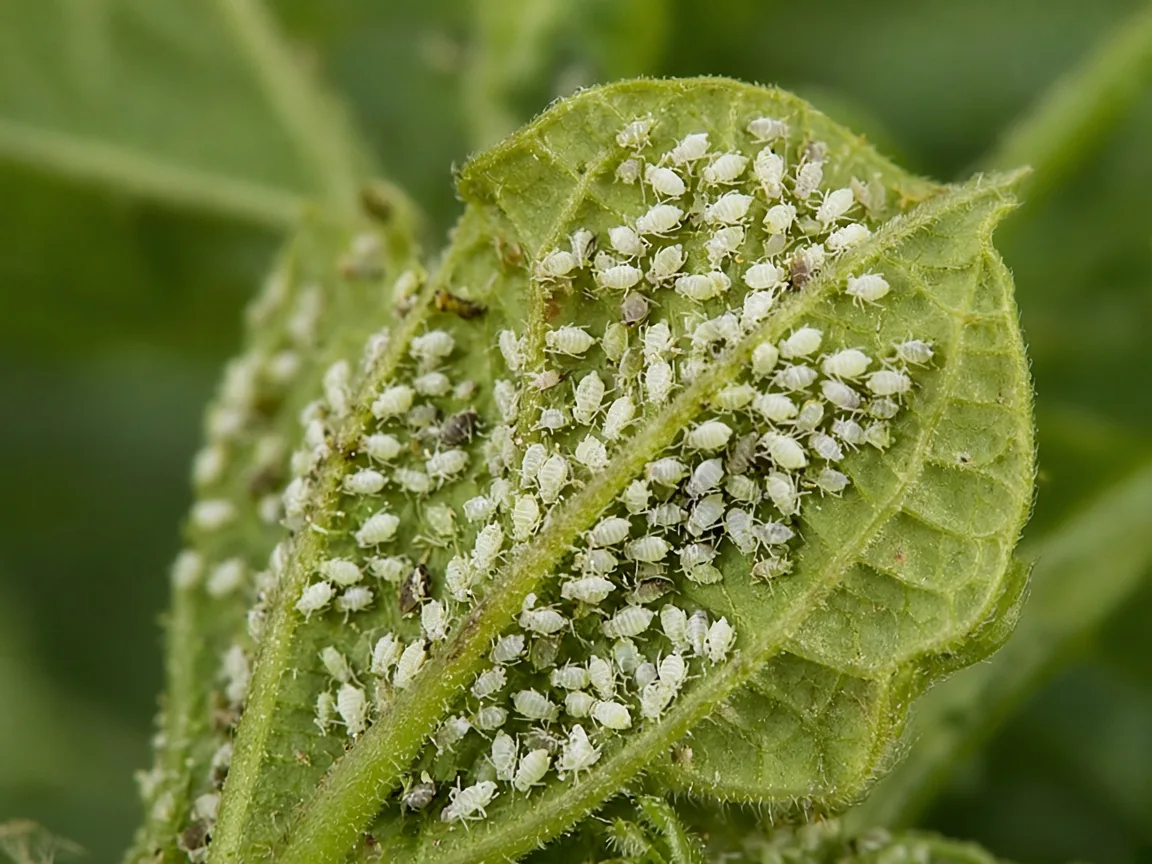
Pale green aphids clustered along veins on the underside of a young palmately lobed Papaya leaf, with mild puckering of the blade.
- The insects: Small (1 to 3 mm), soft-bodied, pear-shaped insects. Common species on papaya are pale lime-green, yellow, pinkish, or dark brown. Look for the diagnostic twin tubular exhaust pipes (cornicles) projecting backward from the posterior abdomen.
- Feeding location: Concentrated heavily along the primary palmate veins on the lower leaf surface, within the folds of newly emerging apical leaves, and clustered around the peduncles of developing flowers.
- Foliar symptoms: Infested leaves cup downward and pucker along the veins. Severe feeding causes yellow chlorotic speckling and premature leaf drop.
- Secondary sooty mold: Aphids excrete excess plant sap as sugary, sticky liquid known as honeydew. As honeydew coats the broad upper surfaces of lower leaves, airborne spores of black sooty mold colonize the sugar, creating a dark soot-like film that blocks sunlight and impairs photosynthesis, as detailed in the CABI Compendium profile for Carica papaya.
Confirming aphids vs. lookalike papaya pests
| Symptom / Sign | Most Likely Culprit | Diagnostic Feature | Immediate Action |
|---|---|---|---|
| Clustered green/yellow pear-shaped bugs under leaves; honeydew & cast skins | Aphids (Aphidoidea) | Slow-moving; rear cornicles; leaves pucker & cup | Spray stream wash → insecticidal soap |
| Fine silk webbing on leaf undersides; yellow stippling dots | Spider mites (Tetranychidae) | Microscopic mites; webbing between lobes | Treat per spider mites guide |
| Fluffy white cottony wax clustered at petiole bases and fruit stems | Papaya mealybugs (Paracoccus) | Dense white waxy filaments; pinkish oval insects | Treat per mealybugs guide |
| Distorted, shoestring leaves with dark oily streaks on green stem | Papaya Ringspot Virus (PRSV) | Systemic viral infection transmitted by aphids | Isolate; no cure; discard infected plant |
| Yellowing lower leaves that drop cleanly while stem is firm | Normal leaf turnover / low nitrogen | Older leaves only; no pests or honeydew | Feed balanced fertilizer & verify light |
Step-by-step eradication protocol for Papaya
Follow this systematic organic protocol to clear aphids while safeguarding the plant’s fast-growing crown:
Step 1: Physical stream wash
- Protect the soil surface if growing in a small container by tipping the pot slightly.
- Using a garden hose or sink sprayer with a moderate, steady stream of lukewarm water, spray the undersides of every affected leaf directly.
- The mechanical pressure easily dislodges soft-bodied aphids, washing them away where they cannot crawl back onto the succulent stem.
Step 2: Insecticidal soap contact treatment
According to UC IPM pest notes, insecticidal soap (potassium salts of fatty acids) provides excellent aphid control without leaving toxic chemical residues:
- Mix commercial insecticidal soap concentrate at label strength (typically 1 to 2 tablespoons per quart of water).
- Spray during the early morning or after sunset when direct sunlight has left the canopy.
- Coat the leaf undersides, petioles, and apical crown thoroughly. The soap dissolves the aphid’s outer cuticular wax layer, causing rapid dehydration.
- Reapply every 5 to 7 days for two to three applications to eliminate newly emerged nymphs.
Step 3: Temperature and oil safety precautions
Clemson Cooperative Extension cautions that applying horticultural oils or soaps when temperatures exceed 85°F (29°C) or in intense direct sunlight leads to severe phytotoxicity. Papaya leaves are broad and thin-cuticled; trapped oils in high heat break down epidermal cell walls, causing large burnt brown patches. Always spray in cool, shaded conditions.
Step 4: Biological control for garden and greenhouse papayas
In outdoor gardens or greenhouse collections, introduce or encourage native beneficial predators:
- Convergent Lady Beetles (Hippodamia convergens): Adults and alligator-like larvae consume dozens of aphids daily.
- Green Lacewing Larvae (Chrysoperla carnea): Known as ‘aphid lions,’ lacewing larvae voraciously attack aphid colonies.
- Parasitic Wasps (Aphidius colemani): Tiny solitary wasps lay eggs inside aphids, transforming them into bloated, tan ‘aphid mummies’ that yield new beneficial wasps.
Recovery timeline and care adjustments
- Days 1 to 3: Mechanical rinsing and soap contact kill 90%+ of active colonies. Honeydew washes away, and honeydew-feeding ants disperse.
- Days 4 to 10: Monitor the central crown weekly. Spot-spray any small surviving pockets with insecticidal soap.
- Weeks 2 to 4: With feeding halted, the apical meristem resumes rapid growth. New palmately lobed leaves unfurl broad, flat, and unblemished.
- Tissue reality note: Severely curled or crinkled leaves will not flatten out completely. Leave them attached as long as they are predominantly green, as they continue to photosynthesize and fuel fruit and root development.
Preventing future aphid infestations on Papaya
- Inspect the apical spear weekly: Papayas grow extremely fast in warm weather, producing a new leaf every few days. Catching an aphid colony on one leaf prevents it from spreading to the entire crown.
- Avoid high-nitrogen fertilizer spikes: Feeding heavy synthetic nitrogen generates watery, overly soft foliar tissue packed with amino acids that triggers explosive aphid reproduction. Use a balanced, slow-release tropical fruit fertilizer with abundant potassium and micronutrients, as recommended by UF/IFAS Extension.
- Control surrounding weeds: Aphids breed on common garden weeds and ornamental brassicas before migrating to papaya. Keep the area around your papaya container or garden bed free of host weeds.
- Install yellow sticky cards: Hang yellow sticky cards near the canopy level to trap incoming winged migrants and provide early warning of seasonal flights.
Related tool
Use our Pest Identifier Tool to verify whether sap-sucking insects on your papaya crown are aphids, thrips, or mealybugs before applying treatments.
Related Papaya guides
- Papaya overview — botanical profile, fast-growing herbaceous habit, and climate requirements
- Watering guide — maintaining evenly moist soil without suffocating sensitive fleshy roots
- Soil guide — rich, fertile, free-draining substrate mixes for container and garden papayas
- Light guide — maximizing full solar irradiance to support rapid growth and fruit set
- All Papaya problems — comprehensive diagnostic directory for tropical papaya care