Mold on Soil on Peperomia Hope: Causes, Checks & Fixes
Quick answer
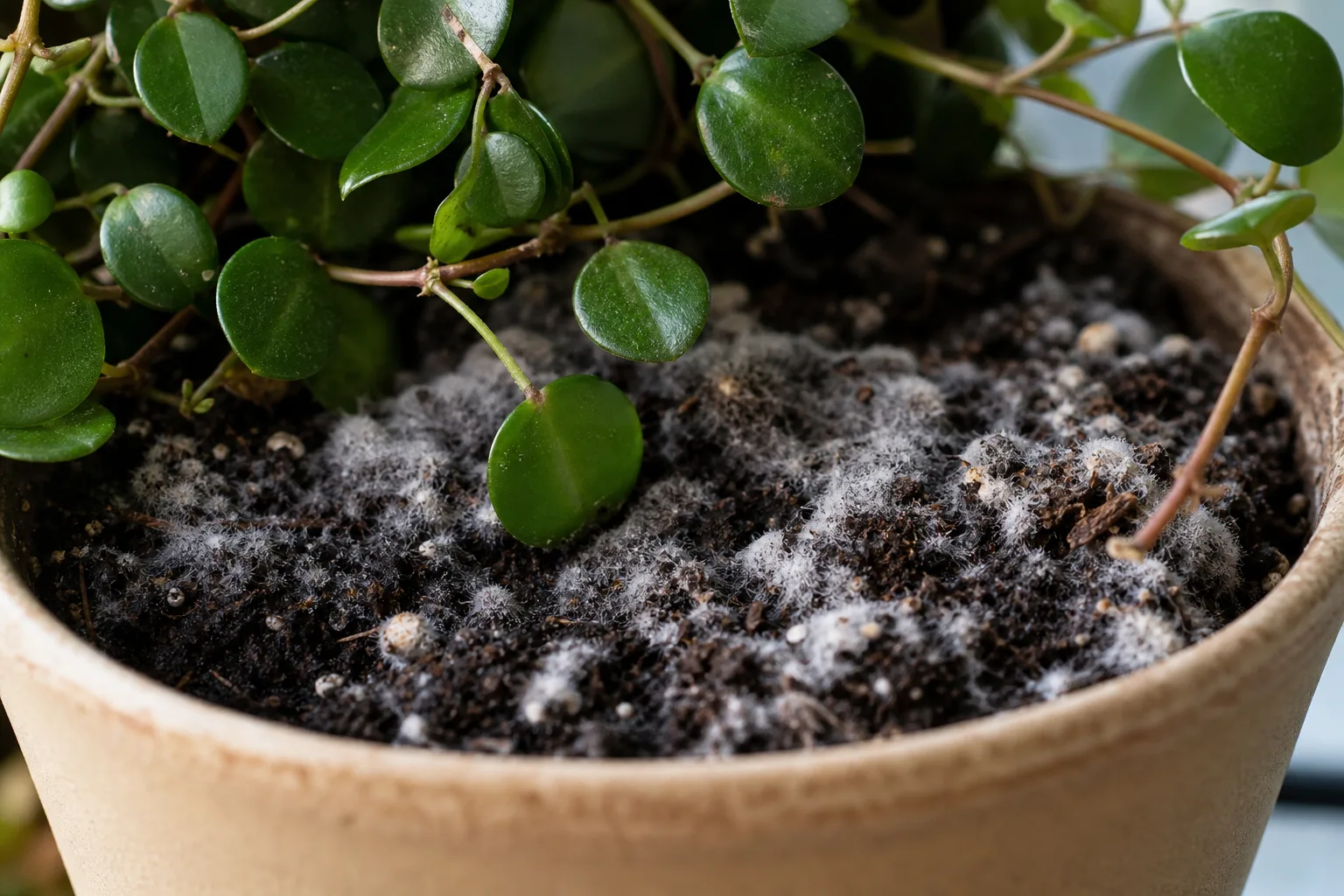
White or gray fuzz on Peperomia Hope soil is almost always harmless surface mold feeding on damp organic mix. The real problem is moisture: hold water until the top dries, scrape the mold, and check stem bases before trailing tips look bad.
Mold on Soil on Peperomia Hope: Causes, Checks & Fixes
This guide covers mold on soil on Peperomia Hope. See also the general Mold on Soil guide, watering, and light pages for this plant.
Mold on Soil on Peperomia Hope: Causes, Checks & Fixes
Quick answer
White or gray fuzz on Peperomia Hope (Peperomia tetraphylla ‘Hope’) potting mix is usually saprophytic surface mold-a fungus breaking down dead organic matter in soil that stays damp too long. It is not the same as leaf spot on the plant’s round, succulent leaves, and it does not harm living plants directly.
The danger on this trailing hybrid is the moisture that feeds the mold. Peperomia Hope carries succulent, round leaves on trailing stems but has a relatively small root system that needs the mix to dry between waterings. When the surface never dries-common in oversized hanging baskets, dense peaty mix, or winter rooms with low light-mold is the visible clue that conditions favor rot at the crown before trailing tips show trouble.
First step: stop watering and let the top 2–3 cm of mix dry completely. Hold all water until a finger test shows dry soil near the surface and the pot feels noticeably lighter-the same dry-down rhythm in our Peperomia Hope watering guide. Only after dry-down should you scrape off visible mold and adjust light or pot size if the surface wetness returns quickly.
What mold on soil looks like on Peperomia Hope
On a healthy Hope in a hanging basket or on a shelf, mold appears only on the soil surface, not on the glossy round leaf blades. Typical signs:
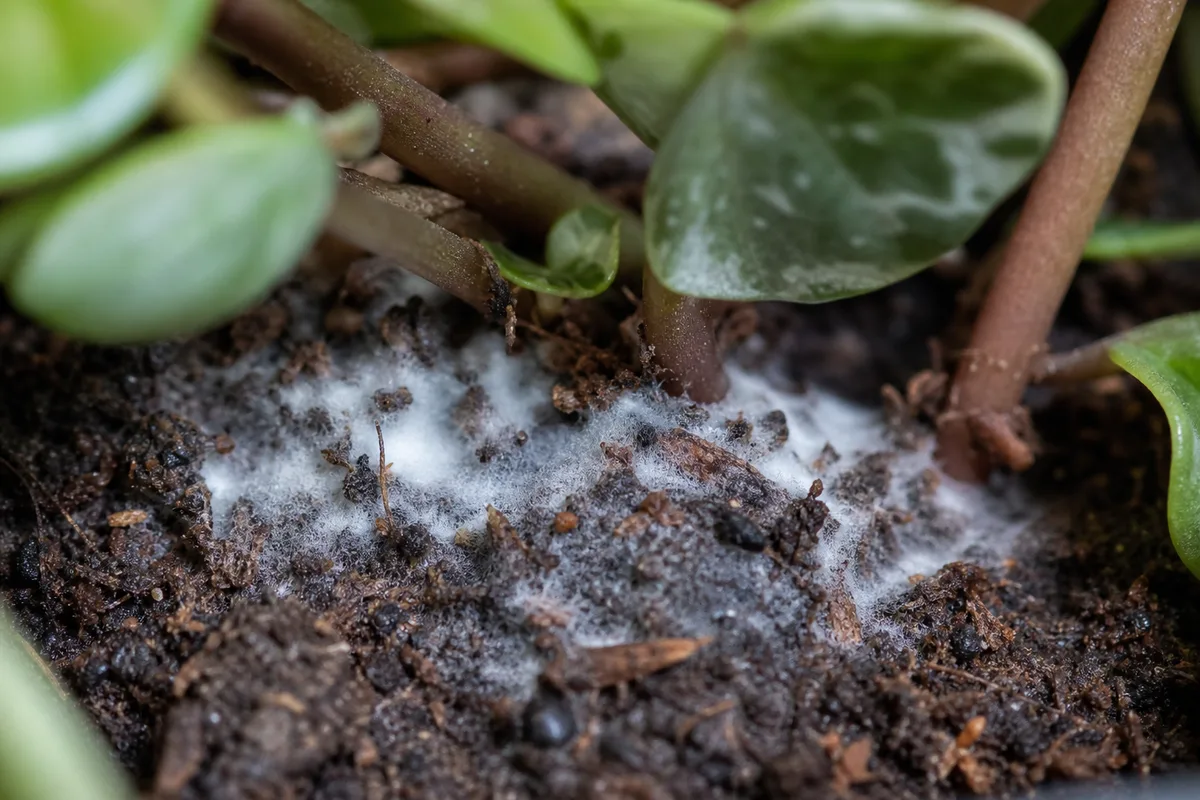
Mold on Soil symptoms on Peperomia Hope - compare with healthy tissue on the same plant.
- White, gray, or occasionally yellow-tan fuzzy film spread across the top of the mix, sometimes in patches near the crown where stems emerge
- Soil that looks dark and wet for days after the last watering, even when trailing leaves still feel firm
- Musty smell when you lift the pot or disturb the surface
- Tiny fungus gnats hovering when you water-often in pots with chronically moist soil
- Fallen leaves or organic debris sitting on the mix, giving mold a food source
The plant itself may look fine at first. Round leaves stay plump, and the longest trailing sections can appear healthy while the crown sits in stale moisture. That is why mold on Hope is easy to dismiss as cosmetic until stem bases soften or lower leaves yellow.
Not mold: Mealybugs leave white, cottony clumps at leaf axils and stem joints that do not disappear when you scrape soil. Powdery mildew coats leaf surfaces in dry-looking white dust-it does not start as a mat on potting mix alone. Mineral crust from hard tap water looks flat and chalky, not fuzzy.
Why Peperomia Hope gets mold on soil
Surface mold needs organic matter plus persistent surface moisture. Standard peat-based potting mixes provide the food; your watering rhythm and environment decide whether the top layer stays wet long enough for spores to grow.
Several factors stack easily on Peperomia Hope:
Overwatering before the mix dries. Hope is treated like a semi-succulent trailer: the soil should dry completely between thorough soaks, with longer gaps in winter when growth slows. Watering on a calendar-especially every few days because the leaves still look fine-keeps the surface damp without giving roots the oxygen they need.
The trailing-length pot-sizing trap. This is the most common Hope-specific mistake. Vines can cascade two feet or more while the root ball stays surprisingly small and shallow. Owners often choose a large decorative hanging basket so the trailing display looks proportional-but a small root mass swimming in a deep wet reservoir keeps the crown soggy for weeks. The outer mix dries on top just enough to fool a surface finger test while the center around the stems stays anaerobic. Mold on the visible surface is your early warning that you sized the container for vine length, not for roots. See pot too large when the basket dwarfs the root ball.
Oversized or deep hanging pots. Dense basket liners and saucers that hold runoff hide the problem until mold appears. Even a correctly sized inner nursery pot can stay wet if a closed cachepot or moss-wrapped liner seals humidity at the crown.
Low light slowing dry-down. In dim corners, transpiration drops. The same watering that worked in brighter summer light leaves the top layer wet through cloudy winter weeks. Mold often shows up seasonally for this reason.
Heavy, water-retentive mix. Pure peat or moisture-control potting soil without enough perlite holds water at the surface. Hope does best in fast-draining, airy mix-the Peperomia Hope soil guide covers perlite-heavy blends with open drainage.
Organic debris on the surface. Fallen round leaves, old moss top-dressing, or bark mulch on the soil give saprophytic fungi extra material to colonize while trapping humidity.
The mold is a symptom of culture, not a random infection. Fixing the fuzz without fixing wet soil only buys a few days.
How to confirm the cause
Work through these checks in order before repotting or spraying anything:
- Surface moisture - Press a finger 2–3 cm deep. If it comes out cool and clings, the mix is still wet. Surface mold on constantly damp soil confirms excess moisture; mold on mix that is dry throughout may be leftover spores after a recent fix.
- Pot weight - Lift the basket by the hanger hook without taking it down if needed: a heavy pot many days after watering means poor drainage, oversized pot, or too-frequent watering.
- Stem bases at the crown - Gently wiggle stems where they meet soil. Firm green or reddish stems support a moisture-only diagnosis. Soft, dark, or collapsing bases mean rot may already be starting-follow the root rot guide before the next pour.
- Leaf pattern - Yellowing or limp leaves near the crown with wet soil point to root stress. Firm trailing tips with only soil fuzz suggest you caught the issue early.
- Smell - Sour or swampy odor from the mix suggests anaerobic conditions and possible root decline, not harmless surface film alone.
- Gnats and timing - Small flies when you water, plus mold that returns within a week of scraping, mean the habitat is still too wet. Treat gnat swarms and surface mold together using our fungus gnats guide.
- Light and season - Short days, north-facing windows, or plants moved away from grow lights in fall often coincide with first mold outbreaks while watering stayed on a summer schedule.
If the pot is light, soil is dry 5–7 cm down, stems are firm, and leaves look normal, a small patch of mold after repotting may fade once you resume proper dry-down watering-no emergency repot needed.
First fix to try
Stop watering and let the top 2–3 cm of mix dry completely.
Do not scrape, cinnamon-dust, or repot on day one unless stem bases are already soft. The first job is breaking the wet cycle that grows mold and invites gnats. On Peperomia Hope that usually means waiting until the finger test reads dry near the surface and the pot feels lighter-often one to two weeks in winter, sometimes less in bright active growth.
While you wait:
- Empty saucers and drip trays so no standing water wicks back up
- Move the plant to bright indirect light if it has been in a dim spot-better light helps the plant use water and speeds surface drying
- Remove fallen leaves from the soil surface so fungi lose easy food
Once the surface is dry, scrape off the visible mold with a spoon and discard it in the trash-not the compost pile. Do not blow spores toward other pots. If the scraped area stays clean and dry for two weeks after you resume watering, the first fix worked.
On cinnamon and fungicide: Harmless surface mold on houseplants is managed by drying soil and correcting watering-not by dusting cinnamon or drenching fungicide on day one. Those treatments add organic matter or moisture to an already wet surface without fixing the cause. Reserve chemical sprays for confirmed foliar pathogens, not saprophytic fuzz on potting mix.
Step-by-step recovery
After dry-down and surface scraping, rebuild habits so mold does not return:
Adjust watering. Water thoroughly only when the top 2–3 cm is dry and the pot feels light. Soak until a little water runs from drainage holes, then empty the saucer within 30 minutes. In winter, stretch intervals toward three to four weeks if the mix stays wet longer-the watering guide covers finger, weight, and top-half dry checks for hanging baskets.
Improve airflow at the crown. Trailing Hope in closed decorative baskets benefits from occasional rotation and open sides so the soil surface is not sealed in humidity. A small fan in the room-not blasting the plant-helps surfaces dry between waterings.
Refresh the top layer if needed. Replace the top 2–3 cm of moldy mix with dry, airy potting mix matching your usual perlite blend. This is faster than full repotting when roots are still healthy.
Repot only when chronic wetness persists. If the surface never dries within ten days after correct watering, or stem bases soften, unpot gently following the repotting guide. Trim mushy roots, use a smaller pot with fresh fast-draining mix, and wait a week before the first cautious soak.
Address fungus gnats together. Sticky traps catch adults; drying soil breaks the larval cycle. Do not rely on sprays while the mix stays wet.
Avoid misting the crown or watering on a fixed schedule “because the vines look thirsty.” Hope’s leaves store water; wilt with wet soil usually means damaged roots, not thirst-see overwatering for the wet-soil wilt trap.
Recovery timeline and signs of improvement
Surface mold can disappear within days once the top layer dries and you scrape spores away. Fixing the underlying habit takes longer.
Example recovery arc: A 10-inch hanging Hope basket in a dim north window developed white surface fuzz fourteen days after the last soak. The owner held water twelve more days until the top 3 cm read dry and the pot felt light on the hanger hook. They scraped the mold on day thirteen, moved the basket one meter closer to a bright indirect window, and resumed watering only when the top half of the mix dried. Surface fuzz did not return within three weeks; stem bases stayed firm; new round leaves appeared on trailing nodes in week four.
Within 1–2 weeks: Soil surface stays matte and dry between waterings; no new fuzzy growth; fewer gnats if they were present.
Within 2–4 weeks: Firm stem bases; no new yellow leaves at the crown; new round leaves along trailing stems if the plant is in active growth.
If nothing improves after four weeks of proper dry-down: Reinspect roots. Chronic mold with sour smell often means compacted or exhausted mix-repot into fresh perlite-heavy soil in a tighter pot.
Yellow leaves that already formed will not re-green; judge recovery by new firm growth, stable crowns, and a pot that dries predictably after each soak.
Balancing dry-down vs. leaf softening: Round Hope leaves may soften slightly during an aggressive moisture correction. That is usually recoverable if stem bases stay firm and the mix is drying-not staying wet. If leaves shrivel while soil remains damp, you are dealing with root damage, not thirst. If leaves wrinkle on a light, fully dry pot, ease toward the watering protocol in our underwatering guide after confirming crown firmness.
Lookalike symptoms
| What you see | Likely cause | What to do first |
|---|---|---|
| White fuzz only on wet soil surface | Saprophytic mold | Dry top layer; scrape; fix watering |
| White cotton at leaf axils or stem joints | Mealybugs | Isolate; see mealybugs guide |
| White dust on leaf tops, not soil | Powdery mildew or mineral deposit | Check leaves under light; adjust humidity or water quality |
| Green slimy film on soil and pot rim | Algae from constant surface moisture | Same as mold-dry surface, more light, less water |
| Yellow mushrooms on soil | Saprophytic fungus fruiting body | Harmless to plant; remove if pets may ingest |
On Hope, soil-surface mold with firm leaves is the benign end of the spectrum. Soft crowns with wet mix is the urgent end-even if you already removed the visible mold.
Mistakes to avoid
Scraping mold daily without drying soil. You remove spores while leaving the habitat intact; mold returns within days.
Upgrading to a bigger hanging basket. More mix holds more water around small Hope roots-the opposite of what trailing peperomias need.
Watering because leaves look slightly soft while soil is wet. Wrinkled leaves with soggy mix often signal root rot from overwatering, not underwatering.
Covering soil with decorative moss or rocks that trap moisture. Top dressings slow evaporation at the crown where rot starts first.
Reaching for fungicide or cinnamon first. Surface mold on houseplants is usually managed by culture change, not chemicals or kitchen spices.
Ignoring gnats. They share the same wet-soil cause and confirm the mix is too damp for Hope’s root style.
How to prevent mold next time
Match pot size to the root ball, not the length of trailing stems-oversized pots stay wet longer and can cause roots to rot. A shallow nursery pot slipped inside a decorative hanger dries faster than one oversized integrated basket.
Use fast-draining mix per the soil guide and open drainage holes. After every watering, confirm saucers are empty.
Place Hope where it gets bright indirect light most of the day so water use stays steady through seasons. Reduce watering frequency when growth slows in cooler months.
Remove fallen leaves from the soil surface during routine care. Wipe dust from leaves so you can spot pests early-but do not leave the crown soaking wet after cleaning.
If mold appears once after buying a plant from a humid greenhouse, a single dry-down cycle often clears it. Recurring mold every month means the home setup-not the plant-is the problem.
Pet safety: non-toxic Peperomia and hanging-basket placement
Peperomia species are listed as non-toxic to cats and dogs by the ASPCA. Scraping moldy soil and handling fallen leaves is generally safe around pets, though any plant material can cause mild stomach upset if eaten in quantity.
Hang baskets above curious pets when possible. Saprophytic mold itself is not a systemic pet poison, but yellow mushrooms on wet soil should be removed if pets dig in pots-mushroom species vary and ingestion is worth avoiding. Floor-level trailing Hope in reach of dogs may also tempt chewing on vines; elevation keeps both plant and pet safer.
When to worry
Treat mold as urgent when it comes with:
- Soft, dark stem bases where vines meet soil
- Sour-smelling mix or roots that look brown and mushy on inspection
- Rapid yellowing at the crown while soil stays wet
- Mold returning within three to five days of scraping despite dry surface attempts
- Large fungus gnat clouds every time you water
Those patterns suggest root rot or crown decline may already be underway. Stop watering, unpot carefully, and trim decay before repotting dry into a smaller container-full surgery steps are in the root rot guide. If the crown is fully mushy but firm stem sections remain higher on the vines, propagate healthy cuttings as backup.
Pure surface mold on dry-down-responsive soil, with firm stems and healthy new trailing growth, is low urgency. Fix the moisture rhythm and the fuzz usually stops being a recurring issue within one care cycle.
Related Peperomia Hope guides
- Peperomia Hope watering - top-half dry rule and hanging-basket weight checks
- Root rot - when soft crowns and sour soil follow chronic wetness
- Fungus gnats - co-occurring flies from the same damp surface
- Peperomia Hope repotting - downsizing oversized baskets and refreshing compacted mix
- Peperomia Hope soil - perlite-heavy blends that dry faster at the crown
- Mealybugs - white cottony lookalike on stems, not soil
- Overwatering - wilt-on-wet-soil trap on semi-succulent trailers
Surface saprophytic mold biology is similar across many houseplants; for a genus-level comparison on a trailing vine, see mold on soil on pothos.
Conclusion
Mold on Peperomia Hope soil is an environmental signal: the top of your mix has stayed wet, organic, and still long enough for harmless saprophytic fungi to become visible. Dry the surface first, scrape once the mix is ready, size pots to roots rather than trailing length, and link wet-soil companions like gnats and crown rot to the right cluster guides before they compound. Firm stems and predictable dry-down after each soak mean you caught the problem at the cosmetic stage-not the crown-failure stage.