Leggy Growth on Philodendron Imperial Green: Causes, Checks
Quick answer
Leggy growth on Philodendron Imperial Green is usually etiolation from insufficient usable light. First fix: move it to brighter indirect light, then judge recovery by tighter new growth rather than old stretched petioles.
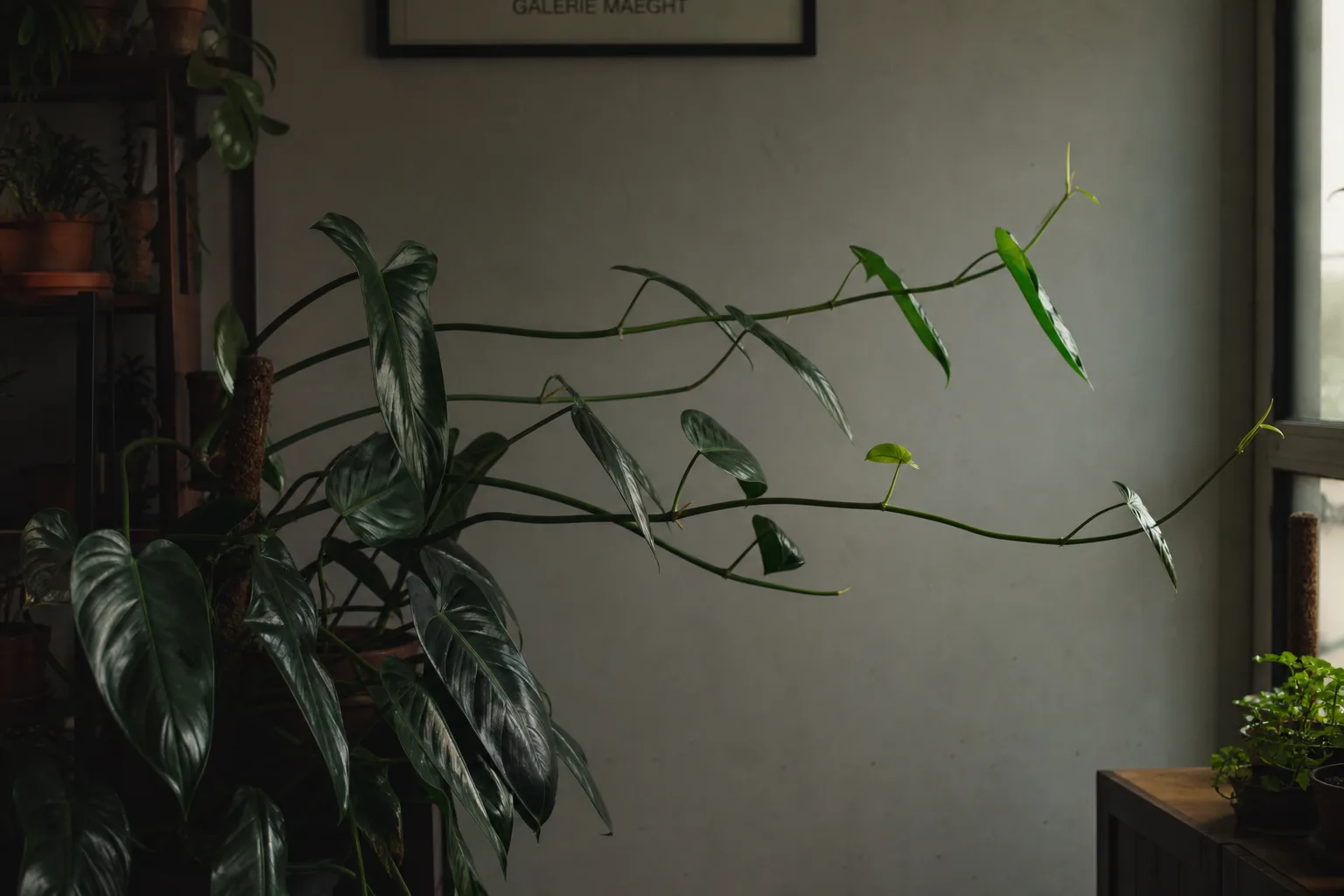
Leggy Growth on Philodendron Imperial Green: Causes, Checks & Fixes
This guide covers leggy growth on Philodendron Imperial Green. See also the general Leggy Growth guide, watering, and light pages for this plant.
Leggy Growth on Philodendron Imperial Green: Causes, Checks & Fixes
Quick answer
Leggy growth on Philodendron Imperial Green usually means etiolation-a low-light stretch response where the plant lengthens petioles instead of building a dense architectural rosette. First fix: move it to brighter indirect light and keep other changes minimal for two to three weeks so you can read a clear response in new crown growth.
Scope note: This page is the morphology, pruning, and etiolation-recovery guide. For broader placement diagnosis, window audits, and office low-light survival, read Not Enough Light on Philodendron Imperial Green and Light Needs for Philodendron Imperial Green.
Philodendron erubescens ‘Imperial Green’ is marketed as a compact self-heading specimen. In dim rooms it survives by stretching-longer petioles, smaller new leaves, and a sparse crown that leans toward glass. The plant still looks alive, which is why legginess is often ignored until the rosette loses its upright shape.
What leggy growth looks like on Philodendron Imperial Green
Imperial Green should look compact and upright, with large glossy paddle leaves emerging in a tight crown-not on a visible trailing stem. NC State notes philodendrons include climbing and non-climbing self-heading forms that hold leaves in a rosette-like habit with short stem spacing.
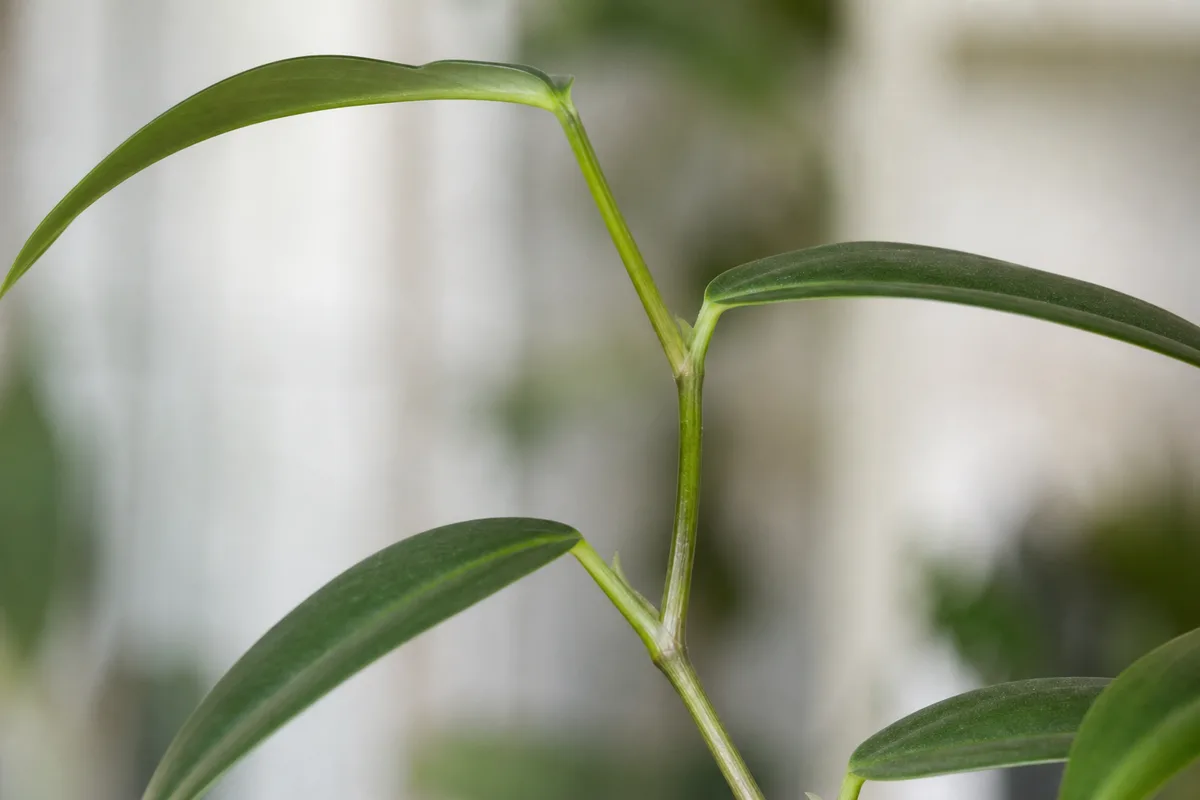
Leggy Growth symptoms on Philodendron Imperial Green - compare with healthy tissue on the same plant.
On this cultivar, leggy etiolation usually appears as:
- petioles noticeably longer between the two newest leaves than on older crown leaves
- smaller new blades and wider spacing in the crown
- one-sided leaning toward the brightest window
- a looser “open” silhouette instead of a dense architectural bush
- slow unfurling with wide gaps even during spring and summer active growth
Visual checklist (what to compare at the crown):
| Signal | Healthy compact rosette | Leggy etiolation |
|---|---|---|
| Petiole length on newest pair | Similar to leaves three pairs down | Clearly longer than older pairs |
| New leaf size | Broad glossy paddles | Smaller blades on longest petioles |
| Crown density | Upright, even, architectural | Sparse, open, one-sided lean |
| Stem type | Short hidden stem; no vines | Still no vines-stretch is at petioles, not internodes |
| Growth direction | Even after weekly rotation | Persistent lean toward brightest wall |
If you see true vines with long internodes and aerial roots, re-check the ID or cultivar label before treating this as Imperial Green legginess.
Why Imperial Green gets leggy
1) Usable light at the crown is too low
Etiolation is the classic low-light response: elongated growth with weaker structure. University of Maine Extension describes etiolation as long, spindly growth in low light and recommends increasing light gradually rather than abruptly.
Philodendrons tolerate lower light, but tolerance is not compact form. Clemson HGIC states most philodendrons prefer indirect or curtain-filtered sunlight and can decline in weak conditions. UF/IFAS production data for interiorscape philodendrons notes they tolerate light as low as 75 foot-candles but 150 fc or more maintains color and leaf size-Imperial Green’s large paddle leaves fit that band better than deep-shade corners.
2) Light direction is uneven
Self-heading rosettes lean toward windows when only one face receives usable light. UF/IFAS describes self-heading hybrid philodendrons as upright bushes with short internodes in even light; one-sided shade produces asymmetric stretch at the crown.
3) Wet soil in dim light compounds weak growth
In low-light rooms, mix dries slowly. Roots stay oxygen-poor, growth stalls, and the plant can look sparse and weak. Missouri Botanical Garden links chronic overwatering to root function problems and decline-see Overwatering on Philodendron Imperial Green if soil stays wet for many days.
4) Heavy nitrogen in marginal light worsens soft stretch
Fertilizing aggressively before light is adequate can produce soft elongated tissue that still looks weak green. Fix light first; feed only after new growth firms up.
How to confirm the cause
Use this order so you do not over-correct:
- Light at the canopy - Hold your hand where the top leaves sit. A soft, diffuse shadow for several hours suggests usable indirect light; a faint or absent shadow all day usually means too dim. Clemson’s indoor light guide classifies medium and high indoor ranges in foot-candles-compact foliage growth needs more than the low end all day.
- Compare newest two leaves to older leaves - Smaller blades with longer petioles strongly support etiolation before repotting or feeding.
- Lean check - Rotate the pot 180° and watch for new growth bending back toward the old bright side within two weeks.
- Pot weight and dry-down - If mix stays wet for ten or more days in summer and lower leaves yellow, inspect watering before fertilizing.
- Rule out pests - Fine stippling, sticky residue, or webbing points to a separate problem.
Lookalike symptoms to rule out
| Pattern | Leggy etiolation | Root rot / overwatering | Young plant immaturity | Normal repot pause |
|---|---|---|---|---|
| Petiole stretch | Long gaps on newest pairs | May soften at base; not always stretched | Smaller leaves but normal spacing | Normal spacing; just slow |
| Soil | Often stays wet in dim spot | Sour smell, chronically wet | Usually normal dry-down | Normal |
| Leaf color | Dull green, smaller new blades | Yellow lower leaves, crown softening | Smaller but glossy | Glossy, no yellowing |
| Fix priority | Brighter indirect light | Dry-down and drainage | Time and adequate light | Wait 2–3 weeks |
First fix for Philodendron Imperial Green
Move the plant to brighter indirect light and keep everything else steady for 14–21 days before adding more changes.
Practical targets (measure at the crown, not across the room):
- East window: 60 cm to 1 m (2–3 ft) from glass for gentle morning brightness
- Filtered south or west: 1–2 m (3–6 ft) back with sheer curtain, no harsh afternoon beam on glossy leaves
- North window: Only if close to glass; deep north corners often stay below compact-growth thresholds
RHS guidance for philodendrons aligns with this: bright but indirect light is preferred, while direct summer sun can scorch leaves.
If the plant has been in deep shade, acclimate in steps over 7–14 days-do not jump from a dark interior shelf to unfiltered south glass in one afternoon (University of Maine Extension). For a staged move protocol, see the Imperial Green light guide.
Once light improves:
- Water only when the top 3–5 cm of mix is dry-brighter placement usually means faster dry-down; see Imperial Green watering.
- Rotate the pot a quarter turn every week for even form.
- Wait for the next two leaves before repotting or feeding.
Make one correction at a time. Do not repot, fertilize, and relocate on the same day-that hides which change helped.
Grow-light option when windows are insufficient
If natural light cannot reach compact-growth levels-common in interior offices-add a full-spectrum LED 30–45 cm (12–18 in) above the crown for 10–12 hours daily on a timer. The Imperial Green light guide covers fixture distance, acclimation, and hour adjustments in detail.
Signs the lamp is helping: the next unfurling leaf shows shorter petiole spacing. Signs to adjust: new leaves stretch toward the bulb (raise intensity or lower fixture slightly) or leaf tissue crisps only under the beam (raise fixture or shorten hours).
Step-by-step recovery
After the light move:
- Week 1–2: stabilize light and watering - Reposition the pot, begin weekly rotation, water only when the top layer has dried. Keep crown dry when watering self-heading plants; water the mix, not into the center.
- Week 3–6: judge by new growth - Look for shorter petioles and slightly larger, sturdier new leaves. Keep fertilizer conservative until two firm new leaves confirm the light upgrade worked.
- Week 6+: cosmetic reset (optional) - Once you have at least two firmer, better-formed new leaves, prune one or two worst stretched outer leaves for shape using clean scissors-see Imperial Green pruning for technique. Do not scalp the crown in one session.
Recovery case note (June 2026): An Imperial Green moved from an interior shelf roughly 3 m from a north window to 60 cm from an east window showed visibly shorter petiole spacing on the third new leaf after five weeks, while older stretched leaves remained unchanged-matching the expected etiolation recovery pattern.
If two new leaves still emerge small and widely spaced after six to eight weeks in clearly brighter light, inspect roots for binding or compacted mix and repot in spring using fresh airy mix-one pot size up at most.
Recovery timeline and limits
Mild cases often show tighter spacing on the next leaf after four to six weeks during spring or summer. Moderate cases with months of dim placement may need two to three new leaves before the rosette looks dense again.
Important limit: Old stretched petioles do not shrink back. Recovery is measured by new compact growth, not reversal of old tissue.
If spacing keeps widening through an entire active season despite a clear light upgrade, check chronic wet roots, pest stress on leaf undersides, or cold drafts-NC State recommends keeping P. erubescens between 65 and 85 °F indoors.
Causes to rule out
If brighter light does not help within two new leaves, check these in order:
- Rootbound pot - Roots circling heavily, mix broken down to fine dust, water running straight through.
- Chronic wet roots - Sour smell, yellow lower leaves, soft petiole bases; fix drainage and dry-down first.
- Nutrient depletion - Only after light and roots look sound; balanced liquid feed monthly in spring and summer at half strength on moist soil.
- Temperature stress - Drafts, cold windowsills, or hot air blasts distort new tips and stall unfurling.
- Pests - Stippling, sticky residue, or webbing stealing vigor without classic etiolation spacing.
Mistakes to avoid
- adding a moss pole to a self-heading Imperial Green
- fertilizing aggressively before light is fixed
- making multiple big changes at once (light, pot, feed, pruning)
- watering on a summer schedule when the plant sits in low light and the pot stays wet
- assuming Imperial Red’s corner works for Imperial Green-the red cultivar needs brighter filtered light to hold compact colored growth; Imperial Green stays green, so watch petiole length instead of color loss
- heavily pruning the crown to fix old stretch-remove problem leaves only and let new tight growth replace the silhouette over time
How to prevent leggy growth next time
- Keep the plant in consistent medium-to-bright indirect light at the crown-not just ambient room brightness.
- Rotate weekly for balanced form.
- Re-check placement each season as daylight angle changes; winter drops can re-trigger stretch indoors (Penn State: reassess placement when houseplants come indoors).
- Match watering to light: brighter placement usually means faster dry-down.
- Treat weak new growth with longer petiole spacing as an early warning-move the plant before months of stretch accumulate.
When to worry
Leggy growth alone is mostly cosmetic. Escalate if stretch appears with yellowing, foul soil odor, soft crown tissue, or repeated collapse of new leaves.
Pet safety: Philodendron contains calcium oxalate crystals toxic to cats and dogs (ASPCA). When moving Imperial Green to brighter window sills, keep pots out of reach. If a pet chews foliage, contact your veterinarian or ASPCA Animal Poison Control promptly.
Related Imperial Green guides
- Philodendron Imperial Green overview
- Philodendron Imperial Green light
- Philodendron Imperial Green not enough light
- Philodendron Imperial Green watering
- Philodendron Imperial Green pruning
- Philodendron Imperial Green overwatering
Related tool
Use the Plant Problem Diagnosis Tool to narrow causes for leggy growth on this plant before changing multiple variables at once.