Overwatering on Philodendron Majestic: Causes, Checks &
Quick answer
Overwatering on Philodendron Majestic shows as limp, yellowing leaves on heavy, wet mix — the roots cannot breathe even though water is plentiful. First step: stop watering immediately, drain all standing water, and let the top 3–5 cm dry before the next soak.
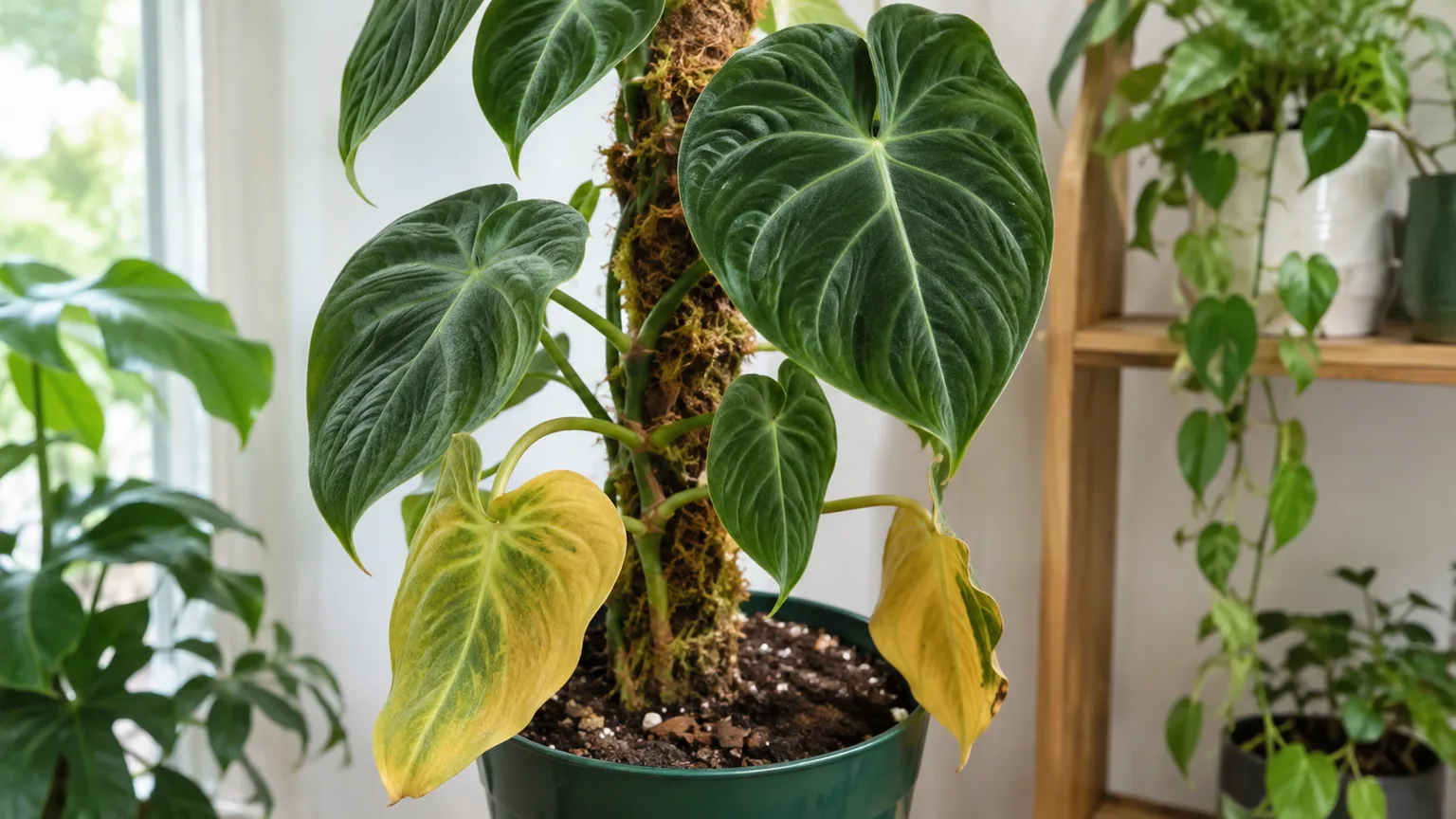
Overwatering on Philodendron Majestic: Causes, Checks & Fixes
This guide covers overwatering on Philodendron Majestic. See also the general Overwatering guide, watering, and light pages for this plant.
Overwatering on Philodendron Majestic: Causes, Checks & Fixes
Quick answer
Overwatering on Philodendron Majestic shows as limp, yellowing velvet leaves sitting in heavy, wet mix — the roots are suffocating even though water is everywhere. Clemson HGIC’s rule for this family is to keep the soil evenly moist, but not soggy, and Majestic punishes every departure from that balance.
First step: stop watering immediately and drain all standing water. Pull the nursery pot out of its cachepot, empty the saucer, and let air reach the drainage holes. Do nothing else until the top 3–5 cm of mix dries — that single pause tells you whether you are dealing with a mild wet spell or active root decay.
What overwatering looks like on Philodendron Majestic
Majestic is a verrucosum × sodiroi velvet climber with large, dark, silver-veined leaves, so excess water reads differently here than on a thin-leaved heartleaf. Expect yellowing that starts on lower leaves and climbs, limp foliage that stays limp after you water, and velvet that looks dull and feels less supple days before it collapses. A practical Majestic reference notes that waterlogged soil makes the leaves wilt while the roots and stems begin rotting — wilt plus wet soil is the signature, not wilt plus dry soil.
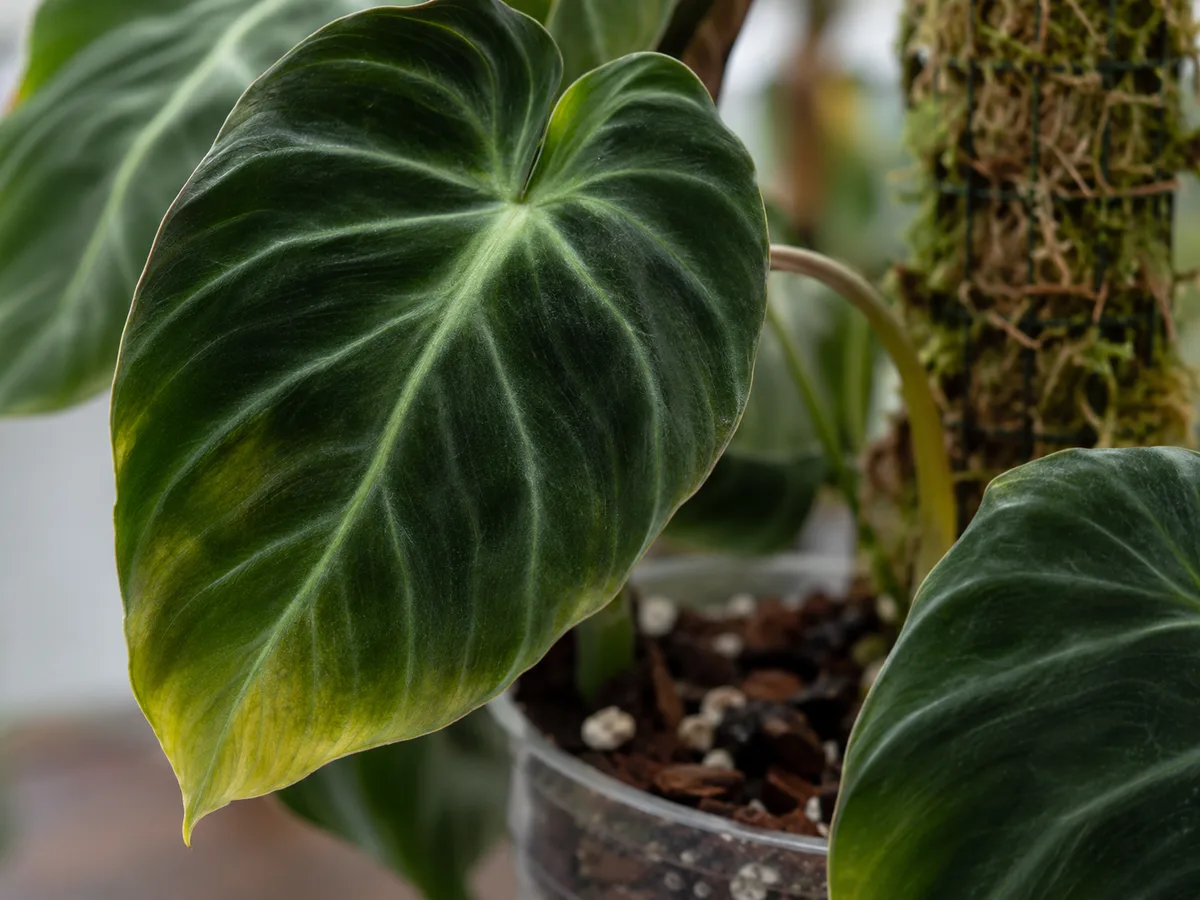
Overwatered Majestic can wilt while its mix is still wet; yellowing begins on lower leaves as stressed roots struggle to supply the foliage.
Late signs are unmistakable: a soft stem base, mix that smells sour at the drainage hole, persistent fungus gnats, and black mushy roots on inspection. One lone yellow basal leaf on an otherwise firm vine is usually normal turnover. Several yellowing leaves at once on a heavy pot is overwatering until proven otherwise.
Why Majestic stays wet longer than you expect
Three Majestic-specific traps keep the root zone wet days after a “normal” watering. First, the large velvet leaf mass transpires heavily in bright warmth but barely drinks in a cool, dim corner — the same pot can dry in a week in July sun and sit wet for three weeks in a winter room. Clemson HGIC is explicit that how often depends on species, pot size, soil mix, light, and season, not a fixed weekly slot.
Second, chunky aroid mix lies to the eye: bark on top dries pale while the center stays saturated, so surface checks invite another pour onto already-wet roots. Third, the decorative cachepot is the silent killer — runoff wicked back through the drainage holes re-floods the root zone within hours. For how soggy mix damages roots in general, see our overwatering guide. On Majestic, the pattern usually shows up as heavy-pot wilt with dull velvet rather than dramatic overnight collapse.
How to confirm it before you act
Run this sequence once, in order, before trimming or repotting anything:
- Lift the pot. A waterlogged root ball feels distinctly heavy. Learn the light weight of your pot after a full dry-down — weight beats eyesight on bark mix.
- Probe 3–5 cm deep with a finger or dry chopstick. Cool, clinging soil means wait; clean dry wood means the plant is actually ready. Iowa State Extension waters philodendrons when the top of the soil is dry and never lets them sit in soggy mix or saucers of water.
- Sniff the drainage hole. Earthy is fine. Sour or swampy means anaerobic decay has started, even if only one leaf has yellowed.
- Tip out only if two or more signs agree. Slide the root ball out gently: firm white-to-tan roots mean a mild case — dry-down alone may fix it. Black, hollow, foul-smelling roots mean rot is active and waiting is the wrong call.
Limp leaves with a light, dry pot and crispy margins point the other way — underwatering — and need a soak, not a dry-out. For the full check-first routine, see the Majestic watering guide.
Step-by-step recovery
Match the response to what the inspection showed, and change one variable at a time:
- Mild case (heavy pot, firm roots, one or two yellow leaves): Stop watering, drain everything, and move the plant to bright indirect light with gentle airflow. Wait until the top 3–5 cm dries and the pot lightens before the next full soak-and-drain. No fertilizer until new growth looks healthy.
- Moderate case (sour smell, gnats, spreading yellow): Unpot, shake off soggy mix, and trim black mushy roots back to firm tissue with clean shears. Let the root ball air in warm indirect light for a few hours, then repot into fresh chunky mix in a clean pot with open drainage — the Majestic soil guide equal-parts recipe is the reset baseline.
- Severe case (soft stem base, widespread mush): Take a healthy top cutting with a node as insurance before surgery, then trim aggressively to clean tissue. Repot small — a pot only slightly larger than the remaining roots — and keep humidity steady via the Majestic overview guidance while roots rebuild. Full timing details live in the Majestic repotting guide.
Every container needs a working drainage hole — if the pot has none, the repot is mandatory, not optional.
The moss-pole moisture trap
Majestic is a climber whose aerial roots grip a moist vertical support, which creates two separate moisture zones: the pot and the pole. Overwaterers typically drown the pot while the pole stays dust-dry, or soak both on the same schedule until the root ball sours. Water the pole by pouring slowly down the fiber until evenly damp when the pot is due — and skip the pole soak when the pot is still heavy. A wet pot plus a dust-dry pole stalls leaf sizing; a soaked pot plus a dripping pole rots the base. Probe both zones, not one.
Trailing Majestic without a pole dries unevenly along the vine — upper nodes in bright air lose moisture faster than shaded sections at the pot — so anchor every decision to the root-ball probe, not the vine tips.
Velvet-leaf reading cues other philodendrons do not give you
Majestic’s pubescent velvet foliage gives earlier warnings than smooth-leaved types if you know what to feel for. Healthy velvet looks lustrous and springs back under a gentle fingertip; overwatered velvet dulls, feels cool and limp, and holds the dent. New spears that stall inside swollen cataphylls in wet, humid-but-dim air often signal roots too oxygen-starved to push growth, not a humidity failure — check the pot before reaching for the humidifier. And because velvet scars permanently, never “test” recovery by bending or tearing a limp leaf; read the newest spear and the stem base instead.
Recovery timeline
Mild cases stabilize fast: leaves firm within days of the dry-down, and a clean new spear within two to four weeks confirms the roots recovered. After root trimming and repot, expect four to eight weeks before normal growth resumes — the plant rebuilds fine roots before sizing up leaves. Improvement looks like firming foliage, no new yellowing, lighter pot weight on schedule, and earthy-smelling mix. Worsening looks like continued yellowing up the vine, softening stem base, or gnats that persist past one full dry cycle — escalate to unpotting if any of those appear.
Mistakes to avoid
- “A little water to perk it up.” Wet roots cannot drink; any pour prolongs suffocation.
- Fertilizing a suffocating plant. Salts on damaged roots burn; hold feed until new growth confirms recovery.
- Repot-plus-prune-plus-spray on the same day. One intervention at a time lets you read the response.
- Misting velvet leaves to “help.” Wet velvet overnight in a dim corner invites spotting without adding root oxygen.
- Upsizing the pot “for recovery.” Extra wet mix around small damaged roots rots faster; size to the roots you have.
Persistent tiny flies over always-damp mix are fungus gnats breeding in damp organic soil — they confirm the moisture diagnosis but sprays alone never fix it. Dry the pot; the gnats follow.
How to prevent it next time
Build the rhythm around dry-down, not dates: check the top 3–5 cm and pot weight, soak thoroughly until runoff flows, empty the saucer within 30 minutes, and hydrate the pole in the same session only when the pot was due. Keep the plant in chunky bark-perlite mix, bright indirect light per the Majestic light guide, and a nursery pot with drainage lifted out of its cachepot for every watering. Stretch intervals in cool, short-day months — a winter pot can hold moisture twice as long as the same pot in summer growth.
When to worry
Act the same day when the stem base softens, the mix smells sour, more than a third of roots are mush on inspection, or yellowing climbs multiple nodes in a week. Those are rot thresholds, not wait-and-see signals. A heavy pot with firm roots and one yellow old leaf is low urgency — dry it out and watch the next spear.
Frequently Asked Questions
How can I confirm overwatering on Philodendron Majestic?
Lift the pot and probe 3–5 cm deep: a heavy, cool, clinging mix with limp or yellowing leaves points to overwatering, while a light, dry pot with dull leaves points to underwatering. A sour smell at the drainage hole or black mushy roots on a gentle tip-out confirms roots are already decaying.
What should I do first for an overwatered Philodendron Majestic?
Stop watering immediately and drain every drop of standing water from the saucer and cachepot. Then leave the plant in bright indirect light with airflow until the top 3–5 cm of mix dries — only mild cases recover without a root inspection.
Will yellow or limp Majestic leaves recover after overwatering?
Limp leaves often firm up once roots can breathe again, but fully yellowed or mushy velvet tissue does not turn green again. Judge recovery by new growth: a firm spear or clean unfurling leaf means the fix worked, even while old damage stays visible.
When is overwatering on Majestic an emergency?
Treat it as urgent when the stem base feels soft, the mix smells sour, several leaves yellow at once, or a gentle tip-out shows widespread black mushy roots. Those signs mean rot is active — unpot, trim to firm tissue, and repot into fresh chunky mix the same day.
How do I prevent overwatering on Philodendron Majestic long term?
Water only when the top 3–5 cm is dry and the pot feels light, always soak-and-drain, and empty the saucer within 30 minutes. Keep the plant in chunky aroid mix with drainage holes, bright indirect light, and a moist — not soaked — moss pole.
Related Philodendron Majestic guides
- Philodendron Majestic overview — whole-plant context, humidity, and pole setup
- Watering — dry-down rhythm and moss-pole watering routine
- Soil — chunky mix recipe and drainage tests
- Light — bright indirect placement that controls dry-down speed
- Repotting — timing and root-inspection workflow after rot
Related tool
Use the Root Rot Risk Checker to narrow causes for overwatering on this plant before changing multiple variables at once.