Yellow Leaves on Philodendron Majestic: Causes, Checks &
Quick answer
Yellow leaves on Philodendron Majestic most often mean the chunky mix stayed wet too long. First step: push a finger 3–5 cm into the mix and lift the pot — if it feels heavy and cool, stop watering, drain the saucer, and let the top layer dry before soaking again.
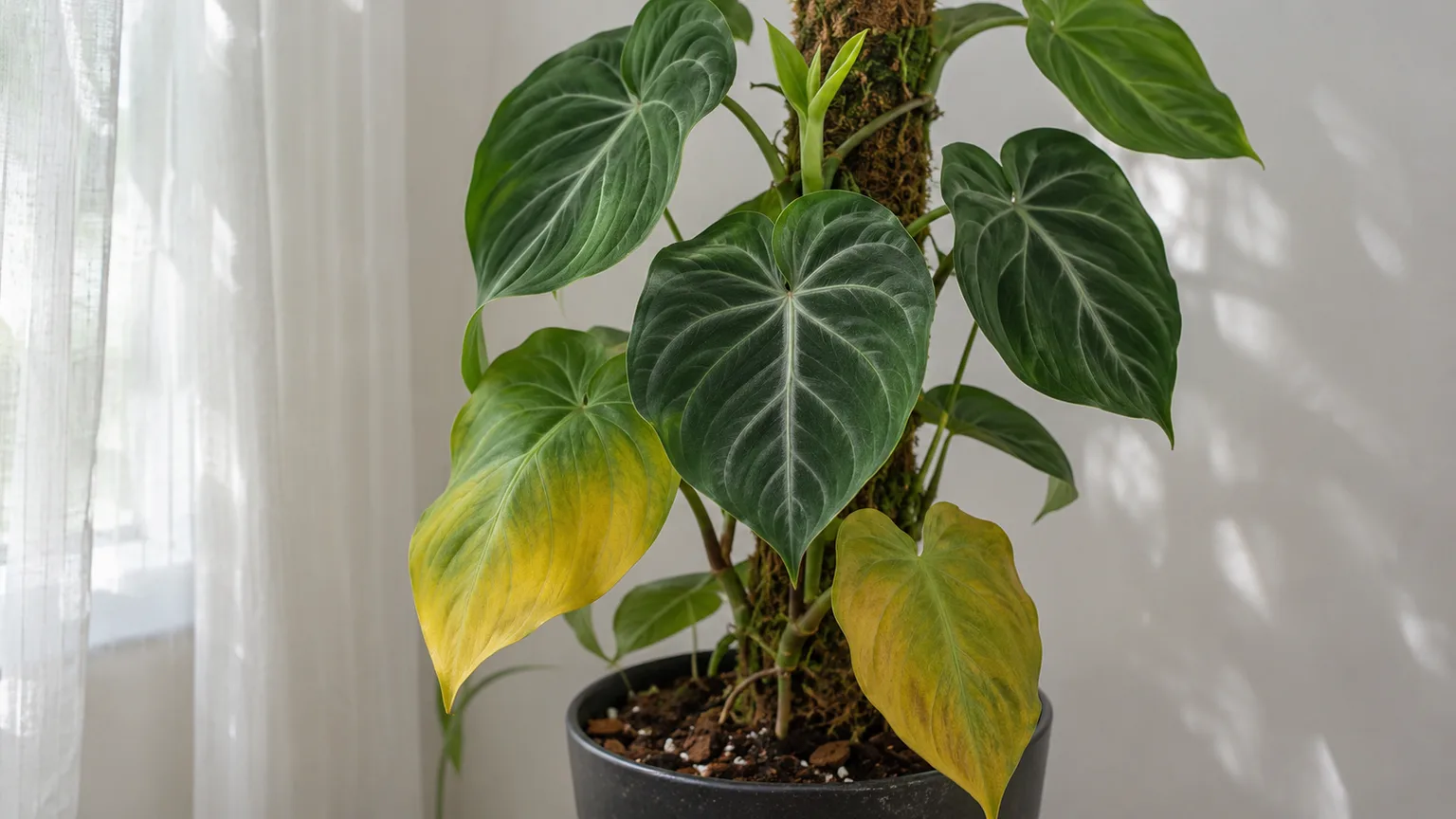
Yellow Leaves on Philodendron Majestic: Causes, Checks & Fixes
This guide covers yellow leaves on Philodendron Majestic. See also the general Yellow Leaves guide, watering, and light pages for this plant.
Yellow Leaves on Philodendron Majestic: Causes, Checks & Fixes
Quick answer
Yellow leaves on Philodendron Majestic most often mean the chunky mix stayed wet too long. First step: push a finger 3–5 cm into the mix and lift the pot — if it feels heavy and cool, stop watering, drain the saucer, and let the top layer dry before soaking again.
One yellow leaf low on the vine is rarely an emergency. Several yellowing at once, especially with soft stems or a sour-smelling pot, means the roots are in trouble and need attention now.
What yellow leaves look like on Philodendron Majestic
On this hybrid, yellowing reads differently than on a plain green philodendron. The silver veining that makes Majestic collectible dulls first, so an affected leaf looks washed out and flat before it turns fully yellow. The velvet texture also holds damage visibly: stippled, patchy yellowing suggests pests, while a smooth even fade across the whole blade points to water or root stress.
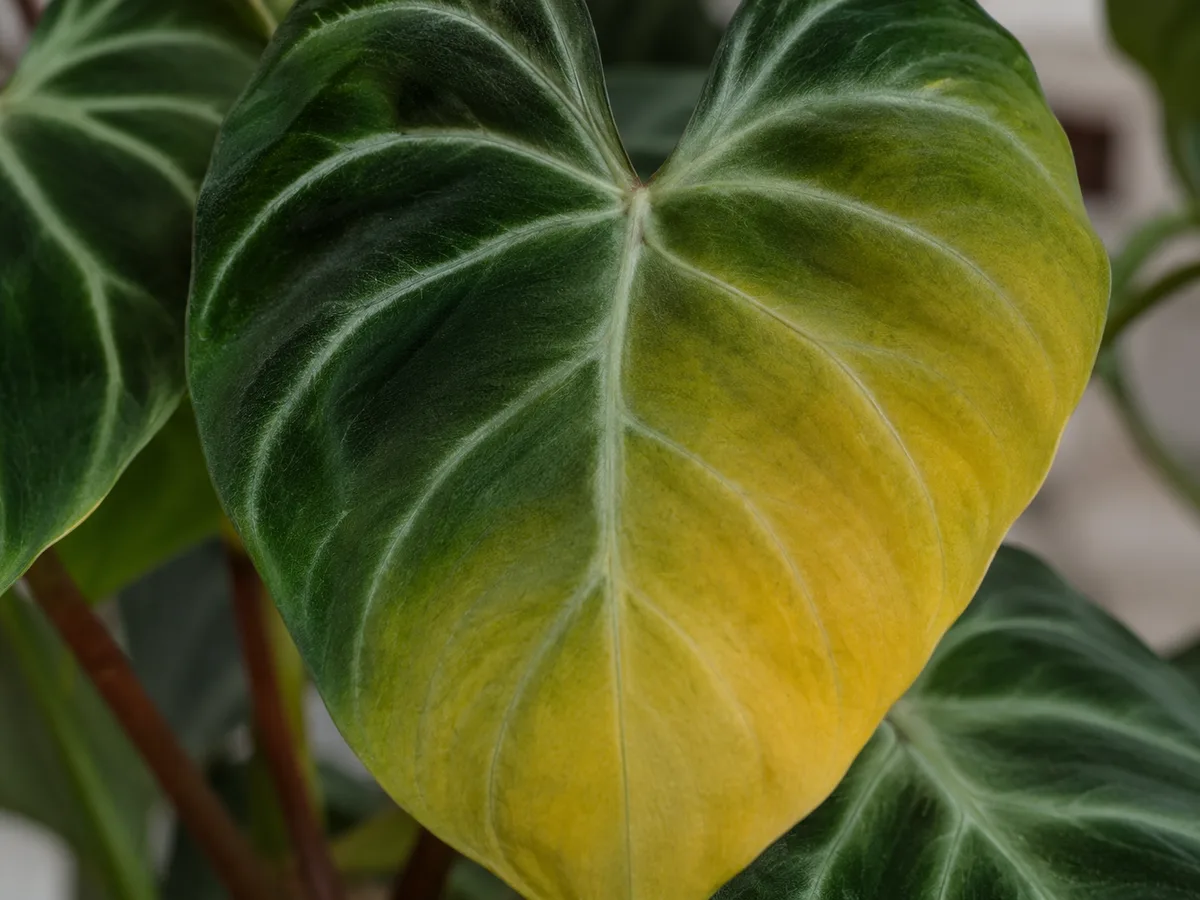
Smooth fading can point to water or root stress; stippling and webbing suggest pests instead.
Pay attention to position. A single oldest leaf near the base yellowing while the tip keeps pushing firm new growth is usually the vine retiring tissue it no longer needs. Yellowing that starts in the middle of the plant, hits the newest spear, or climbs upward leaf by leaf is a care problem, not aging. For the general mechanics of why leaves yellow at all, see our yellow leaves guide — then come back here, because on Majestic the pattern almost always traces to its water rhythm, its pole, or its humidity.
Why Majestic yellows: the usual suspects in order
Overwatering in chunky mix that never dried. Majestic wants soil kept evenly moist, but not soggy, and the classic mistake is watering on a calendar while the lower half of the pot is still wet. Heavy mix suffocates roots, and the leaves yellow broadly, feel soft, and may droop even though the pot is wet. Extension guidance for indoor philodendrons is to let the compost dry out slightly between waterings and take care not to overwater — on Majestic that means the top 3–5 cm dry, not just the surface.
A moss pole that stays soaked. Because Majestic is a vigorous climber, most owners grow it on a pole — but a pole that is drenched at every watering wicks constant moisture against the stem base and aerial roots. Basal leaves yellow first, and in bad cases the stem softens where it meets the support. The pole should feel barely damp between waterings, never dripping.
Underwatering after a dry spell. A Majestic left too long goes thin and tired: leaves yellow from the edges, feel papery rather than soft, and the pot feels strikingly light. Underwatered plants can yellow, then brown, and eventually drop leaves altogether, so a dry-pot yellow is just as real a diagnosis as a wet-pot one.
Too little light slowing everything down. Majestic tolerates lower light but weakens in it, using water more slowly so the mix stays wet longer — which circles back to root stress. Pale yellow-green new growth that stays small in a dim corner usually means the plant needs a brighter spot, not more water or food. Review the Majestic light guide before moving it, since direct sun scorches the velvet.
Dry air and stuck new growth. This hybrid expects 60–75% humidity, and long spells below 50% crisp margins, dull the velvet, and trap emerging spears inside their cataphyll sheaths. A struggling spear can emerge yellowed or torn, which looks alarming but is a humidity problem rather than a root one. A humidifier fixes this; misting only spots velvet leaves.
Salt buildup and overfeeding. Heavy or frequent fertilizer on a stressed plant burns root tips, and the leaf margins yellow and brown while the mix surface may show a white crust. Severely symptomatic plants recover poorly once salts have damaged much of the root system, so feeding a yellowing Majestic “to help it” usually backfires.
Pests hiding in the velvet. Spider mites, scale, and mealybugs all show up on stressed indoor philodendrons, and mites in particular love the sheltered undersides of large velvet leaves. Suspect pests when yellowing is stippled or dusty-looking rather than smooth, with fine webbing at vein junctions or cottony clusters in leaf axils.
Root rot and bacterial spot. When wet conditions persist, Rhizoctonia root rot sets in: leaves gradually turn yellow, brown, and drop, starting on the lower leaves and moving up, with poor vigor overall. Bacterial leaf spot is different — tiny water-soaked patches that expand into tan-to-black lesions, sometimes with an unpleasant fishy odor — and needs prompt removal of affected leaves.
How to confirm the cause at home
Work through these checks in order and let the evidence pick the diagnosis:
- Weigh and probe the pot. Push a finger 3–5 cm deep and lift the pot. Heavy, cool, clinging mix with soft yellow leaves means overwatering; a feather-light pot with thin papery yellowing means underwatering. Do not judge by the top surface alone — the root ball tells the truth.
- Map which leaves are yellow. One old bottom leaf on an otherwise strong vine is natural shedding. Several leaves yellowing at once, or any yellowing on the newest spear, means active stress.
- Empty and inspect. Tip out any standing water from the saucer and cachepot, then smell the drainage hole. A sour or swampy smell, or black mushy roots on a gentle tip-out, confirms rot rather than simple overwatering.
- Check the pole and stem base. Feel the moss pole and the stem where it ties on. A sodden pole with yellowing basal leaves implicates pole moisture; a firm stem with dry pole points elsewhere.
- Flip the leaves. Examine undersides along the midrib with a bright light for stippling, webbing, scale bumps, or mealybug cotton. Mite damage concentrates on older large leaves first.
- Review the last month. New placement, a repot, a fertilizer dose, or a heating-season humidity drop often dates the start of yellowing. Majestic reacts to stacked changes, so the most recent change is the prime suspect.
The first fix to try
Do one thing first: correct the water rhythm based on what the probe told you. If the mix is wet, drain every drop of standing water, leave the plant in bright indirect light with airflow, and do not water again until the top 3–5 cm is dry. If the mix is dry, give one thorough soak until water flows from the drainage hole, discard the saucer water after 30 minutes, and resume the check-first rhythm described in the Majestic watering guide.
Bloomscape’s philodendron guidance puts the rule plainly: water when the top 25% of the soil in the pot is dry, keep soil damp but not wet, and never let the plant sit in standing water. One targeted correction lets you read the plant’s response; stacking a repot, a feeding, and a spray on the same day hides which one worked.
Step-by-step recovery
- Stabilize water and drainage. Confirm the pot has working drainage holes, the Majestic soil mix is chunky rather than compacted, and no cachepot is holding a hidden reservoir. Adjust the pole too — let a soaked pole dry to barely damp.
- Remove only what is finished. Trim leaves that are fully yellow and limp at the petiole base with clean snips. Leave partly green leaves alone; they still photosynthesize and feed recovery. If bacterial spot lesions are present, remove those leaves promptly and avoid splashing water between plants.
- Treat pests only if confirmed. Rinse confirmed mites off leaf undersides with a firm lukewarm shower, let the velvet dry with airflow, and re-inspect in three days before considering insecticidal soap. Never spray a velvet aroid on a schedule without seeing live pests.
- Rescue rot the same day it is confirmed. Unpot, rinse roots, trim everything black and mushy back to firm white tissue, and repot into fresh chunky mix in a clean pot. The Majestic repotting guide covers mix and pole re-installation. Water lightly once, then resume the dry-down rhythm.
- Hold fertilizer until growth resumes. Skip feeding until a new spear opens clean and firm, then restart at half-strength dilute feed during active growth only.
Recovery timeline
Mild cases — one or two yellow leaves from a single overwatering — stabilize within one to two watering cycles once the rhythm is corrected. Expect the yellowing to stop spreading within a week or two; yellow leaves will not turn green again, so judge progress by what is new, not what is damaged. A firm spear that unfurls dark with crisp silver veins is the real all-clear, usually three to five weeks out.
After a rot rescue, recovery is slower: the plant may sit quiet for a month while roots rebuild, then push a smaller-than-usual leaf. That smaller leaf is normal. Worry only if new growth emerges already yellow, stems keep softening, or the mix smells sour again despite careful watering.
What not to do
Do not fertilize a yellowing Majestic to “perk it up” — salts on damaged roots deepen the injury. Do not repot on day one unless you have confirmed rot, compaction, or a sour pot; an unnecessary repot adds shock to an already stressed root system. Do not mist velvet leaves to raise humidity, since wet velvet spots and invites bacterial problems — run a humidifier instead. And do not strip every blemished leaf; a half-green leaf still powers the recovery you are waiting for.
When to use this page vs other Majestic guides
Yellowing rarely travels alone, so route by the dominant symptom. If the pot is heavy, the mix smells, or stems soften, read this page alongside the Majestic watering guide and the repotting guide for the rot-rescue steps. If leaves are limp and the whole plant flops without much yellowing, the cause is more likely in wilt or droop territory than here. Stippled yellowing with webbing belongs with the pest guides first, brown crispy margins without yellowing point to humidity and tip-burn causes, and a vine that pales while stretching toward the window is a light problem wearing a yellow disguise — check the Majestic light guide and the Majestic overview for placement.
How to prevent it next time
Keep the rhythm boring: water only when the top 3–5 cm is dry and the pot feels lighter, always soak until water drains, and empty the saucer within half an hour. Grow in chunky aroid mix with real drainage holes, keep the moss pole barely damp rather than wet, and hold 60–75% humidity with a humidifier through heating season. Feed lightly at half strength in spring and summer only, and quarantine new plants for two to four weeks while you check velvet undersides for mites. Full background on this hybrid’s needs is in the Majestic overview and the Majestic fertilizer guide.
Related tool
Use the Yellow Leaves Diagnosis Tool to narrow the cause for yellow leaves on this plant before changing multiple variables at once.
Related Philodendron Majestic guides
- Philodendron Majestic overview — placement, humidity, and whole-plant care context.
- Watering — the soak-and-dry rhythm that prevents most yellowing.
- Soil — chunky aroid mix and drainage that keep roots breathing.
- Light — bright indirect levels that keep growth compact and silver-veined.
- Repotting — when a root inspection or fresh mix is actually warranted.
- Fertilizer — half-strength seasonal feeding once new growth resumes.