Underwatering on Philodendron Majestic: Causes, Checks &
Quick answer
Underwatered Philodendron Majestic shows soft drooping velvet leaves, inward-curling blades, and dry mix 3–5 cm down with a light pot. First step: water deeply once until it drains freely from the bottom, then confirm the core of the root ball actually absorbed it before doing anything else.
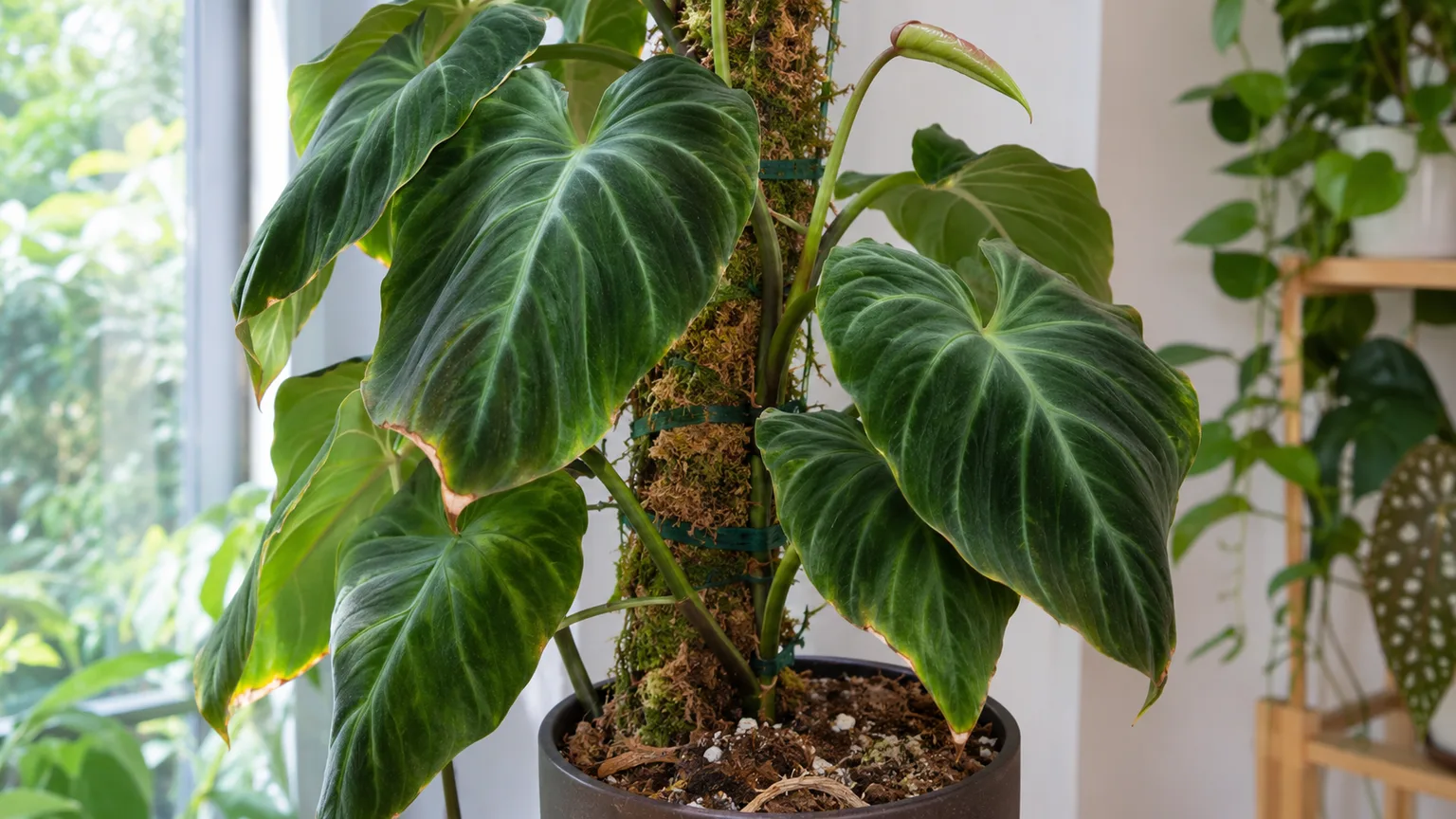
Underwatering on Philodendron Majestic: Causes, Checks & Fixes
This guide covers underwatering on Philodendron Majestic. See also the general Underwatering guide, watering, and light pages for this plant.
Underwatering on Philodendron Majestic: Causes, Checks & Fixes
Quick answer
Underwatered Philodendron Majestic loses leaf turgor first: broad velvet blades go soft and droop, edges curl slightly inward, and the pot feels conspicuously light. For how drought stress works in houseplants generally, see our underwatering guide. On Majestic, the tell is the combination of dry mix 3–5 cm down plus a dry moss pole with limp aerial roots.
First step: water deeply once, slowly, until water flows freely from the drainage holes — then check that the pot actually gained weight. One thorough soak, not a week of fussing. Everything after that (bottom-soaking, pole rewetting, trimming) depends on how the plant responds to this single watering.
What underwatering looks like on Philodendron Majestic
Majestic shows thirst through its velvet foliage before anything else. Leaves lose their firm, quilted feel and hang soft from the petioles. Blades cup or curl inward along their length as cells deflate — drooping here means the foliage has lost turgor, and dry soil with a lightweight pot points to dehydration rather than disease.
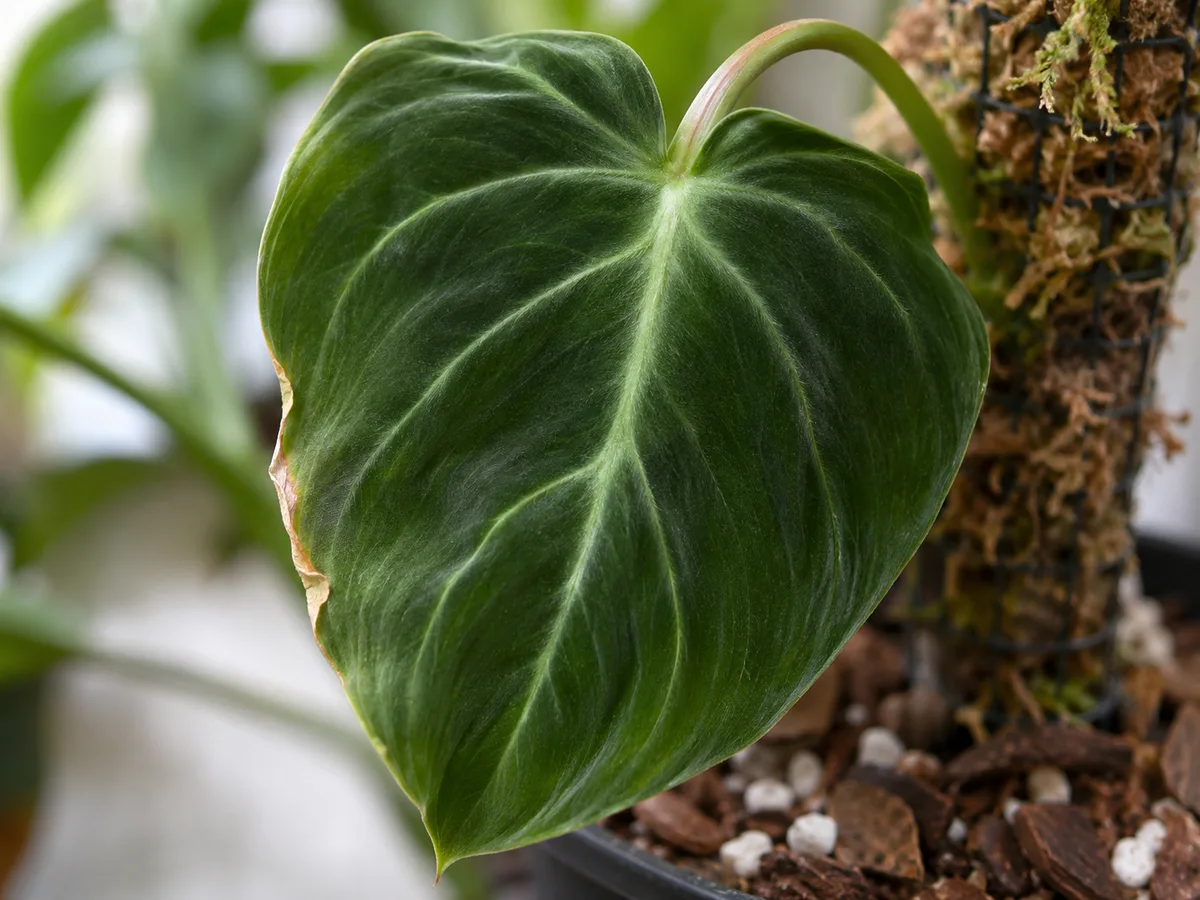
Dry mix can leave velvet leaves soft and curled, with crisping beginning at thin margins.
Margins crisp next. Thin brown edges creep along the large cordate blades, and the silver veining can look dull as the velvet surface desiccates. Growth stalls in a distinctive way: the newest leaf emerges smaller than the last, or its cataphyll sheath sticks halfway and the tip browns before it finishes unfurling. That stuck new leaf after a dry spell is the most Majestic-specific drought signature in the house.
Advanced thirst thins the stems. Petioles feel papery rather than succulent, lower leaves may yellow and drop as the plant sheds water demand, and mix visibly shrinks from the pot sides. Crispy margins will not re-green — recovery is judged by firm older leaves and the next leaf opening at full size.
Why Majestic dries out faster than expected
This hybrid inherits Opposite water traps from both parents: verrucosum’s velvet leaves transpire steadily in warm air, while sodiroi vigor pushes fast growth that drinks heavily. Philodendrons want soil kept evenly moist, but not soggy, and Majestic’s summer rhythm — roughly every 7–10 days with the top 3–5 cm drying — collapses quickly when conditions shift.
The usual accelerants:
- Bright warm placement. A plant near a bright window in summer can exhaust its mix days early, since warm, dry, sunny positions always need more frequent watering than cool low-light ones.
- Chunky bark mix. The open aroid blend Majestic needs drains fast by design. In a small pot it can go from damp to bone-dry within days, and overdried bark and peat turn hydrophobic so later waterings run through without wetting the core.
- A dry moss pole. The pole is part of the root zone on a climber. When it stays dry for weeks, aerial roots desiccate and the plant loses a meaningful share of its water uptake.
- Calendar watering. Fixed weekdays ignore weather, growth flushes, and heating seasons. The RHS approach for philodendrons is to let the compost dry out slightly between waterings and water on condition, not date.
- Travel gaps. One missed week after months of consistency is the single most common trigger — the plant was fine, then suddenly was not.
The moss-pole check most owners skip
Treat the pole as a second pot. Squeeze it: a functional pole feels cool and faintly damp a day after watering. A pole that is dusty-dry top to bottom with brittle, silver-grey aerial roots means the climbing root system has been offline, and pot watering alone may not explain the full drought.
At each watering, pour or spray water down the pole until it darkens and holds moisture. Plants grown as climbers on a moss support root directly into damp material, and Majestic sizes up its silver-veined leaves only when those aerial roots stay alive. If aerial roots have crisped entirely, trim only the fully dead papery strands and keep the pole consistently damp going forward — new attachment roots emerge from nodes when humidity around the pole stays steady.
How to confirm it is underwatering
Run these checks in order before treating:
- Finger test at 3–5 cm. The most reliable gauge is touch: push a finger into the mix up to the first joint, and water if it feels dry at the fingertip. Surface dust means nothing on chunky bark — test at depth.
- Pot weight. Lift the pot. A thirsty Majestic feels strikingly light versus its freshly watered heft. Learn the two weights once and this check takes seconds.
- Hydrophobic test. Pour slowly and watch. If water races down the inside of the pot and out the bottom while the pot stays light, the mix is repelling water and the root-ball core is still dry.
- Pole and aerial roots. Dry pole plus shriveled aerial roots corroborate whole-column drought.
- Newest leaf. A stuck, small, or tip-browned unfurling leaf confirms the stress hit active growth, not just old foliage.
If instead the mix is damp and heavy days after watering, with yellowing lower leaves and soft stems, stop — that is the overwatering pattern, and adding water will make it worse.
First fix for Majestic
Give one deep, slow watering until water runs freely from the drainage holes, then confirm the pot gained weight.
Water in two slow passes a few minutes apart so bark has time to absorb rather than channel. Water thoroughly so it runs out of the bottom — this guarantees the lower two-thirds of the pot, where most roots sit, actually receives moisture. Empty the saucer afterward so the base never sits in standing water.
Then wait and watch. Soft leaves should start firming within hours. Do not fertilize, repot, or prune anything on day one — a thirsty plant needs water first and a chance to show you what recovered.
Step-by-step recovery
Follow this order only if the first watering revealed problems:
- Bottom-soak hydrophobic mix. If water ran straight through and the pot stayed light, set the nursery pot in a basin of room-temperature water for about 20 minutes so moisture wicks upward, then drain fully. Extension guidance for very dry peat-based mix recommends exactly this: water once, again half an hour later, or place the pot in a sink or bucket until the surface moistens, then let it drain completely.
- Rewet the pole. Soak the moss column until it darkens, and mist aerial roots back to pliable. Keep it damp — not dripping — for the following weeks.
- Trim only the dead. Remove fully crispy leaf edges or dead leaves once firming has plateaued, cutting back to healthy tissue. Leave partially green blades; they still photosynthesize for recovery.
- Set a check rhythm. Probe the top 3–5 cm every few days rather than watering on schedule, and shorten the interval while the plant is pushing new growth in warmth. Underwatered philodendrons recover best on a regulated routine where each watering fully reaches the roots.
- Stabilize the environment. This hybrid prefers temperatures between 65 and 85°F with high humidity and partial shade. Keep it out of direct sun and cold drafts while it rebuilds turgor.
Recovery timeline
Simple thirst resolves fast: leaves firm within hours, posture normalizes by the next day, and the following new leaf opens at full size with clean silver veining. That next leaf is the real report card — judge by it, not by old damage.
Recovery that drags past a day, or leaves that yellow and drop after rewatering, signals root damage from repeated dry-outs rather than one missed watering. In that case hold a steady moist-not-soggy rhythm for several weeks and expect smaller replacement growth before normal size returns. Crispy margins never heal; they are history, not active illness.
Lookalike symptoms
| What you see | More likely | Separator |
|---|---|---|
| Heavy damp mix, yellow lower leaves, soft stems | Overwatering / root stress | Pot weight stays high days after watering; thirst is light-pot and dry |
| Fine stippling plus webbing on velvet undersides | Spider mites | Pests leave speckled damage and silk; thirst leaves are clean but limp |
| Crisp margins but mix still moist at depth | Low humidity | Soil check reads damp; damage concentrates on edges in dry air |
| Tan patches only on the sun-facing side | Sun scorch | Localized bleaching where rays hit; soil may be normally moist |
| Single oldest leaf fading while tips grow well | Natural aging | Slow, isolated, and new growth unaffected |
Underwatered philodendrons also show slowed growth with curled tips that turn crisp brown over time — when that whole-plant pattern pairs with dry soil, thirst outranks the lookalikes.
When to use this page vs other guides
Use this page when the finger test reads dry at depth, the pot is light, and leaves droop or curl without spots, webbing, or sun-side-only bleaching. If the mix reads wet and heavy, switch to overwatering and root-rot guidance instead. If velvet undersides show stippling or silk, treat for spider mites first. For day-to-day prevention, the Philodendron Majestic watering guide sets the seasonal rhythm this page assumes.
Mistakes to avoid
- Dribbling small sips daily instead of one deep soak — the core never wets and salts accumulate up top.
- Compensating with a flood after drought, then leaving the saucer full — swinging from dry to waterlogged injures the same roots.
- Fertilizing a wilted plant to “perk it up” — feed only after firm growth resumes.
- Repotting on day one for simple thirst — repotting is for confirmed root damage or a fully root-bound pot, not a dry week.
- Ignoring the pole while perfecting pot watering — half the root system stays in drought.
How to prevent it next time
Anchor prevention to the conditions Majestic actually lives in: bright indirect light, 60–75% humidity, chunky bark mix, and a living moss pole. Check the top 3–5 cm before every watering per the watering guide, rewet the pole in the same session, and weigh the pot occasionally to recalibrate your sense of dry. Before travel, water deeply, dampen the pole well, and set a reminder or arrange a checker — a single planned soak prevents most holiday collapses.
Conclusion
Underwatering on Philodendron Majestic is a fast, fixable problem when caught at the droop-and-curl stage: one deep watering, a weight check, and a bottom-soak only if the mix repels water. Keep the pole damp, water on dryness rather than dates, and let the next full-sized leaf confirm you are back on rhythm.
Related tool
Use the Plant Watering Calculator to narrow causes for underwatering on this plant before changing multiple variables at once.