Brown Tips on Philodendron Majestic: Causes, Checks & Fixes
Quick answer
Brown tips on Philodendron Majestic usually mean the air is too dry for its velvet leaves or waterings are running late — this hybrid wants 60–75% humidity and a soak when the top 3–5 cm of mix dries. First, run a humidifier to hold 60–75% and move the pot away from heating vents, then confirm moisture depth and recent feeding before changing anything else.
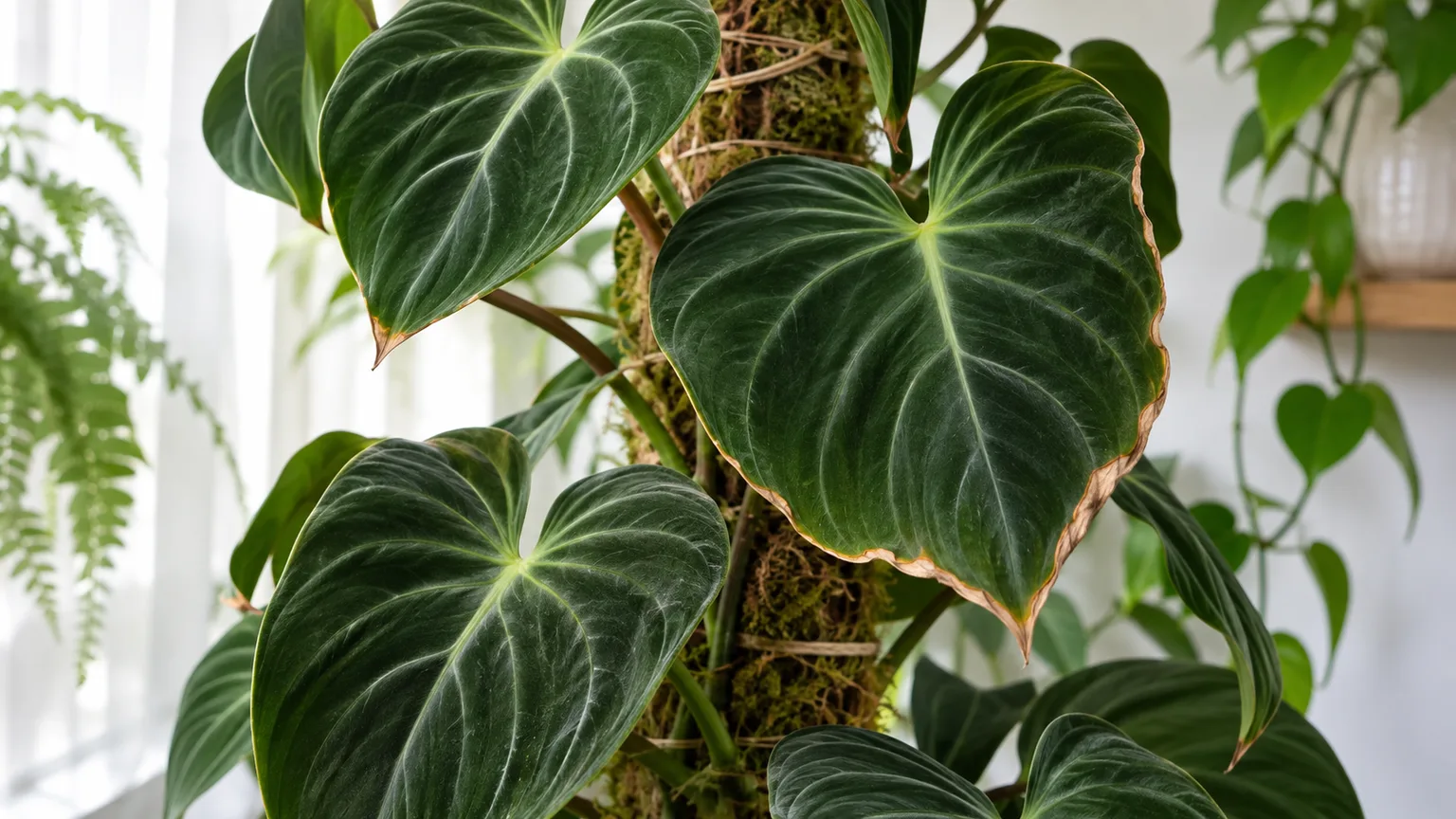
Brown Tips on Philodendron Majestic: Causes, Checks & Fixes
This guide covers brown tips on Philodendron Majestic. See also the general Brown Tips guide, watering, and light pages for this plant.
Brown Tips on Philodendron Majestic: Causes, Checks & Fixes
Quick answer
Brown tips on Philodendron Majestic usually mean the air is too dry for its velvet leaves or waterings are running late — this hybrid wants 60–75% humidity and a soak when the top 3–5 cm of mix dries. First, run a humidifier to hold 60–75% and move the pot away from heating vents, then confirm moisture depth and recent feeding before changing anything else.
Dry, papery margins on otherwise firm leaves point to air or watering stress. Tips that curl as they brown after a recent feed point to fertilizer salts. Soft or haloed spots point to infection or pests rather than simple tip burn.
What brown tips look like on Philodendron Majestic
For how tip burn works across houseplants in general, see our brown leaf tips guide. On Majestic, the pattern usually shows up on the velvet margins first, because the soft pubescent surface of this sodiroi × verrucosum hybrid loses moisture faster than a glossy leaf does.
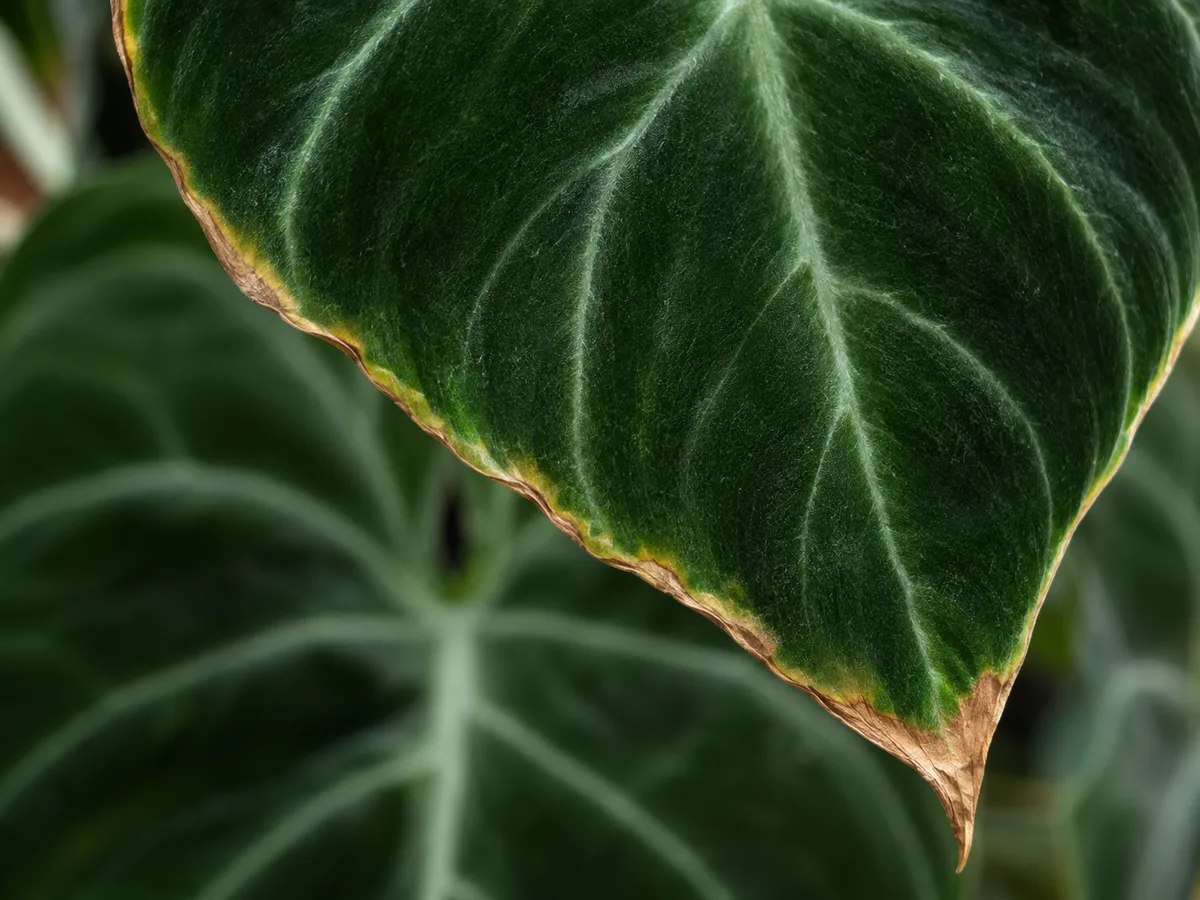
Dry air can crisp the velvet margins while the dark inner blade remains plush.
Early damage is a thin tan rim along the leaf edge that feels dry and crisp while the center stays plush and dark green. The silver veining often looks duller at the same time — low humidity flattens the contrast that makes this plant collectible. New leaves may emerge slowly or stick in their cataphylls when the air is dry, and those struggling unfurlers frequently crisp at the tip before they ever flatten out.
Salt-related browning looks different. Clemson notes that too much fertilizer can cause tips of philodendron leaves to curl and brown (Clemson Cooperative Extension). Suspect salts when the tips twist as they brown, a white crust rims the pot or mix surface, and the damage follows a recent feeding.
Why Majestic’s velvet leaves brown first
Majestic inherits verrucosum’s velvet coating and sodiroi’s silver veining on large heart-shaped blades, and it climbs rather than sprawls. That combination sets a higher humidity bar than plain green philodendrons tolerate: the grower data for this plant targets 60–75%, and long spells below 50% crisp the margins while dulling the velvet.
Dry indoor air pulls water from those broad velvet margins faster than roots can replace it. Epic Gardening describes exactly this dry-margin effect on philodendrons and recommends holding humidity around 50–70% with a humidifier (Epic Gardening). Majestic sits at the thirsty end of that range, and winter heating or a nearby vent is the usual reason a previously fine plant starts crisping in December.
The climbing habit adds a second Majestic-only wrinkle. Aerial roots reaching for a dry moss pole desiccate instead of attaching, which keeps the vine in a stressed juvenile state with smaller, more burn-prone leaves. A pole kept lightly damp gives roots something to grip, but soaking the foliage to raise humidity backfires — water sitting on velvet in weak airflow invites spotting, which is why a humidifier beats misting for this plant.
How to confirm the cause
Read the pattern before treating. Run these four checks in order:
- Air and heat. Check humidity at the plant, not across the room, and note radiators, fireplaces, heating vents, and dehumidifiers. The RHS lists too dry an atmosphere alongside watering faults as a leading cause of brown tips and margins (RHS leaf damage advice). Temperatures above 90°F (32°C) can brown philodendron leaves, while the comfortable band is 65–85°F (Epic Gardening); NC State gives 65 to 85°F as the preferred indoor range (NC State Extension).
- Moisture depth. Push a finger 3–5 cm into the mix and lift the pot. Light pot, crumbly dry mix, and blades that wilt or curl inward point to underwatering — browning from missed water typically starts at the leaf tips and works inward (Epic Gardening). Heavy, soggy mix with yellowing plus browning points the other way, toward roots.
- Light history. Did the plant move closer to a window, or did the season shift sunbeams onto it? Sunburned philodendrons develop white or brown blotches where direct rays strike (Epic Gardening). Velvet scorches show as bleached-tan patches on the sun-facing side while shaded leaves stay clean.
- Feeding and water quality. Any fertilizer in the last month, a crusty pot rim, or very hard tap water suggests salts. The RHS advises rainwater or filtered water for philodendrons wherever possible, especially in hard water areas (RHS).
If only the single oldest, lowest leaf is browning while new growth unfurls clean, that is usually natural aging — snip it off and carry on.
The first fix to try
Run a humidifier to hold 60–75% around the plant and move the pot out of the path of heating vents, radiators, and hot drafts. That is the whole first step — not a repot, not a feed, not a spray.
Place the humidifier a few feet away so fine mist does not settle directly on the velvet, and keep it running consistently rather than in bursts. Give the plant at least two weeks in stable humid air before judging: existing crisp edges will not heal, but the next unfurling leaf should emerge without sticking or browning. If humidity was already in range when you measured, skip ahead to the watering reset below instead of humidifying blindly.
Step-by-step recovery
After the air is fixed, work through these in order, one change at a time:
- Reset watering. Water when the top 3–5 cm of mix is dry, soaking slowly until water runs freely from the drainage holes, then empty the saucer. Gardening Know How stresses exactly this sequence — a thorough soak with free drainage, since philodendrons like water but refuse to sit in it (Gardening Know How). Full timing detail lives in the watering guide.
- Dampen the pole, not the leaves. Water the moss pole when you water the pot so aerial roots can attach, and keep foliage surfaces dry. Good airflow around a supported vine keeps damp velvet from picking up fungal spots.
- Flush suspected salts. If you fed recently or see crusting, water slowly and deeply until plenty drains through, washing excess nutrients from the mix. Then withhold fertilizer until new growth looks healthy. Safe rates are covered in the fertilizer guide.
- Adjust light if scorched. Move sun-struck plants into bright filtered light with no direct beams landing on leaves. Placement targets are detailed in the light guide.
- Trim dead tissue. Cut fully crisp edges with clean scissors, following the leaf’s natural outline. Leave anything still supple — it is still photosynthesizing. Wear gloves, since all philodendron parts contain calcium oxalate crystals that irritate skin and mouths (Clemson Cooperative Extension).
Recovery timeline
Brown edges will not heal or re-green — that tissue is finished. Success looks like browning that stops at the trim line within a week or two, followed by a new leaf that unfurls without sticking and hardens off with sharp silver contrast.
Expect one full leaf cycle, roughly three to six weeks in the growing season, before calling it fixed. If each successive new leaf still browns at the tip, the cause is still active — re-run the four confirmation checks rather than trimming harder.
Lookalike symptoms
- Spider mites on velvet. Fine stippling plus faint webbing on the leaf undersides, with a dusty, faded look rather than clean tip burn. Velvet hides early mites well, so inspect undersides with a lens when edges brown despite good humidity.
- Bacterial leaf spot. Wet-looking spots with yellow halos that enlarge into tan lesions, unlike dry papery tip burn. Remove affected leaves, water at the base to keep foliage dry, and isolate the plant while it recovers.
- Overwatering and root trouble. Yellowing lower leaves plus limp stems and a heavy, sour-smelling pot. Tip burn leaves are dry and crisp; root-trouble leaves go soft and limp. Fix drainage and cadence before anything else. The soil guide covers the chunky aroid mix this plant needs.
- Cold injury. Sudden browning after a drafty window, a cold shipment, or nights near glass. Damage looks water-soaked first, then papery — and it hits exposed leaves regardless of age.
- Natural aging. One oldest leaf yellowing then browning at a time, with clean new growth. Normal — remove and move on.
Mistakes to avoid
Do not fertilize a stressed Majestic to “help it recover” — feeding salt-burned or scorched roots deepens the damage. Do not mist velvet leaves sitting in weak light and call it humidity; wet foliage plus poor airflow favors bacterial spot, so use a humidifier instead of wetting leaves. Do not stack a repot, a hard prune, and a pesticide spray on the same day; each is a separate stress, and you will not be able to read which change helped. And do not exile the plant to a dim corner to escape browning — large silver-veined leaves need bright filtered light to size up, and dim light stalls the new growth you are waiting on.
Philodendron Majestic care cross-check
Once the acute damage is trimmed, audit the routine against this plant’s needs: water when the top 3–5 cm dries per the watering guide, bright filtered light per the light guide, chunky bark-based mix with drainage per the soil guide, and light monthly feeding at half strength in active growth per the fertilizer guide. Most recurring tip burn traces back to one of those four drifting off target.
How to prevent it next time
Hold 60–75% humidity year-round with a humidifier, watching for the winter dip when heating kicks in. Water by finger test rather than calendar, keep the moss pole lightly damp for the climbing stem while leaf surfaces stay dry, and feed lightly only while the plant is actively pushing growth. In hard-water homes, switch to rainwater or filtered water as the RHS recommends (RHS), and flush the pot with a deep watering every few months so minerals never accumulate to burn level.
When to worry
Treat it as urgent if browning spreads across multiple leaves within days, petioles or the stem base soften, the mix smells sour, or pests appear on the velvet undersides. Those signs mean the problem has moved past leaf margins into roots, stems, or infection — unpot to inspect roots, remove anything mushy, and stabilize conditions before any further treatment.
Related guides
Use this page for dry, crisp tips and margins on Philodendron Majestic — especially velvet-edge crisping in dry air. For the general mechanics of tip burn across houseplants, the hub link above is the reference; everything else here is Majestic-specific. For routine care behind prevention, use the watering guide for dry-down timing, the light guide for filtered-bright placement, the soil guide for mix and drainage, and the fertilizer guide for safe feeding rates.
Related tool
Use the Brown Tips Diagnosis Tool to narrow causes for brown tips on this plant before changing multiple variables at once.