Spider Mites on Philodendron Majestic: Velvet-Leaf Checks &
Quick answer
Spider mites on Philodendron Majestic show as silvery stippling hidden in the velvet and fine webbing under the leaves. First step: isolate the plant and rinse every leaf underside under a firm stream of lukewarm water, then re-inspect in three days before spraying anything.
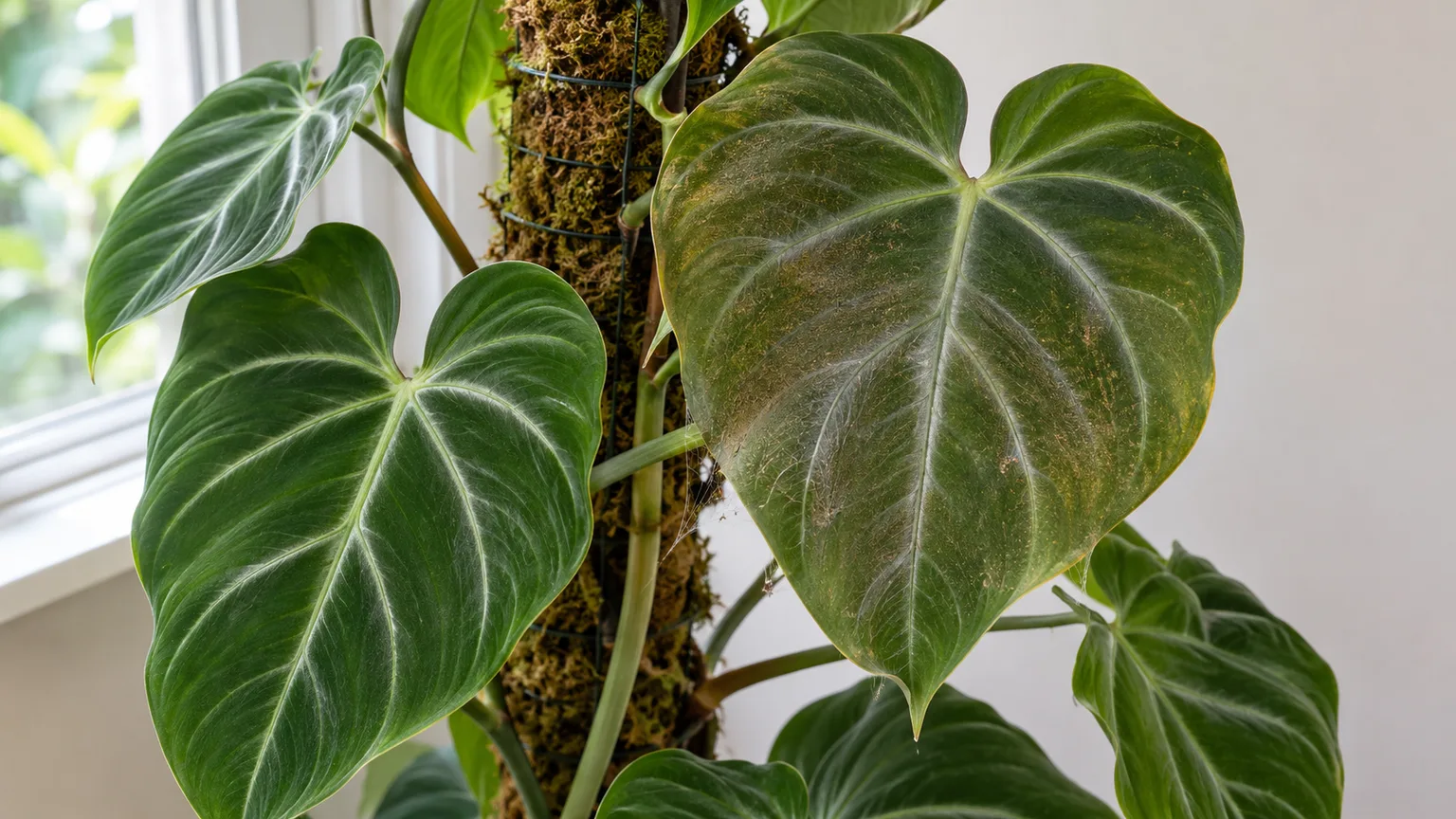
Spider Mites on Philodendron Majestic: Causes, Checks & Fixes
This guide covers spider mites on Philodendron Majestic. See also the general Spider Mites guide, watering, and light pages for this plant.
Spider Mites on Philodendron Majestic: Causes, Checks & Fixes
Quick answer
Spider mites on Philodendron Majestic usually show up as silvery stippling buried in the velvet leaf texture, dull gray-bronze patches along the silver veins, and fine webbing stretched across the leaf undersides. The culprit indoors is usually the two-spotted spider mite, a sap-feeding mite that causes mottled foliage and early leaf loss on a wide range of houseplants.
For how spider mites feed, breed, and spread in general, see our spider mites pest guide. On Majestic, the pattern is easy to miss: the pubescent velvet hides early stippling, the bold silver veining masks color change, and mites shelter inside cataphyll sheaths and where aerial roots grip the moss pole.
First step: isolate the plant and rinse every leaf, especially the undersides, under a firm stream of lukewarm water. Then re-inspect in three days before applying any spray.
When to use this page vs other Majestic guides
This page is the pest-first entry for stippling, webbing, and underside specks on velvet leaves.
| Pattern | Read next |
|---|---|
| Fine webbing plus moving specks under leaves | Stay on this page |
| Yellow leaves, no webbing, heavy wet pot | Watering |
| Small pale leaves on a long bare vine | Light |
| Soggy or compacted mix, weak fine roots | Soil |
| Full routine reset once mites are gone | Majestic overview |
What spider mites look like on Philodendron Majestic
On most houseplants stippling is obvious. On Majestic it hides. The velvet nap breaks up the pale feeding dots, and the silver sodiroi veining already lightens the leaf, so early damage reads as a slight dulling of the leaf rather than clear yellow dots. Look for leaves that have lost their deep green glow and turned a flat gray-bronze, especially between the veins.
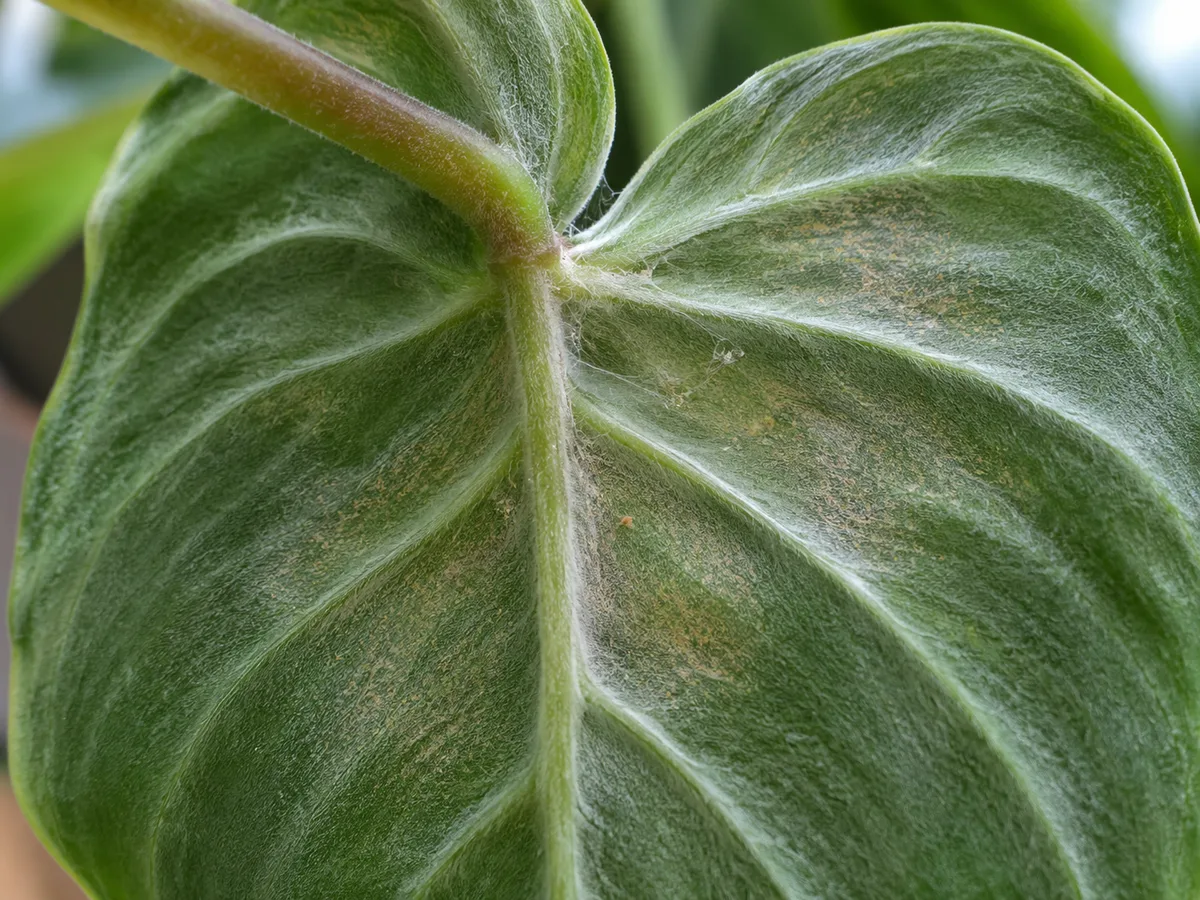
On velvet leaves, inspect vein junctions and the midrib underside for fine webbing and dull stippling.
All spider mites are extremely small, roughly 1/60 to 1/25 inch long, and are usually recognized by the fine silky webbing they spin rather than by the mites themselves. On Majestic the webbing collects at vein junctions on the underside, along the midrib, and around the newest unfurling spear. By the time webbing is visible from above, the colony is well established. Undersides of damaged leaves feel dusty from cast skins and droppings, and severe attacks dry whole leaves until they drop.
Why Majestic invites spider mites
Majestic is a humidity-loving climbing aroid kept in rooms that spend half the year too warm and too dry for it. Glasshouse red spider mite thrives in warm, dry conditions, which is exactly what a heated living room becomes in winter while the plant still wants 60-75% humidity. That mismatch is the main driver: dry air speeds mite breeding while stressing the plant.
Three Majestic traits make it worse. The pubescent velvet shelters mites from casual wiping and hides early damage from the owner. The big thin leaves offer a large feeding surface per leaf, so one colonized leaf feeds many mites. And the moss pole, cataphyll sheaths, and aerial-root junctions give mites textured hiding spots that a smooth-stemmed plant would not. Newly bought or recently moved plants are at highest risk, which is why growers are told to monitor for spider mites on indoor philodendrons. Note the overlap: Majestic grows best around 65 to 85 degrees Fahrenheit indoors, and that same warmth lets mite populations explode.
How to confirm mites before treating
Do not spray on suspicion alone. Velvet Majestic leaves also dull from dust and dry air, and neem on a misdiagnosed plant just adds stress.
- Tap test. Hold white paper under a suspect leaf, tap the leaf sharply, and watch for the tiny culprits crawling on the page. Dust does not walk.
- Lens check. Examine the undersides along the midrib and vein junctions with a 10x hand lens. Mites are oval, slow-moving specks, often with two dark spots.
- Spear and sheath check. Peel back the newest cataphyll sheath gently and inspect the unfurling spear. Mites colonize fresh tissue first, so a clean spear with damage only on old leaves suggests an old or minor attack.
- Webbing check. Fine silk between veins or around the spear confirms spider mites over thrips or dry-air damage. No webbing with silvery rasping deserves a closer lens check before you decide.
First fix: isolate and rinse the undersides
Move the plant away from other aroids immediately. Mites drift on air currents and hitchhike on hands, and a climbing Majestic touching a neighbor’s leaves is a bridge.
Then rinse. Light infestations are knocked back with hard blasts of water aimed at the leaf undersides, and Majestic’s large leaves make this practical: hold each leaf and spray the underside firmly with lukewarm water, working from the oldest leaves to the spear. Support each leaf from above so the petiole does not snap. Wash the moss pole surface too, since webbing and mites collect where aerial roots grip it.
Do one thorough rinse as the single first action. Then wait three days and re-inspect with the tap test. One rinse rarely ends an infestation because eggs survive, but it tells you the scale of the problem: a sharp drop in moving mites means rinsing plus humidity correction may be enough, while unchanged numbers mean sprays are needed.
Follow-up treatment that works on velvet leaves
If mites persist after the first rinse, spray with insecticidal soap every 3 to 5 days for two weeks, coating the undersides each time. The repeat schedule matters more than the product: soap kills mites on contact but not eggs, so every application must catch the next hatch.
Neem oil is the common second option. Its most active component, azadirachtin, reduces insect feeding and interferes with growth and egg-laying. Two cautions specific to Majestic: test any spray on one older leaf first and wait three days, because velvet foliage can spot or burn, and always follow label instructions for dilution, protective gear, and re-entry times. Spray in the evening out of direct sun and keep the plant out of bright light until leaves dry.
Do not stack a repot, a hard prune, and a spray program in the same week. A mite-stressed Majestic has limited energy, and each intervention costs recovery time. Rinse first, spray second, repot only if the mix itself has failed.
Recovery timeline
Judge recovery by new growth, not old leaves. Stippled velvet never re-greens: once mites drain cell contents, those pale dots are permanent. What should happen over two to four weeks is that damage stops appearing on new tissue. Each emerging spear should open cleaner than the last, with crisp silver veining and no webbing at its base.
Keep rinsing or spraying on schedule until you can inspect every few days for about two weeks and find no moving mites and no fresh webbing. If new spears still emerge stippled after three weeks of correct treatment, the colony is sheltering somewhere untreated, usually inside a sheath or deep in the pole fibers, and that spot needs direct attention.
Lookalike symptoms on Majestic
- Dust on velvet. Dry household dust dulls velvet leaves and mimics early stippling, but it wipes off with a damp cloth and shows no specks, webbing, or underside concentration.
- Low-humidity crisping. Majestic below 50% humidity for long stretches develops brown crispy margins and stuck new leaves without any webbing or moving specks. If damage sits at leaf edges and the air is dry, fix humidity first and keep watching.
- Thrips or rasping pests. Silvery scratched patches with tiny black specks but no silk webbing point away from spider mites. Confirm with the lens before choosing a treatment, since soap schedules differ.
- Natural old-leaf aging. The lowest oldest leaf yellowing and dropping on an otherwise clean, growing vine is normal turnover, not mites. Mite damage clusters on undersides with webbing; aging does not.
Mistakes to avoid
- Spraying before confirming. Soap and neem stress velvet leaves. Confirm moving mites first.
- Fertilizing a mite-stressed plant. Extra nitrogen pushes soft growth that feeds the next mite generation. Hold feed until new spears open clean.
- Misting as mite control. Misting spots velvet Majestic leaves and does little for ambient moisture. Run a humidifier for the 60-75% range instead.
- Treating only the worst leaf. Mites spread across the whole plant and the pole. Treat every leaf underside, the spear, and the pole surface each round.
- Quitting after one spray. Eggs survive every contact spray. The schedule is the treatment.
Majestic care cross-check
Mites establish fastest on plants already stressed by care mismatch, so reset the basics alongside treatment. Philodendrons need bright but indirect light; a Majestic starved of light in a dim corner grows soft tissue that mites exploit, so review the light setup. Water by the pot, not the calendar: let the top 3-5 cm dry per the watering rhythm, since both soggy and drought-stressed roots weaken the plant. Keep the chunky aroid mix open per the soil guide so the root zone stays stable while foliage recovers.
How to prevent them next time
Quarantine every new plant for two to four weeks before it joins the collection, and check velvet undersides for mites at purchase. Through the heating season, inspect Majestic leaf undersides weekly with the tap test; colonies caught before webbing forms rinse off easily. Hold humidity at 60-75% with a humidifier, wipe dust from leaves and the pole monthly so early webbing stays visible, and keep the pole lightly moist so the vine grows vigorously instead of stalling into susceptible soft flushes.
When to worry
Treat as urgent when webbing spans several leaves, new spears emerge stippled, or leaves yellow and drop within days. A Majestic stripped of most mature leaves can still recover from a firm stem and healthy roots, but it will take months, not weeks. If the stem softens at the base or the root zone smells sour alongside the mites, the plant has two problems and the roots decide survival.
FAQs
How can I confirm spider mites on Philodendron Majestic?
Tap a suspect leaf over white paper and look for tiny moving specks, then check leaf undersides along the midrib with a 10x lens. Fine webbing at vein junctions and around the new spear confirms mites rather than dust or dry-air damage.
What should I check first for spider mites on Philodendron Majestic?
Inspect the undersides of the oldest large leaves, the newest unfurling spear, and the cataphyll sheath where mites shelter. Compare damaged leaves against the plant’s humidity and heating situation before reaching for sprays.
Will damaged Philodendron Majestic leaves recover?
No. Stippled, bronzed velvet does not re-green once chlorophyll is drained. Recovery means the damage stops spreading and each new spear opens clean and silver-veined. Prune only leaves that are fully crisped and dry.
When are spider mites urgent on Philodendron Majestic?
Act within days when webbing spans multiple leaves, new spears emerge already stippled, or leaves yellow and drop. A few speckled older leaves with no webbing can wait for a rinse and a re-check, but webbing plus spreading damage means the colony is breeding fast.
How do I prevent spider mites on Philodendron Majestic next time?
Quarantine new plants for two to four weeks, hold humidity at 60-75% with a humidifier, and check leaf undersides weekly through the heating season. Wipe dust from velvet leaves and the moss pole so early webbing stays visible.
Related Majestic guides
- Majestic overview - full care baseline for recovery
- Watering - top 3-5 cm dry-down rhythm
- Light - bright indirect placement that keeps growth firm
- Soil - chunky aroid mix and drainage for stable roots
Related tool
Use the Pest Identifier Tool to narrow causes for spider mites on this plant before changing multiple variables at once.