Drooping Leaves on Philodendron Silver Sword: Causes
Quick answer
Limp silver-blue blades on Philodendron Silver Sword usually mean a water problem at the roots: dry mix points to thirst, heavy wet mix points to overwatering or root damage. First step: lift the pot and probe the mix 3–5 cm down before you water, repot, or feed.
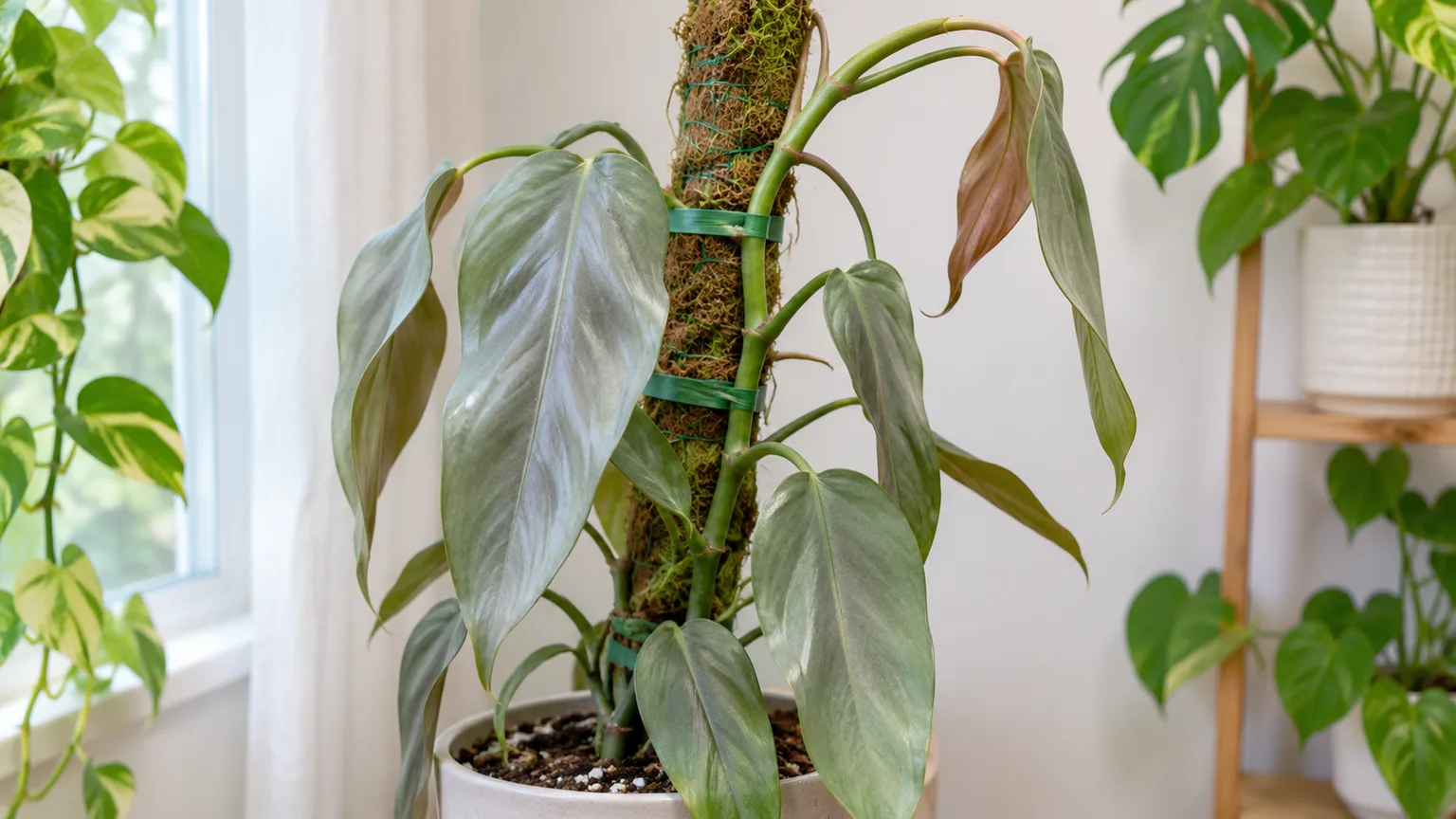
Drooping Leaves on Philodendron Silver Sword: Causes, Checks & Fixes
This guide covers drooping leaves on Philodendron Silver Sword. See also the general Drooping Leaves guide, watering, and light pages for this plant.
Drooping Leaves on Philodendron Silver Sword: Causes, Checks & Fixes
Quick answer
Silver Sword blades go limp when cells lose the internal water pressure that holds them stiff, and on this plant that almost always traces to the root zone: too little water, or roots too damaged by wet mix to deliver it. For how limp leaves work in houseplants generally, see our drooping leaves guide. On Silver Sword specifically, dry mix means a drink will fix it within hours, while wet mix means more water makes it worse.
First step: lift the pot and probe the mix 3–5 cm down before you water, repot, or feed. That single check separates thirst from root trouble, and everything after it depends on the answer.
What drooping looks like on Silver Sword
Healthy Silver Sword leaves are stiff, powdery silver-blue blades held out from a climbing vine, with copper-toned reverses on mature foliage. Trouble shows as blades that hang limp from their petioles, feel soft and papery instead of firm, and lose their metallic sheen. The vine tip often slumps first because new growth has the thinnest cell walls and the least stored water.
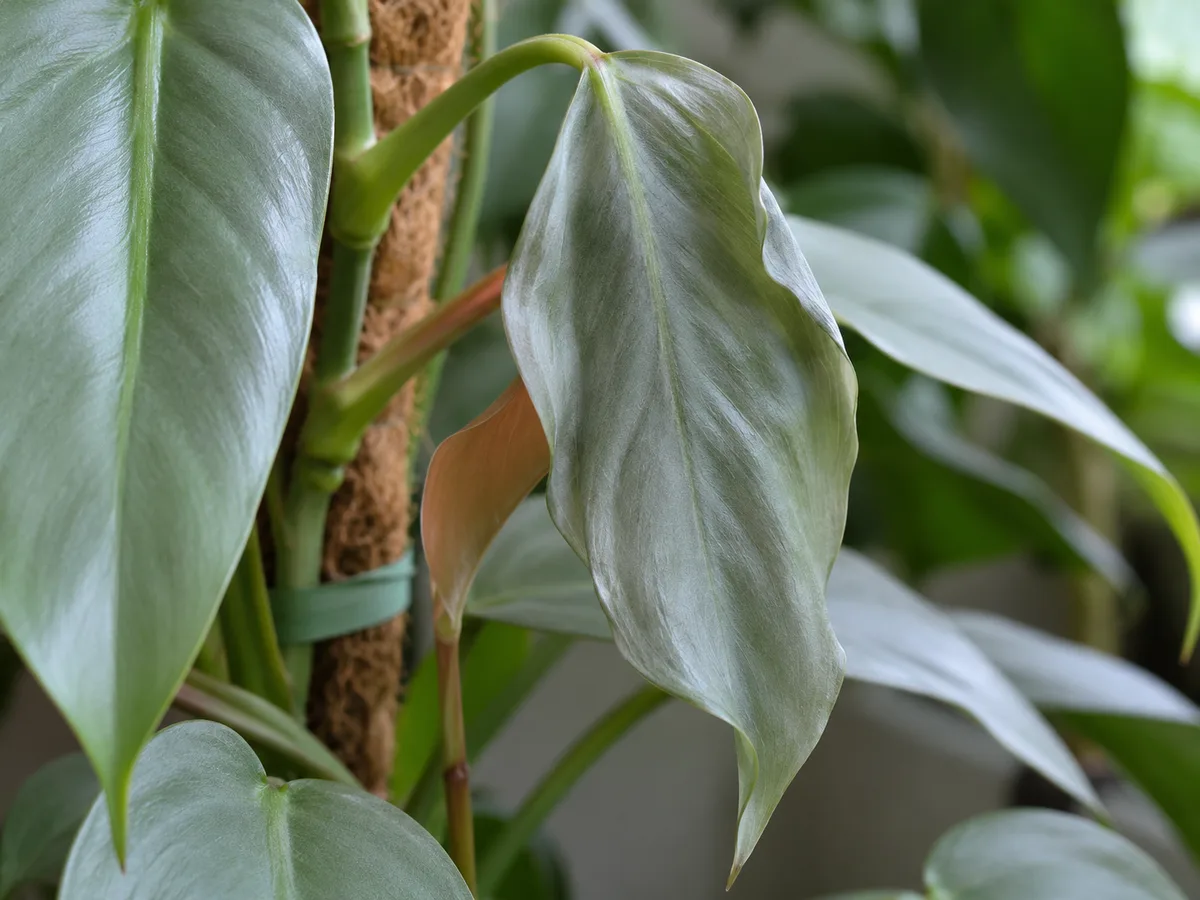
True wilt softens the blades even when the climbing vine is supported.
Uniform limpness across the whole vine points to a root-zone water problem. Drooping confined to one older leaf near the base while the tip keeps climbing is usually normal aging, not an emergency.
Climbing flop versus true wilt: read the vine first
Silver Sword is a climbing herbaceous perennial native to Brazil that wants to grow 10–15 feet up a tree or moss pole indoors. A vine with no support stretches long bare internodes and arches outward under its own weight, which many owners read as drooping. Squeeze the stems before diagnosing: flop from missing support has firm stems and firm blades on a vine that simply leans, while true wilt has soft limp blades even where the vine is tied up.
If the stems are firm and only the posture looks sprawling, the fix is a moss pole or trellis and brighter placement, not extra water. Reserve the wilt protocol below for leaves that have actually lost firmness.
Why Silver Sword droops: the short list
Underwatering. A chunky aroid mix dries fast in bright warm rooms, and once the root ball dries hard the blades collapse. This is the kindest cause: it reverses quickly and rarely kills tissue if caught within a day or two. Silver Sword growers see exactly this pattern, where droopy leaves signal both underwatering and overwatering depending on what the soil says.
Overwatering and root damage. Heavy peat kept wet suffocates roots, and damaged roots cannot deliver water even in saturated mix, so the plant wilts while sitting in moisture. Connecticut’s plant health handbook notes that root rot weakens philodendrons into yellowing, decline, and leaf drop, and warns never to let plants sit in standing water.
Cold drafts and dry winter air. Philodendrons want to stay above 15°C in bright indirect light, and Silver Sword sulks near cold windows, AC vents, or radiators. Dry heated air plus dim light slows water uptake while the blades keep transpiring, producing a midwinter slump even when watering has not changed.
Stale compacted mix. An old peat-heavy pot that has slumped into a dense brick either holds water against the roots or channels it down the sides so the core stays dry. Both failure modes end in limp blades with confusing moisture readings at the surface.
How to confirm the cause at home
Work in this order, since each step rules out one branch. Philodendron guides converge on the same sequence: check the soil first, then roots and drainage, then light and drafts.
- Lift and probe. A light pot with dry crumbly mix 3–5 cm down means thirst. A heavy pot with damp cool mix means excess water. A pot that feels wet at the surface but light overall may have compacted mix shedding water around a dry core.
- Read the stems. Firm green stem bases with limp blades point to a correctable watering swing. Soft, dark, or translucent bases point to rot or bacterial trouble.
- Smell the drainage holes. Sour or swampy odor means decaying roots and confirms the wet branch even before unpotting.
- Review the last two weeks. Recent repotting, a move to a dimmer corner, a cold night by glass, or a saucer left full after watering each point at their matching cause.
- Unpot only if wet droop persists. If the mix stays wet for days or the plant does not firm up after correction, slide the root ball out and look: white firm roots are healthy, brown mushy ones with sloughing outer skin are rotted.
The first fix to try
Do the one action your probe points to, and nothing else that day. Drooping means the plant is losing water pressure inside the leaves faster than roots can restore it, so the fix is whatever restores the root-to-leaf pipeline.
- Dry mix: water deeply until it runs from the drainage holes, empty the saucer after 15 minutes, and reassess in 4–6 hours. Most thirsty Silver Swords stand back up the same evening.
- Wet mix: do not water. Empty any saucer or cachepot, move the plant to bright indirect light with gentle airflow, and let the top 3–5 cm dry before the next drink. The RHS advises growers to let the compost dry slightly between waterings and take care not to overwater.
- Rotted roots: trim only clearly mushy roots with clean scissors, repot into fresh chunky aroid mix in a pot with drainage, and water lightly once. Clemson’s philodendron guidance keeps the rule simple: keep plants evenly moist but never soggy and never let them stand in water.
Silver-blade check: dull tone tells on light and water together
Silver Sword’s metallic finish is a diagnostic instrument other philodendrons lack. Blades that go dull gray-green and limp together usually mean the plant sits too dim for its watering level: weak light slows water use, the mix stays wet longer than the roots like, and turgor sags. Move the plant to bright filtered light, stretch the watering interval until the top centimeters dry, and watch the next new blade. Fresh leaves emerging with full silver tone and stiff posture confirm you read it right; new growth that stays pale and soft says roots still need attention.
Step-by-step recovery after the first fix
Once the first correction is in, leave the plant alone for 48 hours so you can read its response. Thirst cases usually resolve in that window. Wet cases need a week or more of steady drying before new firmness shows at the tip.
Remove only leaves that are fully brown, translucent, or mushy, cutting at the petiole base with clean scissors. Half-green blades still photosynthesize and feed the recovery, so keep them until the plant sheds them on its own. Resume feeding only after two weeks of firm new growth, at half strength, since fertilizer on damaged roots burns rather than heals. Stable plants can later be multiplied from stem cuttings with node tissue if the vine needs restarting, but never take cuttings from a still-wilted plant.
Lookalikes that are not simple wilt
Bacterial leaf spot. Tiny water-soaked patches that expand into tan-to-black lesions, followed by the whole leaf collapsing on its petiole, sometimes with an unpleasant fishy odor, match bacterial leaf spot rather than thirst. Remove affected leaves promptly, avoid splashing water and handling wet foliage, and destroy severely infected plants since recovery is unlikely.
Spider mites and thrips. Fine stippling, silvery scratch marks, or webbing on the copper-toned undersides plus gradual limpness suggest sap-feeding pests draining the blades. Confirm with a hand lens on leaf undersides before spraying anything.
Natural old-leaf shed. One lowest leaf yellowing and softening while the vine tip climbs firmly is aging. Let it finish and remove it, and only escalate if younger leaves follow.
Recovery timeline and what improvement looks like
Thirst droop firms up within hours and looks normal within a day. Wet-mix droop stabilizes over one to two weeks as the root zone dries and new root hairs grow; the vine tip stiffening and the next leaf unfurling flat are the first wins. Old blades that stayed limp in wet soil usually keep a slight downward set even after the plant recovers, so judge by new growth, not by old leaves returning to showroom posture. The RHS notes that houseplants with wilting and yellowing often recover quickly once growing conditions are corrected, which matches Silver Sword when roots are still alive.
Escalate if drooping spreads to previously firm leaves after a week of correct care, stem bases soften, or the mix smells sour. Those signs mean the first diagnosis missed active rot and the roots need direct inspection.
What not to do
Do not fertilize a wilted Silver Sword; salts stress damaged roots and the plant cannot use the feed until turgor returns. Do not repot on day one unless you confirmed rot, since tearing healthy roots on a merely thirsty plant converts a one-day problem into a month-long one. Do not mist limp blades as the fix: surface wetting without root correction changes nothing and invites the bacterial spot described above. And do not pile repotting, pruning, spraying, and feeding into one session; make one targeted correction so you can read the response.
How to prevent it next time
Keep the mix chunky and the pot honest: potting mix cut with perlite and orchid bark, drainage holes always open, saucers emptied after every watering. Water on probe readings rather than weekdays, aiming for the top 3–5 cm dry in summer and a slightly deeper dry-down in winter when growth slows. Tie the vine to its pole early so energy goes into stiff blades instead of sprawling internodes, hold humidity near 55–70 percent, and keep night temperatures above 15°C away from drafty glass. NC State’s hastatum profile places this plant’s comfort zone around 65 to 85 degrees Fahrenheit with bright indirect sun, which is the band where watering rhythms stay predictable.
FAQs
How can I tell if my Silver Sword is drooping from thirst or overwatering?
Push a finger 3–5 cm into the mix and lift the pot. Light pot plus dry, crumbly mix means thirst, and the blades usually firm up within hours of a thorough soak. Heavy pot plus damp mix that stays wet for days means too much water, so hold off and check drainage and roots instead of watering again.
What should I check first when my Silver Sword starts drooping?
Check soil moisture deep in the pot, not just the surface, and note whether the stems are still firm. Firm stems with limp blades point to a watering imbalance you can correct. Soft or dark stem bases, a sour smell, or mix that never dries point to root damage that needs unpotting and inspection.
Will drooping Silver Sword leaves perk back up?
Thirsty leaves typically re-firm within hours of a deep watering because the cells regain water pressure. Leaves that stayed limp in wet soil, or blades with brown mushy patches, rarely recover their shape, so judge success by firm new growth at the vine tip rather than old leaves standing perfectly upright.
When is drooping urgent on a Silver Sword?
Act the same day if several leaves collapse together, stem bases feel soft, the mix smells sour, or drooping follows sitting in a full saucer. That pattern suggests spreading root trouble or bacterial collapse. A single older leaf softening on an otherwise firm, climbing vine can wait for a routine moisture check.
How do I prevent drooping on my Silver Sword?
Water only when the top 3–5 cm of chunky aroid mix is dry, keep drainage holes open, and give the vine a moss pole so growth stays compact instead of flopping. Hold humidity around 55–70 percent, keep the plant above 15°C away from cold drafts, and ease off watering in dim winter months.
Related tool
Use the Drooping Leaves Diagnosis Tool to narrow causes for drooping leaves on this plant before changing multiple variables at once.