Brown Tips on Philodendron Silver Sword: Causes, Checks &
Quick answer
Brown tips on Philodendron Silver Sword most often mean dry indoor air, uneven watering through chunky mix, or fertilizer salt buildup. First, give the pot one slow, thorough watering until water drains freely and empty the saucer. Then raise humidity toward 55-70% and check for salt crust before changing anything else.
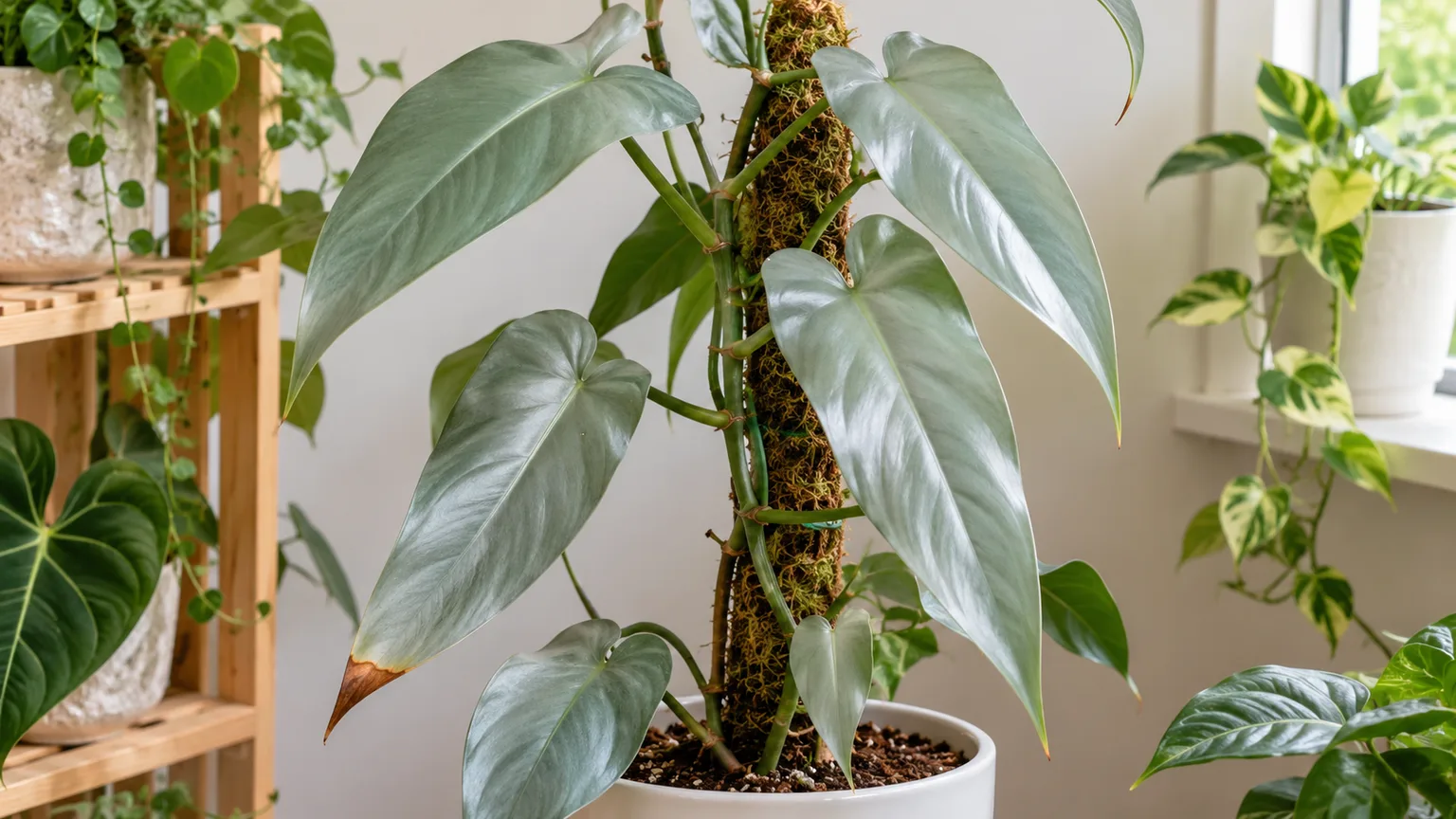
Brown Tips on Philodendron Silver Sword: Causes, Checks & Fixes
This guide covers brown tips on Philodendron Silver Sword. See also the general Brown Tips guide, watering, and light pages for this plant.
Brown Tips on Philodendron Silver Sword: Causes, Checks & Fixes
Quick answer
Brown tips on Philodendron Silver Sword most often mean dry indoor air, uneven watering through chunky mix, or fertilizer salt buildup. First, give the pot one slow, thorough watering until water drains freely and empty the saucer. Then raise humidity toward 55-70% and check for salt crust before changing anything else.
What brown tips look like on Silver Sword
On this plant the damage is easy to spot: the narrow ends of the long, sword-shaped blades turn tan to dark brown, dry, and papery while the rest of the leaf stays silvery blue-green. Because each leaf is long with a pointed apex, the tip is the farthest point from the stem and the first tissue to dry out when water uptake lags behind transpiration. Light crisping confined to the oldest, lowest leaves is common and mild. Browning that races inward, turns mushy, or appears on new unfurling leaves points to a deeper problem such as root damage or scorch.
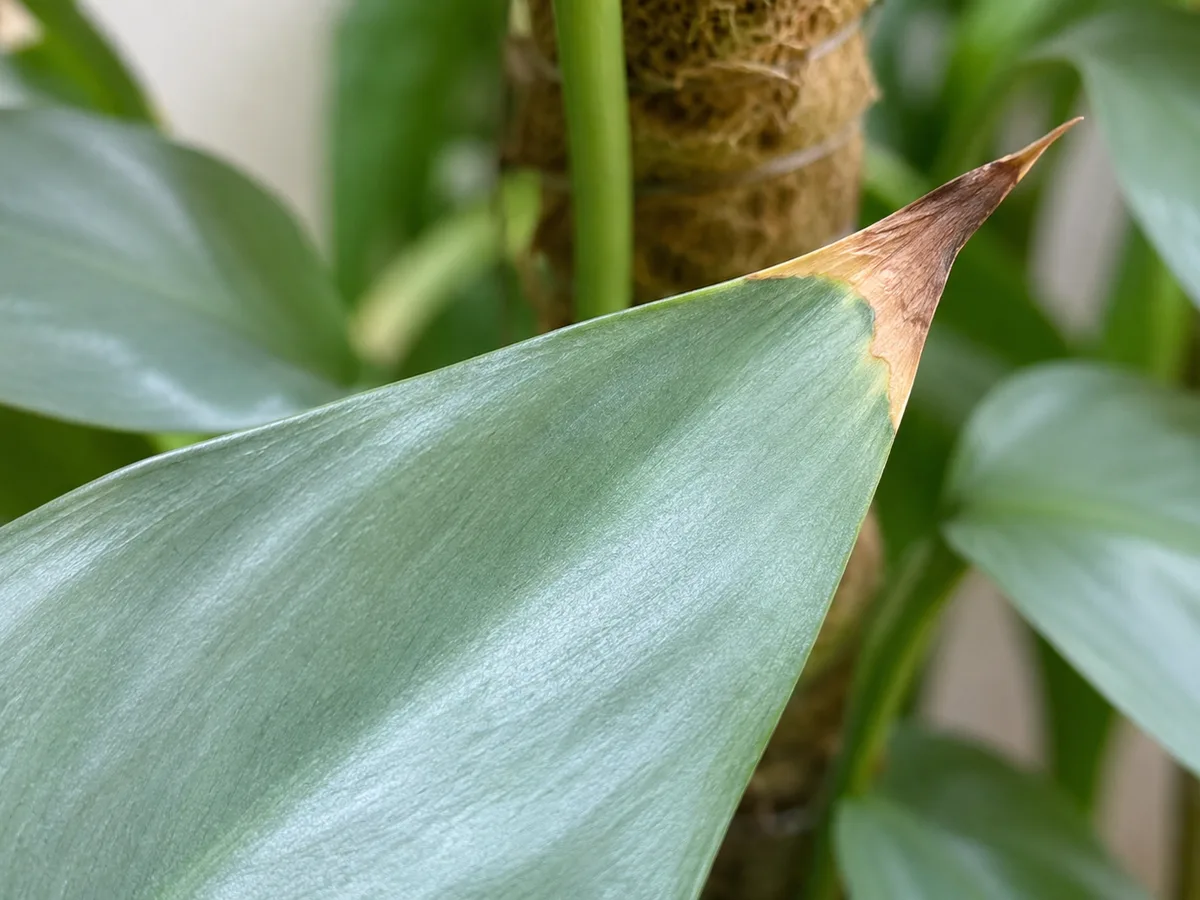
Dry tip burn begins at the pointed leaf apex and remains distinct from healthy silvery tissue.
Why Silver Sword’s long blades brown at the tips first
Philodendron hastatum is a true climbing aroid that reaches 10 to 15 feet indoors when given a moss pole or trellis, and its elongated arrow leaves are built for humid rainforest understory air. In a typical home the air is far drier than that habitat, so moisture exits the broad leaf surface faster than the roots can replace it, and the leaf tip desiccates first. Underwatering amplifies this: a vine with several feet of foliage above a modest pot simply cannot keep every leaf tip hydrated when the root ball runs dry. For the general mechanics of tip burn across houseplants, see our brown tips guide. On Silver Sword, the pattern usually shows up as dry, even crisping at the apex of otherwise healthy-looking silver blades.
The moss-pole moisture trap
Silver Sword grown up a pole has a second, plant-specific water problem. The top of a moss pole dries out much faster than the pot, so the aerial roots gripping the upper pole can sit dry for days while the pot mix still feels damp. The grower waters by the pot, the pot seems fine, yet the uppermost leaves — the prized large silver ones — keep crisping at the tips. Fix this by wetting the pole itself when you water: pour slowly down the pole until it is damp through, not just the pot surface. If the vine has outgrown its pole and the top leaves dangle in dry room air with no support contact, expect tip burn there first regardless of pot moisture.
How to confirm the cause
Work through these checks in order and stop at the first one that clearly fails.
- Full-depth soil moisture. Push a finger or wooden skewer 3-5 cm down and also judge pot weight. Surface-dry but heavy means the lower root zone is still wet; light pot plus dry skewer means genuine underwatering.
- Room humidity and airflow. A vine near a radiator, heat vent, or air-conditioner outlet lives in much drier air than the room average. Crispy tips plus crackling leaf edges near a heat source strongly implicate dry air.
- Salt crust check. Look for a white or yellowish crust on the mix surface and pot rim, and recall your feeding schedule. Browning that appeared within a week or two of fertilizing, especially at full strength, points to salt stress.
- Light position. Leaves pressed against a hot south or west window with bleached or scorched patches indicate direct-sun damage rather than humidity crisping.
- Root-zone health. If the mix stays soggy for many days and lower leaves yellow alongside the browning tips, slide the root ball out and look for dark, mushy roots and a sour smell.
The first fix to try
Give the root ball one slow, thorough watering until water runs freely from the drainage holes, then empty the saucer so the pot never sits in water. Water slowly in two passes a few minutes apart so the chunky bark and perlite actually absorb moisture instead of letting it channel straight through. This single action resolves simple underwatering and uneven wetting, which are the most common drivers, and it sets a clean baseline: if new damage stops within a week or two, you found it.
Step-by-step recovery
After the baseline watering, act on what your checks showed.
- Dry air confirmed: move the plant away from heat and AC outlets, group it with other plants, and run a humidifier or pebble tray. In dry climates, consider using a humidifier or pebble tray to hold humidity up around the foliage.
- Salt buildup confirmed: flush the pot with plain room-temperature water equal to several times the pot volume, let it drain fully, and skip fertilizer for at least a month. Clemson Extension warns that too much fertilizer can cause tips of leaves to curl and brown, so resume at dilute half-strength only during active growth.
- Scorch confirmed: pull the vine back from direct sun into filtered brightness. Philodendrons do best in bright but indirect light, and direct summer sun scorches the silver blades.
- Root damage confirmed: trim only clearly mushy roots with clean tools, repot into fresh airy aroid mix, and water sparingly until new growth resumes.
Do not stack all of these at once. Make the one correction your diagnosis points to, wait one to two watering cycles, and judge by whether new leaves emerge clean.
Silver tone versus scorch: reading the leaf surface
Silver Sword gives a useful early warning that most philodendrons do not: its metallic silver sheen dulls in weak light before feeding becomes the issue, while direct sun bleaches the silver to a washed-out yellow-white and then browns the exposed tip and edge. If the whole blade looks pale and stretched on long internodes, the plant wants brighter filtered light, not fertilizer. If only the window-facing tips are bleached and crisp while shaded leaves stay silver, that is scorch — move the plant, do not feed it. Keep this distinction in mind because mistaking low-light dullness for hunger leads growers to fertilize a stressed plant and create salt-tip burn on top of the original problem.
Lookalike symptoms
| What you see | Likely cause | How to tell it apart |
|---|---|---|
| Yellow lower leaves plus brown tips, soggy mix | Overwatering and root stress | Whole leaves yellow from the base; pot stays heavy for days |
| Bleached patches then brown edges on window side only | Direct-sun scorch | Damage faces the glass; shaded leaves stay silver |
| Brown tips plus white crust on mix | Fertilizer salt buildup | Crust visible; onset follows feeding |
| Spotted or stippled leaves with fine webbing | Spider mites in dry air | Speckling and webbing under leaves, not just tip crisping |
| Soft dark stem base with collapsing leaves | Stem or root rot | Tissue is mushy, not papery; spreads fast |
Mistakes to avoid
Do not mist the leaves as your humidity strategy — droplets evaporate in minutes and wet foliage in still air invites fungal spots. Do not fertilize a crisping plant to “help it recover”; salts are a leading cause of this exact symptom. Do not repot on day one unless you confirmed root damage, since repotting a merely dry plant adds shock without benefit. And do not shear off whole leaves for cosmetic tip damage — a leaf with a brown tip still photosynthesizes and feeds the vine.
How to prevent it next time
Settle into the rhythm this species likes: water only after the top few inches of soil are dry, which for most homes means roughly weekly in summer and less in winter. Hold humidity in the 50 to 75 percent range with a humidifier or pebble tray rather than misting, and keep daytime temperatures in the 65-85°F band this plant prefers. Feed monthly at half strength in the growing season and flush the pot with plain water every couple of months to prevent salt accumulation. Our full watering guide covers the seasonal cadence in detail — pair that cadence with bright filtered light and a damp moss pole and tip burn rarely returns.
When to worry
Worry when browning spreads across multiple leaves within days, new unfurling leaves emerge already browned, stems soften, or the root ball smells sour — those signal root or stem rot, not dry air. A vine that keeps crisping new tips after you corrected water, humidity, and salts may have a compacted or exhausted mix that needs replacement. Slow, stable crisping limited to old leaf tips with clean new growth is cosmetic; trim the dead edges and stay the course.
Related tool
Use the Brown Tips Diagnosis Tool to rank the likely cause for your plant’s exact pattern before changing more than one variable at a time.