Mealybugs on Philodendron Silver Sword: Causes, Checks &
Quick answer
White cottony clusters in leaf axils and along Silver Sword vine nodes are usually mealybugs. First step: isolate the plant and dab each visible insect with a cotton swab dipped in 70% or weaker isopropyl alcohol, then recheck weekly for at least three weeks to catch hatching crawlers.
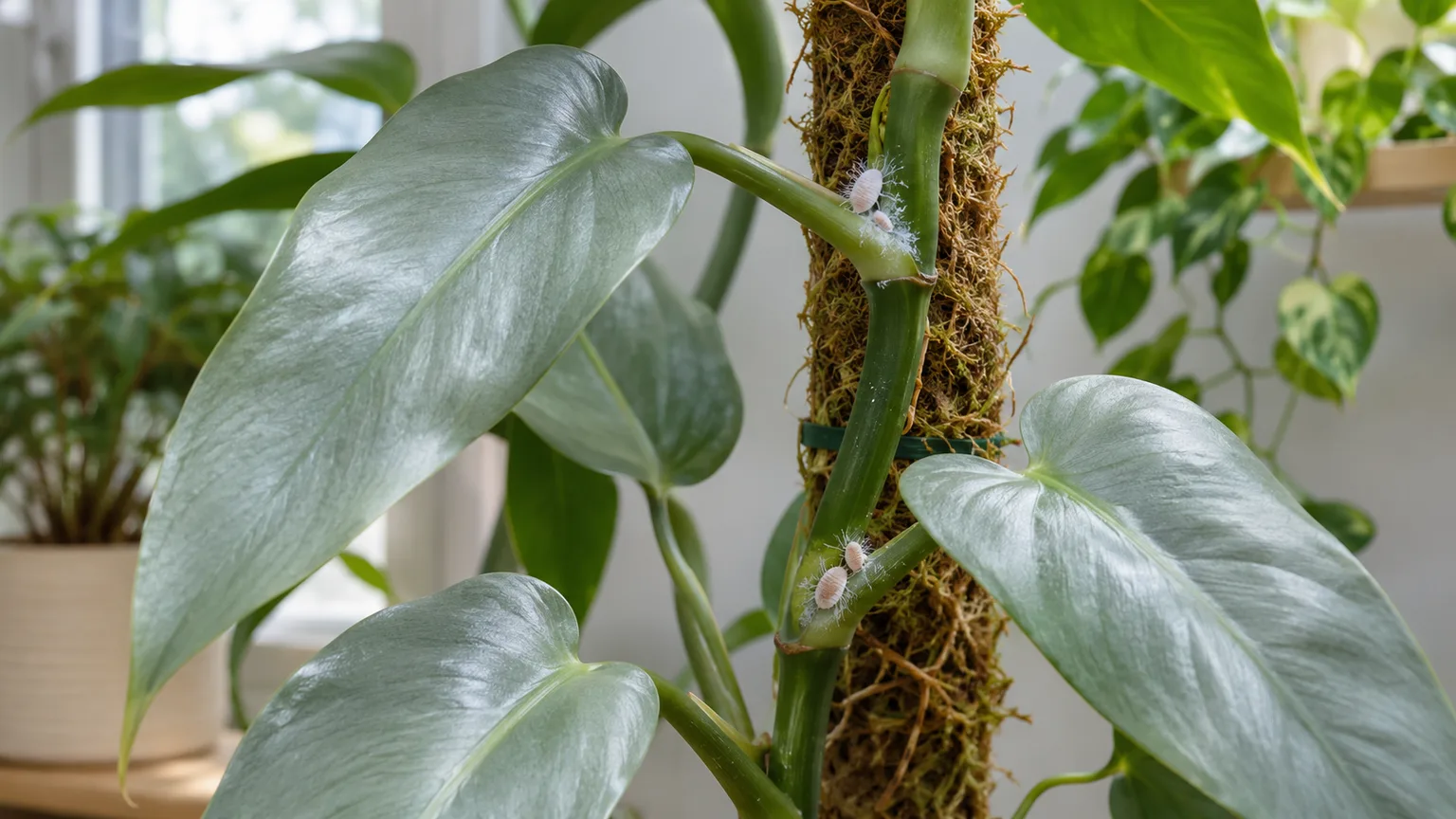
Mealybugs on Philodendron Silver Sword: Causes, Checks & Fixes
This guide covers mealybugs on Philodendron Silver Sword. See also the general Mealybugs guide, watering, and light pages for this plant.
Mealybugs on Philodendron Silver Sword: Causes, Checks & Fixes
Quick answer
White cottony tufts packed into leaf joints and along the vine of a Philodendron Silver Sword are usually mealybugs, not dust or perlite. First step: isolate the plant and dab each visible insect with a cotton swab dipped in 70% or weaker isopropyl alcohol, then recheck the whole vine weekly for at least three weeks to catch crawlers hatching from protected eggs.
For general mealybug biology across houseplants, see our mealybug guide. On Silver Sword, the pattern usually shows up as sticky metallic blades, stunted new leaves, and clusters hiding where the climbing stem meets a leaf base or moss pole.
What mealybugs look like on Philodendron Silver Sword
On this plant, mealybugs appear as small, pale insects about ⅛ to ¼ inch long that cover themselves in a white waxy material, making them look cottony — the classic description in Clemson Extension’s houseplant pest guide. Adults move sluggishly or sit still in clusters; newly hatched crawlers are tiny, yellowish to pinkish, and far more mobile before they settle and grow their own wax coat.
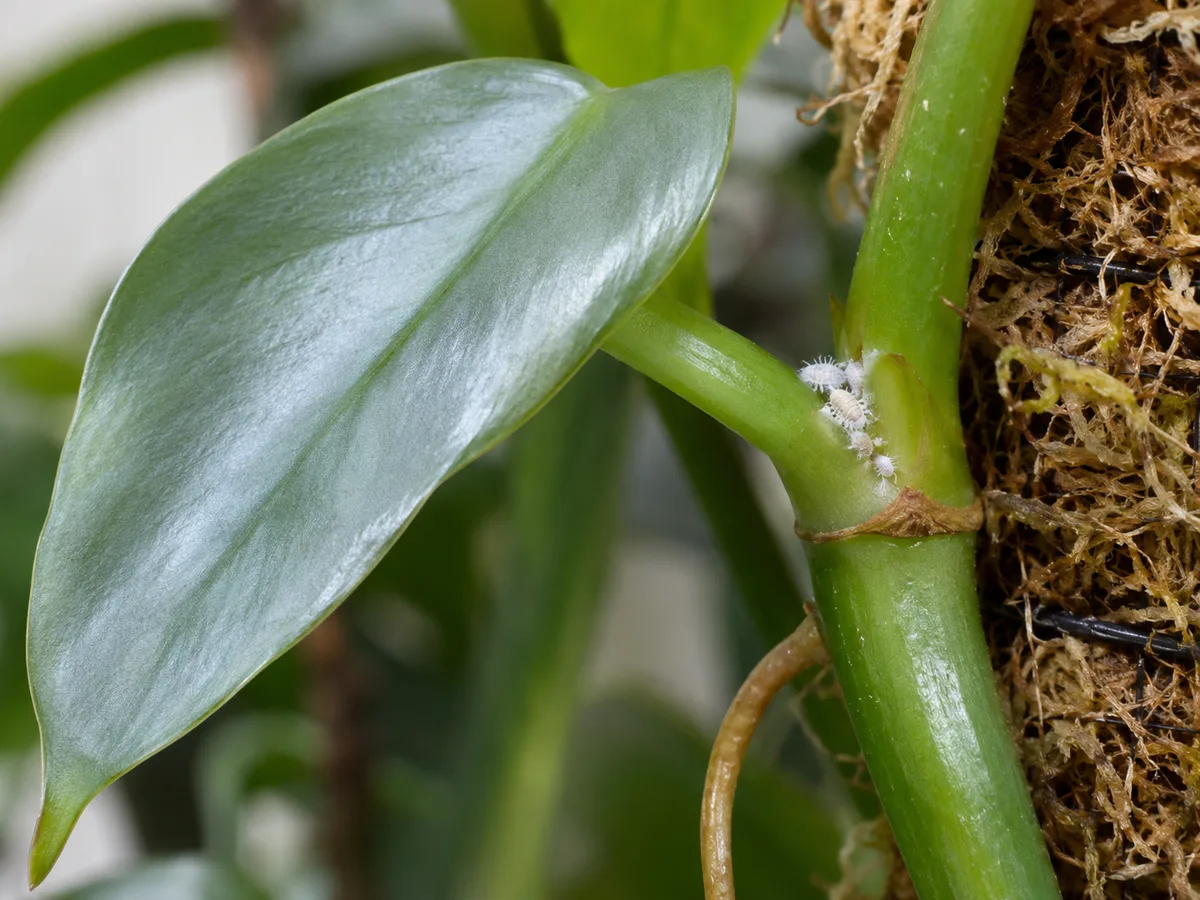
Check leaf joints and stem nodes for the white waxy clusters that shelter settled mealybugs.
Expect three companion signs on Silver Sword. Leaves feel tacky from excreted honeydew, a sweet sticky liquid that sooty molds colonize readily. Black or gray powdery film on the upper blade is sooty mold growing on that honeydew, which dulls the metallic silver finish fast. New leaves may emerge smaller, distorted, or slow to unfurl while older established blades still look acceptable.
Where mealybugs hide on a climbing Silver Sword vine
Silver Sword is a true clinging climber that can reach 10 to 15 feet indoors on support, per NC State Extension — and that vertical jointed stem gives mealybugs far more hiding places than a rosette plant offers. Work the vine joint by joint rather than scanning only the biggest leaves.
Check in this order:
- Leaf axils where each petiole meets the main stem — the single most common site, matching the leaf-axil clustering habit mealybugs prefer.
- The newest unfurling leaf and its sheath, where crawlers settle on tender tissue.
- Stem nodes with emerging aerial roots, especially lower nodes near the potting mix.
- Leaf undersides and midribs, using a flashlight — crawlers scatter from bright light.
- The soil line and pot rim, since one mealybug group feeds on roots and others drop to shelter in crevices.
Moss-pole and aerial-root junctions: the Silver Sword trap
The moss pole is non-negotiable for good Silver Sword leaf size, but every point where vine, aerial root, and damp moss press together is a sheltered humid crevice. Mealybugs favor exactly these inaccessible clusters between twining stems, so a poled vine needs a different inspection than a hanging juvenile plant.
Gently pull the vine a centimeter away from the pole at two or three heights and look into the gap. Check tie points, velcro straps, and string wraps where cottony egg masses wedge out of sight. If the pole is constantly soaked, let its surface dry between mistings — perpetually wet moss plus honeydew grows mold that hides pest residue. When you treat, push the swab and later soap spray into these junctions rather than misting only open blades, because sprays must reach the hiding places to work.
Silver-blue leaves and copper undersides: reading damage on metallic foliage
Silver Sword’s metallic silver-blue upper blade and copper-toned reverses make mealybug damage easier to read than on plain green philodendrons. Honeydew shows as glossy sticky patches that catch light differently from the dry metallic sheen — wipe a fingertip along a suspect blade and it comes away tacky. Sooty mold then settles as a dark film that mutes the silver tone even after pests are gone; those coated areas will not polish back to full metallic shine.
Use the copper underside as your early-warning panel. Fine white specks, faint webbing-free cotton flecks, or sticky dots there usually precede visible axil colonies by days. Leaves that yellow from the petiole outward while clusters sit in that leaf’s axil point to sap loss at that node. Keep light at the bright filtered level Silver Sword needs during treatment — dim corners slow new-leaf replacement and make recovery harder to judge.
How to confirm mealybugs, not scale, aphids, or dust
Mealybugs share honeydew and sooty mold with several other sap feeders, so confirm before committing to a multi-week protocol. UC IPM notes mealybugs may be confused with cottony cushion scale, woolly aphids, and whiteflies, which also produce wax and honeydew.
- Alcohol-smear test: touch a cottony mass with an alcohol-dipped swab. Mealybugs collapse into an orange-gray smear; perlite dust, dried fertilizer, or edema crystals do not.
- Movement check: nudge the mass with a toothpick. Mealybug adults shift sluggishly; scale bumps are hard, immobile domes that must be scraped off.
- Location check: soft pear-shaped clusters on buds and shoot tips fit aphids better; stationary white axil tufts with trailing filaments fit mealybugs.
- Honeydew test: wipe a blade clean and recheck in 24 hours. Returning stickiness means active sap feeders are still feeding above that leaf.
- Ant trail: ants climbing a firm-stemmed vine toward axils usually lead to honeydew producers, not a watering problem.
First fix: isolate and dab with alcohol
Do one thing first: isolate the vine away from other houseplants and dab every visible mealybug with a cotton swab dipped in 70%-or-weaker isopropyl alcohol. NC State gives this exact prescription for early infestations on cherished houseplants — mealybugs may be removed by a cotton swab dipped in alcohol — and UC IPM specifies to dab the solution directly on mealybugs with a swab.
Technique matters on Silver Sword’s long blades. Support each leaf from below with one hand so you do not crack the petiole at the node. Roll the swab rather than scrubbing, and push the tip into the axil crease where egg masses sit. Test the alcohol on one small leaf area 1–2 days before full treatment and watch for leaf burn, as UC IPM advises a patch test first. Work top to bottom so dislodged crawlers fall onto already-treated sections, and bag used swabs rather than dropping them on the bench.
Step-by-step follow-up over three to four weeks
One dabbing session never finishes the job because eggs sit inside a dense waxy ovisac that repels contact sprays — eggs are relatively waterproof in their waxy fluff. Plan on repeat passes timed to hatching crawlers.
- Days 1–3: alcohol-dab all visible insects and wipe honeydew off blades with a damp cloth so you can detect fresh stickiness later.
- Day 7: recheck every axil, node, and pole junction with a flashlight. Dab new hatchlings, then apply insecticidal soap or horticultural oil strictly per label, coating tops and undersides until runoff — these are contact materials effective only where they touch insects.
- Days 14 and 21: repeat the inspection plus spot treatment. NC State warns to be prepared to repeat contact applications two or more times to kill nymphs hatching from protected eggs.
- Week 4: if no new cotton, stickiness, or crawlers have appeared for two full weeks, return the plant to its display spot but keep weekly axil checks for another month.
Prune only stem sections that are fully coated, distorted beyond function, or mold-blackened across most of the blade — and disinfect snips between cuts. Avoid repotting during the treatment window unless you find root mealybugs; tearing apart a chunky aroid mix that is otherwise draining well adds root stress on top of sap loss.
What not to do
Do not reach for broad-spectrum pyrethroid sprays first. Their waxy coating repels most contact insecticides, hidden colonies escape coverage, and the spray kills the predators that help outdoors — UC IPM considers home insecticides relatively ineffective for mealybugs on larger plants. Do not use full-strength alcohol or spray alcohol across the whole vine in hot direct sun; diluted spot treatment plus a patch test is the safer path.
Do not fertilize a heavily infested vine to “help it recover.” Extra nitrogen pushes the soft succulent growth sap feeders prefer, and feeding belongs back on the normal Silver Sword routine only after clean new growth resumes. Do not stack repotting, heavy pruning, and spraying on the same day — make one targeted move, then read the plant’s response in the next leaf.
How to prevent mealybugs on Silver Sword next time
Quarantine every new plant for at least a month before adding it to the collection, inspecting leaf axils and sheltered places before it joins the display — the quarantine-first rule RHS recommends. Wash hands and tools after handling an infested vine, and wipe down the saucer, cachepot rim, and nearby sill where crawlers and eggs lodge in cracks.
Keep the vine’s routine unfriendly to outbreaks. Water by checking the top few centimeters of mix rather than by calendar so growth stays firm, hold bright filtered light so new leaves mature fast, and inspect nodes and pole ties weekly during warm active growth when populations build quickest. Remove spent sheaths and dead leaves promptly since they can harbor eggs.
When to worry
Treat as urgent if most vine nodes carry cottony masses, new leaves abort or emerge severely stunted, stems wilt despite correct watering, or sooty mold covers large blade areas and blocks light. A vine that keeps producing sticky distorted leaves after three full weekly treatment cycles is chronically infested — cut back to the lowest clean node with firm tissue, root the healthy tip cutting separately if the mother vine is collapsing, and consider a local extension diagnosis before any systemic product. Mealybug saliva and sustained sap loss can cause stunting, wilting, and leaf drop on sensitive hosts, so prolonged heavy feeding is not cosmetic.
Severity note: This issue is marked medium for Philodendron Silver Sword — a triage clue, not a guarantee.
Related tool
Use the Pest Identifier Tool to narrow causes for mealybugs on this plant before changing multiple variables at once.