Slow Growth on Pilea Moon Valley: Causes, Checks & Fixes
Quick answer
Slow growth on Pilea Moon Valley is usually tied to low light, root stress, or cool wet soil-not a fertilizer shortage. First step: move to bright indirect light and verify the top 2–3 cm drying cycle before repotting or feeding.
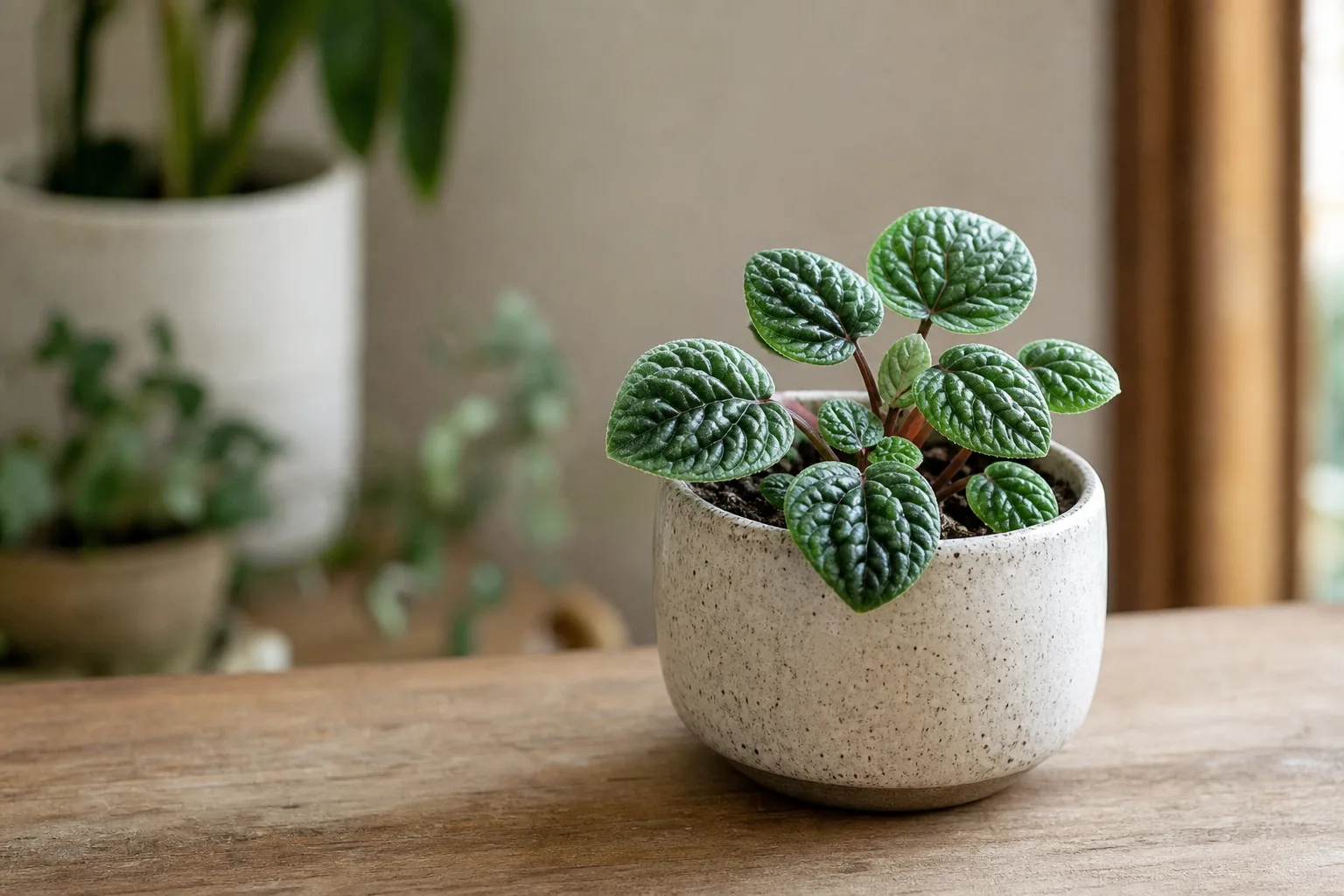
Slow Growth on Pilea Moon Valley: Causes, Checks & Fixes
This guide covers slow growth on Pilea Moon Valley. See also the general Slow Growth guide, watering, and light pages for this plant.
Slow Growth on Pilea Moon Valley: Causes, Checks & Fixes
Quick answer
Slow growth on Pilea Moon Valley (Pilea mollis ‘Moon Valley’) is usually tied to low light, root stress, or cool wet soil-not a fertilizer shortage. A healthy Moon Valley keeps producing small quilted leaves through the mound during warm months. Weeks without new texture in spring or summer usually mean the environment is limiting photosynthesis or root uptake.
First step: move the pot to bright indirect light and verify the top 2–3 cm drying cycle before you fertilize or repot. Existing mature leaves will not enlarge; judge recovery by the next puckered leaf from the crown, not by old foliage color.
Slow growth vs. leggy growth vs. not enough light - which page to use
Moon Valley light and growth problems overlap, but your primary symptom determines which guide fits best:
| Your main complaint | Start here | Why |
|---|---|---|
| Static mound; no new quilted leaves for weeks in warm weather | This guide (slow growth) | Stalled push through the mound is the defining pattern |
| Long gaps between quilted leaves; one dominant stretched tip | Leggy growth | Internode stretch and sparse mound architecture |
| Faded bronze-green color, wet soil for weeks, stalled growth in a dim room | Not enough light | Broader dim-room syndrome beyond stall alone |
| Window placement, grow lights, seasonal light limits | Light guide | Ongoing brightness requirements and warning signs |
Many Moon Valley specimens show both a static mound and slight stretch. If weeks without new textured leaves are your clearest signal, stay on this page for the decision table, dry-down first fix, and root-bound routing. If long internode gaps dominate, read the leggy growth guide for pinching and propagation timing.
What slow growth looks like on Pilea Moon Valley
Moon Valley is grown for its mounding habit and deeply puckered bronze-green leaves-not for fast vertical height like Pilea peperomioides. Slow growth on this plant shows up as a static mound rather than a dying specimen.
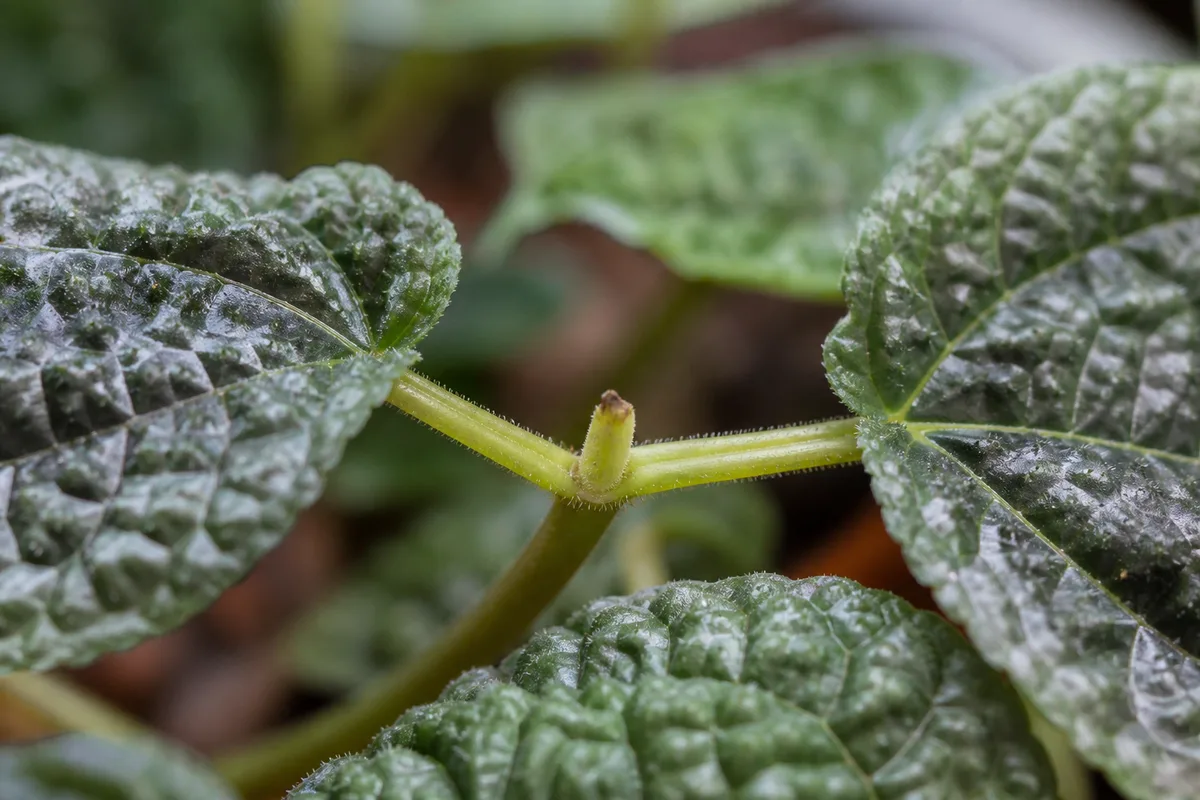
Slow Growth symptoms on Pilea Moon Valley - compare with healthy tissue on the same plant.
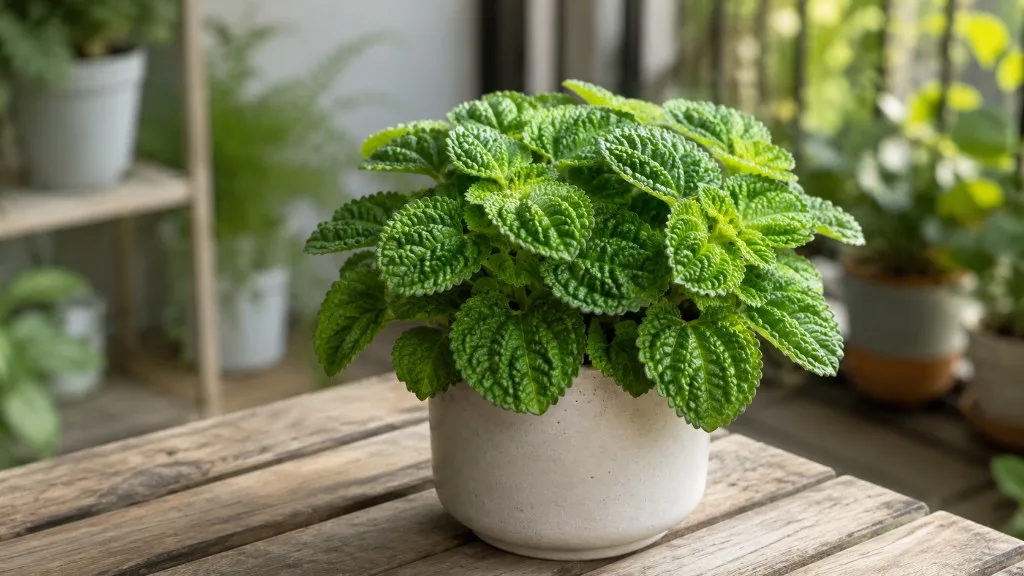
Typical slow-growth signs:
- No new quilted leaves for weeks during active season, even though older foliage looks intact
- New leaves emerge tiny, pale, or less puckered than mature ones
- Internodes stretch slightly, but the plant stays thin rather than filling out the mound
- The pot feels heavy for days or, conversely, dries so fast you cannot keep up
- Growth pauses only in winter, then fails to restart when days lengthen
What is often normal:
- Slower push through late fall and winter when light drops and you reduce watering in fall through late winter
- A brief pause after repotting while roots settle-see the repotting guide for timing
- Compact size-Moon Valley typically stays under 12 inches tall as an upright mounding cultivar
Judge the problem by new leaf frequency and texture, not by comparing Moon Valley to faster-growing pileas. A healthy compact specimen has new growth tucked throughout the mound, not only at one tip.
Why Pilea Moon Valley growth stalls
Moon Valley evolved as an understory plant that wants bright indirect light in a warm, humid room-not a dark corner or harsh south window. When any part of that balance fails, growth energy goes to survival instead of new foliage.
Insufficient light
Light drives photosynthesis. Low light levels can result in spindly growth as plants stretch toward brighter zones, and growth may stall entirely when light is too weak for the leaf area Moon Valley maintains. Dim shelves also keep soil wet longer, which compounds the stall-read not enough light if color fade and wet mix pair with the stall.
Root stress from wet or compacted soil
Moon Valley needs moderate watering in active growth-not a constantly soggy mix. Chronic wetness in cool, low-light corners reduces root function, so the top cannot push shoots even when you water faithfully. Compacted or exhausted mix has the same effect by limiting oxygen and nutrient uptake. If soil stays wet for days, route to overwatering before assuming the plant needs food.
Cool temperatures and drafts
Moon Valley slows sharply on cold windowsills, near air-conditioning vents, or when night temperatures drop while soil stays damp. RHS houseplant growing guidance notes that cold drafts, low daylight, and temperatures below a plant’s tolerance suppress healthy growth on tropical foliage kept indoors year-round.
Root-bound conditions
When roots circle the pot for years, water runs through without wetting the center and uptake drops. Pot-bound plants often show stunted growth and dry out unusually fast between waterings. Moon Valley’s compact root system hits this wall sooner in small decorative pots.
Nutrient depletion (after other causes are ruled out)
Old substrate can run low on available nutrients. Nutrient deficiency symptoms include poor growth and pale new leaves-but feeding a plant in poor light or wet soil rarely fixes the stall. See the fertilizer guide only after light and dry-down are corrected.
Hidden pests on textured leaves
The puckered surface makes spider mite stippling and mealybug clusters easier to miss. Low-level feeding drains vigor before obvious leaf damage appears-inspect craters and undersides before assuming environmental stall alone. Route confirmed colonies to spider mites or mealybugs.
Dormancy vs. stall vs. root-bound vs. rot - decision table
Use this table before changing multiple variables at once:
| Pattern | Season / soil | New growth | Stems | Likely cause | First action |
|---|---|---|---|---|---|
| Firm mound, no new leaves, normal dry-down | Late fall–winter | None for weeks | Firm at base | Seasonal dormancy | Wait; supplement light or reduce water per watering guide |
| Static mound, tiny pale puckered tips | Spring–summer; often wet at 2–3 cm | Small, flat texture | Firm | Light stall + wet soil | Bright indirect light + dry-down first |
| No new leaves; pot dries in 1–2 days | Any season; light may be adequate | May be absent | Firm | Root-bound | Confirm circling roots; repot in spring per repotting guide |
| Static mound + heavy wet pot for days | Cool dim corner | Tiny or collapsing tips | Soft at base | Root rot pathway | Same-day root inspection-root rot guide |
| Stall + fine webbing in leaf craters | Often normal moisture | Stippled texture | Firm | Spider mites | Isolate and treat-spider mites guide |
Editorial case note: A Moon Valley on a north-facing interior shelf showed a static mound for six weeks in May with soil wet at 2–3 cm. After moving three feet from an east window and waiting until the top 2–3 cm dried before each soak, the first firm quilted leaf emerged in 11 days. No fertilizer or repot was needed.
How to confirm the cause
Work through these checks in order:
- Season check - If it is late fall through winter and the plant looks otherwise healthy, slower growth may be seasonal. Expect a restart when light and warmth increase.
- Light audit - Can you read comfortably without a lamp at the plant’s position for several hours daily? Moon Valley more than one meter from a window in a dim room is likely light-limited. Indoor plants stretch and fade in inadequate light.
- Moisture at 2–3 cm - Insert a finger or skewer. Constant wetness with a heavy pot points to overwatering or poor drainage. Bone-dry mix with limp leaves suggests underwatering instead.
- Pot weight - Lift the container. A plant that dries within a day or two of watering may be root-bound or in too much direct heat.
- Newest leaves - Tiny puckered tips in shade confirm light stress. Uniform pale small leaves after years in the same pot may suggest depleted mix.
- Root peek - Look through drainage holes. White firm tips mean healthy roots; brown mushy tips mean rot and stalled top growth.
- Pest scan - Inspect leaf craters and undersides with a hand lens for webbing, specks, or cottony clusters.
Match the pattern before treating. Light plus wet soil in a dim corner is the most common combination on Moon Valley.
First fix for Pilea Moon Valley
Move the pot to the brightest indirect spot available-then confirm you are watering only when the top 2–3 cm of mix is dry.
Place Moon Valley near an east window, a few feet back from west or south glass with sheer curtain, or under a grow light if natural light is weak. Never expose puckered leaves to midday sun through south glass; avoid full sun indoors, which scorches the textured surface.
After relocation, probe the mix before every watering per the watering guide. Moon Valley in better light uses water faster and more predictably, which often unlocks growth without any other intervention.
Do not fertilize on day one. Do not repot on day one unless roots are clearly rotting or the mix is failing. Fix light and the drying cycle first, then reassess in two weeks.
Step-by-step recovery
Once light and watering rhythm are corrected:
- Maintain the drying cycle - Water moderately when the top 2–3 cm is dry, not on a fixed calendar. Empty saucers so the crown does not sit in runoff.
- Raise humidity without soaking foliage - Group pots, use a pebble tray, or place Moon Valley in a naturally humid room. Avoid misting into leaf clusters where water sits.
- Pinch stem tips after growth resumes - Once new quilted leaves appear with normal texture, pinch long shoots to keep the mound compact and stimulate branching.
- Repot if root-bound - In spring or early summer, move to a pot one size up with fresh mix plus 15–20% perlite. Loosen circling roots per pot-bound management guidance.
- Feed lightly only during active push - If new leaves stay pale after light and roots are healthy, apply balanced liquid fertilizer at half strength monthly in spring and summer. Skip feeding in winter or while the plant is stressed.
- Treat pests if confirmed - Rinse undersides and isolate before applying insecticidal soap on confirmed mite or mealybug colonies.
Change one major variable at a time when possible. Moon Valley sulks if you simultaneously repot, relocate, and fertilize.
Recovery timeline
When light and moisture align, expect the first firm quilted leaf within one to two weeks during warm months. Plants that were chronically overwatered in dim corners may pause briefly while roots recover-judge progress by new texture, not old leaf color.
Repotted specimens often stall one to two weeks before pushing again. Winter improvements may show only as stable foliage until spring lengthens days.
Signs recovery is working:
- New leaves emerge with pronounced puckering and normal size
- Internodes stay short and the mound fills rather than one stretched tip
- Pot weight and drying time become predictable between waterings
Signs the problem is worsening:
- New tips stay tiny or collapse while soil stays wet
- Stems soften at the base or smell sour at soil line
- Webbing or sticky residue spreads across leaf surfaces
- Yellowing climbs from lower leaves to active growth
Winter slowdown and supplemental light
Moon Valley naturally pushes fewer quilted leaves through late fall and winter when daylight shortens. Houseplants grow more slowly in less light and use less water-extend your dry-down interval and hold fertilizer until you see firm new leaves in late winter or spring per the fertilizer guide.
A firm static mound with healthy dry-down is usually seasonal, not failure. If the same sill that worked in June feels marginal by December, move the pot closer to glass or add a full-spectrum LED for 12 to 14 hours daily-Moon Valley’s textured leaves need stable photons through short days, not extra water to wake up a cool dim plant.
Wipe dust from puckered ridges monthly in winter; ridged foliage intercepts less light when coated. Rotate the pot every two weeks so all sides of the mound receive similar brightness. If growth fails to restart when days lengthen in March, treat it as a light stall-not dormancy-and return to the decision table above.
Lookalike symptoms to rule out
| What you see | Likely cause | Why it is not slow growth alone |
|---|---|---|
| Long gaps between quilted leaves reaching for glass | Leggy growth / etiolation | Stretch is the primary pattern-see leggy growth |
| Limp quilted leaves, very light pot, dry mix throughout | Underwatering | Deep soak once; stall often follows repeated drought-see underwatering |
| Yellow lower leaves on heavy wet mix | Overwatering | Growth may stall secondary to root stress-see overwatering |
| Slower push in short days only | Normal winter slowdown | Supplement light or wait for longer days; do not overwater to “wake up” a dim winter plant |
| Soft stems, sour soil, collapsing crown | Root rot | Same-day root inspection-see root rot |
Mistakes to avoid
Do not force growth with heavy fertilizer in low light-soft, pale stretch gets worse and salts can damage roots on a stressed plant.
Do not keep Moon Valley in a dark bathroom just for humidity if light is inadequate. Humidity without photons does not restore vigor.
Do not upsize pots preemptively. An oversized container stays wet too long and can slow growth further unless the plant was genuinely root-bound.
Do not assume slow winter growth needs more water. Cool, wet soil in low light is a common stall trigger-extend the interval between soaks instead.
Do not compare Moon Valley to P. peperomioides speed. Moon Valley is a compact mounding cultivar; steady small quilted leaves through the mound mean success.
How to prevent slow growth on Moon Valley
Refresh tired mix every one to two years before roots circle tightly. Rotate the pot weekly so all sides receive similar light. Scout puckered leaf surfaces weekly during active growth because texture hides early pest damage.
Accept slower winter growth or add supplemental light rather than keeping a dark shelf moist. Pinch during active season to maintain bushy form and redirect energy into new textured leaves-details in the pruning guide.
Track new leaf count monthly during spring and summer. Pair bright indirect exposure with perlite-lightened mix and drainage holes per the soil guide. If the pot stays wet longer than expected after you improve light, reassess the mix before watering again.
When to worry
Escalate when slow growth pairs with wet soil and soft stems: yellowing that spreads up the mound, fungus gnats, sour smell at the soil line, or mix that never dries within two weeks of watering. That pattern can become root rot quickly on Moon Valley’s compact root system.
A static firm mound with normal dry-down in winter is not an emergency. Move to better light before spring if you want earlier push, but do not flood a cool dim plant to force growth.
Related Pilea Moon Valley guides
- Overview - species context, terrarium use, humidity
- Light - window placement and grow-light detail
- Watering - top 2–3 cm dry-down rhythm
- Not enough light - full dim-room confirmation and watering correction
- Leggy growth - internode stretch vs. static mound stall
- Root rot - soft stems and sour soil same-day workflow
- Repotting - root-bound timing and mix refresh
- Fertilizer - when to feed after light correction
Conclusion
Slow growth on Pilea Moon Valley is usually a light-and-moisture problem expressed as a static mound-weeks without new quilted leaves during warm weather, tiny pale puckered tips, or a pot that stays wet in a dim corner. Move to bright indirect light as the first fix, confirm the top 2–3 cm drying cycle, then route root-bound, pest, or rot cases through the linked guides rather than defaulting to fertilizer. Existing leaves will not enlarge; the next textured leaf from the crown is your proof the fix worked. For ongoing brightness requirements, continue with the light guide; if stretch dominates over stall, use the leggy growth guide instead.