Spider Mites on Sago Palm: Causes, Checks & Fixes
Quick answer
Spider mites on Sago Palm cause pale stippling and fine webbing on stiff fronds, especially in dry heated rooms. First step: isolate the plant and rinse every frond thoroughly, including leaflet undersides, before applying any spray.
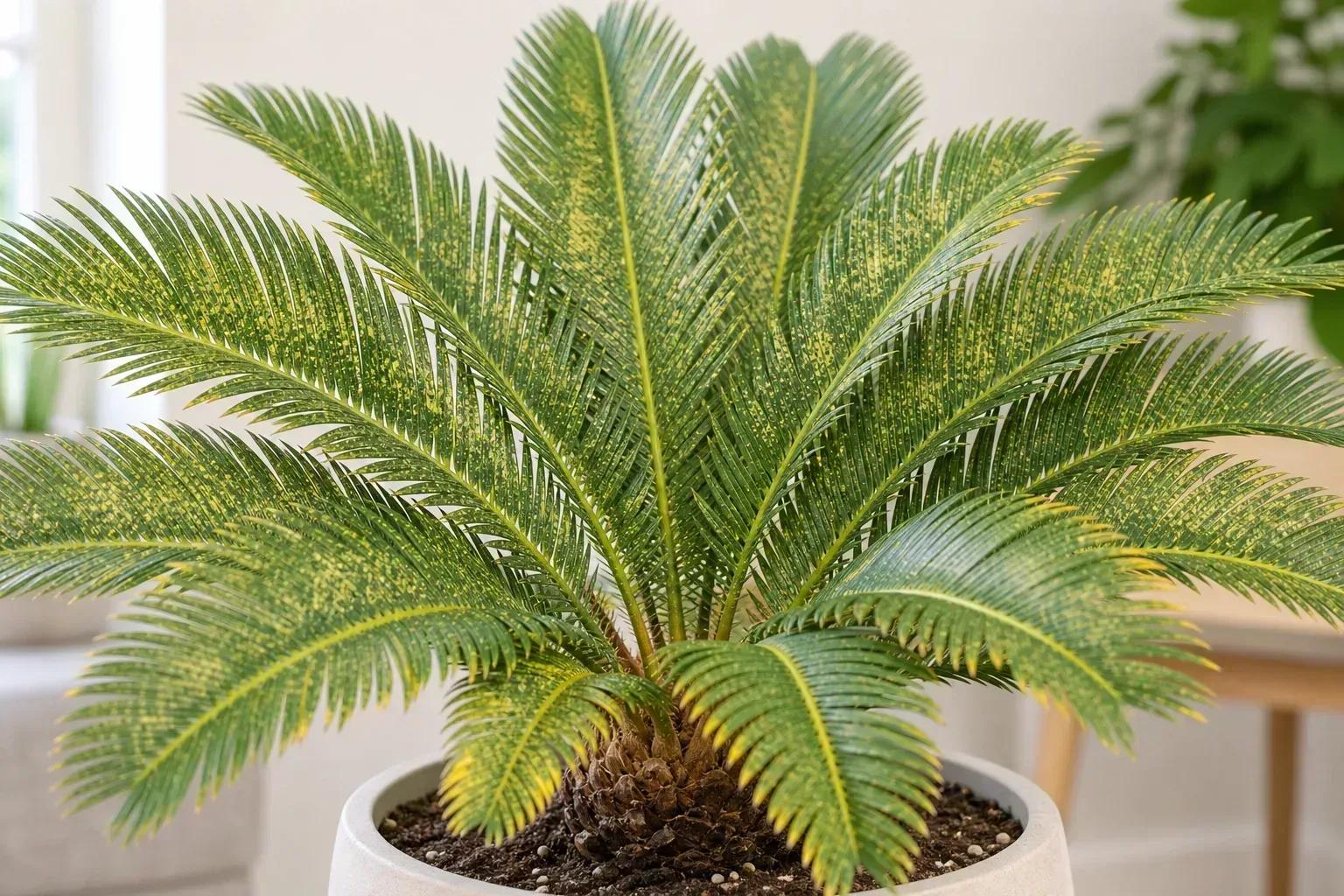
Spider Mites on Sago Palm: Causes, Checks & Fixes
This guide covers spider mites on Sago Palm. See also the general Spider Mites guide, watering, and light pages for this plant.
Spider Mites on Sago Palm: Causes, Checks & Fixes
Quick answer
Spider mites on Sago Palm (Cycas revoluta) show up as dull, stippled fronds and fine silk webbing-not as the twisted yellow new leaves of manganese deficiency. These tiny sap-feeding arachnids love warm, dry indoor air, and spider mites can be problematic in dry air on sago’s stiff, needle-like leaflets, which give mites plenty of hiding spots on undersides and at the crown.
First step: isolate the plant and rinse every frond thoroughly with lukewarm water, directing the stream at leaflet undersides and the crown. That single move knocks down live mites and webbing so you can confirm the infestation and see how bad it is before reaching for soap or oil. Do not spray pesticides on day one if you have not verified mites with a tap test or hand lens.
For full culture context-including pet toxicity-see the Sago Palm overview. Dry winter air that triggers mites overlaps with the low-humidity guide.
What spider mites look like on Sago Palm
Spider mites are arachnids, not insects-too small to see clearly without magnification, but their damage is visible on sago’s glossy, leathery fronds. Early feeding leaves tiny pale or yellow dots (stippling) on leaflet surfaces where mites suck chlorophyll from cells. As colonies grow, fronds look dusty, dull, or bronzed rather than deep green.
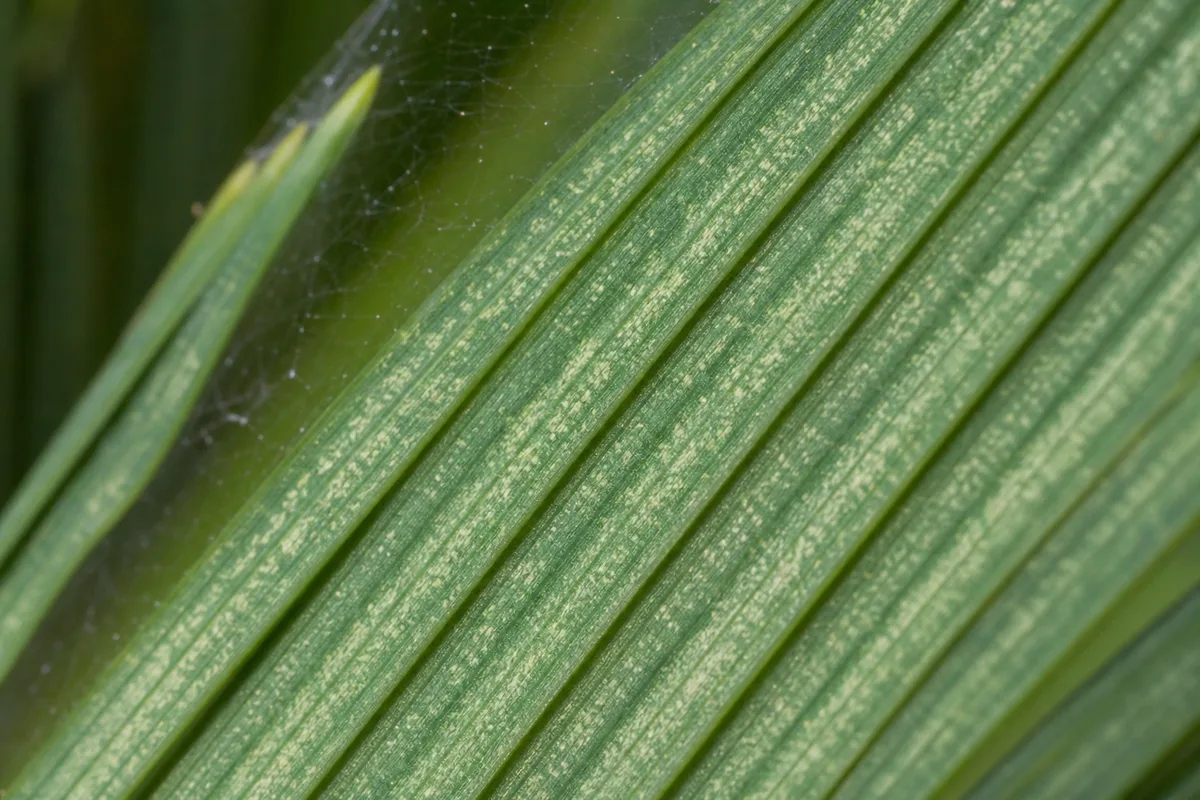
Spider Mites symptoms on Sago Palm - compare with healthy tissue on the same plant.
On sago, check these spots first:
- Upper surfaces of older fronds - fine white or yellow speckling across stiff leaflets
- Undersides of leaflets - moving specks and early webbing where mites feed
- Crown and frond bases - silk threads between the central spear and surrounding fronds
- Lower fronds near heat vents or sunny glass - mites often start where air is hottest and driest
Unlike scale or mealybugs, spider mites rarely leave cottony white masses or hard brown shells. Unlike manganese deficiency (frizzle-top), mite damage usually hits existing fronds with stippling and webbing rather than deforming the newest crown flush into crinkled yellow leaflets. For the full frizzle-top pattern, see yellow leaves on sago.
Why Sago Palm gets spider mites
Sago is a slow cycad, not a true palm-it pushes a new ring of fronds infrequently, sometimes once per year indoors. That slow pace means pest damage on current leaves stays visible for months, and losing one clean flush is a serious setback.
Spider mites thrive when three conditions overlap:
Dry air. Spider mites can be problematic in dry air on sago. Winter heating, forced-air vents, and sunny windows drop humidity precisely when houseplants sit closest to heat sources-the same dry stress covered in the low-humidity guide.
Plant stress. Scale insects, mealybugs, and spider mites can occur on sago. Drought-stressed or dusty fronds-common when a drought-tolerant sago goes too long without water in a bright window-give mites weak tissue and favorable reproduction. Follow the sago watering guide so soil dries appropriately between drinks without long drought spells in hot rooms.
Crowded or dusty placement. Sago’s rosette of stiff fronds traps dust and limits airflow at the crown. Dusty, dry leaflets are classic mite territory, especially on plants moved indoors for winter without a rinse.
Mites spread by crawling and by hitchhiking on tools, hands, or nearby infested plants. Because sago is often displayed as a specimen in bright rooms, it frequently sits beside other houseplants that can harbor mites invisibly.
How to confirm the cause
Work through these checks before treating:
- Tap test - Hold a white sheet of paper under a suspect frond and tap the leaflet cluster sharply. Pinhead-sized specks that crawl are spider mites. Static dust does not move.
- Webbing check - Look for fine silk at frond bases, between leaflets, or around the crown spear. Webbing confirms an established colony, not early manganese trouble.
- Which fronds are affected - Stippling on several mature fronds with intact crown growth fits mites. Brand-new fronds emerging yellow, short, and frizzled without webbing fits manganese deficiency better-see fertilizer and frizzle-top guidance.
- Environmental scan - Is the pot near a heat vent, radiator, or very sunny south glass? Dry, warm microclimates support mite explosions.
- Neighbor plants - Inspect other houseplants within a few feet. Mites often appear on several species at once.
- Soil moisture - Confirm the pot is not bone dry for weeks. Underwatering alone does not cause stippling, but drought plus dry air increases mite risk on sago.
If the tap test shows no movement and there is no webbing, reconsider manganese deficiency, normal lower-frond senescence, or sun scorch before applying miticides.
Spider mites vs. frizzle-top, scale, mealybugs, and sun scorch
| Symptom pattern | Spider mites | Frizzle-top (manganese) | Scale / mealybugs | Sun scorch / drought |
|---|---|---|---|---|
| Frond age affected | Older stiff fronds | Newest crown flush | Any frond; crown crevices | Tips/margins on exposed fronds |
| Key visual clue | Stippling + fine webbing | Crinkled yellow new leaflets | Bumps, cotton, or white crust | Tan/brown edges; no moving specks |
| Tap test | Moving specks | No insects | Scale does not crawl | No insects |
| First fix | Isolate and rinse | Manganese sulfate | Alcohol swab or oil | Adjust light/water |
Manganese deficiency (frizzle-top) - New crown fronds emerge yellow, stunted, and physically deformed with crinkled leaflets. No webbing. Treatment is manganese sulfate, not miticide. Damaged fronds cannot re-green, but the next flush should normalize once manganese is corrected.
Cycad aulacaspis scale - Flat white armored dots coat fronds and trunks, often without stippling or silk. Can kill sagos quickly in warm climates if untreated. Scale does not move on a tap test. Mites and scale can co-occur on stressed sagos-treat each pest with the right product.
Mealybugs - White cottony clusters in crown crevices with sticky honeydew, not fine stipple dots. See the mealybugs on sago guide when cottony masses appear.
Scale insects - Hard or waxy brown bumps on fronds and stems; no stippling pattern. Scraping reveals a soft insect underneath.
Normal lower-frond aging - The lowest frond yellows and browns one at a time while the crown stays deep green. No stippling or webbing on upper fronds.
Sun scorch or drought browning - Tan or brown leaflet tips and margins without moving specks on a tap test. Often follows sudden hot sun or long drought, not fine mottling across the whole leaflet.
First fix for Sago Palm
Move the plant away from other houseplants and rinse all fronds with a firm stream of lukewarm water.
Focus on leaflet undersides and the crown, where mites concentrate. Support stiff fronds with your hand so the spray does not snap them. Let the plant drain fully-sago is intolerant to overwatering or poor drainage, so avoid soaking the pot repeatedly in one session. If the mix is already wet, wipe fronds with a damp cloth instead of drenching the soil again.
Wear gloves when handling sago. All parts contain the toxin cycasin and are highly toxic to pets and humans; rinsing and pruning can expose sap and broken tissue. VCA Animal Hospitals notes that even small ingestions can cause serious effects. If a pet contacts rinsed sap or chews a frond during treatment, contact your veterinarian or the ASPCA Animal Poison Control Center at (888) 426-4435 immediately. Keep treated plants out of pet reach while foliage dries.
Do not reach for horticultural oil, neem, or insecticidal soap until you have confirmed live mites and completed at least one thorough rinse. Do not prune heavily on day one unless a frond is completely bronzed and webbed-sago needs its green fronds for photosynthesis while recovering.
Step-by-step recovery
After the initial isolation and rinse:
- Repeat water rinses every three to five days for two weeks, always targeting undersides. Spraying with a strong stream of water, particularly undersides, dislodges mites and washes away webbing that protects eggs.
- Apply insecticidal soap or horticultural oil if mites persist after several rinses. Use products labeled for spider mites on ornamentals. Cover upper and lower leaflet surfaces and the crown completely; these contact sprays only kill mites they touch. Spot-test one leaflet in bright window light before coating the whole plant-stressed cycad fronds can burn if oil is applied in hot direct sun.
- Repeat sprays on label intervals-typically every five to seven days for at least three cycles-to catch newly hatched mites. One application rarely clears an infestation because eggs survive.
- Trim only fully damaged fronds once the plant is stable. Remove bronzed, web-covered lower fronds with clean pruners if no green tissue remains. Do not strip fronds that still have green-especially on a slow cycad that may wait months for replacements.
- Correct dry stress - Move the pot away from heat vents if possible. A humidity tray or nearby humidifier helps suppress mite reproduction but does not replace rinsing and sprays.
- Monitor neighbors weekly - Inspect adjacent houseplants and check the aphids guide if soft insects appear on the crown spear alongside stippling.
Hold fertilizer until new growth looks healthy for several weeks. Feeding a mite-stressed sago pushes tender tissue that pests prefer.
Recovery timeline
Water rinses can drop mite numbers within a few days when colonies are moderate. A full soap or oil course often takes two to three weeks with repeated applications. Stippled leaflets will not return to solid green-the damage is permanent on that tissue.
Judge recovery by cleaner new fronds at the next flush, reduced stippling spread on existing leaves, and no new webbing after two weeks of control. Because sago is very slow-growing, you may wait many months before a full new ring of fronds replaces the worst damage. If the crown spear opens normally and mites stay gone on inspection, the plant is on track even if older leaflets still look speckled.
Mistakes to avoid
Do not treat for mites when the real problem is manganese deficiency-you will delay the correct fix and stress the plant with unnecessary sprays.
Do not stop after one rinse or one soap application. Mite eggs hatch in cycles; incomplete treatment is the main reason infestations return.
Do not spray only the tops of fronds. Mites feed on undersides; missed surfaces leave survivors.
Do not use broad-spectrum insecticides aimed at other pests. UC IPM warns that pyrethroids and similar products can kill mite predators and trigger mite outbreaks-use labeled miticides, soap, or oil instead.
Do not overwater while treating. Repeated foliar rinses tempt owners to keep soil soggy. Sago roots rot in wet mix faster than mites kill the plant-see overwatering on sago if the pot stays heavy.
Do not remove all stippled fronds at once on a slow-growing cycad unless they are fully dead. Green tissue still supports recovery.
Do not handle sago without gloves near pets or children. Toxicity is unrelated to mites but matters during hands-on treatment.
Sago care cross-check during treatment
While fighting mites, keep baseline culture steady so the plant is not fighting drought, wet roots, and pests at once:
- Water - Water thoroughly when the top few centimeters of mix are dry, then let the surface dry before the next drink. Sago tolerates drought but long dry spells in hot windows increase mite risk. Do not compensate for foliar rinses by keeping soil constantly wet.
- Light - Bright filtered sun for four to six hours daily indoors supports recovery. Do not move a mite-weakened sago into harsh new direct sun while fronds are stressed.
- Soil - Fast-draining palm or cactus mix with a drainage hole prevents crown rot when you rinse foliage often. Old depleted mix can also contribute to frizzle-top if you mistake nutrient stress for mites-see the fertilizer guide.
- Humidity - Raise ambient humidity away from blasting heat vents. That slows mite reproduction but does not replace direct rinsing and sprays.
How to prevent spider mites next time
Rinse sago fronds occasionally during warm active months to remove dust and early mites before colonies build. Quarantine new plants for two to three weeks before placing them beside your sago. Keep the pot out of direct blast from heating vents while still providing bright filtered light for four to six hours daily indoors.
Water thoroughly but let the surface dry between drinks in fast-draining mix. Even drought-tolerant sago stressed by long dry spells in hot, dusty windows is more vulnerable to mites. Inspect the crown when you water, especially in late fall when plants come indoors from patios.
Watch for scale and mealybugs on the same plant-multiple pests sometimes appear together on cycads. Route white crust to scale management and cottony masses to the mealybugs guide.
When to worry
Treat as urgent when webbing covers most fronds, the central spear fails to open, stippling spreads to every frond within days, or mites jump to multiple plants in the same room. On sago, repeated loss of crown flushes can leave a bare trunk that takes years to look full again.
Consider discarding only if the plant is severely defoliated, the crown feels soft, or you cannot isolate it from a large collection in a shared warm room. UMN Extension recommends bagging and removing houseplants when most foliage is webbed and decline is advanced. Most established sagos recover with consistent rinsing and repeated contact treatments if green crown tissue remains firm.
Conclusion
Spider mites on Sago Palm are a dry-air pest problem, not a mysterious palm disease. Confirm them with a tap test and webbing check, isolate the plant, and rinse fronds thoroughly before escalating to soap or oil on repeat intervals. Protect the crown, avoid overwatering the pot while treating foliage, and judge success by clean new growth-not by old stippled leaflets that will never fully re-green.
For overlapping symptoms and culture context, use sibling guides: Sago Palm overview, yellow leaves, mealybugs, aphids, low humidity, watering, fertilizer, and overwatering. Horticultural claims in this guide were checked against extension, botanical garden, and veterinary references before publication.
When to use this page vs other Sago Palm guides
- Sago Palm watering guide - Use for routine moisture checks before assuming spider mites is the main issue.
- Sago Palm problems hub - Browse all 3 common issues on this species.
- Slow Growth on Sago Palm - Different entry point when symptoms overlap with spider mites.