Underwatering on Sago Palm: Causes, Checks & Fixes
Quick answer
Sago Palm tolerates drought but still needs regular moisture when the soil surface dries out. Extended dryness in bright light causes limp fronds and brown leaflet tips. First step: lift the pot, check soil 5–7 cm deep, and water deeply once if the mix is dry throughout.
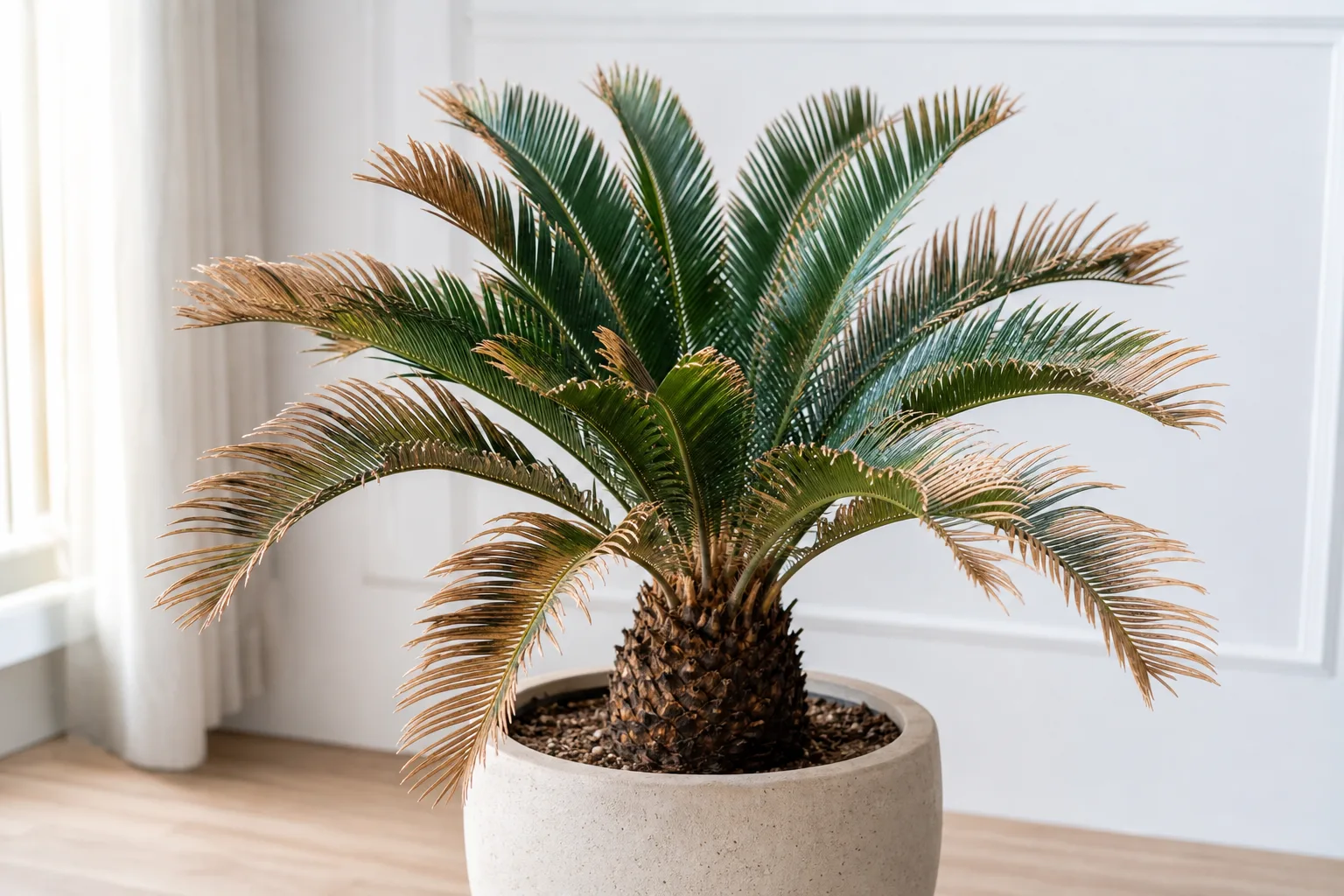
Underwatering on Sago Palm: Causes, Checks & Fixes
This guide covers underwatering on Sago Palm. See also the general Underwatering guide, watering, and light pages for this plant.
Underwatering on Sago Palm: Causes, Checks & Fixes
Quick answer
Underwatering on Sago Palm (Cycas revoluta) happens when the root ball stays too dry for too long-even though the plant is a drought-tolerant cycad once established, not a true palm. Indoors, Missouri Botanical Garden notes that sago still needs regular moisture with the soil surface nearly drying between water applications. Skip that rhythm in a bright window and stiff pinnate fronds lose turgor, leaflet tips crisp, and crown growth stalls.
The thick caudex stores reserves for dry spells, but prolonged desiccation still damages fine roots-storage buys time, not immunity. Stiff fronds also hide early drought longer than soft-leaved houseplants because the plant draws from internal reserves before the crown looks dramatic.
First step: lift the pot and check soil moisture 5–7 cm (2–3 inches) deep. If the mix is dusty dry throughout and the container feels light, water deeply once until excess drains from the bottom. Do not pour on a calendar-confirm dryness first, then soak.
This URL is the drought-rescue hub for the sago cluster-use it when the pot is light and mix is dry at depth. For year-round soak-and-dry rhythm and seasonal intervals, see the sago palm watering guide. For wet-soil wilt, yellow lower fronds, or sour smell, route to overwatering on sago palm instead.
Drought vs. rot vs. frizzle-top on Sago Palm
Underwatering means the root zone dried too far between drinks. Overwatering keeps soil wet and damages roots-limp fronds on soggy mix are rot, not thirst. Manganese deficiency (frizzle-top) deforms the newest crown leaves on soil that may be appropriately moist.
| What you notice | Likely cause | Urgency | First move |
|---|---|---|---|
| Light pot, dry at 5–7 cm, crispy tips on older fronds, firm caudex | Underwatering | Same day if widespread droop | Deep soak until water runs from holes; empty saucer |
| Light pot, water channels through, dry core after “watering” | Hydrophobic dry mix | Same day - center stays dry | Bottom-soak 30–45 minutes until depth moistens, then drain |
| Heavy pot, wet at depth, yellow lower fronds, sour smell | Overwatering / rot | Same day if caudex softens | Stop watering; inspect roots if decline continues |
| Newest crown fronds yellow, crinkled, or streaked; soil may be moist | Manganese deficiency | Within a week | Manganese sulfate-not more water |
| Brown tips only, turgid fronds, moist soil at depth | Low humidity or tap-water minerals | Low–medium | Confirm moisture at depth; see brown tips |
When drought and rot both seem possible, compare pot weight and depth moisture before adding water. Wet soil plus limp fronds almost always means root trouble-not this guide’s primary fix.
What underwatering looks on Sago Palm
Sago Palm is a gymnosperm cycad-more closely related to conifers than to true palms. Its stiff, pinnate fronds emerge from a central crown in slow flushes; young plants may push several leaf cycles per year, while mature plants often flush once annually. That slow pace means drought damage accumulates quietly before you notice a pattern-especially because one annual flush can make months of root stress visible only when the next spear stalls.
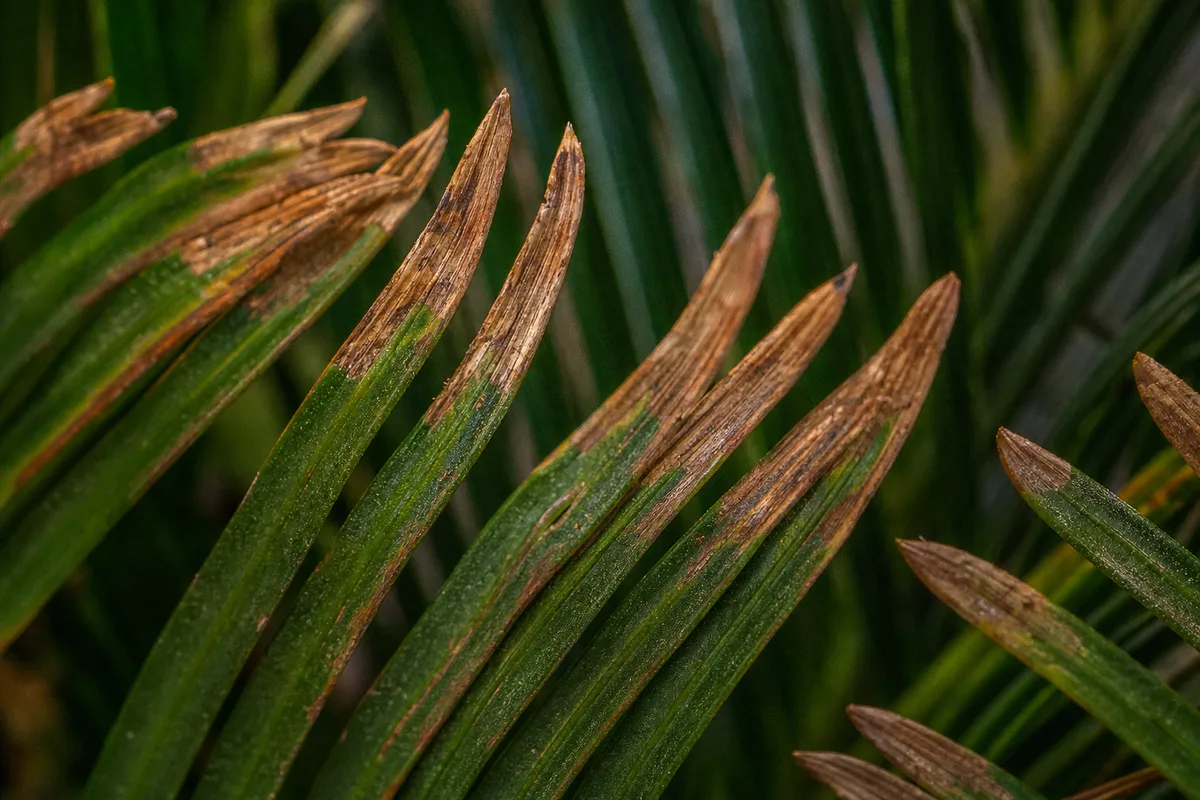
Underwatering symptoms on Sago Palm - compare with healthy tissue on the same plant.
Limp pinnate fronds and crispy leaflet tips
Typical underwatering signs:
- Fronds droop or fold along the midrib while soil is dry deep in the pot
- Leaflet tips turn brown and crispy; margins may scorch on the oldest fronds first
- Pot feels noticeably lighter than it did after the last thorough watering
- Mix has shrunk and pulled away from the pot sides
- Water runs straight through the surface without soaking the root ball (hydrophobic dry mix)
- New crown growth slows or emerging leaflets stay small and stiff
University of Maryland Extension lists wilting, leaf scorch, browning, and stunted growth as drought stress symptoms on houseplants. On sago, scorch usually starts at leaflet tips on lower, older fronds while the crown still looks structurally intact.
What dead tissue will not fix: Brown crispy leaflet tips do not green up again. Trim them only after the plant has rehydrated and stopped spreading new brown edges. Success means firm fronds and healthy new crown growth-not restored color on old burned tips.
Pot weight and hydrophobic mix gaps
The pot-weight test separates drought from rot faster than looking at fronds alone. Lift the container right after a thorough watering and notice the heft. A pot that feels dramatically lighter with dry depth readings strongly suggests underwatering. A heavy pot with drooping fronds points elsewhere-usually overwatering.
When dry peat or old mix repels water, the surface may look briefly damp while the center stays bone dry. Mix pulling away from pot walls confirms prolonged dryness. That hydrophobic trap is common after travel neglect or fear-driven under-watering following a past rot scare.
Why Sago Palm gets underwatered
The biggest trap is assuming drought tolerance means “rarely water.” NC State Extension describes sago as drought tolerant when established but still needing moist, well-drained soil-and intolerant of overwatering. The safe zone is dry-down between drinks, not months of neglect.
Drought-tolerance misconception
FAMU Cooperative Extension notes sagos can go for extended periods without supplemental water once established-growth may slow, but the plant survives. That resilience tricks owners into treating container sagos like in-ground specimens that can coast through heat waves. Limited pot volume and fast-draining mix do not offer the same buffer.
Fear of rot after past overwatering
Sago is highly vulnerable to root rot when soil stays wet. Many owners swing too far the other direction and let the root ball desiccate. Rot comes from soggy mix; underwatering comes from extended dryness-check soil to tell them apart.
Bright light and fast-draining mix
Sago wants filtered sun for 4–6 hours daily indoors. In a south-facing window during summer, transpiration rises and the same weekly schedule that worked in spring leaves the pot bone dry. The recommended sandy, well-drained soil dries quickly-appropriate for rot prevention but unforgiving if you forget checks during travel or heat waves.
Winter misread and calendar watering
Growth slows in cool, dim months, so watering should stretch out-but complete desiccation still damages roots. Do not treat winter rest as permission to ignore a shriveled, lightweight pot for months.
UMD Extension warns that scheduled watering causes both over- and underwatering because pot size, mix, humidity, and light differ in every home.
How to confirm the cause
Work through these checks before you soak:
- Pot weight - Lift the container. A dry sago in a lightweight pot strongly suggests underwatering. A heavy pot with drooping fronds points elsewhere.
- Moisture at depth - Insert your finger or a dowel 5–7 cm into the mix. UMD recommends this depth for most houseplants. Dry at depth plus limp fronds fits drought; wet deep mix does not.
- Caudex firmness - Press the trunk base firmly with your knuckle. A firm caudex on dry soil supports drought diagnosis. Soft or spongy tissue on wet soil is urgent-inspect roots for root rot before soaking again.
- Perk test (next day) - If roots are healthy, fronds should regain stiffness within hours to a day after a proper soak. No improvement with wet soil suggests rot, crown damage, or another stressor.
- Soil gap check - Shrunken mix pulling from pot walls confirms prolonged dryness.
- Drainage and smell - Sour odor, mushy trunk base, or yellowing lower fronds on persistently wet soil indicates overwatering-withhold water and inspect roots instead of soaking again.
- New vs. old frond pattern - Uniform tip brown on older fronds with dry soil fits drought. Yellow, frizzled new crown fronds on moist soil may signal manganese deficiency-a different fix entirely.
If soil is wet and fronds droop, stop-adding water will not help and may trigger rot.
Healthy root note: Firm coralloid root nodules are normal nitrogen-fixing structures, not rot. Mushy, foul-smelling roots that slip apart easily are decay-do not trim firm coral-like growth during drought recovery.
Documented recovery pattern
A common indoor pattern: a 25 cm (10-inch) plastic pot in a bright south window, watered on a two-week calendar through spring, then neglected for about three weeks during travel. On return the pot felt feather-light, mix was dusty dry 7 cm down, and lower fronds folded along the midrib with crispy tips. One slow shower soak until runoff, saucer emptied within 20 minutes, and fronds regained stiffness by the next morning. Crown spear firmness returned within days; a full new flush took roughly six weeks-normal for a slow cycad after drought stress, not a failed rescue.
First fix for Sago Palm
Water deeply once until excess runs from the drainage holes, then stop.
Set the pot in the sink or shower. Water slowly in passes until the entire root zone moistens and water exits the bottom freely. UMD Extension notes that mix pulled away from pot sides may need several applications to rehydrate fully.
Empty the saucer within 30 minutes. Never leave sago sitting in standing water-this cycad will not tolerate saturated soil.
That single deep soak is the first fix. Do not fertilize, repot, or prune heavily the same day.
Bottom-water for hydrophobic mix
If water runs through without soaking, bottom-water for 30–45 minutes: place the pot in a basin so the drainage holes sit in water and the mix wicks moisture upward. Winter care guidance from UMD recommends soaking partially submerged pots for one to two hours when soil has shrunk severely. Let the pot drain fully afterward.
Repeat the finger or dowel test at depth before the next drink.
Step-by-step recovery
After the first deep soak, follow this order:
- Wait for dry-down - Let the surface dry before watering again. Match the rhythm Missouri Botanical Garden describes: consistent moisture with the top nearly dry between applications-not constant wetness, not bone-dry weeks.
- Track weight for two weeks - Compare pot heft after watering versus dry to learn your home’s interval.
- Adjust for season - Extend intervals in cool, low-light months; tighten checks when the plant sits in bright summer sun.
- Trim dead tips later - Once fronds firm up and no new browning appears, snip fully crisp leaflet tips with clean shears. Leave green tissue intact.
- Refresh hydrophobic mix only if rewetting fails twice - If water repeatedly channels through dry pockets, repot into fresh fast-draining palm or cactus mix during active growth-not as a day-one reflex.
- Hold fertilizer - Rehydrate first. Feeding drought-stressed roots adds salt stress without fixing the underlying dryness.
Do not compensate for underwatering by watering daily. Alternating drought and soggy cycles damages roots faster than either extreme alone.
Recovery timeline
Mild dehydration: fronds often perk within hours to one day after proper soaking if roots remain firm.
Leaflet tip burn: permanent on affected tissue; the plant looks better once new growth stays green.
New crown flush: because sago is very slow growing, expect weeks to months before a fresh frond set appears-especially after a severe dry spell during winter rest.
Signs recovery is working:
- Fronds stiffen and hold their arch without folding
- No spread of brown tips up younger fronds
- Pot weight cycles predictably between wet and dry
- New crown spears eventually emerge firm and green
Signs the problem is worsening:
- Newest crown fronds fail to open or collapse
- Trunk base softens or smells sour
- Widespread yellowing on lower fronds while soil stays wet (rot, not drought)
- Repeated dry cycles with no new growth for two or more flush seasons
If fronds stay limp after a confirmed deep soak on dry soil, escalate to root rot inspection-uptake failure can mimic drought.
Lookalike symptoms
Overwatering and root rot - Yellowing often starts on lower fronds; soil stays wet; trunk may soften. Root rot follows overwatering or poor drainage. Dry soil plus perk after watering rules this out. Full triage: overwatering guide.
Manganese deficiency (frizzle top) - Newest fronds show interveinal yellowing, necrotic streaks, and frizzled deformation while older fronds stay green. Soil may be moist. Manganese sulfate-not more water-fixes confirmed deficiency. See yellow leaves on sago palm.
Natural old frond senescence - Sago periodically sheds lower fronds as the crown grows. A single browning bottom frond on an otherwise firm, well-watered plant is often normal aging, not drought.
Low humidity or fluoride tip burn - Brown tips on otherwise turgid fronds in evenly moist soil may trace to dry indoor air or tap water minerals rather than root dryness. Confirm moisture at depth before soaking again; see brown tips.
Wilting from multiple causes - Frond droop alone is not diagnostic. Wilting on sago palm and drooping leaves cover wet-soil uptake failure, heat stress, and pest pressure when drought is ruled out.
Crown rot from other causes - Advanced rot can mimic wilt. Soft crown tissue with foul smell needs inspection, not repeated watering.
Mistakes to avoid
- Soaking without checking soil - Wet roots plus drought-stressed appearance can mean rot. Confirm dryness at depth first.
- Misting instead of watering roots - Fronds need soil moisture; misting leaves does not rehydrate a dry root ball.
- Watering on the same weekday year-round - Light and temperature shift demand every season.
- Overcorrecting into daily watering - Soggy mix kills sago faster than brief drought.
- Fertilizing a dry plant - Rehydrate first; salts on drought-stressed roots burn fine root hairs.
- Repotting immediately - Unnecessary unless mix is hydrophobic beyond recovery or roots are bound and drying in hours.
- Assuming yellow always means underwatering - On sago, yellow lower fronds with wet soil usually mean too much water or nutrient issues, not too little.
- Applying manganese sulfate for crispy tips on dry soil - Frizzle-top affects new crown growth on moist mix; drought tips on older fronds need water, not micronutrients.
How to prevent underwatering
- Use depth checks, not memory - Probe 5–7 cm before every major watering during active growth.
- Start from realistic intervals - Many indoor sagos need water every 14 to 28 days in spring and summer active growth and every 4 to 8 weeks in winter dormancy-but only when the top few inches are completely dry. See the watering guide for soak-and-dry technique and seasonal framing.
- Choose pots with drainage holes and discard saucer runoff promptly.
- Check more often in bright, warm months when filtered sun drives faster drying.
- Refresh peat-heavy mix that repeatedly goes hydrophobic before chronic dry pockets form.
- Reduce frequency in winter but still monitor weight-complete desiccation during indoor heat season damages roots even when top growth is slow.
Pair dry-down watering with the fast-draining mix sago needs. The goal is moist root zone after watering, dry surface before the next drink-not perpetual drought and not soggy peat.
When to worry
Underwatering becomes urgent when new crown fronds stall or collapse, brown damage climbs into young fronds during warm growth, or the plant has gone through repeated extreme dry cycles in one season. Sago’s slow decline can hide trouble until the crown fails-act when dry soil and widespread frond droop align, not after the trunk base softens.
If the trunk base is mushy, roots are brown and slimy on inspection, or fronds stay limp despite wet soil, stop watering and treat for root rot instead. Underwatering recovery depends on firm roots; advanced rot may not be reversible despite deep soaks.
Severe caudex softening from chronic drought is less common than rot but may not fully recover even after rehydration-prevention through regular depth checks beats emergency soaking.
For most owners, one confirmed deep watering and a corrected dry-down rhythm restore a firm, arching sago within days-provided the roots were still healthy when you acted.
Related Sago Palm guides
| Guide | Use when |
|---|---|
| Sago Palm overview | Cycad biology, toxicity, and culture hub |
| Watering | Year-round soak-and-dry rhythm and seasonal intervals |
| Overwatering | Heavy wet pot, yellow lower fronds, sour smell |
| Root rot | Mushy roots, soft caudex, no perk after soak on wet soil |
| Yellow leaves | Frizzle-top manganese deficiency on new crown growth |
| Brown tips | Tip burn with adequate soil moisture |
| Wilting | Drooping fronds when drought vs. rot is unclear |
| Drooping leaves | Multi-cause frond fold without a single obvious trigger |
FAQs
Why won’t my sago palm perk up after I watered it?
If fronds stay limp on wet soil, roots may be damaged from overwatering-not thirst. If the pot was light and dry before watering and fronds still droop after 24 hours, check for hydrophobic mix (water ran through without soaking the core) or crown damage. A proper deep soak on genuinely dry mix usually restores stiffness within hours to one day when roots are still firm.
Is my sago underwatered or deficient in manganese?
Underwatering shows crispy tips on older fronds with a light, dry pot throughout. Manganese deficiency (frizzle-top) hits the newest crown flush with yellow, crinkled, or streaked leaflets while soil may be moist. Do not add more water for frizzle-top-see the yellow-leaves guide for manganese sulfate correction.
How long should I wait between soak and next watering?
Let the top 5–7 cm of mix dry completely before the next drink. Many indoor sagos need water every 14 to 28 days in active growth and every 4 to 8 weeks in winter dormancy-but only when depth checks confirm dryness. Your pot, light, and mix decide the interval, not a calendar.
Will crispy sago leaflet tips turn green again?
No-fully desiccated brown tip tissue does not re-green. Judge recovery by firm fronds, stopped spread of browning, and healthy new crown spears-not by cosmetic repair on old burned tips. Because sagos grow very slowly, a new flush may take weeks to months indoors.
When is underwatering urgent on sago palm?
Act promptly when the newest crown fronds fail to open, older fronds brown rapidly during warm active growth, or the trunk base feels soft. Sagos decline gradually, so rehydrate as soon as dry soil and widespread frond droop align-do not wait until the entire crown collapses. Soft caudex on wet soil means rot, not drought.
This guide targets underwatering diagnosis and drought rescue on container Cycas revoluta-dry-vs-wet-vs-frizzle decision table, caudex firmness check, hydrophobic rewetting, perk test, and honest slow-flush recovery timeline-not day-to-day watering rhythm alone (watering guide) or wet-soil triage (overwatering). Horticultural claims were checked with claims-validator-v1 against NC State Extension, Missouri Botanical Garden, University of Maryland Extension, UF/IFAS, FAMU Cooperative Extension, Mississippi State Extension, and UNF Botanical Garden references before publication.