Wilting on Swedish Ivy: Causes, Checks & Fixes
Quick answer
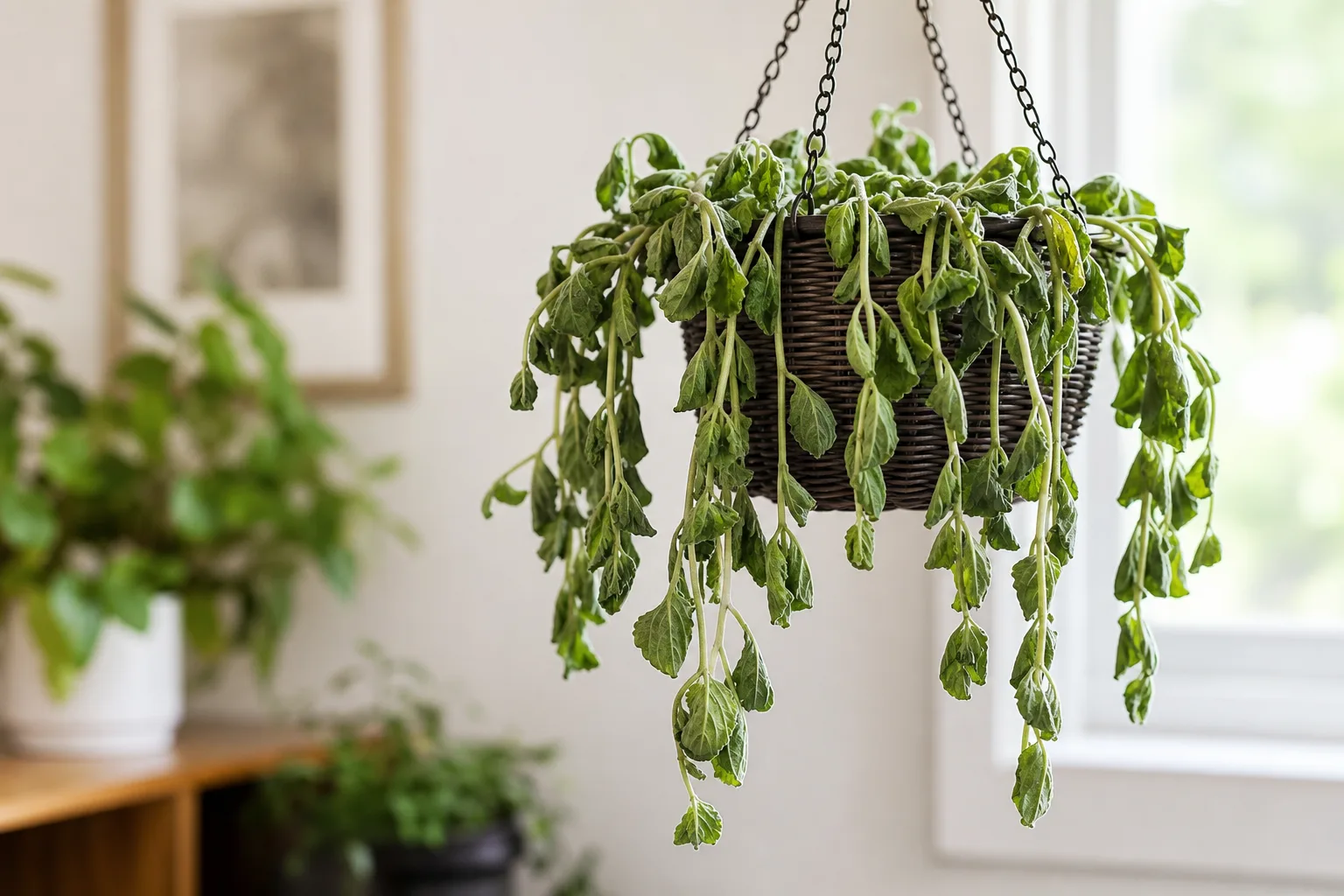
Wilting on Swedish Ivy is acute collapse-whole runners hang limp when roots cannot keep fleshy leaves firm. Lift the pot and check the top inch of mix before you water: light and dry means rehydrate; heavy and wet with soft stem bases means stop watering and inspect roots.
Wilting on Swedish Ivy: Causes, Checks & Fixes
This guide covers wilting on Swedish Ivy. See also the general Wilting guide, watering, and light pages for this plant.
Wilting on Swedish Ivy: Causes, Checks & Fixes
Quick answer
Wilting on Swedish Ivy (Plectranthus verticillatus, still sold as P. australis on many tags) is acute collapse-whole trailing runners hang limp when roots cannot keep fleshy scalloped leaves firm. The same limp cascade can come from opposite problems: bone-dry mix or waterlogged failing roots.
Scope check: Use this page when multiple stems or the whole basket collapses at once and you need to separate drought, rot, heat, and shock. Use the drooping leaves guide when individual blades lose lift but vines still feel structurally attached-the diagnostic moisture rule is the same, but wilting covers broader rescue including wet-soil paradox and seasonal rhythm mismatch.
First step: lift the pot and check the top inch of mix before you reach for the watering can. Dry at the surface with a light pot → underwatering is likely; water thoroughly until drainage runs free. Wet mix with limp runners → stop watering-damaged roots cannot move water upward even when soil feels damp, so another soak worsens collapse. For species baseline and the leaf-softness secondary check, see the Swedish ivy watering guide.
| Pattern | Top inch of mix | Pot weight | Stem bases | Likely cause | First action |
|---|---|---|---|---|---|
| Dry-wilt | Dusty dry | Light | Firm | Underwatering | One deep soak; empty saucer |
| Wet-wilt | Damp or soggy days | Heavy | Softening | Overwatering / root rot | Stop water; inspect roots |
| Stress wilt | Normal moisture | Normal | Firm | Repot, move, or heat spike | Hold rhythm; bright indirect light |
| Drooping-only | Varies | Varies | Firm | Early turgor loss | Drooping leaves |
On Swedish Ivy this means trailing runners collapse before crown tissue fails on dry wilt, but stem bases soften first on wet wilt-the fork that saves a forgiving trailer from becoming a rot casualty.
When to use this page vs. other Swedish Ivy guides
| Your symptom | Start here | Or use instead |
|---|---|---|
| Whole basket limp; unsure if dry or wet | This page | - |
| Individual leaves droop; vines still springy | Drooping leaves | This page if collapse spreads |
| Soil stays wet too long; yellow lower leaves | Overwatering | This page for wet-soil wilt paradox |
| Confirmed mushy roots or sour smell | Root rot | This page for initial triage only |
| Light pot; mix fully dry through top inch | Underwatering | This page when causes overlap |
| Water runs through; center stays dry | Dry hydrophobic soil | This page if whole basket collapses |
| Wilt after recent repot or cold draft | Draft stress | This page for full cause comparison |
What wilting looks like on Swedish Ivy
Wilting is lost turgor-the leaves and soft stems hang limp instead of holding their usual springy angle. On a healthy Swedish Ivy, rounded scalloped leaves feel slightly thick and stems stay firm enough to support trailing runners. When turgor drops, the whole basket can look flattened overnight.
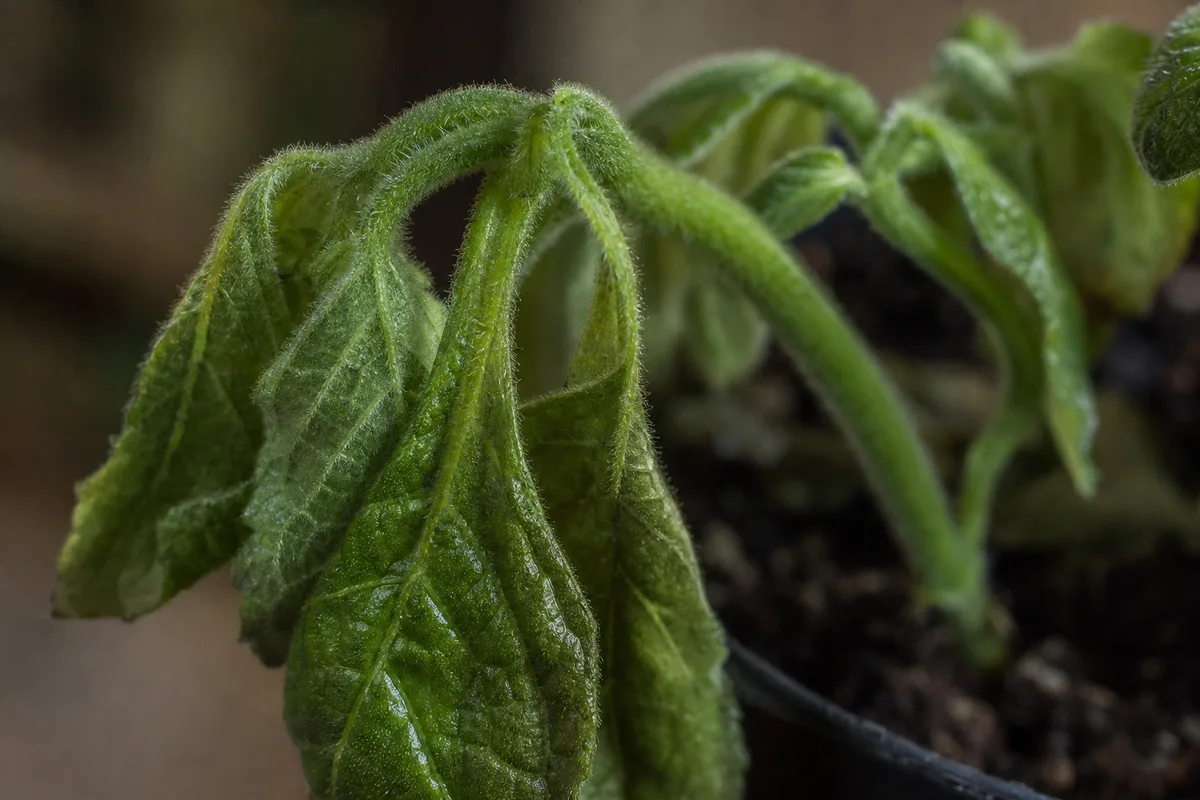
Wilting symptoms on Swedish Ivy - compare with healthy tissue on the same plant.
Dry-wilt pattern:
- Leaves and runners hang limp but feel thin rather than mushy
- Pot feels noticeably light when lifted
- Top inch of mix is dry; lower mix may also be dry in small baskets
- Stems stay firm at the soil line
- Leaf edges may crisp or curl if dryness lasted several days
- Recovery often visible within hours after proper watering
Wet-wilt pattern:
- Leaves wilt even though mix feels damp or soggy
- Pot feels heavy; saucer may hold standing water
- Lower leaves yellow before they wilt
- Stem bases near the soil line feel soft, waterlogged, or hollow
- Sour or swampy smell from the pot
- No improvement after watering-sometimes worse the next day
Temporary wilt after stress:
- Firm stems and normal soil moisture, but limp foliage after repotting, a sudden move to brighter light, or a hot afternoon outdoors
- Often improves once roots settle or heat drops, without changing the watering rhythm drastically
Swedish Ivy wilts faster than many upright houseplants because trailing stems expose a large leaf surface in bright indoor light. A small hanging basket can flip from fine to collapsed in a day when water runs out-or when roots fail in wet mix. Variegated forms with thinner white margins may show collapse on exposed runners first while inner green tissue still holds some firmness.
What to photograph for your own records: One limp cascade on a light dry pot, one limp basket on heavy wet mix with yellow lower leaves, and one firm healthy trailing section after recovery-side-by-side phone photos make pot-weight decisions easier than memory alone.
Worked example: 15 cm kitchen hanger
A 15 cm (6 in) plastic hanging basket in a bright east kitchen went from firm runners at breakfast to a flattened cascade by evening. Pot weight felt noticeably lighter than after the last soak; top inch dusty dry; stem bases firm when pinched. One bottom soak for 25 minutes, then top-water until drainage ran, with saucer emptied. By 10 p.m. the longest runners felt springy again; by next morning new tips looked glossy. Timeline: roughly six hours from soak to visible perk on mild dry wilt with healthy roots-matching the drooping thirst signal on pot-grown Plectranthus.
Why Swedish Ivy wilts
The cause always comes back to whether roots can supply water faster than leaves lose it. Swedish Ivy is not a desert succulent, but it is also not a moisture-loving fern. UF/IFAS recommends well-drained potting media and watering when the top inch feels dry, never letting the plant sit in water. That balance is where most wilt stories start.
Underwatering during active growth is the straightforward case. In bright indirect light, a fast-growing basket uses water quickly. Plectranthus tolerates drought and grows best with evenly moist but not soggy soil. Once stored stem moisture is used up and the mix is dry through the top inch, runners lose turgor and wilt.
Overwatering and root oxygen loss produce the confusing mirror image. UF/IFAS notes that over-watering Swedish Ivy can cause root rot. Saturated mix suffocates fine roots. Decayed roots cannot transport water, so the plant wilts despite wet soil-exactly the pattern Penn State Extension describes when root rot causes wilting and mushy roots. Catch chronic wet feet early on the overwatering guide before stems soften at the crown.
Seasonal rhythm mismatch triggers both extremes. Keep the soil evenly moistened in summer but drier during winter, when growth slows. Watering on a summer schedule through winter rest keeps mix wet too long. Watering winter-dry mix on a calendar without checking can also leave a bright windowsill basket thirsty in spring growth.
Heat and light spikes increase water demand. Swedish Ivy prefers moderate indoor temperatures around 16°C to 24°C (60–75°F). Cold drafts below about 10°C (50°F) slow uptake and compound wet-soil problems. A basket moved suddenly into harsh direct sun may wilt in afternoon heat even when mix moisture looks adequate-especially if roots were recently disturbed. One-sided collapse on the window-facing half of a hanger often points to heat stress before whole-basket rot.
Recent repotting or root damage can cause temporary wilt while roots re-establish. This is different from rot: stems stay firm, mix moisture is normal, and improvement usually follows within a few days if you avoid overwatering “to help it settle.” See repotting if wilt started within two weeks of a pot change.
Root-bound stress in an overcrowded pot can also wilt a thirsty-looking plant because water runs through dry channels while the root mass stays partially dry-or because old compacted mix holds water unevenly. When water channels down the sides without rewetting the core, cross-check dry hydrophobic soil.
How to confirm the cause
Work through these checks in order. Each step narrows the diagnosis before you commit to watering or repotting.
- Pot weight - Lift the basket by the hanger or rim. Light and dry strongly suggests underwatering. Heavy and wet suggests oversaturation or root failure.
- Top-inch moisture - Push your finger into the surface mix. Dusty dry confirms dry wilt. Clinging wet mix with wilt confirms uptake failure until proven otherwise. The watering guide adds a leaf-softness pinch on mature blades as a secondary signal when surface checks mislead.
- Stem firmness at the soil line - Pinch the lowest inch of stem. Firm tissue supports dry wilt or temporary stress. Soft, mushy, or collapsing bases point to rot.
- Smell and drainage - Sour odor or a pot standing in full saucer water supports rot. Clear drainage flow after watering supports healthy culture.
- Leaf pattern - Uniform limp runners with dry mix fit thirst. Yellow lower leaves plus wet mix fit overwatering. Crisp edges with dry mix fit prolonged drought.
- Recent history - Repotted in the last week? Moved to a brighter window? Returned from a dry vacation? Each context shifts the likely cause.
- Recovery test (dry wilt only) - If mix is dry and stems are firm, water once deeply. Perked stems within several hours confirm underwatering. No change with wet mix means do not water again-inspect roots.
If soil is wet and stem bases are softening, skip the recovery test and treat as root failure. Adding water will worsen oxygen loss. Escalate to the root rot guide when most of the root mass is mushy.
First fix for Swedish Ivy
Lift the pot, check the top inch of mix, and choose one path-do not water by habit.
- If the pot is light, the top inch is dry, and stems are firm: Water thoroughly until excess runs from the drainage hole, then empty the saucer. Let the plant drain completely before returning it to its hanger. Wait 12–24 hours and judge by stem firmness, not guilt.
- If the pot is heavy, mix is wet, and stem bases are softening: Stop all watering. Unpot, rinse away old mix, and trim brown mushy roots back to firm white tissue. Let the root ball air-dry for several hours, then repot into fresh well-draining mix in a clean pot with drainage. Wait until the top inch dries before the first post-rescue drink. Full salvage protocol lives on root rot on Swedish Ivy.
- If mix moisture is normal and wilt followed repotting or a light move: Hold your watering rhythm steady, give bright indirect light without harsh direct sun, and avoid fertilizing until new growth looks firm.
One decision beats stacking fixes. Do not simultaneously repot, fertilize, prune heavily, and soak-Swedish Ivy recovers faster when the water pathway is corrected first.
Step-by-step recovery
Dry wilt recovery
- Water until liquid runs freely from the bottom, ensuring the whole root ball rewets-not just the surface.
- If mix has pulled away from the pot edge and water runs straight through, bottom-water for 20–30 minutes or poke shallow holes to break dry channels, then top-water once. Persistent channeling may need the dry hydrophobic soil workflow.
- Place the basket back in bright indirect light, not direct hot sun on stressed foliage. Review light placement if the basket sat in a hot window.
- Remove only leaves that stay crispy and brown after 48 hours; soft wilted leaves often recover.
- Resume watering when the top inch dries again-UF/IFAS advises this as the standard check.
Wet wilt and root rot recovery
- Unpot gently and wash away soggy mix so you can see root color and texture.
- Trim all mushy, brown, or hollow roots with clean scissors. Sterilize blades between cuts if rot is extensive.
- Cut back soft stem tissue at the base if it has turned waterlogged-healthy stem above firm nodes can still recover.
- Let trimmed roots air for several hours in bright shade with good airflow.
- Repot into fresh well-draining houseplant mix. Do not reuse contaminated soil. Mix guidance sits on the soil guide.
- Water lightly once if the remaining root mass is small; otherwise wait until the top inch dries.
- If most of the root system is gone but firm stem tips remain, take stem cuttings as backup-UF/IFAS recommends tip cuttings when root rot kills the parent. Propagation steps are on the propagation guide.
Temporary stress wilt
- Keep soil moisture steady-neither bone dry nor soggy.
- Avoid moving the basket again for one to two weeks.
- Pinch only dead tips; leave healthy runners to photosynthesize.
- Hold fertilizer until wilt stops and new tips look firm.
Recovery timeline
Mild dry wilt on an otherwise healthy basket often shows firmer stems within several hours and near-normal appearance within one day after thorough watering. Moderate drought with crisp leaf edges may take one to two weeks for new growth to mask damaged foliage.
Temporary wilt after repotting usually improves within three to seven days if mix moisture stays appropriate and roots were not heavily damaged during the move.
Root rot recovery is slower and less certain. After trimming and repotting dry, expect one to three weeks before you can judge success by new tip growth. Partial recovery-some firm stems with slow new leaves-is common when rot was caught early. If stem bases keep softening or wilt spreads after corrective care, the remaining tissue may not be saveable.
Leaves that fully collapsed and turned brown will not revert. Judge recovery by new firm tips and stable stem bases, not by old damaged leaves.
Lookalike symptoms
Drooping vs. wilting scope: Drooping leaves are early turgor loss-blades hang but the diagnostic moisture rule matches this page. Wilting is more advanced collapse across multiple runners or the whole basket. Start on drooping when only some leaves sag; start here when the entire trailer flattens or wet-soil paradox confuses the picture.
Yellow leaves frequently accompany wet-soil wilt as lower leaves fail first. Yellow alone with firm stems and appropriate moisture may point to seasonal leaf drop when lower leaves turn yellow and fall, reduce watering-a different rhythm issue than acute wilt.
Leggy pale growth signals too little light, not necessarily wilt. Stems may look weak but leaves stay turgid. Fix light and pinching; watering more will not stiffen stretched runners.
Pest-related limpness is uncommon as the primary wilt cause on Swedish Ivy, but heavy sap-feeding can stress tips. Check leaf undersides for mealybugs or spider mites if soil moisture checks out and wilt persists despite correct watering.
Mistakes to avoid
- Watering without checking - The most common error on wilted Swedish Ivy is assuming thirst when roots are already failing in wet mix.
- Soaking a wet wilted plant - Extra water suffocates remaining healthy roots and accelerates stem rot at the soil line.
- Moving a wilted basket into direct sun - Heat increases transpiration before roots can recover; bright indirect light is safer during rescue.
- Repotting dry wilt on day one - Unnecessary repotting adds stress when the plant only needed water.
- Fertilizing stressed plants - Salt in fertilizer can burn compromised roots. Wait until new growth is firm for two weeks.
- Letting saucers stay full - Standing water keeps mix saturated and invites repeat wilt from root failure.
- Ignoring winter slowdown - Continuing summer watering frequency in low-growth months keeps mix wet too long.
How to prevent wilting next time
Learn how fast your specific basket dries in its window. A 15 cm (6 in) hanging pot in bright light may need water every five to seven days in summer and every ten to fourteen days in winter-your home will differ. Full rhythm detail lives on the Swedish ivy watering guide.
Water thoroughly each time so the whole root ball rewets, then let the top inch dry before the next drink. Empty saucers after watering. Repot when roots crowd the container or mix stops draining evenly, ideally in spring when growth resumes.
Pinch tips regularly to keep the plant bushy-dense foliage is easier to read than a few long bare runners that hide dry soil at the crown. When moving baskets outdoors for summer, place them in shade with no direct midday sun and acclimate over several days.
When to worry
Seek aggressive intervention when wilt persists more than 48 hours after correct dry-wilt watering, when wilt worsens despite dry mix and firm stems (possible vascular or pest issue-inspect closely), or when wet-soil wilt spreads with blackening stem bases.
Take stem cuttings from healthy upper growth if root inspection shows most of the root mass is mushy but several inches of firm stem remain-Swedish Ivy cuttings often root in water or moist mix and can replace a failing parent.
If the entire plant collapses with rotten stem bases up multiple nodes and no firm tissue remains, recovery is unlikely. Discard contaminated mix and sanitize the pot before reusing.
When to seek expert help: If wilt persists on corrected dry-down, improved drainage, and root trim for three weeks or more, contact your county cooperative extension office or a local master gardener clinic.
Related Swedish Ivy guides
Use this page for whole-basket collapse and multi-cause wilt triage; follow the link that matches what you found:
- Swedish ivy overview - species biology and basket culture
- Swedish ivy watering - top-inch dry rule, leaf-softness check, seasonal rhythm
- Swedish ivy light - placement to avoid heat wilt
- Swedish ivy soil - mix that drains without channeling
- Swedish ivy repotting - root-bound and shock recovery
- Swedish ivy propagation - backup cuttings when roots fail
- Overwatering on Swedish Ivy - early wet-soil triage
- Underwatering on Swedish Ivy - dry pot rescue
- Root rot on Swedish Ivy - mushy roots and sour smell
- Drooping leaves on Swedish Ivy - early turgor loss
- Dry hydrophobic soil - water runs through dry core
- Draft stress - cold or vent shock wilt
- All Swedish Ivy problems
Conclusion
Wilting on Swedish Ivy is your signal to inspect the water pathway, not a command to water. Dry, light pots with firm stems need one thorough drink. Heavy, wet pots with soft bases need drying, root inspection, and repotting-not more moisture. Get that fork right and most baskets bounce back quickly; get it wrong and a forgiving plant becomes a rot casualty. Check the pot first every time.
How we wrote and verified this guide: Recommendations were checked against UF/IFAS Gardening Solutions, Missouri Botanical Garden, Penn State Extension, and PlantZAfrica references cited inline. Author: sai-ananth. Reviewer: LeafyPixels Review Board. Methodology: plant problem guidance is reviewed against botanical references, extension resources, and LeafyPixels plant-care data before publication. Claims validation: claims-validator-v1 pass with inline external links documented below. Last reviewed: 2026-06-17.