Mold on Soil on Whale Fin Snake Plant: Causes, Checks &
Quick answer
Mold on Whale Fin Snake Plant soil is usually harmless surface fungus feeding on a mix that stays wet too long for a plant that drinks very slowly. First step: stop watering, scrape off the fuzzy top inch, and let the pot dry all the way to the bottom before the next drink.
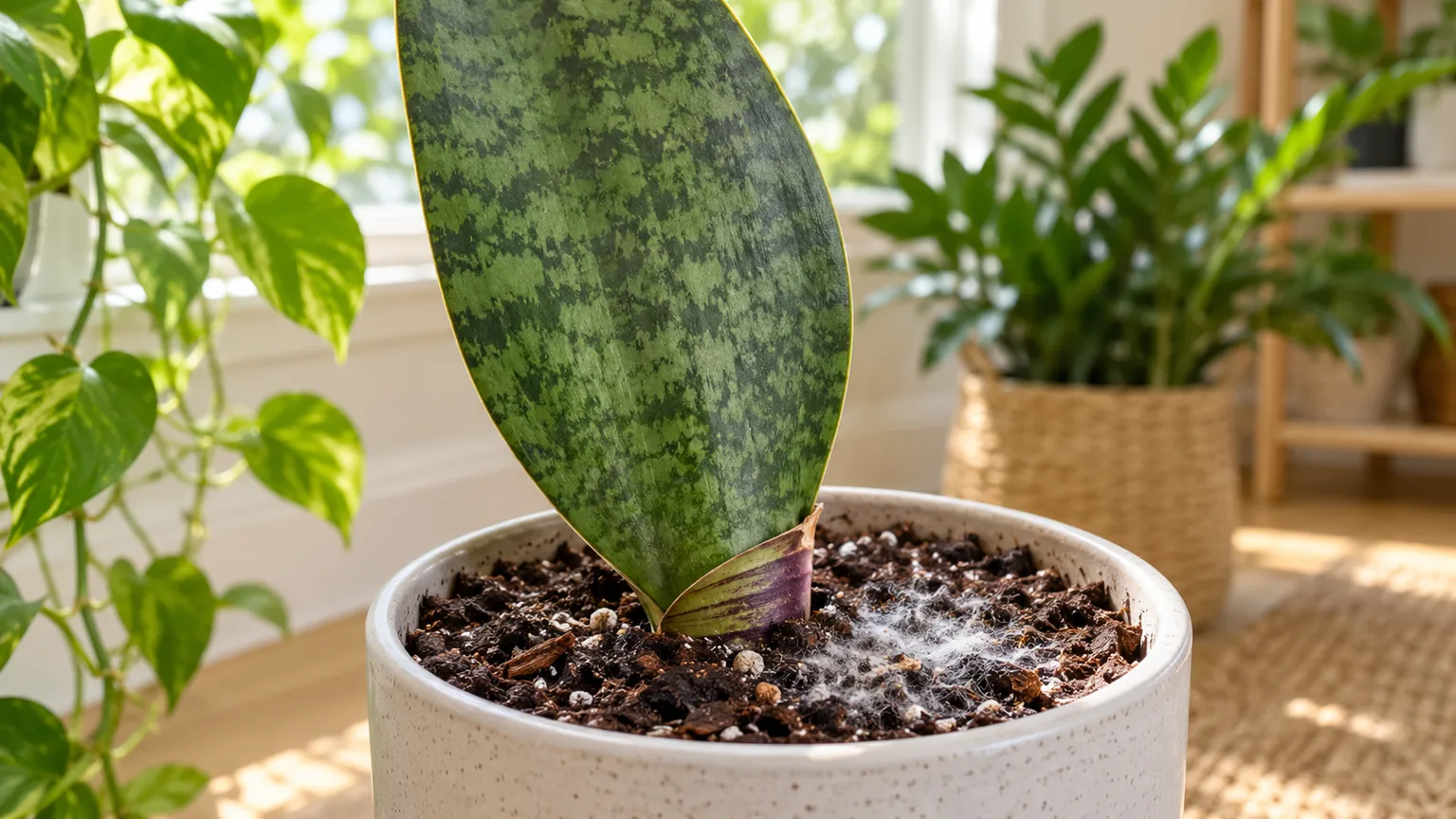
Mold on Soil on Whale Fin Snake Plant: Causes, Checks & Fixes
This guide covers mold on soil on Whale Fin Snake Plant. See also the general Mold on Soil guide, watering, and light pages for this plant.
Mold on Soil on Whale Fin Snake Plant: Causes, Checks & Fixes
Quick answer
Your Whale Fin’s pot has white or gray fuzz on the mix, and you need to know whether to scrape it, repot, or ignore it. Start with what makes this plant different from almost every other houseplant you own: it is often a single giant paddle holding weeks of water, sitting in far more soil than its roots can drink. That leftover moisture keeps the surface damp, and damp organic mix grows mold.
First step: stop watering, scrape off the fuzzy top inch, and let the whole pot dry to the bottom. Surface mold on a firm Whale Fin is a moisture warning, not a dying plant. For how surface mold works across houseplants in general, see our mold on soil guide. Everything below is about why it happens on this particular slow-drinking paddle and what to check before you touch anything else.
When to use this page vs other Whale Fin Snake Plant guides
This page is the symptom-first entry for fuzzy or dusty growth on the potting mix. Use the table to pick the right next step.
| What you see | Read next |
|---|---|
| Fuzzy white or gray film on damp mix, paddle firm | Stay here |
| Heavy pot, soft sheath at the soil line, sour smell | The root rot guide for this plant |
| Soil wet for weeks though you water rarely | The overwatering guide |
| Small dark flies rising when you water | The fungus gnats guide |
| White gritty crust, dry soil, no fuzz | The fertilizer guide (likely mineral salts) |
| Paddle wrinkled, pot feather-light, no mold | The underwatering guide |
| Pot stays damp, mix dense and peaty | The soil guide |
Browse the Whale Fin Snake Plant problems hub or the plant overview if nothing above matches.
What mold on soil looks like on Whale Fin Snake Plant
A healthy Whale Fin pot should have a dry, dusty surface between waterings. Mold breaks that pattern:
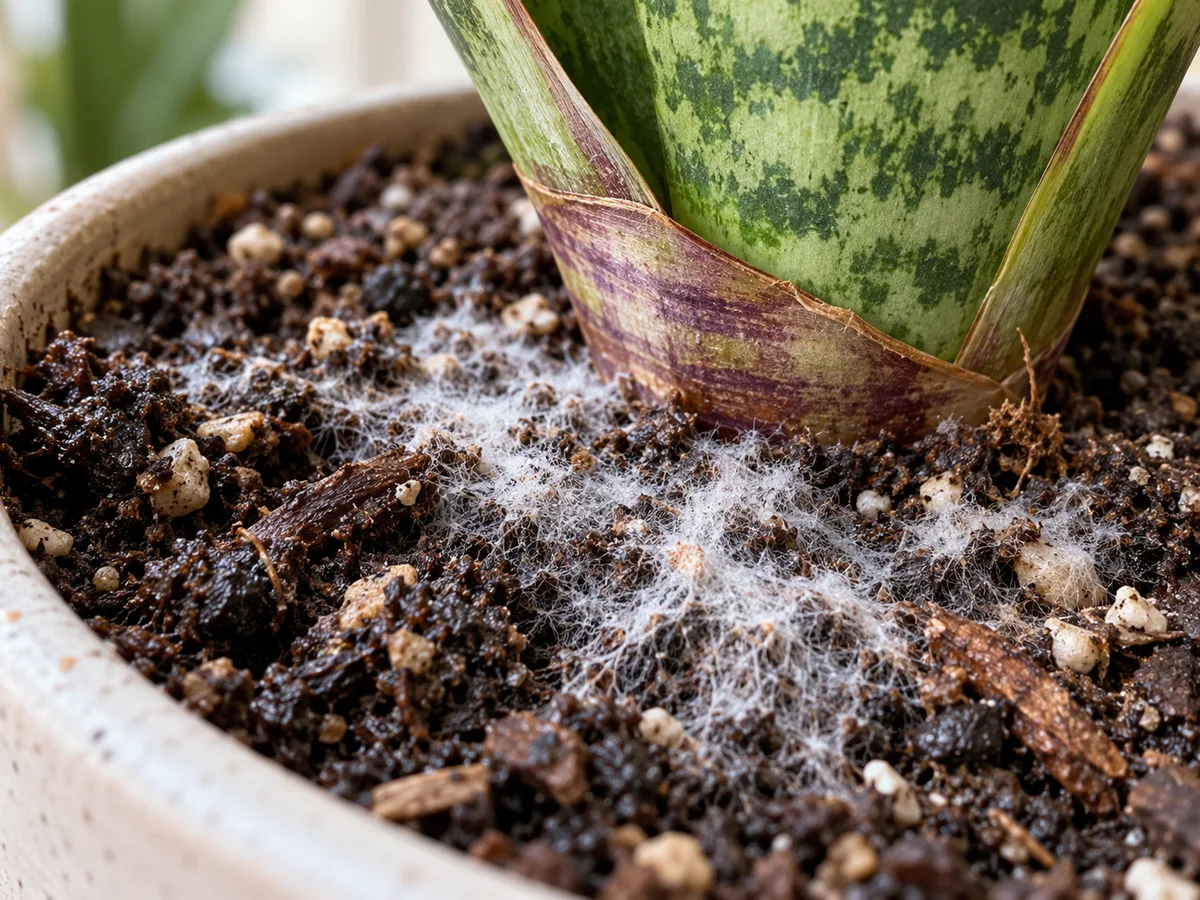
White surface threads spreading from the paddle base across damp mix. Compare the fuzzy layer with the firm mottled tissue above it.
- Typical harmless surface mold: white, gray, or faintly tan fuzzy patches on the top of the mix, often creeping out from the paddle base where water collects. The surface feels cool or clings to your finger days after watering.
- The Whale Fin giveaway: mold rings the thick purple-banded sheath where the paddle meets the soil. That junction holds moisture against the leaf base longer than open mix does.
- Signs the wetness behind the mold is hurting the plant: mold returns within days of scraping, the surface never lightens in color, small dark flies hover when you water, the pot feels heavy long after the last drink, or the sheath turns soft or translucent at the soil line.
Because one paddle can look perfect while the rhizome underneath is sitting wet, do not read a glossy leaf as proof the pot is fine. Read the soil, the sheath, and the pot weight instead.
Why Whale Fin Snake Plant gets mold on soil
Whale Fin (Dracaena masoniana) is a rhizomatous plant from tropical Central Africa that NC State calls very drought tolerant and best left to dry out between waterings. Its paddles reach 3 to 4 feet long and 8 to 10 inches wide, and each one is a water tank. Mold appears whenever the pot stays wetter than that biology expects.
One slow-drinking paddle in too much soil
Most Whale Fins are sold as a single leaf in a generously sized decorative pot. One paddle sips while a whole potful of mix holds water, so the surface can stay damp for weeks after one routine drink. As Epic Gardening puts it, when a plant cannot absorb all the water it is given, the excess stays in the soil and creates the right environment for fungus, while also setting up root rot. UGA Extension warns that snake plant roots rot in soggy soil and recommends quick-draining media, and the same math applies here with even less leaf area doing the drinking. If your plant is a lone paddle in a wide pot, assume the schedule needs to be slower than whatever the tag said.
Dense mix and trapped water
Standard indoor potting soil holds moisture far too long for a rhizome plant. NC State recommends a blend with perlite, coarse sand, and organic matter to keep air around the roots, and Penn State Extension advises a cactus mix or one with perlite in containers with drainage holes only. Pots without holes, full saucers, and decorative cachepots that quietly collect runoff all keep the surface humid. Ohio Tropics notes the classic trap: a nursery pot slipped inside a cachepot, where excess water pools unseen at the bottom while the top looks merely damp.
A dim corner in the slow season
Whale Fin tolerates low light, which is exactly why it ends up as a statement piece in a dim hallway where nothing dries. NC State lists partial shade with protection from harsh direct sun, and warns that direct sunlight can scorch the leaves. The fix is brighter indirect light, not a sunny blast. In autumn and winter the plant barely grows and drinks almost nothing, so a summer rhythm carried into December keeps the surface permanently damp. The RHS advises barely any water in winter for sansevierias.
Organic debris on the surface
Fallen leaf bits, old top-dressing moss, and bark fines give decomposer fungi extra food. The RHS describes these soil fungi as saprotrophs: organisms breaking down dead organic matter, not attacking living paddles. That is reassuring about the fuzz and damning about the conditions, because the same damp layer that feeds mold also feeds fungus gnat larvae.
How to confirm the cause
Work through these in order before repotting or spraying anything.
- Skewer to the bottom. Push a wooden skewer or chopstick all the way down and pull it out. Dark, damp, or soil-streaked wood means the whole root zone is wet. Clean and dry means the problem is only at the surface.
- Lift the pot. A container that still feels heavy a week or more after watering is holding moisture the paddle has not used. Compare it against how it feels when fully dry so you learn its dry weight.
- Press the sheath, not just the paddle. Squeeze gently where the paddle meets the soil. Firm is good. Soft, slick, or translucent tissue at that junction means moisture has reached the leaf base, and surface fixes alone will not do.
- Smell the drainage hole. Earthy is normal. Sour or swampy points to oxygen-starved mix and possible rhizome trouble.
- Audit the drainage. Confirm open holes, no standing water in the saucer or cachepot, and gritty mix rather than dense peat that clumps when squeezed wet.
- Watch for gnats. Small flies rising when you disturb the surface mean larvae are feeding on fungi and decaying matter in the top inches of the same damp layer as the mold.
If the skewer reads dry at depth, the sheath is firm, and the pot is light, you caught a shallow surface issue. If the skewer is wet, the pot is heavy, or the sheath is soft, treat the mold as the visible tip of a root-zone problem.
Lookalike comparison
| What you see | Likely cause | How to tell apart |
|---|---|---|
| White or gray fuzzy threads on damp mix | Saprophytic surface mold | Threads sit on wet mix; sheath still firm |
| Hard white or tan crust, dry and gritty | Mineral salt buildup from hard water or fertilizer | Scrapes off as grit, not fuzz; soil beneath is dry — see the fertilizer guide |
| Smooth green film on the rim | Algae from constant surface wetness plus light | Same moisture fix; fades once the surface dries |
| White cottony clusters tucked at the paddle base | Mealybugs, not soil mold | Clusters wipe off the leaf itself and recur on tissue — check pest guides before changing water |
| Brief white threads right after repotting | Normal mycelium in fresh peat before the first dry-down | Disappears once the pot dries; no sour smell |
First fix for Whale Fin Snake Plant
Stop watering and remove the moldy top inch in the same visit, then leave the pot alone to dry.
Scoop the fuzzy layer off with a spoon and bag it for the trash, not the compost. University of Maryland Extension recommends discarding the upper layer when fungal mats appear on indoor plant soil. Wear gloves, since NC State notes the sap may cause skin irritation. Give the pot breathing room so air moves across the surface, and do not mist the paddle or add fresh organic top-dressing while it dries.
This single correction addresses both the visible mold and its cause: a surface that never dries on a plant built for drought. Do not stack fungicide, cinnamon, and repotting on the same day. Change the moisture first and read the plant’s response.
Step-by-step recovery
After the scrape, follow the branch that matches your checks.
If the skewer was damp but the sheath is firm:
- Wait until a skewer pushed to the bottom comes out clean and dry.
- Water deeply once until excess runs from the drainage holes, then empty the saucer and check the cachepot the same day.
- Move the plant closer to bright indirect light if it sits in a dim corner, without putting the broad paddle in hot afternoon sun.
- Resume watering on a dry-down rhythm per the watering guide: roughly every two to four weeks in summer and every four to six weeks in winter, verified at depth every time.
If mold returns within a week of scraping:
- Replace the top inch with dry, gritty mix per the soil guide rather than scraping the same peat again.
- Confirm the pot is not oversized for a single paddle. Penn State Extension notes these plants can be killed by overwatering and need drainage holes; extra soil volume is extra water the plant never drinks.
- Downsize the container if the root ball swims in mix, and favor heavy terracotta that resists tipping as the paddle grows.
If fungus gnats appear with the mold:
- Let the top one to two inches dry completely between waterings to break the gnat life cycle.
- Set out yellow sticky traps for adults and pick fallen debris off the surface so larvae have less to eat.
- Follow the dedicated fungus gnats guide if flies persist after two weeks of dry-down.
If the sheath feels soft or the soil smells sour:
Stop surface treatment and treat this as possible rhizome rot. Unpot, cut away dark mushy tissue with a clean blade, let cuts air-dry, and repot into dry gritty mix. The full procedure is in the root rot guide, with the dry-down principles from the overwatering guide.
Recovery vignette: lone paddle in a dim hallway
A single-paddle Whale Fin in an eight-inch ceramic cachepot on a dim hallway table developed white fuzz ringing the sheath after two months of small weekly drinks. The skewer came out dark and damp at the bottom; the sheath was still firm with no sour smell. The grower scraped the top inch, emptied a half inch of trapped water from the cachepot, and withheld water for five weeks until the skewer read dry throughout. No new fuzz appeared after one deep watering with the saucer emptied same-day. Visible clearance took about two weeks; the fix was dry-down and drainage, not fungicide.
Mistakes to avoid
- Watering on a calendar. Whale Fin needs water when the full depth is dry, not every Saturday.
- Scraping mold without changing moisture. The fuzz returns within days if the surface stays damp.
- Spraying fungicide or cinnamon as the first response. Surface treatments do not fix drainage or a too-frequent schedule.
- Repotting into standard potting soil on day one. Mild mold usually resolves with dry-down plus a grittier top inch. Repot only when the mix stays soggy, mold recurs fast, or the sheath needs inspection.
- Moving the paddle into direct sun to dry the soil. A broad flat paddle scorches quickly behind glass.
- Watering into the sheath. Pour onto the mix around the paddle, never into the leaf base where the purple sheath traps moisture.
- Feeding a moldy, wet plant. Fertilizer does not fix wet roots and adds salts that crust the surface.
Recovery timeline
Surface mold usually stops spreading within one to two weeks once the top layer stays dry. Expect no new fuzz, a lighter pot before each watering, and a sheath that stays firm at the soil line. Existing fuzz dries to harmless dust you can brush away.
New mold within a week, persistent gnats, or yellowing climbing from the base means the moisture fix was incomplete. Escalate to a mix change, a smaller pot, or a rhizome inspection. Because Whale Fin grows slowly, judge recovery by a stable base and a new pup spear over months, not by quick leaf changes.
Seasonal note: a bright summer room may dry the pot in two to three weeks. The same plant in a dim winter corner can take five or six weeks between drinks. Always verify with a skewer at depth.
How to prevent mold next time
Build the routine around a plant that stores its own water:
- Check dryness deep in the pot with a skewer or by pot weight, never by the surface alone.
- Use coarse, fast-draining mix in a pot sized to the rhizome, with open drainage holes and emptied saucers. The RHS says to pour away water that drains into the saucer and water only once the compost has dried out.
- Give the paddle bright indirect light for most of the day so the surface actually dries; review the light guide if the corner is dim.
- Cut watering sharply in winter and in low light.
- Remove fallen debris from the surface promptly and skip moss top-dressings that hold moisture.
- Leave room around the pot so air moves; a gentle fan in a still room helps the surface dry without blasting the plant.
When to worry
Mild surface mold on a firm paddle is a medium-priority correction, not an emergency. Inspect the roots the same week when:
- The sheath at the soil line turns soft, slick, or translucent.
- The soil smells sour after you have stopped watering.
- Mold, gnats, and a heavy pot appear together and persist.
- The paddle yellows from the base upward while the mix stays wet.
- Scraping and dry-down fail twice in a row.
If the rhizome has turned to mush with no firm tissue left, the plant may not be saveable. See the underwatering guide only if the opposite pattern fits: a wrinkled paddle in a feather-light pot with dusty soil throughout.
FAQs
How can I confirm mold on soil on my Whale Fin Snake Plant?
Press a wooden skewer to the bottom of the pot: damp or soil-streaked wood means the whole root zone is wet, not just the surface. Then press the paddle gently at the soil line: firm tissue with plain white fuzz points to surface mold, while a soft sheath or sour smell points to rot starting below.
What should I check first for mold on Whale Fin Snake Plant soil?
Check deep moisture first: lift the pot for weight and push a skewer to the bottom, because the surface lies. Next confirm the drainage story: open holes, an emptied saucer, no water pooled in the cachepot, and a gritty mix rather than dense peat.
Will moldy soil hurt my Whale Fin Snake Plant?
The fuzz itself rarely attacks the paddle: it is a decomposer feeding on damp organic matter, not a leaf disease. The danger is the wet conditions behind it: a paddle base that turns soft, yellow, or translucent means the rhizome is already stressed and needs the root-rot response.
When is mold on Whale Fin Snake Plant soil urgent?
Treat it as urgent when: mold returns within days of scraping, the soil smells sour, the sheath at the soil line feels soft, or fungus gnats swarm every watering. Those signs mean moisture has reached the rhizome, so inspect the roots the same week.
How do I prevent mold on Whale Fin Snake Plant soil long term?
Water only when the mix is dry through the full depth of the pot: roughly every two to four weeks in summer and every four to six weeks in winter. Use a gritty cactus-style mix with perlite and coarse sand, a pot with open drainage holes, and bright indirect light so the surface actually dries.
Related Whale Fin Snake Plant guides
- Whale Fin Snake Plant overview — basic care and paddle biology.
- Watering — full-pot dry-down rhythm after the mold clears.
- Soil — gritty perlite and sand mixes that protect the rhizome.
- Light — bright indirect placement that keeps the pot drying on schedule.
- Overwatering — the primary cause behind recurring surface mold.
- Root rot — rhizome inspection and surgery when the sheath softens.
- Fungus gnats — companion pest on the same wet mix.
- Underwatering — the opposite pattern, for wrinkled paddles in light pots.
- All Whale Fin Snake Plant problems — the full list of issues on this plant.
Conclusion
Mold on Whale Fin Snake Plant soil is almost always a watering and drainage story, not a plant disease. One slow-drinking paddle in a big pot of dense mix stays wet far longer than the plant needs, and surface fungi simply announce it. Scrape the top inch, stop watering until a skewer reads dry at the bottom, and press the sheath each time you check. Judge success by a pot that dries on schedule and a firm base, not by the old fuzz.
Related tool
Use the Mold on Soil Diagnosis Tool to narrow causes for mold on soil on this plant before changing multiple variables at once.