Brown Tips on Whale Fin Snake Plant: Causes, Checks & Fixes
Quick answer
Brown tips on Whale Fin Snake Plant usually trace to long dry spells between waterings, fluoride or salt buildup in the mix, or sudden harsh sun on the broad paddle — not low humidity. First step: confirm the paddle base is firm, probe the mix to the bottom, and give one deep leaching soak with plain water only if drainage is fast and no rot signs are present.
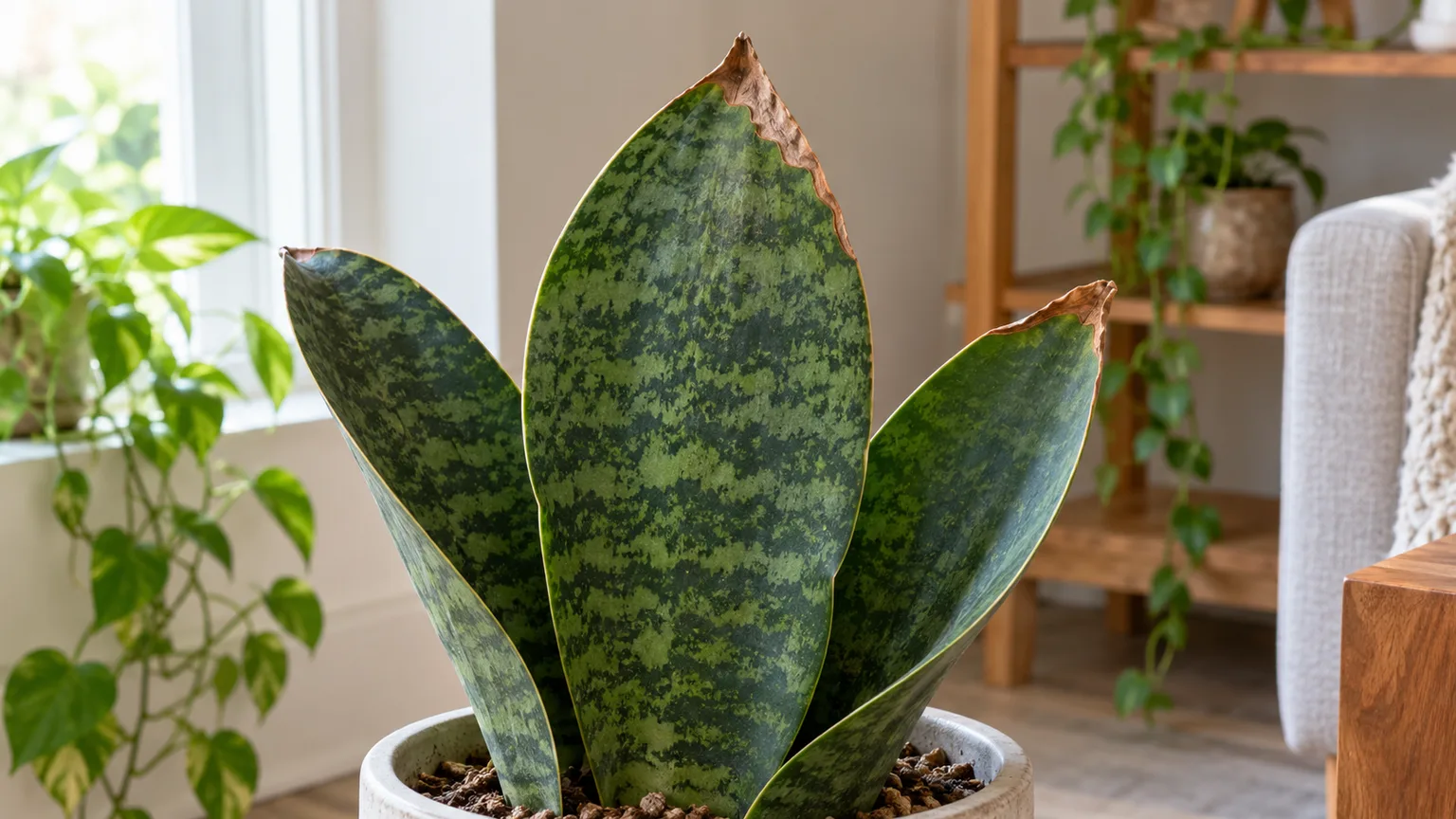
Brown Tips on Whale Fin Snake Plant: Causes, Checks & Fixes
This guide covers brown tips on Whale Fin Snake Plant. See also the general Brown Tips guide, watering, and light pages for this plant.
Brown Tips on Whale Fin Snake Plant: Causes, Checks & Fixes
Quick answer
Brown tips on a Whale Fin Snake Plant are almost never a humidity emergency. On Dracaena masoniana — a plant that often carries its whole display on one enormous paddle leaf — crispy edges usually mean one of three things: the root zone swung too dry between drinks, fluoride or fertilizer salts concentrated in the mix, or the broad blade took sudden harsh sun. For how tip burn works in general across houseplants, see our brown tips guide. On a whale fin, the pattern shows up differently because there is so little leaf to spare, so read the paddle before reaching for the watering can.
Your first move: press the paddle base at the soil line. If it is firm, probe the mix to the bottom and lift the pot for weight. Dry throughout means a deep soak is safe; white crust on the surface means salts are involved and the soak should be a full leaching flush. If the base is soft or the mix smells sour, stop — that is rot, not edge burn, and watering more will finish the rhizome.
What brown tips look like on a Whale Fin
On a clumping snake plant, a browned tip on one blade among dozens is background noise. On a whale fin, which the Missouri Botanical Garden notes produces only one or two leaves per rhizome, the same damage dominates the whole plant. Expect dry, papery, tan-to-brown edges that start at the leaf tip or the outer rim of the paddle and creep inward. The affected margin feels crisp and thin, while the rest of the blade stays rigid and waxy — that firm-center-plus-crisp-edge combination is the signature of tip burn rather than rot.
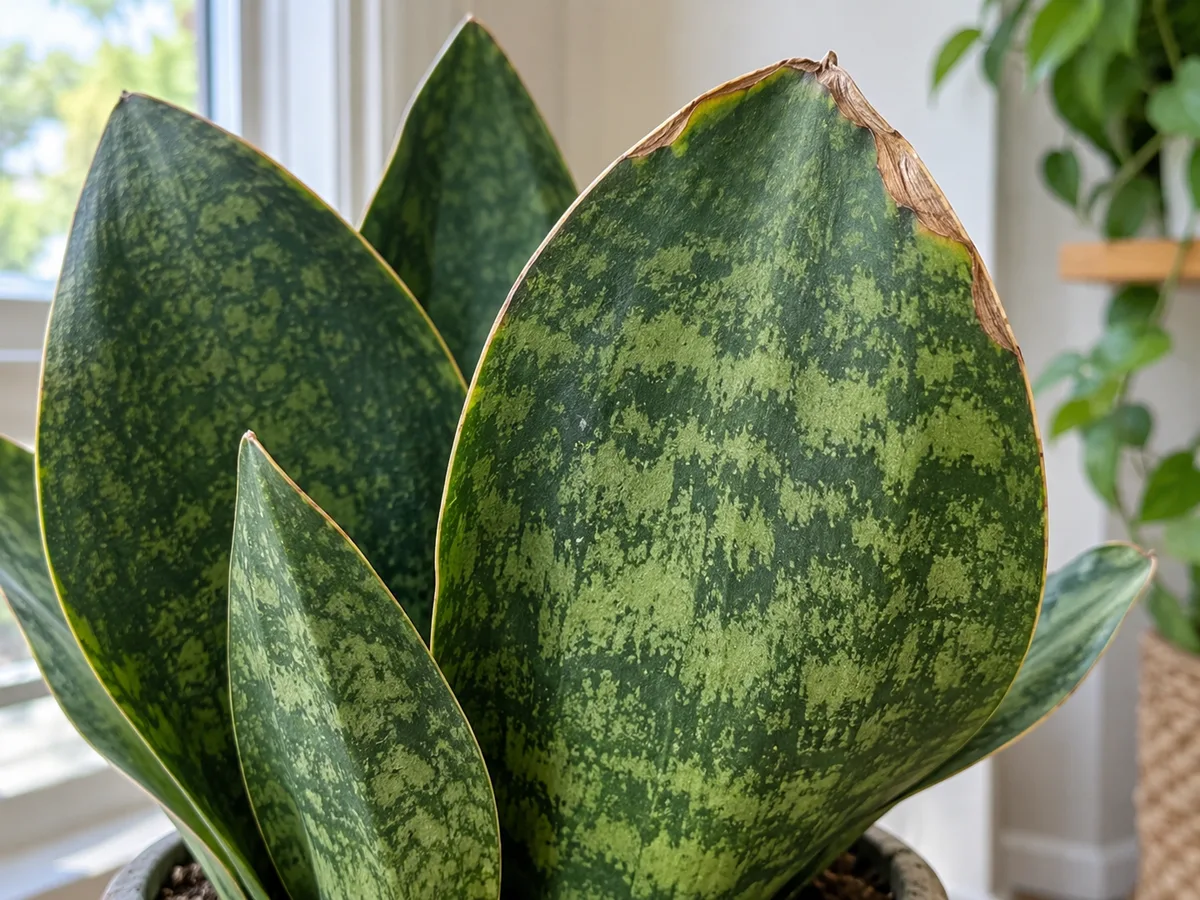
Crisp brown margins on a firm whale fin paddle — compare with healthy waxy tissue on the same leaf.
Tip burn from dryness or salts looks different from the other ways a paddle browns. Sun scorch lands as bleached white-yellow patches on the face that caught direct afternoon beams, often within days of a move. Cold damage shows as dark water-soaked areas after a chill near glass. Rot starts at the base with soft, translucent tissue and a sour smell — never confuse that spreading softness with a dry crispy rim. If the paddle base is firm and only the far edges are papery, you are dealing with tip burn and the fixes below apply.
Why a Whale Fin gets brown tips
Three pieces of masoniana biology explain nearly every case, and all three differ from generic houseplant advice.
One giant paddle means one unforgiving water budget
Each whale fin leaf is a living reservoir 3 to 4 feet long and 8 to 10 inches wide at maturity. Water the plant too rarely and the leaf draws down its own margins first — tips crisp while the center still looks fine. Keep the mix wet and feeder roots suffocate, which also starves the margins even though the pot feels damp. Both extremes brown the same far edges of the same single leaf, which is why the whale fin watering guide insists on judging dryness at root depth rather than by the calendar or the paddle’s appearance.
Dracaenas are fluoride-sensitive — and whale fins show it on the margins
This is the cause most generic guides miss. Dracaena species are very sensitive to fluoride toxicity, and fluoride acts as an accumulative poison that travels in the transpiration stream and lodges in leaf margins. Municipal water dosed around 1 ppm for dental health is enough to injure sensitive foliage over time. On a whale fin, the symptom is textbook: brown necrotic tips and margins on an otherwise healthy paddle. Dracaenas are the classic example of fluoride-sensitive houseplants, so if your care is otherwise steady and tips keep crisping, the faucet deserves suspicion before the fertilizer bottle does.
Salts concentrate in a pot that never gets flushed
Hard tap water and routine feeding both leave minerals behind as water evaporates. In a fast-draining gritty soil mix this matters less; in a peat-heavy nursery mix watered in light sips, salts build until roots struggle to take up moisture. Excessive drying between waterings can also lead to brown tips and margins, especially if fertilized too much — the dry-salty combination is worse than either alone. A white crust on the surface or rim is the visible confession. The Missouri Botanical Garden’s indoor-plant guidance warns that plants kept dry can be damaged by soluble salt concentrations and recommends leaching as part of the watering program, letting water drain through and discarding the runoff rather than letting the pot reabsorb it.
Sun and cold play supporting roles. Direct sunlight can scorch the broad paddle, and Penn State Extension likewise advises snake plants be kept out of the direct sun, as it can burn. Cold below about 55°F damages tissue that later browns at the edges. Neither is the usual suspect indoors, but both should be ruled out when browning appears within days of a move.
How to confirm the cause
Work this order before changing anything. It takes minutes and prevents the classic error of flushing a rotting plant or soaking an already-salty one without draining.
- Paddle base firmness. Squeeze gently at the soil line. Firm means tip burn; soft or translucent means rot — switch to the overwatering guide and the root-rot guide instead.
- Moisture at depth. Push a wooden skewer to the bottom of the pot. Clean and dry means the plant is ready for water; damp soil days after watering means the interval or the mix is the problem, not dryness.
- Pot weight. Lift now and compare with how the pot felt after its last thorough soak. Feather-light confirms a dry-down gap; still heavy confirms stagnation.
- Salt evidence. Check for white crust on the mix surface, the rim, or the saucer. Note fertilizer in the last month and whether you ever flush the pot fully.
- Water source. Fluoridated or very hard municipal water plus recurring tip burn on healthy leaves is a meaningful pattern for a dracaena. Note whether you use tap, filtered, or rainwater.
- Light history. Did the paddle move to stronger sun in the last two weeks, or sit against hot glass? Scorch clusters on the sun-facing side, not evenly on all tips.
- Temperature. Nights near cold glass below roughly 55°F darken tissue differently from slow drought crisping — check placement before blaming water.
Match the pattern, then apply exactly one fix.
The first fix to try
If the paddle base is firm and there are no rot signs, give one deep leaching soak with plain room-temperature water: carry the pot to a sink, water slowly until a generous volume runs from the drainage holes, let it drain for 10–15 minutes, empty the saucer completely, and do not let the pot sit in runoff. This single action rehydrates a dry root zone and carries accumulated salts out at the same time, which covers the two most common causes in one pass. Then wait until the mix is dry throughout before watering again, following the dry-down rhythm in the whale fin watering guide.
Do not apply this fix if the base is soft, the mix smells sour, or water pools without draining — a pot that cannot drain turns a flush into a drowning. Those signs mean root trouble, and the correct first action is unpotting and inspection, not more water.
Step-by-step recovery by cause
After a dry-down gap. Resume soak-and-dry: water deeply only when a depth probe comes out clean and dry, and drain fully every time. Small pots in bright warm rooms may need checking every two to three weeks in summer; cool dim rooms stretch far longer. New growth emerging with clean margins over the next month confirms the rhythm is right.
After salt or fluoride buildup. Pause all fertilizer until new growth looks normal. Flush as described above, repeating once after two to three weeks only if crust returns and drainage is genuinely fast. If browning recurs despite flushing, switch to rainwater, distilled, or filtered water for a month or two — standard references note fluoride can be removed by reverse osmosis, condensation, or charcoal filtration, where resting water overnight cannot. Feed afterward only at low strength during warm active growth, since dracaenas need low levels of fertilization, especially under lower light.
After sun scorch. Pull the paddle back from direct beams or filter with a sheer curtain, and acclimate any future light increase over two to three weeks. Scorched patches are permanent, so judge the move by new tissue, not old scars. Details on placement live in the whale fin light guide.
After cold exposure. Move to a stable warm spot away from glass and drafts, and hold water until the mix dries — chilled roots use almost nothing. Trim only fully dead tissue once firm boundaries form.
Recovery timeline
Drought-related tip burn usually stabilizes within one to two proper watering cycles, with cleaner new margins visible over the next four to eight weeks — slow, in line with masoniana’s genuinely unhurried growth habit. Salt recovery takes longer: expect two to four weeks after a good flush before new tissue proves the root zone is clean. Fluoride-related browning fades only on leaves produced after the water switch, since accumulated fluoride does not leave old tissue.
Existing brown edges never re-green. Success means the damage stops spreading and the next leaf or pup emerges clean. If the whole paddle keeps crisping inward despite correct watering and clean water, unpot and inspect the rhizome — hidden root loss mimics tip burn until the base finally softens.
Lookalike symptoms to rule out
| Pattern | Likely cause | First step |
|---|---|---|
| Crispy tips, dry deep soil, firm base | Underwatering gap | Deep soak, then dry-down schedule — see underwatering |
| Crispy tips, white crust, recent feeding or hard water | Salt or fluoride burn | Stop feeding; leach once if drainage is fast |
| Tips plus soft base, sour mix, wet soil | Root rot / overwatering | Stop watering; inspect rhizome — see overwatering |
| Bleached patches on the sun-facing side after a move | Sun scorch | Filter light; acclimate gradually |
| Whole-leaf yellowing from the base upward | Natural aging or overwatering | Compare with yellow leaves |
| Pale thin growth in a dim corner with persistent tips | Low light stalling dry-down | Raise brightness before adjusting water |
Overwatering is the top reason snake plant tips brown according to practical grower experience, with underwatering and dry air close behind — which is exactly why the base-firmness check comes before any other step.
What not to do
Do not mist the paddle and expect tips to recover. Whale fins tolerate ordinary indoor air, and wet foliage in still air invites spotting without fixing roots or salts.
Do not feed a browning plant to “green it up.” Fertilizer during stress concentrates the very salts burning the margins; Penn State’s guidance to fertilize monthly applies to the growing season on a healthy plant, not a stressed one.
Do not cut deep into green tissue when trimming. Leave a hairline of brown so the wound seals instead of browning fresh.
Do not repot, prune, flush, and relocate in the same week unless rot forces surgery. One correction at a time lets you read the response — the repotting guide can wait until the plant stabilizes.
Do not keep a fluoride-sensitive dracaena on fluoridated tap water out of habit once the pattern is clear. Resting water overnight off-gasses chlorine but does not remove fluoride.
How to prevent it next time
Prevention for a whale fin is plumbing and rhythm, not humidity gadgets.
- Water by depth, not by date. Soak only when the whole root zone tests dry, drain fully, and empty the saucer — the same discipline Penn State Extension summarizes as water only when it is dry, noting you can neglect water for a month with little harm but kill the plant quickly by overwatering.
- Flush on schedule. Every few waterings during active growth, water until plenty runs through and discard it, especially with hard tap water or regular feeding.
- Feed lightly in season only. Half-strength balanced fertilizer during warm active growth, none in winter dormancy, and never on dry or stressed roots.
- Match water to sensitivity. If tips recur, switch to rainwater or filtered water and keep a note of which source the plant receives.
- Keep drainage honest. A pot with drainage holes in gritty mix, per the soil guide, plus the bright indirect placement that dries the pot predictably, prevents the wet-salty root zone where tip burn starts. Old leaves do age out — yellow or brown leaves can also be normal as the plant diverts energy to new growth — so treat one aging edge as information, not alarm.
When to use this page vs other Whale Fin Snake Plant guides
- Whale fin overview — Start here for whole-plant context: paddle biology, masoniana vs trifasciata, and toxicity.
- Whale fin problems hub — Browse all 16 documented issues when the symptom does not clearly match tip burn.
- Underwatering on whale fin — Use when the pot is bone-dry and the paddle wrinkles; overlaps with drought-driven tips.
- Overwatering on whale fin — Use when the base softens or soil stays wet; rot overrides cosmetic tip fixes.
- Yellow leaves on whale fin — Use when whole leaves yellow rather than just margins crisping.