Low Humidity on Whale Fin Snake Plant: Causes, Checks &
Quick answer
Low humidity rarely harms a Whale Fin Snake Plant, which tolerates average indoor air. Check soil moisture, heat-vent exposure, and pests first. First step: move the pot out of direct hot or cold air blasts and confirm the soil is not bone dry.
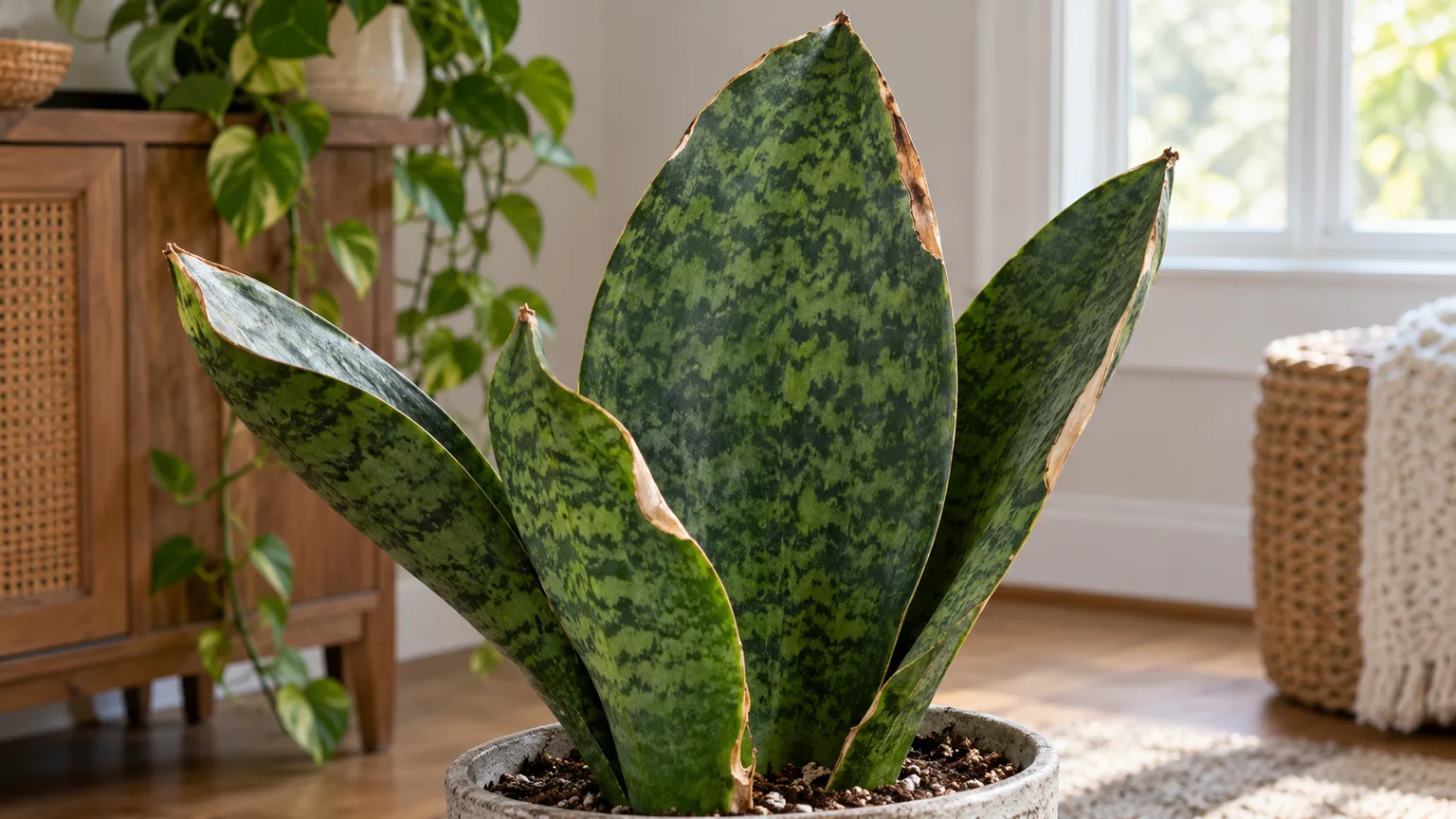
Low Humidity on Whale Fin Snake Plant: Causes, Checks & Fixes
This guide covers low humidity on Whale Fin Snake Plant. See also the general Low Humidity guide, watering, and light pages for this plant.
Low Humidity on Whale Fin Snake Plant: Causes, Checks & Fixes
Quick answer
A Whale Fin Snake Plant (Dracaena masoniana) is one of the last houseplants to blame on dry air. Its paddle leaves are thick, stiff, and waxy water reservoirs, so the plant is very drought tolerant and stays comfortable at the average household humidity between 30 and 50 percent most homes already have. When edges turn brown and papery in winter, the real culprit is usually underwatering, a heat vent blasting the leaf, fertilizer salt buildup, or spider mites exploiting dusty dry conditions.
Scope note: this page covers dry-air stress and its lookalikes on whale fin specifically. For general moisture-in-air mechanics that apply to any houseplant, see our low humidity guide. On whale fin, the pattern usually shows up as slow papery edging on an otherwise firm paddle, not wilting or collapse, and the fix is placement and watering rhythm rather than a humidifier.
First step: move the pot out of any direct hot-air or cold-draft blast, then check soil moisture. Do not mist, do not repot, and do not buy a humidifier until you have ruled out dry soil and pests. One placement correction tells you more than three simultaneous treatments.
What low humidity looks like on Whale Fin Snake Plant
A healthy whale fin paddle stands upright with a smooth waxy surface, dark green mottling, and a firm feel when you squeeze it gently near the base. Because each leaf stores water, genuine dry-air damage is slow and cosmetic: the outermost leaf margin dries into a thin tan or brown papery rim, sometimes with small splits along the edge. The center of the paddle stays rigid and evenly colored.
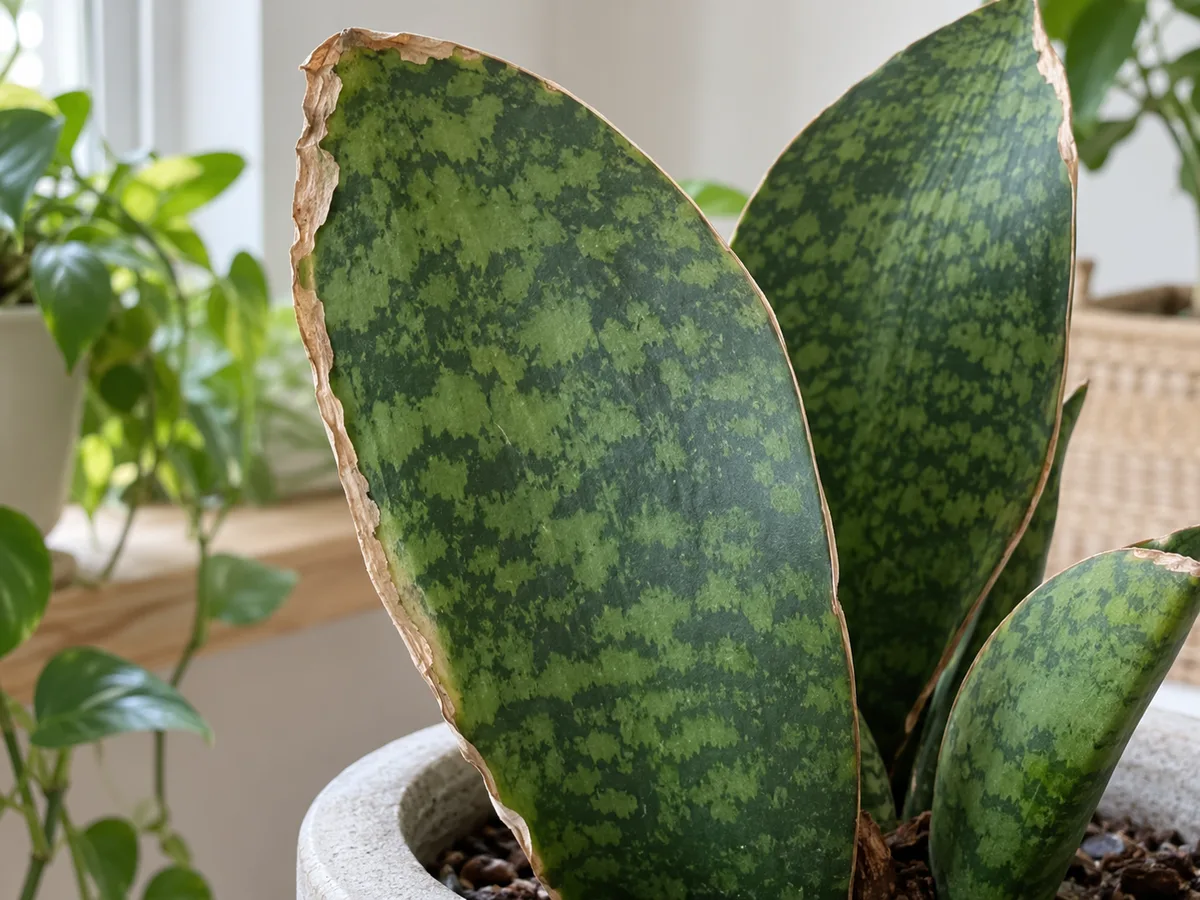
Papery brown edging on a firm whale fin paddle — compare with soft or yellow tissue, which points to water or root trouble instead.
Typical signs include:
- Thin papery brown rims along the outer paddle margin while the leaf center stays firm
- Tiny edge splits on older, larger paddles after weeks near a radiator or heating vent
- Dull dusty film on the broad leaf surface, sometimes with fine webbing at the leaf base
- Slower pup production through a dry heated winter, with no softness or smell at the soil line
- Crispy leaf tips on the tallest paddle only, where hot air pools near the ceiling
What you will not see from humidity alone: mushy leaf bases, yellowing that starts at the soil line, or a paddle that folds and collapses. Those patterns belong to overwatering and root rot, which kill whale fins far faster than any dry air. Compare your plant against the Whale Fin Snake Plant overview for the firm upright silhouette a healthy paddle should hold.
Why a whale fin barely notices dry air
The paddle is a water tank, not a tropical leaf
Dracaena masoniana evolved as a rhizomatous perennial from tropical Central Africa with leaves built like succulent storage organs: paddle-shaped leaves up to 3 to 4 feet long with a thick waxy cuticle that throttles transpiration. A single-leaf specimen may transpire less in a week than a fern does in a day, so room humidity in the 30 to 50 percent range simply does not stress it. The species is even described as adaptable to 30 percent humidity, and growers note snake plants are comfortable at normal household humidity levels with no misting or humidifier required.
This is the central diagnostic fact of this page: if your whale fin looks bad in dry indoor air, humidity is the least likely cause. NC State lists the ideal for masoniana at humidity levels of at least 50%, yet the same plant coasts through heated apartments all winter because its storage tissue buffers the gap. Treat a “low humidity” diagnosis on this plant as guilty-until-proven-innocent, and check everything below first.
Heat vents and winter air deliver the real damage
Dry air becomes a genuine problem only when it arrives as a concentrated blast. A paddle parked beside a radiator, above a floor vent, or in front of a forced-air heater loses moisture from one edge faster than the rhizome can resupply it, producing the asymmetric crispy rim that readers mistake for ambient humidity. Cold drafts do parallel damage: exposure below 55 degrees Fahrenheit can injure tissue that then browns like a dry edge. Both are placement injuries, not room-climate failures, and both resolve by moving the pot rather than humidifying the room.
Dust plus dry air invites spider mites
The one dry-air-associated threat worth taking seriously is pests. NC State advises growers to monitor for spider mites, scale, mealybugs, thrips, and aphids on this species, and spider mites in particular build up fastest on dusty leaves in warm dry rooms. A broad whale fin paddle collects a remarkable film of dust, which both hides early stippling and shelters mites. If your “humidity damage” comes with fine webbing where the paddle meets the soil or a sandpapery feel to the leaf surface, you are looking at spider mites, not a humidity deficit.
How to confirm the cause
Work through these checks in order before changing anything:
- Feel the soil at the bottom, not the top. Push a finger or chopstick to the base of the pot. Bone dry throughout plus a slightly wrinkled or puckered paddle means underwatering, the commonest mimic — water deeply per the whale fin watering rhythm and skip humidity tactics.
- Map the heat sources. Is the damaged edge the one facing a radiator, floor vent, space heater, or a cold leaky window? One-sided browning that tracks an air current is a placement injury.
- Inspect for mites with a flashlight. Hold white paper under the paddle and tap the leaf sharply; moving specks confirm mites. Look for fine webbing in the crevice where the paddle meets the soil sheath.
- Review feeding and water quality. Crispy tips that appeared after fertilizing point at salt buildup rather than air — this plant is a light feeder, and excess salts burn the same margins that dry air gets blamed for.
- Check light history. A paddle recently shifted into direct sun can scorch, and direct sunlight can scorch the leaves. Scorch makes bleached tan patches on the sun-facing side; cross-check not enough light if the plant was also moved recently.
If the soil dries on a normal multi-week rhythm, no pests appear, and the browning sits on the vent-facing edge of an otherwise rigid paddle, dry moving air is confirmed — and relocation is the whole fix.
The first fix to try
Move the pot three to six feet from the heat source or draft, keeping the same window orientation so light does not change at the same time.
That single move is the first fix. Do not mist the paddle, do not set up a pebble tray, and do not repot. Sansevierias like low humidity — the RHS explicitly advises never misting them and keeping them out of steamy bathrooms — so adding surface moisture risks leaf spotting while proving nothing. Give the plant two weeks in the calmer spot; if the browning rim stops advancing, the diagnosis is settled without any gadget.
Step-by-step recovery
Once the plant is out of the blast zone, secondary steps rebuild its margin of safety:
- Water correctly for a storage leaf. The growing medium should be allowed to dry out between waterings, then soaked thoroughly until water drains freely. A whale fin in a gritty mix may need water only every few weeks — match the soil and drainage setup to that rhythm rather than watering little and often.
- Dust the paddle. Wipe both faces of each leaf with a damp cloth, supporting the blade from behind so the heavy paddle does not crack at the base. Clean leaves transpire normally and reveal new stippling early.
- Treat mites only if confirmed. If the tap test showed mites, follow the spider mites guide: isolate, rinse the paddle, and repeat treatment on schedule. Do not spray a mite-free plant “just in case.”
- Flush salts if you fertilize heavily. If tips browned after feeding, run plain water through the pot until it flows freely from the drainage holes, let it drain completely, and pause feeding until spring growth resumes.
- Trim only what is fully dead. Snip completely papery rim tissue with clean scissors, leaving a thin brown margin rather than cutting into green. Damaged edges never regreen, but tidy trimming stops splits from traveling.
Do not repot during recovery. A whale fin with a stable root zone recovers in place; fresh mix around stressed roots only adds rot risk.
Recovery timeline
Brown edges are dead tissue and will not heal. Judge recovery by whether the damage stops and new growth looks right.
| Phase | What to expect |
|---|---|
| Weeks 1–2 | No new browning along the rim; paddle feels as firm as before the move |
| Weeks 3–6 | Existing splits stay static; dust-free leaf surface looks glossier in good light |
| Months 2–6 | A new pup or paddle emerges firm and evenly colored during the growing season |
| Winter | Growth may stall entirely; stasis with no spread counts as success until spring |
Worsening signs: browning that advances week to week despite relocation, softness or translucency spreading up from the leaf base, sour-smelling mix, or stippled yellowing plus webbing. Recheck root rot if bases soften, or the mite guide if webbing appears.
Lookalike symptoms to rule out
| Pattern | Paddle feel | Soil / pot | Likely cause | Next step |
|---|---|---|---|---|
| Papery rim on firm paddle, vent-facing side | Rigid center | Normal dry-down | Dry moving air | This guide — relocate |
| Wrinkled puckered paddle, crispy tips | Thirsty-flexible, thin feel | Bone dry throughout | Underwatering | Underwatering |
| Soft yellow base, sour mix | Mushy at soil line | Heavy, stays wet | Overwatering / rot | Overwatering |
| Fine webbing, stippled dots, dusty film | Sandpapery surface | Any | Spider mites | Spider mites |
| Bleached tan patch, sun-facing side | Firm but pale | Normal | Sun scorch | Filter light, keep placement |
| Even brown tips after feeding | Firm | White crust on mix surface | Fertilizer salts | Flush, pause feeding |
Mistakes to avoid
- Misting the paddle. It adds nothing this species wants and leaves water sitting on waxy tissue in cool rooms, inviting spots. Experienced growers agree no special attention to humidity is needed for these plants.
- Buying a humidifier for a succulent leaf. Room humidity was never the limiting factor; the money is better spent on a gritty mix or a better pot position.
- Watering more because the air feels dry. The paddle stores its own water. Extra drinks in winter keep the rhizome wet while the leaf looks thirsty — the classic path to rot.
- Sealing the plant in a steamy bathroom. Whale fins want airflow, not steam; a windowless humid bathroom trades a cosmetic rim for fungal and rot pressure.
- Cutting into green tissue to “tidy” edges. Trimming live margin opens wounds on a slow-growing leaf that takes a year to replace.
- Treating for mites without confirming them. Blanket spraying a dusty but mite-free paddle wastes effort and stresses the plant for no gain.
How to prevent it next time
Site the plant where air moves gently but never blasts: a few feet back from south or west glass, clear of radiators, floor vents, and exterior doors that leak winter air. Keep the light bright and indirect so the paddle stays thick enough to buffer normal indoor dryness. Dust the leaf monthly and water on the bone-dry rhythm, and dry seasons will pass unnoticed — which is exactly how this species prefers them.
When to worry
Dry-air edging alone is cosmetic and never an emergency. Worry when a single-paddle specimen softens at the base, when browning races across the leaf in days rather than weeks, or when mites spread to neighboring plants. Those are structural and pest emergencies layered on top of dry air, and they need the rot or mite guides the same week — not a humidity dial.
Related Whale Fin Snake Plant guides
Use this page for dry-air edging and its mimics; follow the link that matches what you see:
- Whale Fin Snake Plant overview — species baseline and healthy paddle silhouette
- Problems hub — full problem index when several symptoms overlap
- Underwatering — wrinkled paddles and bone-dry mix, the top mimic
- Overwatering — soft bases and wet soil that humidity never causes
- Root rot — mushy rhizome rescue when water damage is confirmed
- Brown tips — salt burn and tip dieback detail
- Spider mites — tap test, rinse, and treatment schedule
- Whale Fin Snake Plant watering — bone-dry rhythm for a storage leaf
- Whale Fin Snake Plant light — bright indirect placement that thickens paddles
Conclusion
Low humidity is rarely the real story on a Whale Fin Snake Plant: thick storage paddles handle ordinary indoor air, and the RHS notes these plants actively prefer it dry. Confirm the pattern by ruling out underwatering, vent blasts, salts, scorch, and mites; relocate out of the air current as the single first fix; and judge recovery by arrested browning and clean new growth. Skip the mister, keep the leaf dusted, and let the paddle do what it evolved to do — hold water through the dry months.
How we wrote and verified this guide: Recommendations were checked against NC State Extension, the Royal Horticultural Society, The Spruce, Costa Farms, and Ohio Tropics references cited inline. Author: sai-ananth. Reviewer: LeafyPixels Review Board. Methodology: plant problem guidance is reviewed against botanical references, extension resources, and LeafyPixels plant-care data before publication. Claims validation: claims-validator-v1 pass with inline external links documented below. Last reviewed: 2026-09-08.