Mealybugs on Whale Fin Snake Plant: Checks & Fixes
Quick answer
Mealybugs on a Whale Fin Snake Plant show up as white cottony clumps tucked into the base crease, between overlapping paddles, or along the soil line, sometimes with sticky honeydew on the leaf. First step: isolate the plant and dab each visible insect with an alcohol-dipped cotton swab, then re-check weekly before reaching for any spray.
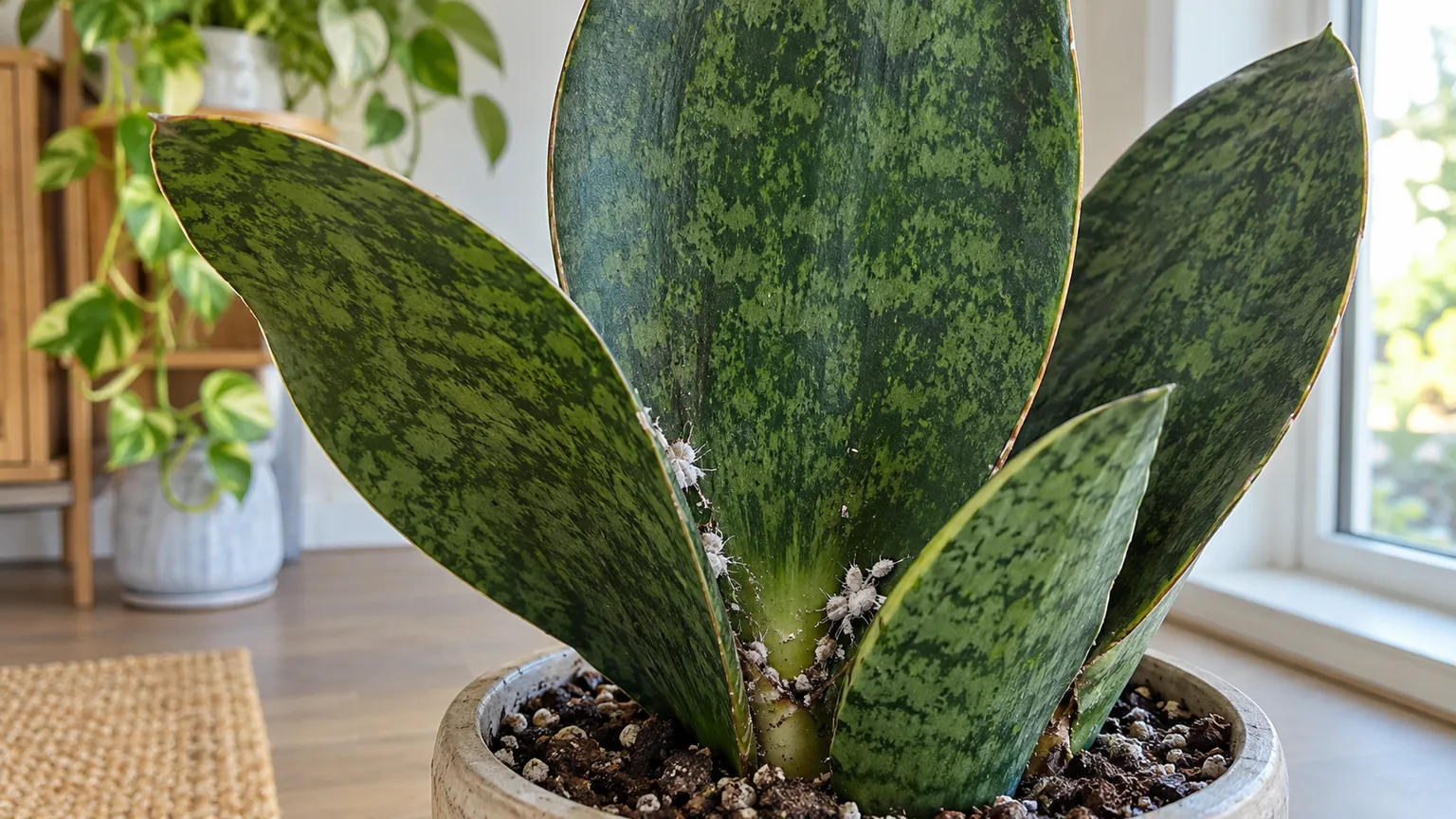
Mealybugs on Whale Fin Snake Plant: Causes, Checks & Fixes
This guide covers mealybugs on Whale Fin Snake Plant. See also the general Mealybugs guide, watering, and light pages for this plant.
Mealybugs on Whale Fin Snake Plant: Causes, Checks & Fixes
Quick answer
A Whale Fin Snake Plant (Dracaena masoniana) looks armored, but NC State Extension lists mealybugs among the main threats to watch for on it. Expect white cottony clumps lodged where the paddle meets its sheath, between pressed-together leaves, or near the soil line, sometimes with a sticky film on the leaf below.
First step: isolate the plant, then dab each visible insect with an alcohol-dipped cotton swab. Do not pour water through the pot, repot, or spray anything on day one. A targeted dab kills what you can see without soaking the gritty mix this plant needs kept dry. For the general biology of this pest across houseplants, see our mealybugs guide. On a Whale Fin, the pattern usually shows up as hidden base-crease colonies rather than insects out in the open.
What mealybugs look like on a Whale Fin paddle
On a broad, waxy paddle, mealybugs read as small tufts of white cotton sitting on the surface, most often a few millimeters across and clustered rather than scattered. Part the fluff with a toothpick and you will find tiny oval, segmented bodies or orange-pink eggs underneath. Fresh honeydew feels tacky to the touch and may carry a thin black sooty film.
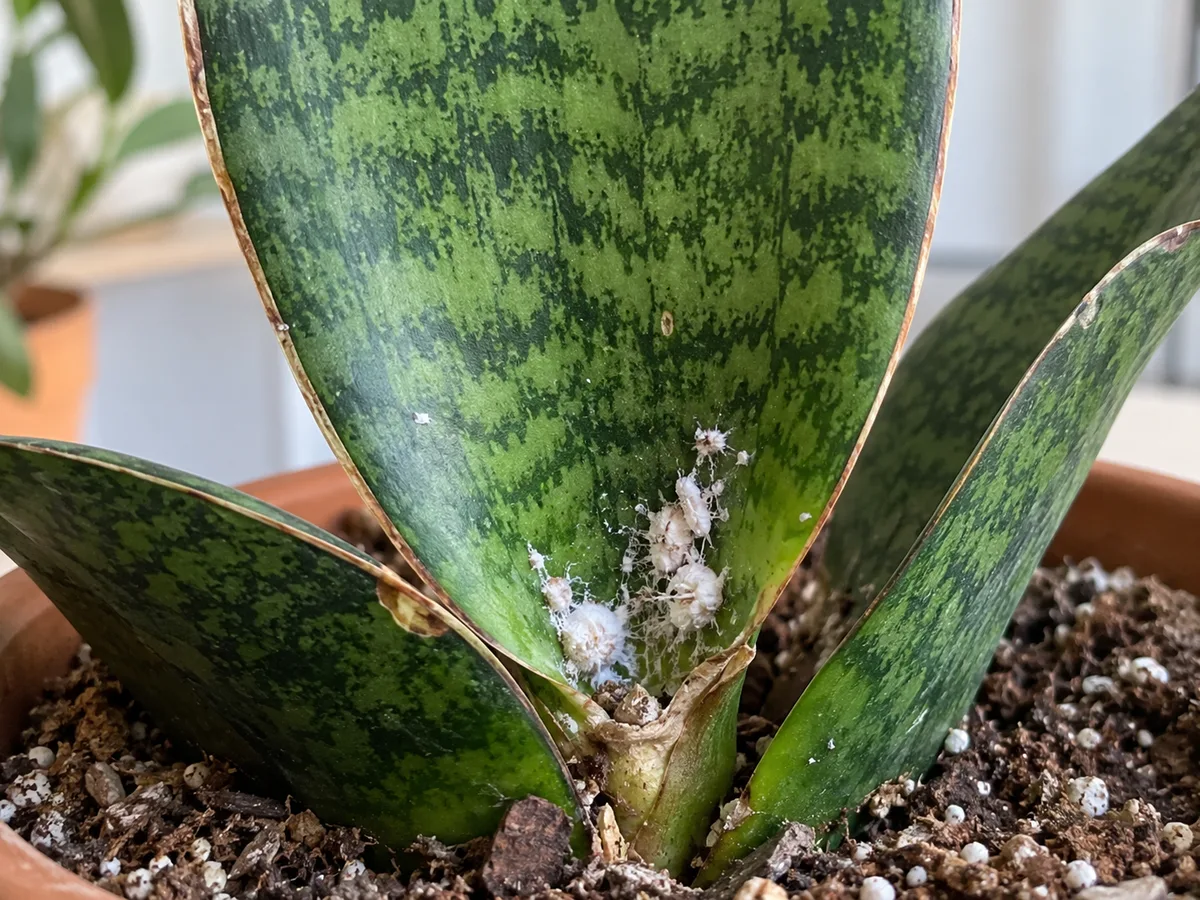
White cottony mealybug masses packed into the base crease of a Whale Fin paddle, with sticky honeydew sheen on the leaf below. The broad light-green patches are the leaf’s natural mottling, not damage.
The RHS describes glasshouse mealybugs as first noticed by fluffy white wax in leaf axils and other sheltered places, which matches a Whale Fin exactly: the purple-banded sheath at the soil line and the tight fold where the paddle emerges are this plant’s version of a leaf axil. Because the paddle is so large and dark, small colonies are easy to miss until honeydew or sooty mould gives them away.
Why mealybugs settle on a Whale Fin
UC IPM names dracaena among the houseplants that often have problems with aboveground mealybugs, and notes that indoor plants are especially vulnerable because mild year-round temperatures let all life stages persist while natural enemies are absent. Three things about a Whale Fin make that setup comfortable:
- Months between close inspections. Whale Fin is famously slow and low-fuss, so nobody looks at the base crease for weeks. A female can lay hundreds of eggs in one cottony sac, and Epic Gardening notes the newly hatched crawlers wander to fresh spots, so one overlooked sac becomes several colonies.
- Sheltered architecture. A single paddle can run 3 to 4 ft long and 8 to 10 in wide, per NC State, and mature clumps press paddles and pups together. UC IPM says mealybugs favor protected spots such as crowns, crotches, and stems near the soil, and a Whale Fin is nearly all protected spots.
- Soft growth from kindness. Colorado State’s houseplant guide advises growing plants under conditions that allow moderate growth, because the soft succulent tissue mealybugs favor follows overfeeding. A Whale Fin pushed with fertilizer in weak light produces exactly the sappy tissue crawlers prefer. Keep feeding minimal and confirm placement in bright indirect light first.
New plants are the usual entry point. Colorado State notes that mealybug, scale, and whitefly infestations are almost always established from recently purchased or gifted plants, which is why quarantine matters more than any spray schedule.
Where mealybugs hide on a Whale Fin
This plant has few leaves but many hiding places. Check all of them in this order:
- The base crease. Where the paddle emerges from the purple-banded sheath at the soil line, the leaf folds against its neighbor. Cottony masses and egg sacs gather here first.
- Between overlapping paddles or pups. Contact points between pressed-together leaves are shielded from air and eyes. Separate them gently to look.
- The underside and lower third of the paddle. Colonies work upward from the base, so the lowest few inches are the earliest warning zone.
- The soil line and surface roots. Some species retreat toward roots when conditions turn unfavorable, and Colorado State notes mealybugs may infest roots as well as foliage. White waxy clumps on roots at repot time are the tell.
Tilt the pot rather than bending the leaf, since a thick paddle can crack. When dabbing or rinsing, keep liquid out of the crown crease afterward: the same fold that shelters mealybugs holds water against the rhizome.
Confirm it is mealybugs before you treat
Run these checks in order:
- The wipe test. Rub a suspect tuft with a damp cotton swab. Mealybug wax and insects come off onto the swab; the leaf’s natural mottling does not move.
- The magnifier look. Under a 10x hand lens, confirm segmented oval bodies, fine wax filaments, or tiny mobile crawlers. Orange-pink eggs under the fluff are conclusive.
- The sticky check. Tacky honeydew or black sooty film below the fluff confirms sap-feeding pests. Dust wipes away dry and clean.
Lookalikes on a Whale Fin
| What you see | Likely cause | Key check |
|---|---|---|
| White cottony tufts in the crease, sticky below | Mealybugs | Insects and eggs under the fluff on a swab |
| Flat brown discs stuck tight to the leaf | Scale insects | Shells do not wipe off; no loose cotton |
| Tiny green or black clusters on new pups | Aphids | Soft-bodied clusters with no waxy filaments |
| Fine pale speckles plus thread-like silk | Spider mites | Moving specks on a white-paper tap test |
| Wrinkled, puckered paddle with no insects | Underwatering | Pot is light and soil is bone dry throughout |
| Mushy leaf base with sour smell | Overwatering damage | Soft base, not cottony masses |
Treat as confirmed only when you have seen insects, eggs, or crawlers under magnification. Fluff alone can occasionally be windblown debris or old egg sacs from a dead colony.
The first fix: isolate and dab
Move the Whale Fin away from every other plant you grow, then kill what you can see by hand. Dip a cotton swab in diluted isopropyl alcohol and touch each cottony mass directly so the alcohol contacts the insect beneath the wax. Work through every crease, pup junction, and inch of the soil line, and discard swabs as you go so crawlers do not hitch a ride back.
UC IPM recommends dabbing houseplant mealybugs with 70% or weaker isopropyl alcohol and water, testing a small area first and watching for leaf burn. Colorado State similarly endorses swabbing individual mealybugs and dilute 25 to 50 percent alcohol sprays, with a patch test first, and warns both are strictly contact treatments with no residual action. On a Whale Fin, dabbing beats spraying: you keep alcohol on the insect and off the broad waxy leaf, and you add no moisture to a pot that must dry out fully. Re-inspect with the magnifier two to three days later and dab any crawlers you missed.
If they come back: soap as the second step
If fresh fluff or crawlers reappear after two rounds of dabbing a week apart, move to insecticidal soap applied exactly per the label, covering the base crease and leaf undersides. Colorado State describes insecticidal soaps as dilute one to three percent sprays useful against many houseplant insects, while warning that household detergents risk plant injury. Spray in mild indoor temperatures, never on a sun-baked or water-stressed paddle, and keep runoff out of the pot.
Stop household options after three thorough rounds. Systemic granules and stronger insecticides exist, but dosing a slow succulent-stemmed plant carries real burn and root risk, so get local extension identification help before escalating. If the plant is heavily crusted across multiple creases and pups, Colorado State’s sanitation advice applies: seriously infested plants are often best discarded, since they demand lengthy effort and serve as a source for everything nearby.
Whale Fin care cross-check
Pest stress tempts people to overhaul care. Hold the line on these points:
- Watering. Whale Fin must dry out completely between drinks. Keep that rhythm per the Whale Fin watering guide, and use the overwatering guide if the mix stays heavy. Wet soil invites rhizome rot, which kills faster than mealybugs.
- Light. Bright indirect light keeps the paddle firm and makes fresh fluff easy to spot. See the light guide before moving it, since harsh sun scorches the paddle and adds a second symptom.
- Soil. The gritty fast-draining mix in the soil guide is part of pest defense: it denies root mealybugs the damp organic matter they prefer.
- Fertilizer. Do not feed to push past the problem. Moderate, infrequent feeding avoids the soft succulent growth Colorado State flags as mealybug-favored.
Recovery timeline
Mealybugs mature in roughly two months with overlapping generations indoors, so plan for three to four weeks of weekly checks before calling it done, longer if pups are involved.
- Days 1 to 3: Visible masses gone after dabbing; check for missed crawlers with the magnifier.
- Weeks 1 to 2: No fresh fluff at the base crease. If a soap round was used, apply the follow-up on schedule.
- Weeks 3 to 4: Clean creases, no honeydew, and pups emerging without wax mean the colony is broken.
Old feeding marks and sooty film do not wash back to perfect green. Gently wipe sooty mould off with a damp cloth once insects are gone, and judge the plant by clean new inspections, not by old blemishes disappearing. Whale Fin grows slowly and may add only a few paddles a season, so a static but clean paddle is success.
Mistakes to avoid
- Drenching the pot to fight leaf pests. Extra water risks root rot, the bigger killer of this plant.
- Spraying alcohol across the whole paddle. Blanket alcohol risks leaf burn; UC IPM and Colorado State both insist on testing a small area first.
- Misting into the crown. Water pooling where the paddle meets the sheath invites rot in the same crease you just cleaned.
- Trimming the paddle tip. Cutting removes no insects from the base and leaves a permanent scar on a slow plant.
- Skipping quarantine. One unchecked new plant restarts the whole cycle, so hold newcomers apart for at least three weeks per Colorado State.
- Leaving treated leaves in reach of pets. ASPCA lists dracaena as toxic to cats and dogs, so keep sprayed or dabbed plants out of reach until dry.
How to prevent it next time
Inspect the base crease of every paddle monthly, more often in the warm months when crawlers are most mobile. Quarantine new arrivals for at least three weeks and check them at the end of that period before placement. Keep feeding light so growth stays firm rather than sappy, and wipe the paddle during checks, which removes both dust and first arrivals. If the plant yellows without any fluff or stickiness, work through the yellow leaves guide instead of treating for pests that are not there.
When to use this page vs other Whale Fin guides
- Use this page when you can see or wipe off white cottony masses, especially with stickiness.
- Use the spider mites guide when the damage is pale speckling with silk rather than cotton.
- Use the aphids guide when clusters sit on tender new pup growth without waxy filaments.
- Use the brown tips and underwatering guides when leaf edges crisp with no insects or honeydew.
- Use the all-problems hub when several symptoms overlap and you need to triage.
Related Whale Fin Snake Plant guides
- Whale Fin Snake Plant overview - baseline care and what a healthy paddle looks like.
- Whale Fin watering - how long the mix should stay dry between drinks.
- Whale Fin light - placement that avoids both scorch and weak sappy growth.
- Whale Fin soil - the gritty mix that keeps the rhizome and roots safe.
- All Whale Fin problems - every common issue on this plant.
Related tool
Use the Pest Identifier Tool to narrow causes for mealybugs on this plant before changing multiple variables at once.