Aphids on Whale Fin Snake Plant: Causes, Checks & Fixes
Quick answer
Aphids on a Whale Fin Snake Plant cluster on the softest tissue available: emerging pups, the leaf-base crease, or a flower stalk, leaving sticky honeydew on the broad paddle. First step: isolate the plant, blast the colony off with a strong spray of water, and wipe the paddle dry without letting water pool at the crown.
Aphids on Whale Fin Snake Plant: Causes, Checks & Fixes
This guide covers aphids on Whale Fin Snake Plant. See also the general Aphids guide, watering, and light pages for this plant.
Aphids on Whale Fin Snake Plant: Causes, Checks & Fixes
Quick answer
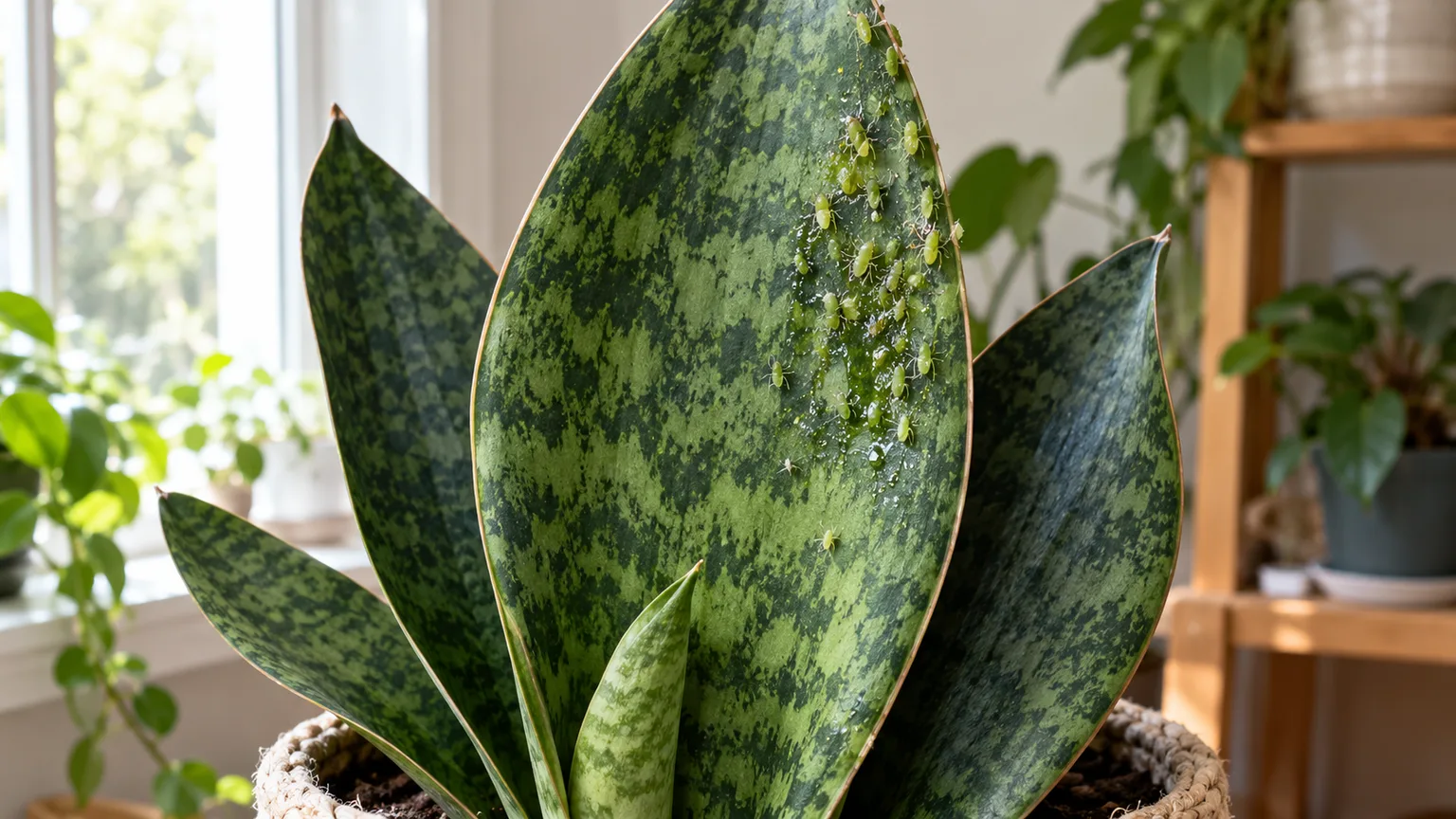
A Whale Fin Snake Plant (Dracaena masoniana) looks too tough for aphids, with a thick, waxy paddle up to 3 to 4 ft long. Aphids agree, which is why they skip the mature leaf face and settle on the only soft tissue the plant offers: an emerging pup, the crease where the paddle meets its sheath, or a rare flower stalk. The giveaway is rarely the insects themselves at first. It is the sticky film of honeydew they leave on the broad paddle below the colony.
First step: isolate the plant, blast the colony off with a strong spray of water, then wipe the paddle dry. Gardening Know How lists aphids among the bugs that eat dracaena and recommends blasting them off with water, and Colorado State University Extension describes washing as effective against aphids, which are most readily dislodged. Do not fertilize, repot, or spray anything on day one. For how aphids behave on houseplants in general, see our aphids guide.
What aphids look like on a Whale Fin
Aphids are soft-bodied insects that pierce tender tissue and suck out fluids, per UC IPM. On a Whale Fin you will find them as a tight cluster of tiny pear-shaped insects, green, black, or pale, packed along a pup spear or tucked into the basal crease. Individuals are small, but a colony plus its sticky residue is easy to spot on a dark paddle held to side light.
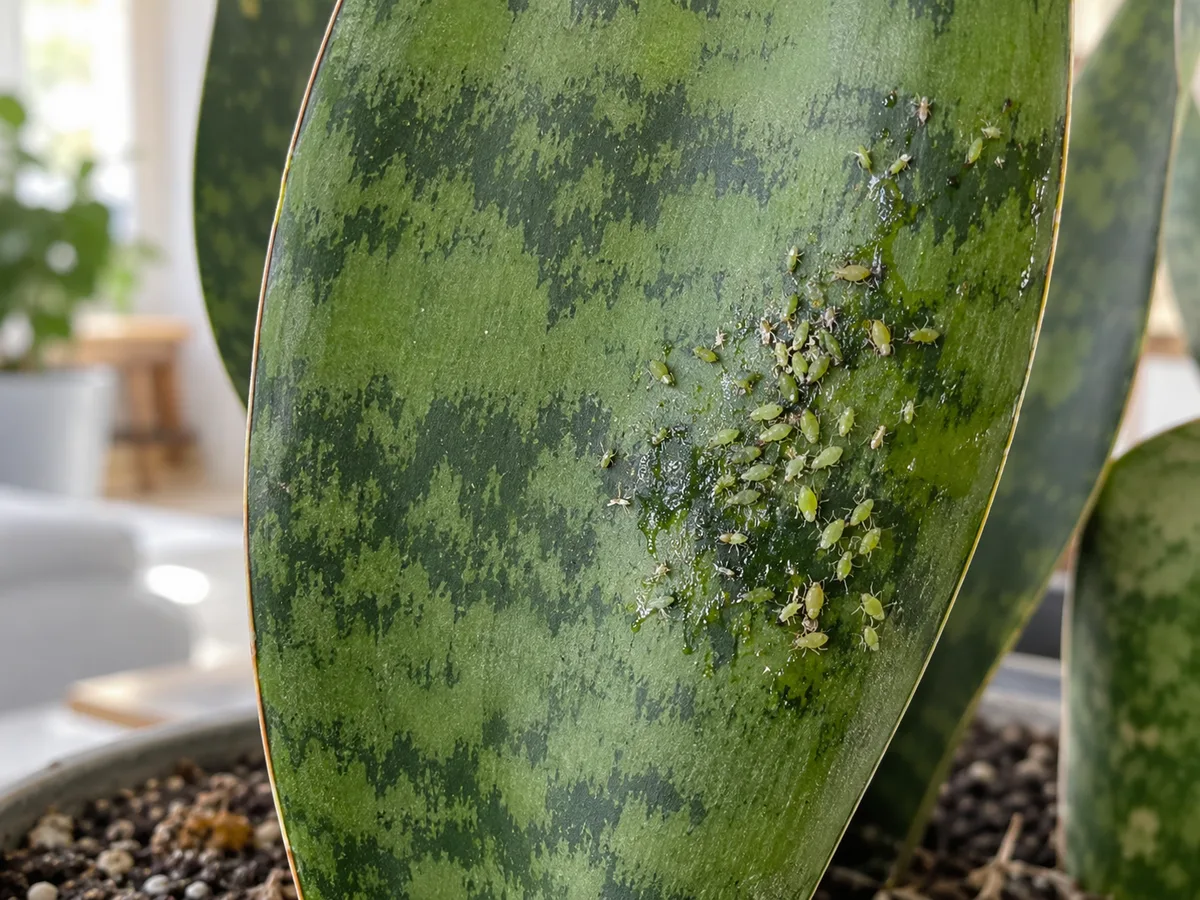
Clustered aphids on soft new tissue with sticky honeydew filming the paddle face. The broad lighter patches are the leaf’s natural mottling, not damage.
The second sign is honeydew: a clear, tacky film on the paddle face beneath the colony. Colorado State notes that aphids feed on plant sap and excrete large amounts of sticky honeydew. On a waxy Whale Fin leaf the film sits on the surface instead of soaking in, so it catches dust and can turn black as sooty mold grows on it, which UC IPM describes as the usual follow-on to honeydew deposits. Ants trailing up the pot to the colony are a third sign worth trusting.
Why a Whale Fin gets aphids
Aphids do not need a sick plant. They need soft new tissue and an entry route, and a Whale Fin supplies both in its own slow way:
- One soft target at a time. The mature paddle is too leathery to pierce comfortably, so the colony concentrates on whatever is unfolding: a single pup spear, which on this slow-growing plant may be the only new tissue for months. One pup can host the entire infestation.
- Soft growth from overfeeding. Nitrogen-heavy feeding pushes exactly the tender shoots aphids prefer. A Whale Fin needs only light spring and summer feeding, so a heavily fed plant is serving aphids their favorite food.
- New plants without quarantine. Indoor aphid outbreaks usually walk in on a recent purchase. Colorado State advises quarantining new houseplants in a separate area for at least three weeks, precisely because hitchhiking pests are the top introduction route.
- Long gaps between close looks. A Whale Fin can go weeks without handling since it wants its mix bone dry between drinks. A colony founded on a pup can coat the paddle in honeydew before anyone bends down to look.
Where aphids hide on a Whale Fin
This plant has almost no small leaves to scan, so the hiding places are few and you can check all of them in two minutes:
- The emerging pup spear. Unfurling tissue is the softest thing on the plant and the first place to look. Part the sheath gently rather than pulling the spear.
- The base crease. Where the paddle emerges from the purple-banded sheath at soil level, the fold shelters colonies from air and casual view.
- A flower stalk, if present. A rare indoor bloom sends up exactly the kind of tender stem aphids colonize outdoors. Check the whole stalk before it opens.
- The underside of the paddle. Colonies spill over here once the prime spots fill. Tilt the pot instead of bending the stiff leaf, which can crack.
The same crease that shelters aphids also holds water, so every wash step below comes with a drying step. Water pooled where the paddle meets the sheath is a rot risk on a plant whose mix must dry out completely between drinks.
Confirm it is aphids before you treat
Run these checks in order:
- Find live insects. Use a 10x hand lens on the pup spear and base crease. Aphids are pear-shaped, mostly stationary, and clustered; they do not jump or fly off when breathed on.
- Touch-test the sticky film. Honeydew feels tacky and smears; it often carries dust or black sooty mold. Plain water spots and natural leaf sheen dry clean and are not sticky.
- Check for ants and cast skins. Ants farming a colony, plus tiny white shed skins stuck in the honeydew, confirm an active aphid population rather than a one-off visitor.
Lookalikes on a Whale Fin
| What you see | Likely cause | Key check |
|---|---|---|
| Clustered pear-shaped insects plus sticky film | Aphids | Tacky honeydew and stationary clusters on pups or crease |
| White cottony tufts in the crease | Mealybugs | Fluff that looks like cotton, not fine insects; see the Whale Fin mealybugs guide |
| Brown immobile bumps on the paddle | Scale | Bumps do not move and scrape off with a fingernail |
| Fine pale stippling with silk at the base | Spider mites | Moving specks on a white-paper tap test, no sticky film |
| Wrinkled, puckered paddle with a dry pot | Underwatering | Pot is light and the mix is bone dry throughout |
| Broad light-green patches in a fixed pattern | Normal leaf mottling | Same pattern on every leaf, no insects or stickiness |
| Mushy leaf base with a sour smell | Root rot | A soft base is not an aphid symptom |
Treat this as confirmed only when you have seen live clustered insects or fresh sticky honeydew with skins or ants. Stickiness alone near a kitchen window, with no insects found under magnification, is a suspected diagnosis worth re-checking in two days.
The first fix: isolate, blast, and wipe dry
Move the plant away from everything else you grow, then wash the colony off. Carry the pot to a sink or shower, tilt it so water runs off the blade instead of pooling at the crown, and direct a strong spray at the pup spear, the base crease, and the paddle underside. UC IPM lists washing among the first responses to aphids, and Gardening Know How specifically recommends a strong spray of water for dracaena pests.
Follow with a soft, damp cloth over the whole paddle to lift honeydew, wiping from base to tip, then let the leaf drip dry in bright indirect light. Drying matters as much as washing here: a Whale Fin that hates wet soil also hates a wet crown, so blot the base crease and keep the pot on its normal dry-down rhythm. Match that rhythm to the Whale Fin watering guide rather than watering to reward yourself for de-bugging.
If aphids come back: soap as the second step
Re-check the pup and crease two days after the wash. If live clusters remain, move to insecticidal soap or horticultural oil applied exactly per label. UC IPM notes that insecticidal soaps and oils are available options for aphids, and Epic Gardening advises repeating treatment to catch survivors and newly hatched insects. Coat the pup spear and crease thoroughly, since that is where the colony lives, and repeat on schedule rather than escalating to a stronger product after one round.
Patch-test on a small area of the paddle first and avoid spraying a heat-stressed plant in a hot room. Keep the routine anchored to how this plant actually lives: hold the dry gritty mix described in the Whale Fin soil guide, keep the light bright but indirect per the Whale Fin light guide, and do not feed until the colony is gone.
Whale Fin care cross-check
Aphids push people to overcorrect, so keep these points straight:
- Watering. Honeydew on the leaf is not thirst. Keep the soak-and-dry-down routine unchanged and rule out moisture stress with the underwatering guide if the paddle is wrinkled as well as sticky.
- Fertilizer. Do not feed a colony away. Soft nitrogen-pushed growth is aphid food; return to the normal light schedule in the Whale Fin fertilizer guide only after the plant is clean.
- Light. Bright indirect light keeps new pups firm and makes honeydew easy to spot early. A sudden move into harsh sun adds scorch to your problems, so check placement against the light guide before shifting the pot.
- Yellowed or spotted leaves. Color change without insects or stickiness belongs to the Whale Fin yellow leaves guide, not to this page.
Recovery timeline
Aphids reproduce fast indoors, so plan for two to three weeks of checks before calling it done:
- Days 1 to 3: Visible insects drop sharply after the wash. Fresh honeydew should stop appearing on a wiped paddle.
- Week 1 to 2: No new clusters on the pup spear. If you used soap, apply the follow-up round on schedule.
- Weeks 2 to 3: Clean inspections twice in a row and a dry, dust-free paddle face mean the colony is gone.
Old damage stays. Distorted pup tissue keeps its shape and sooty-mold staining fades only slowly off the waxy surface. Because Whale Fin grows slowly, judge recovery by what stops happening, new clusters and fresh stickiness, rather than by fast new growth. If clusters keep returning after two full treatment rounds, contact your local extension office for identification help before reaching for anything stronger.
Mistakes to avoid
- Spraying before confirming. Stickiness with no insects under magnification is not yet a diagnosis. Wash and re-check first.
- Pooling water in the crown. Every rinse must end with the base crease blotted and the paddle air-dried, or you trade aphids for rot.
- Fertilizing a colonized plant. Extra nitrogen grows softer pups and more aphid food.
- Repotting on day one. Aphids live on the leaf, not in the mix. Disturbing the rhizome adds stress without touching the colony.
- Skipping quarantine after cleanup. Keep the plant isolated until two clean weeks pass, and keep new purchases separated for at least three weeks per the extension guidance above.
- Leaving sprayed leaves where pets chew. ASPCA lists dracaena as toxic to cats and dogs, so keep treated plants out of reach until the leaf is fully dry.
How to prevent it next time
Quarantine every new plant for at least three weeks and inspect the base crease before it joins the collection. On the Whale Fin itself, check each emerging pup as it appears and wipe the paddle every few weeks, which doubles as an inspection on a plant you otherwise rarely handle. Feed lightly and only in the growing season, hold the dry-down routine steady, and give the plant enough airflow that honeydew cannot sit undisturbed for weeks. See the full baseline in the Whale Fin Snake Plant overview and browse all Whale Fin problems when something looks off.
When to use this page vs other Whale Fin guides
- Use this page when you find clustered insects, sticky honeydew, ants, or sooty mold on or below new growth.
- Use the Whale Fin mealybugs guide when the white substance is cottony tufts rather than sticky film with visible insects.
- Use the Whale Fin spider mites guide when the symptom is pale stippling with silk and no stickiness.
- Use the Whale Fin yellow leaves guide when the paddle changes color without insects, silk, or sticky residue.
- Use the Whale Fin underwatering guide when the paddle wrinkles and the pot is light and dry.
Related Whale Fin Snake Plant guides
- Whale Fin Snake Plant overview - baseline care and what a healthy paddle looks like.
- Whale Fin watering - how long the mix should stay dry between drinks.
- Whale Fin light - placement that avoids both scorch and weak, pest-prone growth.
- Whale Fin soil - the gritty mix that keeps the rhizome safe.
- All Whale Fin problems - every common issue on this plant.
Related tool
Use the Pest Identifier Tool to narrow causes for aphids on this plant before changing multiple variables at once.