Best Indoor Plants for Dry Air
Houseplants that tolerate low humidity from heating, AC, and winter radiators.
Best Indoor Plants for Dry Air
Quick recommendation
Snake plant, ZZ plant, and jade plant handle dry indoor air better than ferns.
Best Indoor Plants for Dry Air
Houseplants that tolerate low humidity from heating, AC, and winter radiators.
Quick recommendation
Snake plant, ZZ plant, and jade plant handle dry indoor air better than ferns.
Dry indoor air—often below 30% relative humidity when heat or AC runs—crispies fern fronds and calathea tips within weeks. The best dry-air houseplants store water in thick leaves, stems, or bulbs and evolved for seasons without rainforest mist.
This guide compares ten species by dry-air tolerance, watering interval, and light needs, with a comparison table, quick picks for common situations, and links to full species care on LeafyPixels. For AC-specific placement, see Best Indoor Plants for AC Rooms.
The ten best indoor plants for dry air for most homes are Snake plant, ZZ plant, Jade plant, Aloe vera, Haworthia, Rubber plant, Ponytail palm, Yucca plant, Christmas cactus, Cast iron plant. They are not interchangeable—some want bright sun, some survive dim corners, and pet safety varies widely.
Forced-air heating and air conditioning remove moisture from rooms. Winter radiators and summer AC both stress thin-leaved tropicals. Extension guides recommend choosing plants matched to your conditions rather than fighting every species with misting. (University of Georgia Extension)
Misting leaves briefly raises local humidity for minutes—not hours. A humidifier helps sensitive plants, but dry-air specialists survive without one.
For maximum neglect tolerance, choose snake plant or ZZ plant.
For sunny dry sills, choose jade plant or aloe vera.
For pet-safe dry desks, choose haworthia.
For sculptural dry corners, choose ponytail palm.
Prioritize succulent-type leaves or water-storing bases, bright light when the species needs it, and pots with drainage. If you must grow ferns in dry air, add a humidifier—do not expect misting alone to work.
Ranked by documented low-humidity tolerance, recovery from missed waterings, and realistic indoor placement—not greenhouse maximums.
| Plant | Best For | Light | Care Level | Main Trade-Off |
|---|---|---|---|---|
| Snake plant | Dry-air champion | Low–bright indirect | Easy | Toxic to pets |
| ZZ plant | Glossy low-humidity pick | Low–medium indirect | Easy | Toxic to pets |
| Jade plant | Succulent tree form | Bright to direct sun | Easy | Needs strong light |
| Aloe vera | Medicinal succulent | Bright to direct sun | Easy | Toxic to pets |
| Haworthia | Pet-safe succulent | Bright indirect | Easy | Small footprint |
| Rubber plant | Glossy floor tree | Bright indirect | Easy | Toxic to pets |
| Ponytail palm | Sculptural dry-air tree | Bright to direct sun | Easy | Bulb rots if overwatered |
| Yucca plant | Architectural canes | Bright to direct sun | Easy | Toxic to pets |
| Christmas cactus | Seasonal blooms | Bright indirect | Easy | Bud drop if stressed |
| Cast iron plant | Indestructible foliage | Low–medium indirect | Easy | Very slow growth |
Best for: dry air and forgetful waterers
Difficulty: Easy
Light: Low–bright indirect
Water: Every 2–4 weeks
Best placement: Corner or sunny sill
Pet safety: Toxic if ingested
Typical indoor size: 1–4 ft upright
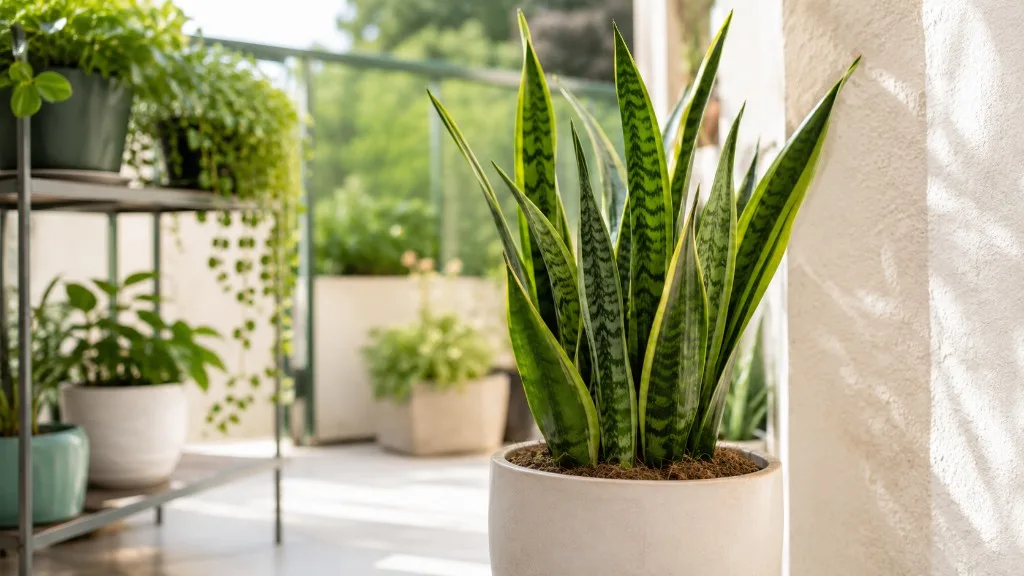
Snake plant stores water in thick leaves—one of the most reliable dry-air survivors indoors.
Why it works: Architectural form that ignores winter heating.
Who it is for: Anyone with forced-air heat or AC.
Care reality: Rot only when overwatered in low light.
Common mistake: Watering weekly because other plants need it.
Limitation: Toxic to pets; slow in dim corners.
Useful care guides:
Best for: offices and heated apartments
Difficulty: Easy
Light: Low–medium indirect
Water: Every 2–4 weeks
Best placement: Desk or dim corner
Pet safety: Toxic if ingested
Typical indoor size: 2–3 ft
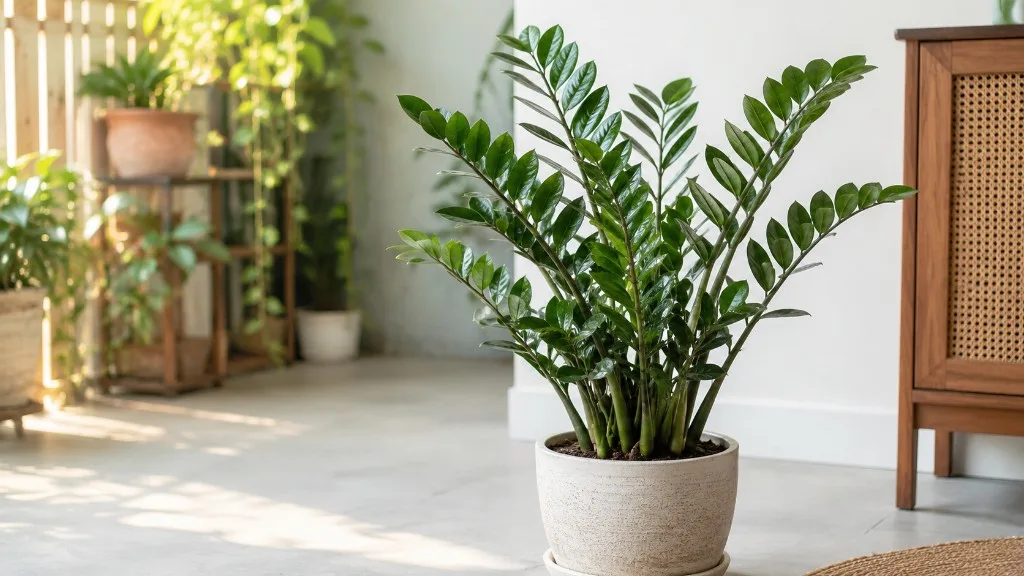
ZZ plant glossy leaves tolerate dry air from radiators and AC better than most tropicals.
Why it works: Survives low humidity and irregular watering.
Who it is for: Busy growers in dry, climate-controlled rooms.
Care reality: Thrives on neglect; rots when overwatered.
Common mistake: Misting daily instead of fixing watering rhythm.
Limitation: Toxic; growth stalls in very dark spots.
Useful care guides:
Best for: sunny dry windowsills
Difficulty: Easy
Light: Bright indirect to direct sun
Water: Every 2–3 weeks
Best placement: South or west sill
Pet safety: Toxic if ingested
Typical indoor size: 1–3 ft
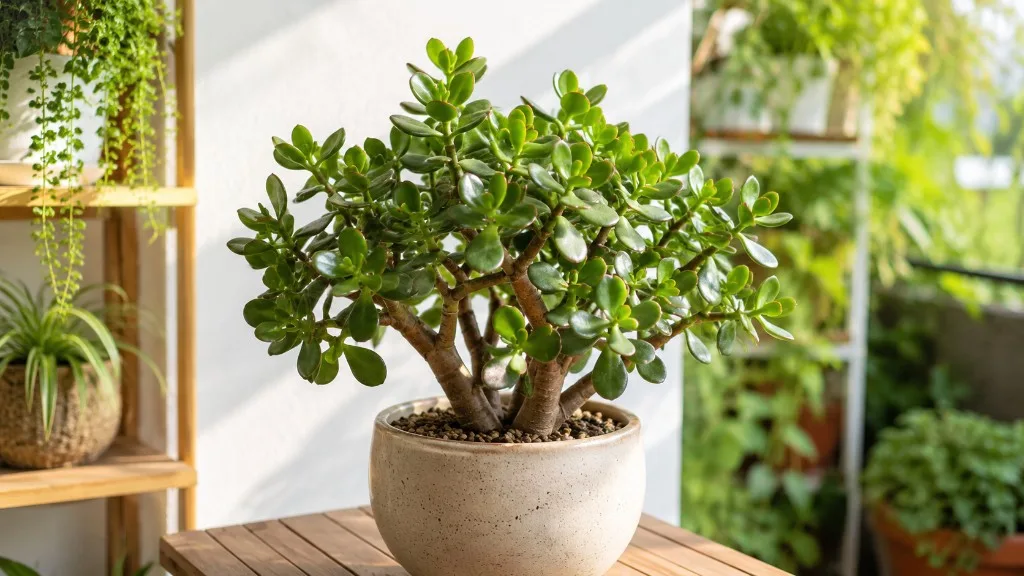
Jade plant succulent leaves hold moisture—ideal when winter air drops below 30% humidity.
Why it works: Tree-like form without humidity demands.
Who it is for: Sunny-room growers who forget to water.
Care reality: Needs bright light; tolerates dry air naturally.
Common mistake: Keeping in dim humid bathrooms.
Limitation: Toxic; leggy without sun.
Useful care guides:
Best for: bright dry sills
Difficulty: Easy
Light: Bright indirect to direct sun
Water: Every 2–3 weeks
Best placement: Sunny kitchen or office window
Pet safety: Toxic if ingested
Typical indoor size: 8–16 in.
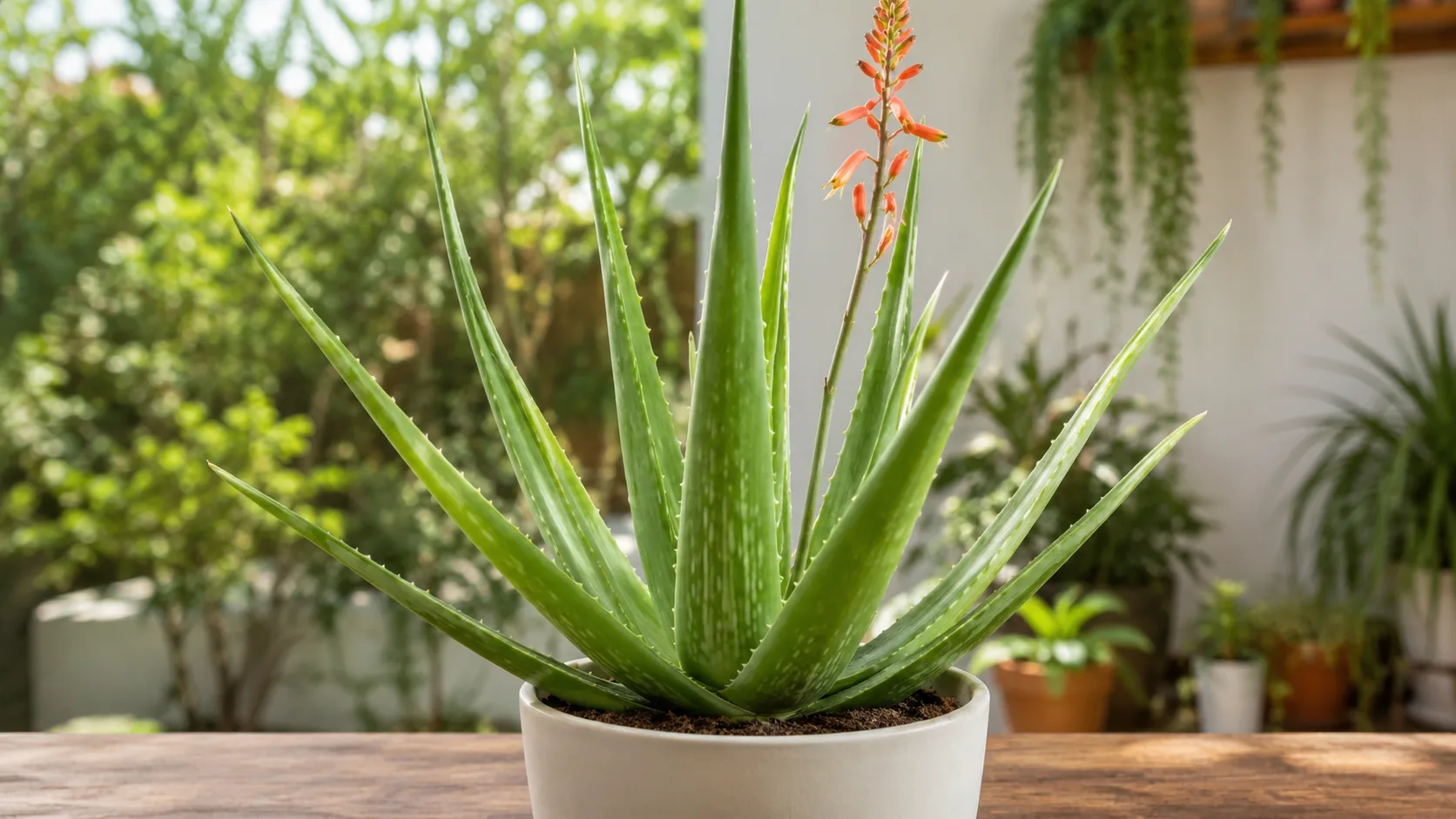
Aloe vera thrives in dry air—overwatering kills it faster than low humidity.
Why it works: Classic dry-air windowsill plant.
Who it is for: Beginners with a sunny window.
Care reality: Let soil dry fully; brown mush means too much water.
Common mistake: Grouping with humidity-loving ferns.
Limitation: Toxic to cats and dogs.
Useful care guides:
Best for: small dry desks
Difficulty: Easy
Light: Bright indirect
Water: Every 2–3 weeks
Best placement: Desk near window
Pet safety: Non-toxic to cats and dogs (ASPCA)
Typical indoor size: 3–6 in.
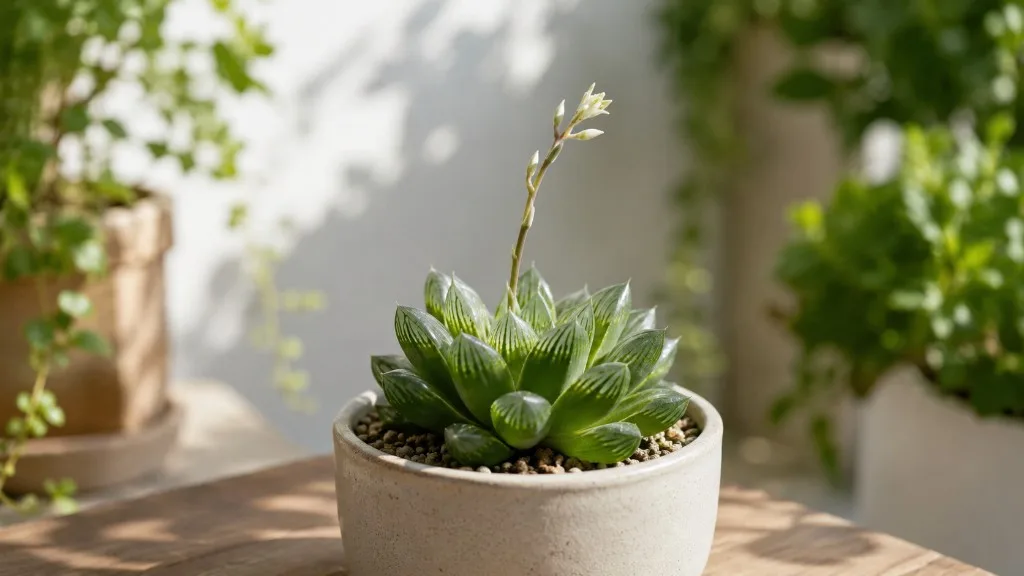
Haworthia compact succulent that handles heated dry offices without complaint.
Why it works: Pet-safe succulent for dry cubicles.
Who it is for: Desk growers with bright indirect light.
Care reality: Rot if watered on a tropical schedule.
Common mistake: Misting leaves in a humidifier-heavy room—unnecessary.
Limitation: Slow growth; not a trailing statement.
Useful care guides:
Best for: bright dry living rooms
Difficulty: Easy
Light: Bright indirect
Water: When top 2 in. dry
Best placement: Near bright window, not in draft
Pet safety: Toxic if ingested
Typical indoor size: 4–8 ft indoors
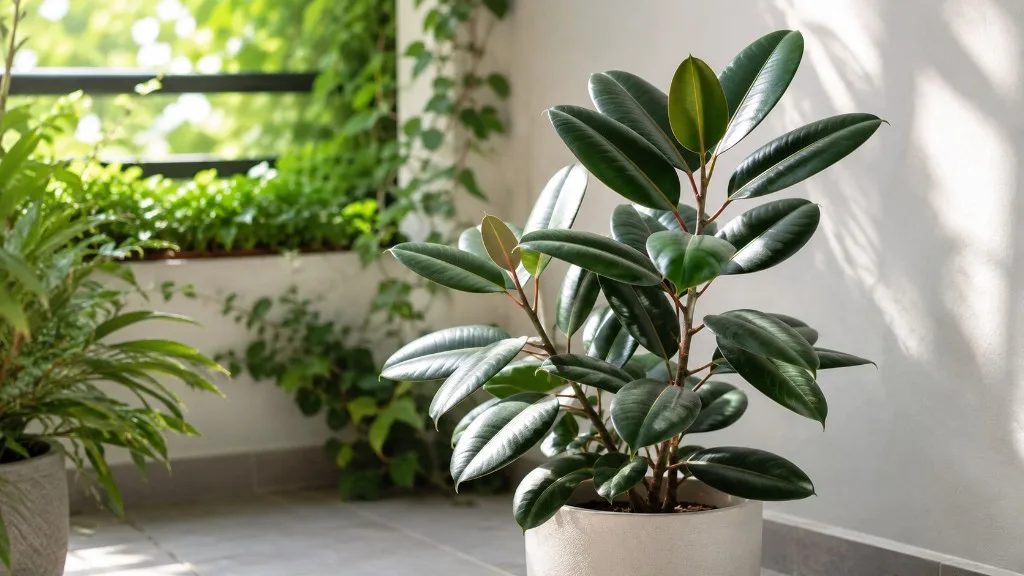
Rubber plant thick leaves tolerate average home humidity—brown tips often mean inconsistent watering, not dry air alone.
Why it works: Large glossy leaves without fern humidity demands.
Who it is for: Bright-room owners wanting floor height.
Care reality: Wipe leaves monthly; stable watering matters more than misting.
Common mistake: Over-misting while soil stays soggy.
Limitation: Toxic; needs bright light for size.
Useful care guides:
Best for: sunny dry corners
Difficulty: Easy
Light: Bright indirect to direct sun
Water: Every 2–4 weeks
Best placement: Bright corner with drainage
Pet safety: Non-toxic to cats and dogs (ASPCA)
Typical indoor size: 3–6 ft
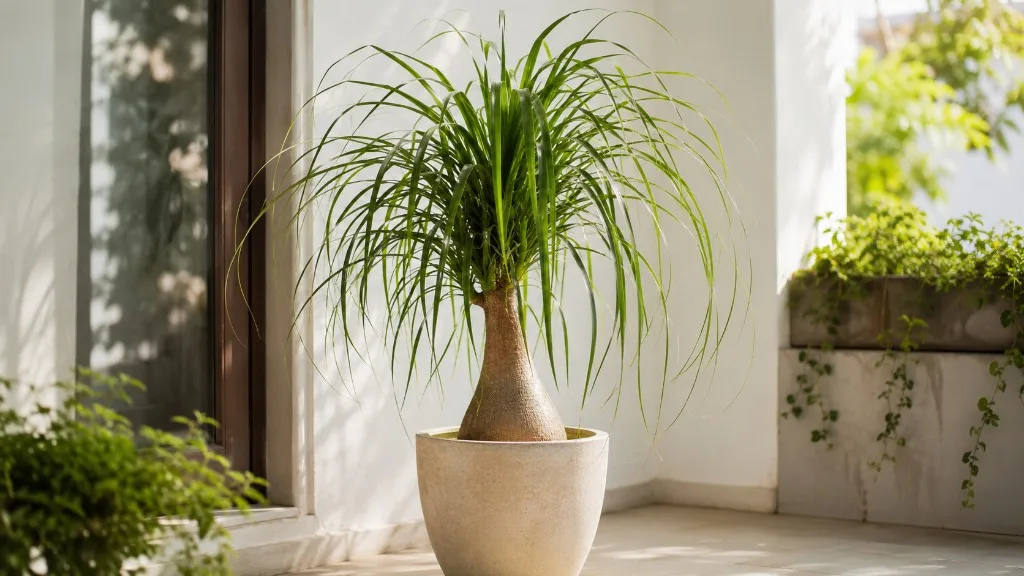
Ponytail palm stores water in its bulbous base—built for dry air and infrequent watering.
Why it works: Sculptural form that ignores AC dryness.
Who it is for: Sunny apartments with irregular watering.
Care reality: Bulb base rots if soil stays wet.
Common mistake: Planting in a pot without drainage because it “looks desert.”
Limitation: Needs bright light for best form.
Useful care guides:
Best for: bright dry architectural height
Difficulty: Easy
Light: Bright indirect to direct sun
Water: Every 2–3 weeks
Best placement: Floor near sunny window
Pet safety: Toxic if ingested
Typical indoor size: 4–8 ft cane form
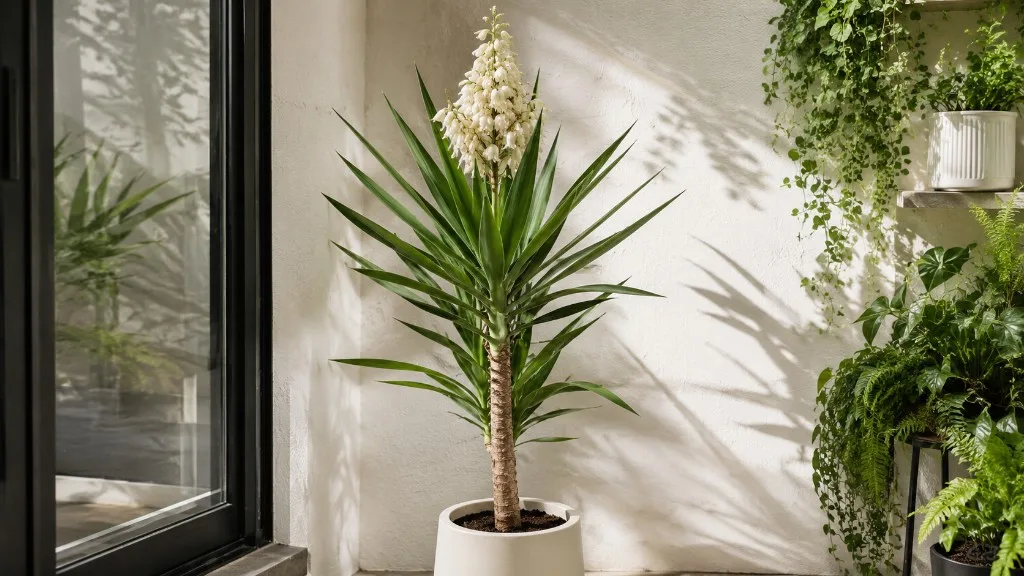
Yucca plant desert-adapted cane form that handles dry forced-air heat.
Why it works: Modern vertical lines without humidity trays.
Who it is for: Bright rooms with heating vents.
Care reality: Let soil dry; yellow mushy leaves mean overwatering.
Common mistake: Keeping in a dim humid bathroom.
Limitation: Toxic; sharp leaf tips near walkways.
Useful care guides:
Best for: bright rooms with average humidity
Difficulty: Easy
Light: Bright indirect
Water: When top inch dries
Best placement: East window or bright shelf
Pet safety: Non-toxic to cats and dogs (ASPCA)
Typical indoor size: 8–12 in. trailing
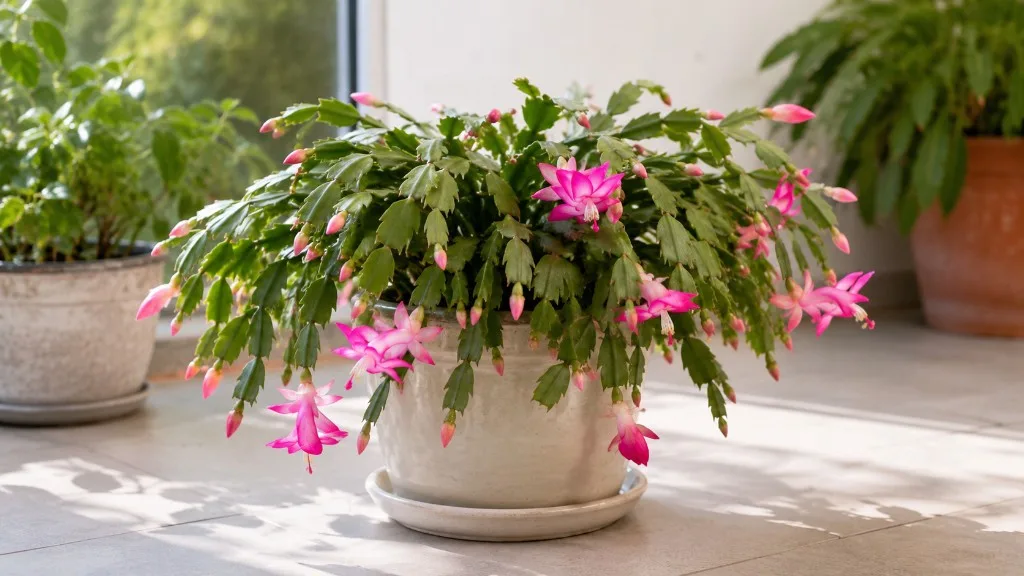
Christmas cactus tolerates dry winter air better than true jungle cacti need summer humidity for buds.
Why it works: Pet-safe bloomer that is not a desert succulent.
Who it is for: Growers wanting seasonal flowers without misting rituals.
Care reality: Dry air is fine; bud drop follows inconsistent watering.
Common mistake: Treating like a desert cactus with monthly water.
Limitation: Needs bright light to rebloom reliably.
Useful care guides:
Best for: dim dry corners
Difficulty: Easy
Light: Low–medium indirect
Water: Every 2–3 weeks
Best placement: North corner or hallway
Pet safety: Non-toxic to cats and dogs (ASPCA)
Typical indoor size: 2–3 ft
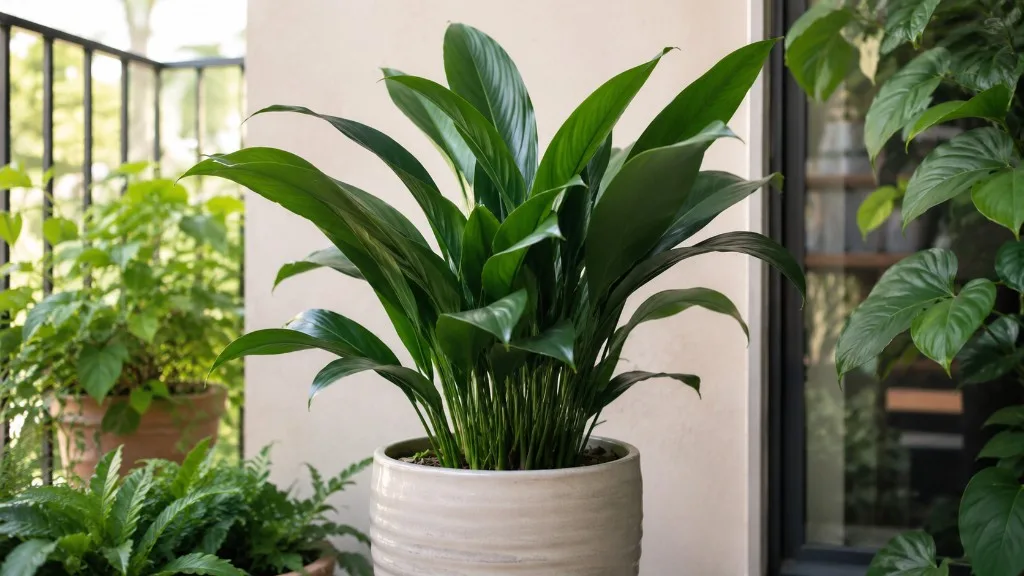
Cast iron plant lives up to its name—low light and dry air rarely faze it.
Why it works: Toughest foliage for north rooms and heating season.
Who it is for: Low-light apartments with AC or radiators.
Care reality: Extremely slow; almost never needs repotting yearly.
Common mistake: Overwatering because it looks “tropical.”
Limitation: Slow growth; not showy.
Useful care guides:
Misting instead of choosing the right plant. Dry-air succulents do not need daily mist; ferns need more than mist can deliver.
Grouping succulents with humidity lovers. Shared trays help ferns but can rot snake plant roots.
Overwatering because leaves look dry. Thick leaves store water—check soil, not leaf shine.
Placing jade in a dim room. Dry air tolerance does not mean low-light tolerance for sun lovers.
Dry air is normal indoors—choose plants built for it. Snake plant and ZZ plant survive heated winters; jade and aloe want sun; haworthia and ponytail palm add pet-safe options. Match light before you buy.
Background reading on picking and caring for the right plants.
This Best Indoor Plants for Dry Air plant list was researched and written by . Plant picks, rankings, and suitability notes for Best Indoor Plants for Dry Air are checked against LeafyPixels plant metadata, care requirements, pet-toxicity references, and practical indoor suitability.
We prioritize sources that hold up under scrutiny:
The LeafyPixels editorial team then reviews the draft for clarity, step-by-step usefulness, and fit with real apartment and home conditions-not ideal greenhouse setups. When guidance changes materially, we update the page and note the revision date.