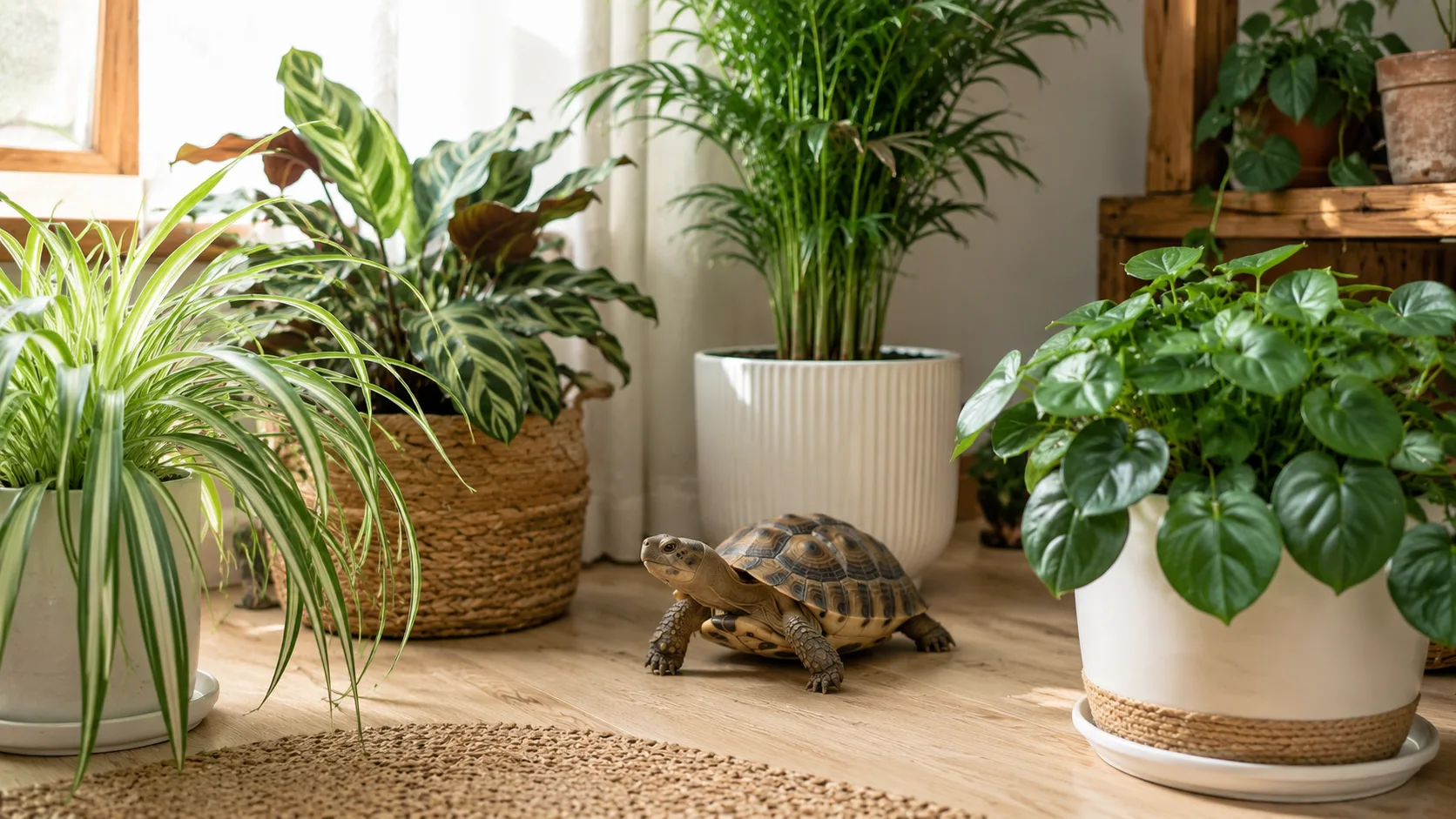
Tortoises do not “sample” plants the way a cat might—they graze. Anything reachable in an indoor pen, patio enclosure, or supervised roaming area may be eaten repeatedly over days. That makes tortoise plant safety fundamentally different from hanging a toxic pothos “high enough” and hoping for the best.
LeafyPixels keeps this list intentionally short: three aquatic species—anacharis, cabomba, and hornwort—that fit water-feature or humid enclosure contexts better than random houseplants. This is not a complete forage guide. For balanced nutrition, use species-specific husbandry resources like The Tortoise Table. For ornamentals to remove, see Plants Toxic to Tortoises.
Safer Does Not Mean Unlimited Grazing
Even lower-risk aquatic plants can foul water, carry pesticide residue from nurseries, or displace the balanced diet your tortoise species requires. The Merck Veterinary Manual treats many common ornamentals as toxic to reptiles—assume unverified plants are unsafe until proven otherwise for your species.
Contact your reptile veterinarian if your tortoise shows reduced appetite, lethargy, oral irritation, or abnormal droppings after eating any plant not on your verified forage plan.
Quick Pick: Start With These Three
For a shallow water feature or humid grazing zone, anacharis (Elodea) is the most widely used starting point—fast-growing, easy to replace after nibbling, and commonly kept in tortoise pond setups with conservative husbandry oversight.
For submerged texture that tolerates some grazing, hornwort (Ceratophyllum demersum) floats freely without roots—useful when tortoises uproot anchored plants.
For fine-leaved submerged growth, cabomba (Cabomba spp.) works in deeper water sections—monitor water quality as leaves decay.
How to Choose Plants for Tortoise Access
Match Plant Type to Enclosure Design
Terrestrial tortoise pens should not be filled with unverified houseplants. Aquatic and semi-aquatic species in this list fit water features or moist zones—not dry basking areas decorated with pothos or aloe.
Rinse Nursery Plants Thoroughly
Aquatic plants from pet stores may carry snail treatments, algaecides, or fertilizer tabs. Rinse well and quarantine before adding to a tortoise-access pond.
Separate Enrichment From Diet
Grazing enrichment is not nutrition. Sulcata, Hermann’s, and red-foot tortoises have different dietary requirements—The Tortoise Table lists species-appropriate weeds and greens separately from aquatic decor.
How We Selected These Three
We required aquatic species with practical tortoise-enclosure use, absence from major reptile toxicology red-flag lists for incidental contact, and presence in LeafyPixels plant inventory. We excluded terrestrial houseplants—even ASPCA non-toxic ones—because tortoise grazing exposure is sustained and species-specific forage data rarely supports them.
We omitted plants with oxalate-rich profiles (most Araceae houseplants) and bulb or cardiac glycoside species entirely—they belong on Plants Toxic to Tortoises.
Tortoise-Safer Plant Comparison Table
Anacharis
Best for: shallow pond features, humid enclosure water bowls, replaceable grazing enrichment
Enclosure role: Submerged oxygenating plant (often sold as Elodea or waterweed)
Grazing reality: Tortoises commonly nibble soft stems; plan to replenish
Conservative status: Lower-risk aquatic candidate—not a verified staple food for all tortoise species
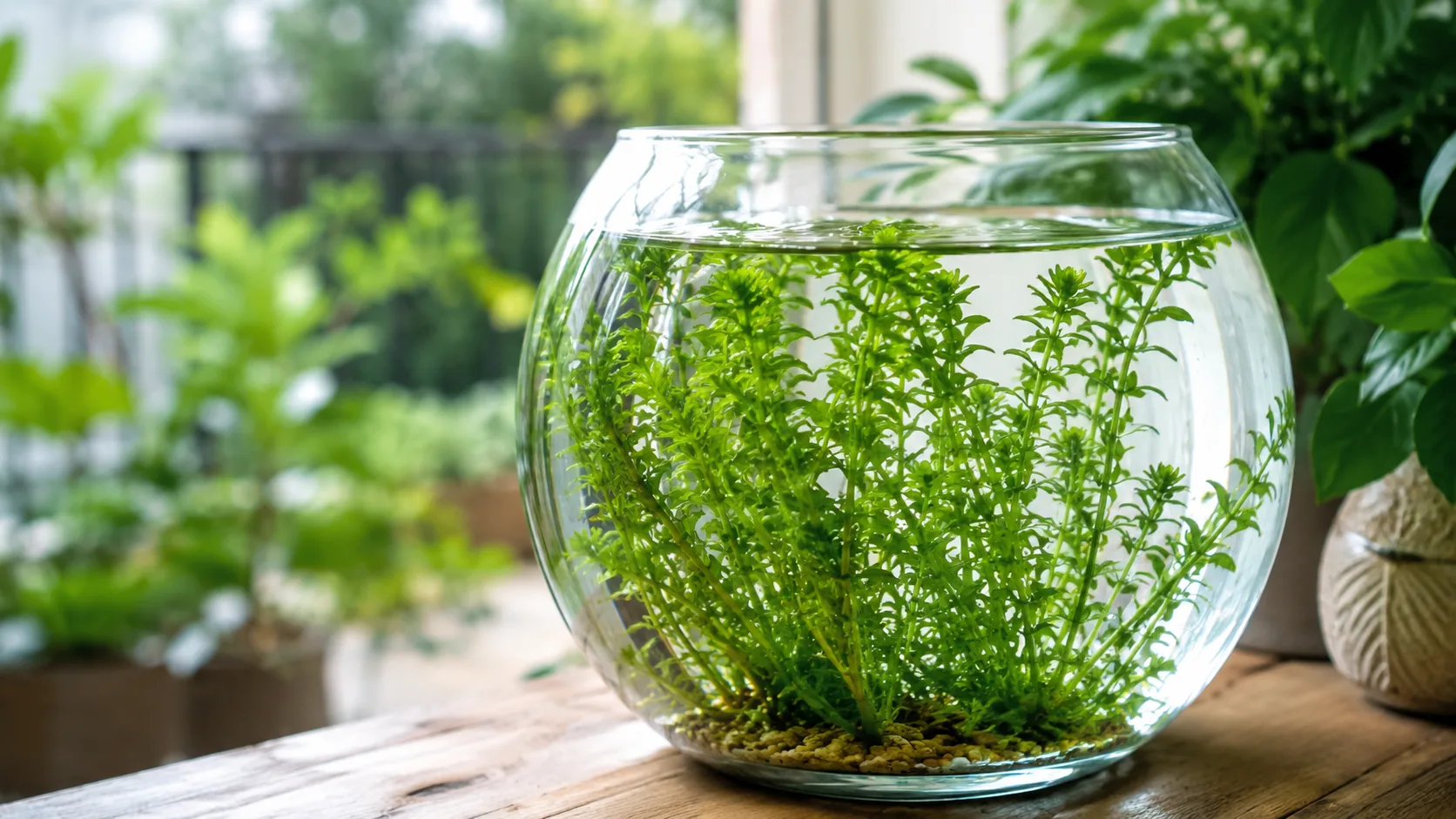
Anacharis (Elodea / Egeria spp.—often labeled waterweed) is the most practical starting plant for tortoise-access water features. It grows quickly, oxygenates water, and tolerates partial grazing better than delicate terrestrial ornamentals. Reptile keepers use it in pond-style setups; it is not listed among common houseplant toxins in the Merck Veterinary Manual’s ornamental chapter.
The mistake is treating anacharis as a complete diet. It is enrichment and habitat structure—not a replacement for species-appropriate greens from verified Tortoise Table listings.
Why it works: Fast regrowth after nibbling; widely available in aquatic sections.
Care tip: Anchor stems or weight bunches so tortoises do not drag entire clumps onto dry land. See anacharis care guide.
Common mistake: Letting uneaten decaying stems accumulate and foul water.
Avoid this plant if: You need dry-land grazing options—this is aquatic only.
Useful care guides:
Hornwort
Best for: floating cover, filter-free tubs, tortoises that uproot rooted plants
Enclosure role: Free-floating submerged mass—no planting required
Grazing reality: Soft fronds get trimmed; plant often persists as floating fragments
Conservative status: Lower-risk aquatic candidate for incidental grazing
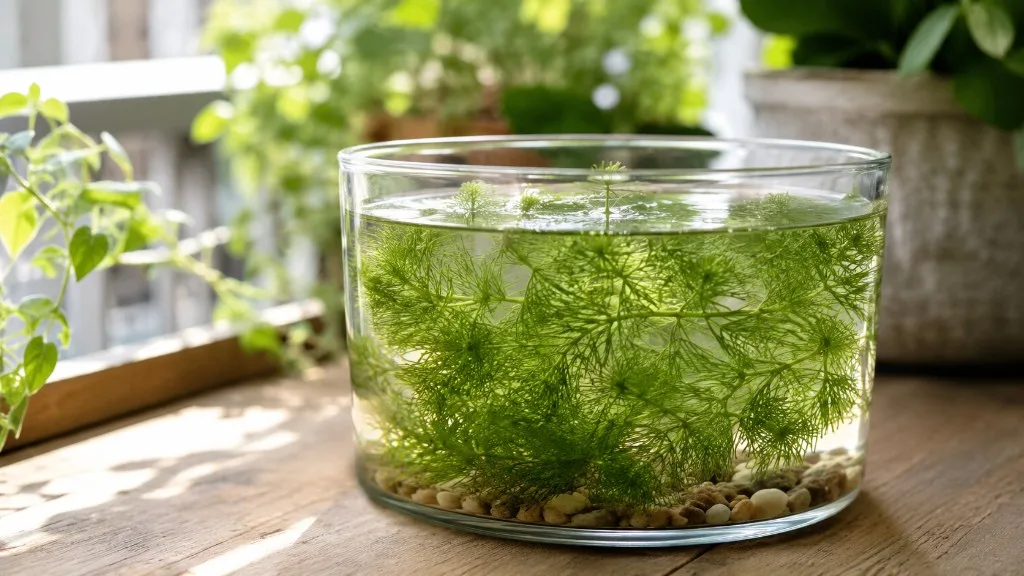
Hornwort (Ceratophyllum demersum) floats freely without true roots—ideal when tortoises dig up anything planted in substrate. It provides shade and nibbling texture in shallow pools. Not a common entry on ornamental toxic-plant lists aimed at mammal pets; reptile references focus on keeping unverified terrestrial ornamentals out of enclosures instead.
Why it works: Survives uprooting because it does not need anchoring.
Care tip: Thin dense mats so surface film does not block gas exchange. See hornwort care guide.
Common mistake: Allowing hornwort to choke small water bowls entirely.
Avoid this plant if: You need rooted structure for bank stabilization—use anacharis instead.
Useful care guides:
Cabomba
Best for: deeper water zones, visual texture, experienced keepers monitoring water quality
Enclosure role: Fine-leaved submerged plant (fanwort)
Grazing reality: Stems break easily; tortoises may scatter fragments
Conservative status: Lower-risk aquatic candidate with higher maintenance
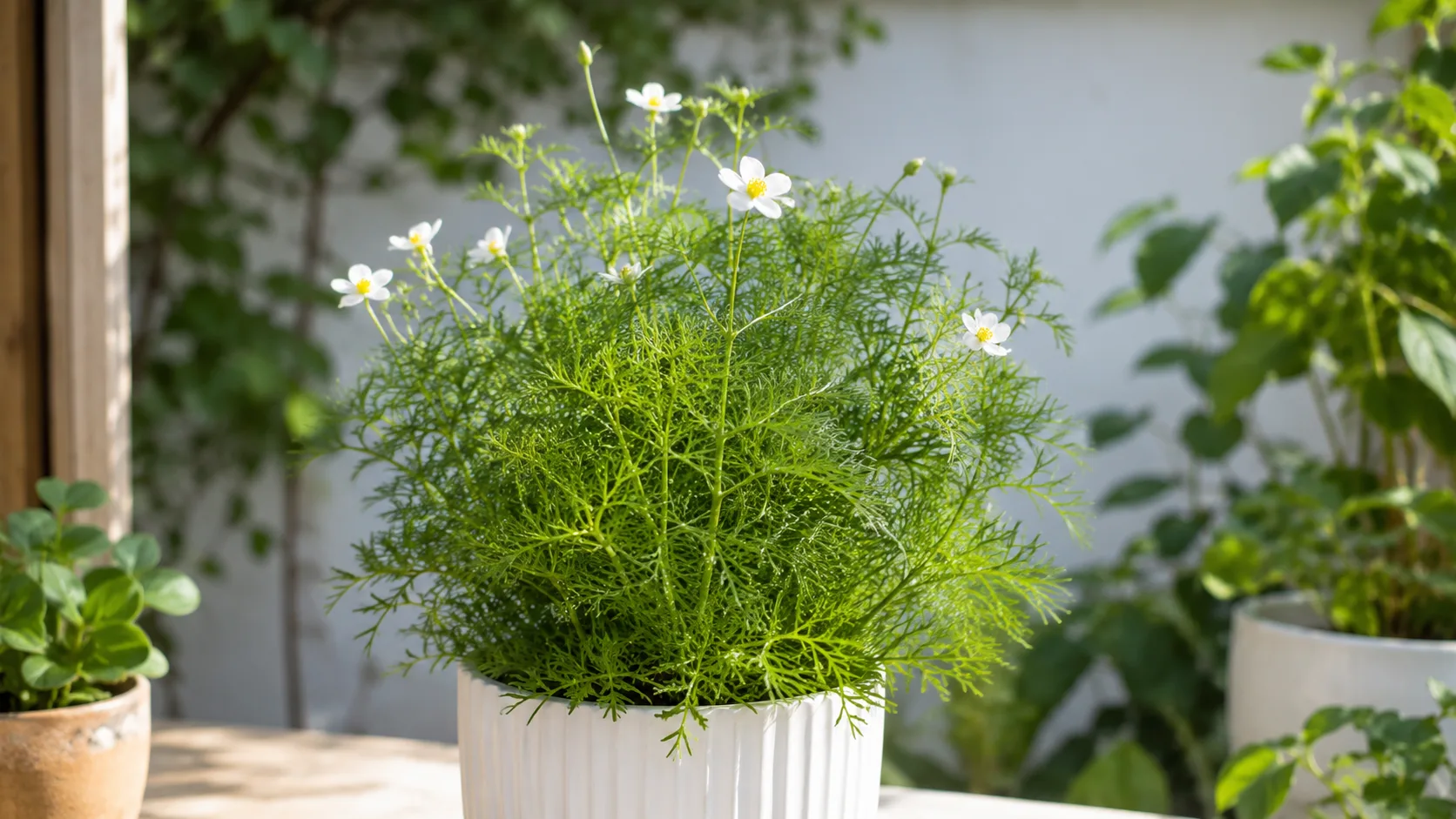
Cabomba (Cabomba spp.)—fanwort—adds fine texture to deeper water sections of tortoise ponds. It is less bulletproof than hornwort or anacharis: low light and temperature swings cause melt. For grazing setups, treat it as replaceable enrichment rather than permanent structure.
Why it works: Offers variety beyond two-species ponds when water quality is managed.
Care tip: Rinse thoroughly at purchase; quarantine before tortoise access. See cabomba care guide.
Common mistake: Adding to warm shallow bowls without enough light—rapid decay fouls water.
Avoid this plant if: You want zero-maintenance grazing decor—choose hornwort.
Useful care guides:
Common Mistakes With Tortoise Plants
Decorating pens with houseplants. Pothos, aloe, and philodendron are grazing hazards—see the toxic tortoise list.
Assuming turtle-safe equals tortoise-safe. Tortoises graze more steadily on land plants.
Skipping The Tortoise Table. Aquatic decor does not replace species-specific forage planning.
Ignoring water quality. Decaying aquatic plants harm tortoises indirectly through bacterial bloom and ammonia spikes.
Trusting “natural” without ID. Wild-collected plants may be toxic—weeds and look-alikes kill tortoises every year.
Conclusion
Tortoise plant safety starts with conservative choices: anacharis, hornwort, and cabomba for aquatic enrichment—not random houseplants in grazing range. Verify every terrestrial green against The Tortoise Table for your species. Remove common ornamentals listed on Plants Toxic to Tortoises. When in doubt, call an ARAV-member reptile veterinarian before offering new plants.