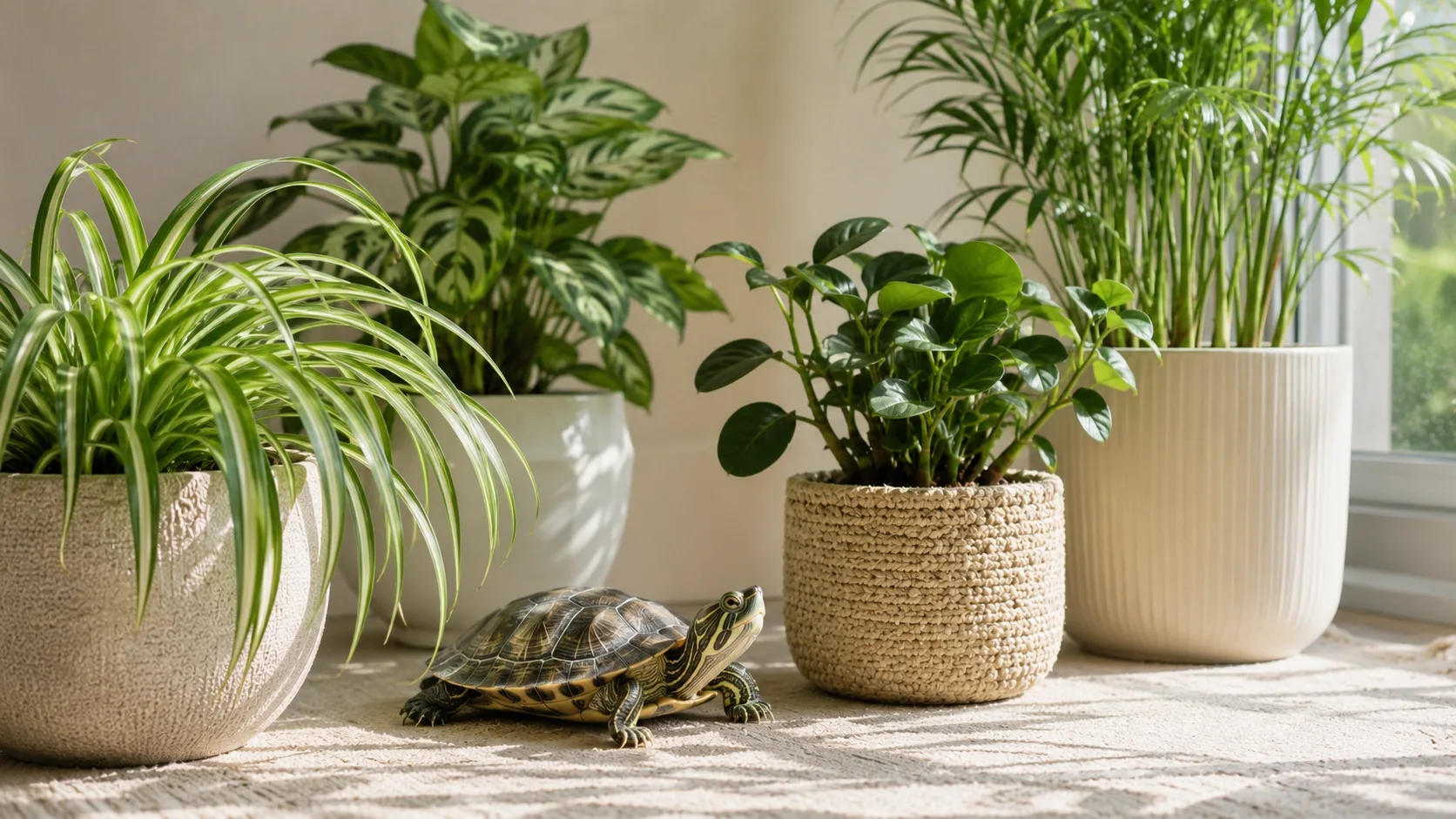
Aquatic turtles live inside their plant list. Anything in the tank—submerged stems, floating mats, basking-platform adjacency—will be nibbled, uprooted, or shoved under the filter intake. The question is not whether turtles touch plants, but whether the species you add is a lower-risk aquatic candidate or a toxic ornamental that should never enter the habitat.
This guide covers seven conservative turtle-safer plants: anubias, java fern, hornwort, anacharis, duckweed, cabomba, and water lettuce. They fit tank and pond setups—not living-room décor. For ornamentals to remove from turtle spaces, see Plants Toxic to Turtles. The Merck Veterinary Manual warns that many common houseplants are toxic to reptiles; aquatic species here are cautious starting points, not blanket approvals.
Cautious Candidate Does Not Mean Food
Turtles sample plants for grazing enrichment and shelter—not as a balanced diet. Lower-risk aquatic plants can still decay, carry nursery pesticides, or spike ammonia when left uneaten. Contact your reptile veterinarian if your turtle shows lethargy, refusal to eat, oral irritation, or abnormal buoyancy after new plants are added.
Quick Pick: Best Plant for Your Turtle Setup
For hardscape planting that survives nibbling, start with anubias tied to rock or driftwood—not buried in substrate turtles dig up.
For low-maintenance floating cover, use duckweed or hornwort—both tolerate partial grazing and regrow fast.
For submerged oxygenation in larger tanks, add anacharis in weighted bunches.
For attached epiphytes on basking structure wood, java fern handles turtle traffic better than delicate stem plants.
How to Choose Turtle Tank Plants
Prioritize Aquatic Over Terrestrial
Pothos dangling into a tank, aloe on a basking shelf, and philodendron beside a pond are enclosure-adjacent hazards—not enrichment. Keep terrestrial ornamentals on the toxic turtle list out of reach.
Rinse and Quarantine New Plants
Pet-store aquatic plants may carry copper-based snail treatments. Rinse thoroughly and float in a quarantine tub for several days before turtle access.
Monitor Water Quality After Adding Plants
Decaying transplant melt and uneaten fragments raise ammonia. Test water after introducing cabomba, anacharis, or water lettuce.
How We Selected These Seven
We required aquatic species with real turtle-tank use, conservative reptile toxicology cross-checks, and inventory presence in LeafyPixels. We ranked by nibbling tolerance, ease of replacement, and how often keepers successfully maintain each species in turtle habitats.
We excluded terrestrial houseplants—even those ASPCA non-toxic to cats—because turtle incidental ingestion in tanks differs from mammal chewing patterns.
Turtle-Safer Plant Comparison Table
Anubias
Best for: beginner turtle tanks, low light, hardscape planting
Tank role: Rhizome plant tied to rock or driftwood
Nibbling tolerance: High—thick leaves withstand occasional bites
Conservative status: Lower-risk aquatic candidate; not a dietary staple
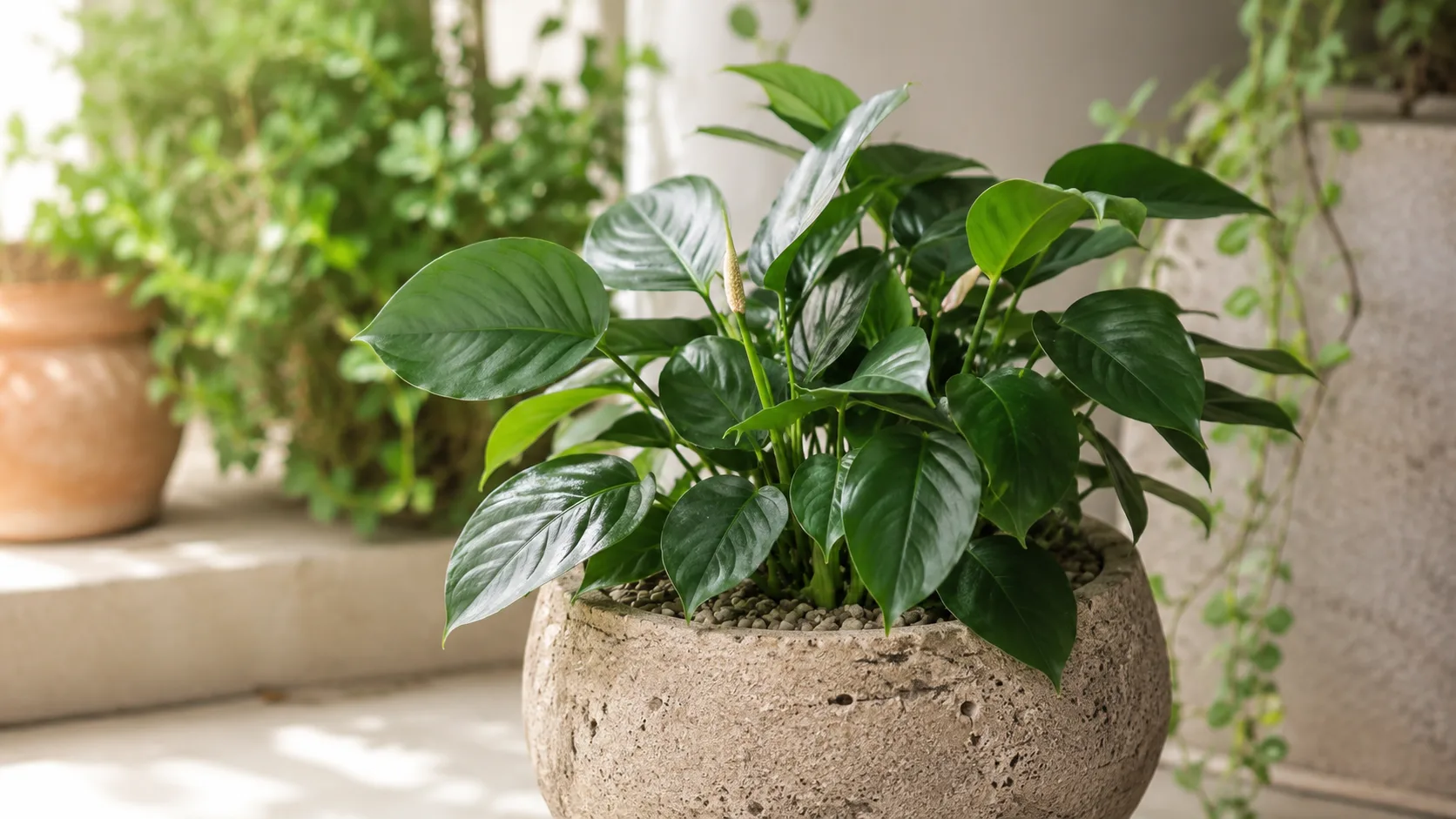
Anubias (Anubias spp.) is the standard hardy epiphyte in turtle tanks. Tie the rhizome to hardscape—never bury it in substrate turtles excavate. Thick leaves tolerate red-eared slider and map turtle nibbling better than fine stem plants. Not listed among common ornamental toxins in Merck’s houseplant chapter; reptile guidance focuses on excluding terrestrial aroids from habitats instead.
Why it works: Survives turtle traffic when attached correctly.
Care tip: Use fishing line or gel superglue (cyanoacrylate) on dry rock, then cure underwater. See anubias care guide.
Common mistake: Planting rhizome in gravel—rots and dies.
Avoid this plant if: You need fast surface cover—use duckweed instead.
Useful care guides:
Java Fern
Best for: filter-adjacent wood, basking structure planting
Tank role: Epiphyte with leathery fronds
Nibbling tolerance: High
Conservative status: Lower-risk aquatic candidate
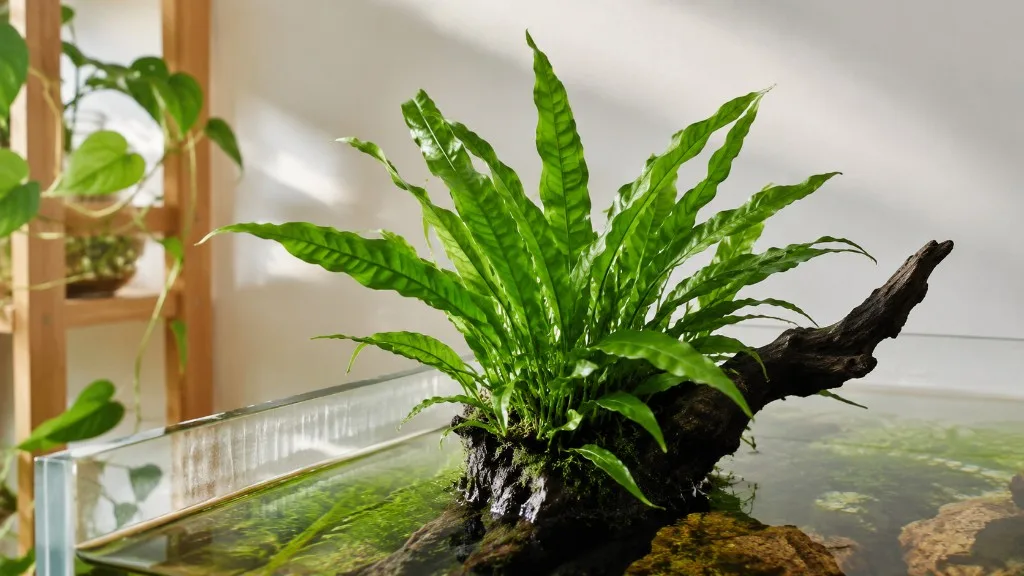
Java fern (Microsorum / Leptochilus spp.) attaches to wood and rock like anubias. Leathery fronds resist shredding better than cabomba or anacharis. Common in turtle aquascapes for low-light durability.
Why it works: Tolerates the water-quality swings beginner turtle tanks often have.
Care tip: Do not bury the rhizome. See java fern care guide.
Common mistake: Removing healthy black spore spots on mature leaves—they are normal.
Avoid this plant if: You want rapid nutrient export—stem plants grow faster.
Useful care guides:
Hornwort
Best for: floating shade, fry cover, filter-free tubs
Tank role: Free-floating submerged plant
Nibbling tolerance: Medium—fragments regrow
Conservative status: Lower-risk aquatic candidate
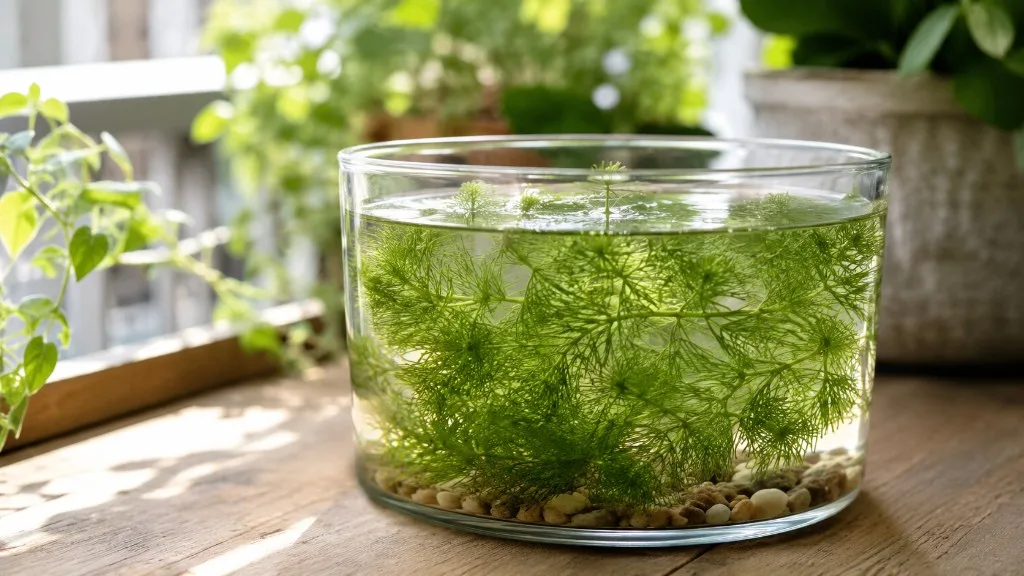
Hornwort (Ceratophyllum demersum) needs no planting—critical when turtles uproot everything anchored in gravel. Provides shade under basking lamps and absorbs nutrients. Trim around filter intakes.
Why it works: Zero substrate requirement.
Care tip: Thin weekly in high-nutrient turtle tanks. See hornwort care guide.
Common mistake: Letting mats block entire water surface—reduces gas exchange.
Avoid this plant if: Your filter intake has no pre-filter sponge.
Useful care guides:
Anacharis
Best for: submerged oxygenation, larger tanks
Tank role: Stem plant in weighted bunches
Nibbling tolerance: Medium—regrows if rooted or re-bunched
Conservative status: Lower-risk aquatic candidate
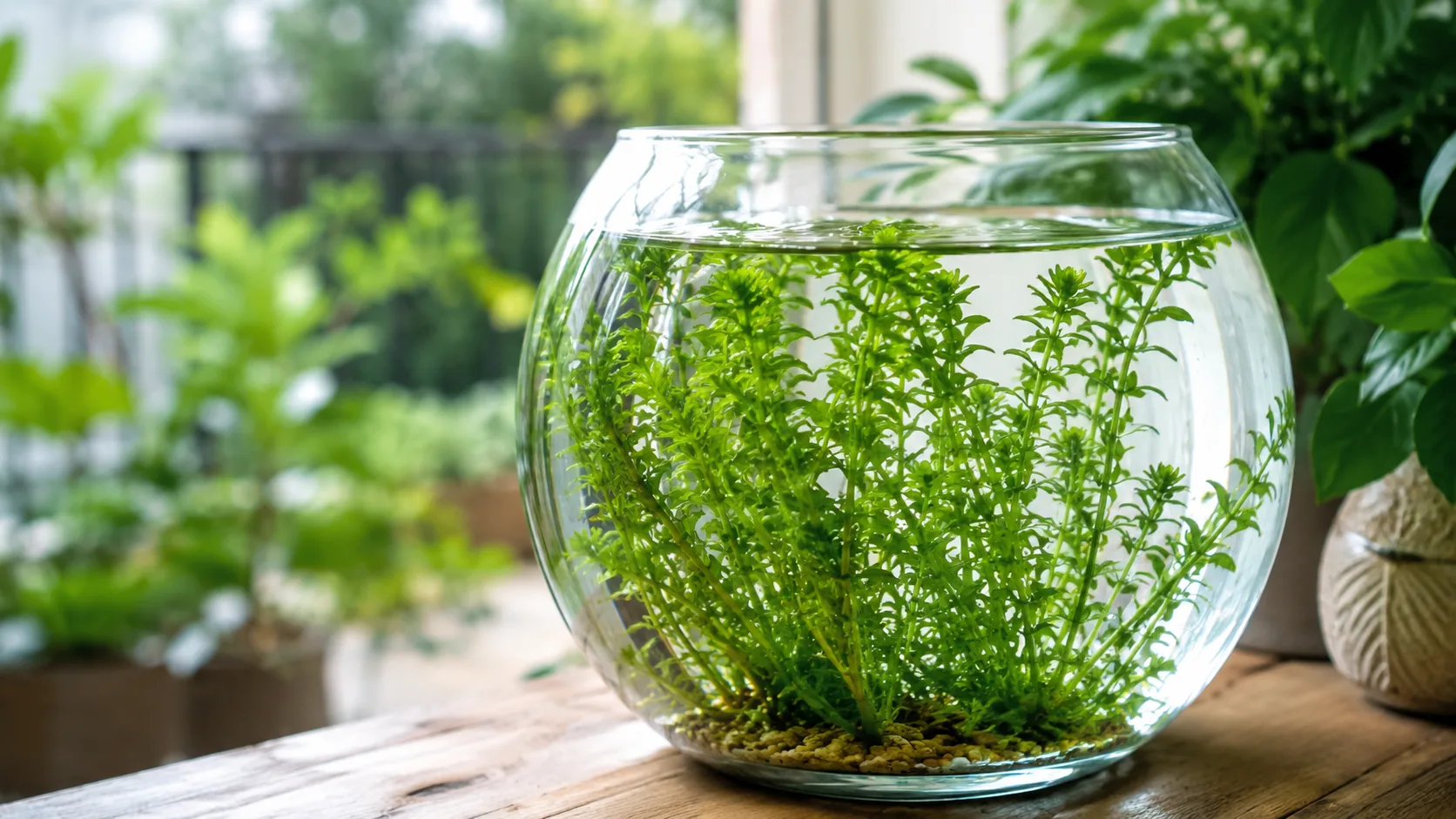
Anacharis (waterweed / Elodea spp.) is a classic turtle-tank workhorse. Turtles graze soft tips; keep extra bunches to replace shredded stems. Monitor ammonia when large amounts decay.
Why it works: Cheap, available, fast-growing.
Care tip: Weight stems with lead-free plant weights or tuck into crevices. See anacharis care guide.
Common mistake: Leaving uprooted stems to rot on the basking dock.
Avoid this plant if: Tank is tiny and unfiltered—decay overwhelms small volumes.
Useful care guides:
Duckweed
Best for: surface shade, nutrient uptake, pond tubs
Tank role: Floating mat (Lemna / Spirodela spp.)
Nibbling tolerance: High—regrows rapidly
Conservative status: Lower-risk aquatic candidate
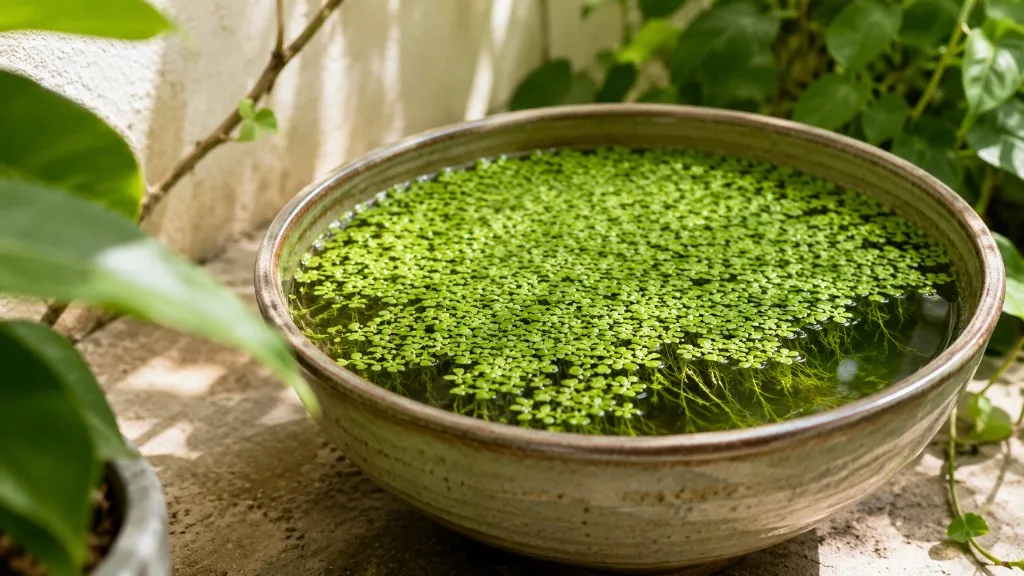
Duckweed forms a fast-spreading surface mat turtles graze and push aside. Excellent nutrient sponge in overstocked grow-out tubs— but it clogs filter socks and spreads to every tank in the room.
Why it works: Turtles eat it; it returns within days.
Care tip: Scoop excess weekly with a fine net. See duckweed care guide.
Common mistake: Introducing to every tank when one cup hitchhikes on a plant order.
Avoid this plant if: You hate perpetual surface skimming.
Useful care guides:
Cabomba
Best for: background texture in lit tanks
Tank role: Fine-leaved stem plant
Nibbling tolerance: Low to medium—stems break
Conservative status: Lower-risk aquatic candidate with higher maintenance
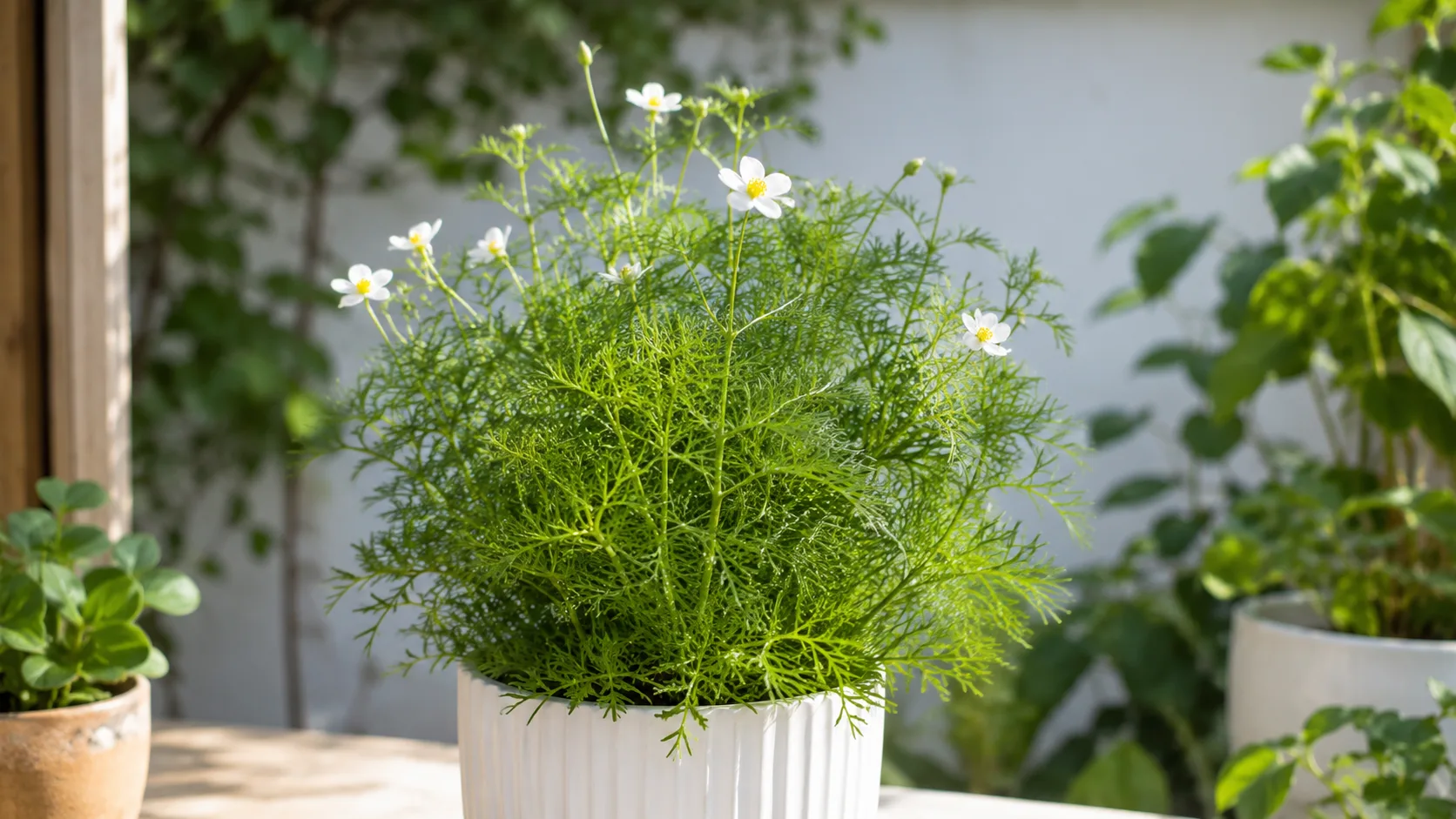
Cabomba (Cabomba spp.) adds fine background texture when light and flow are adequate. Turtles break stems easily—treat as replaceable, not permanent aquascaping.
Why it works: Visual variety in larger display tanks.
Care tip: Quarantine and rinse before adding to turtle systems. See cabomba care guide.
Common mistake: Adding to cold or dim turtle tanks—rapid melt fouls water.
Avoid this plant if: You want zero maintenance—choose hornwort.
Useful care guides:
Water Lettuce
Best for: open-top pond tubs, outdoor stock tanks (where legal)
Tank role: Floating rosette with long roots
Nibbling tolerance: Medium—roots grazed first
Conservative status: Lower-risk aquatic candidate; check local legality
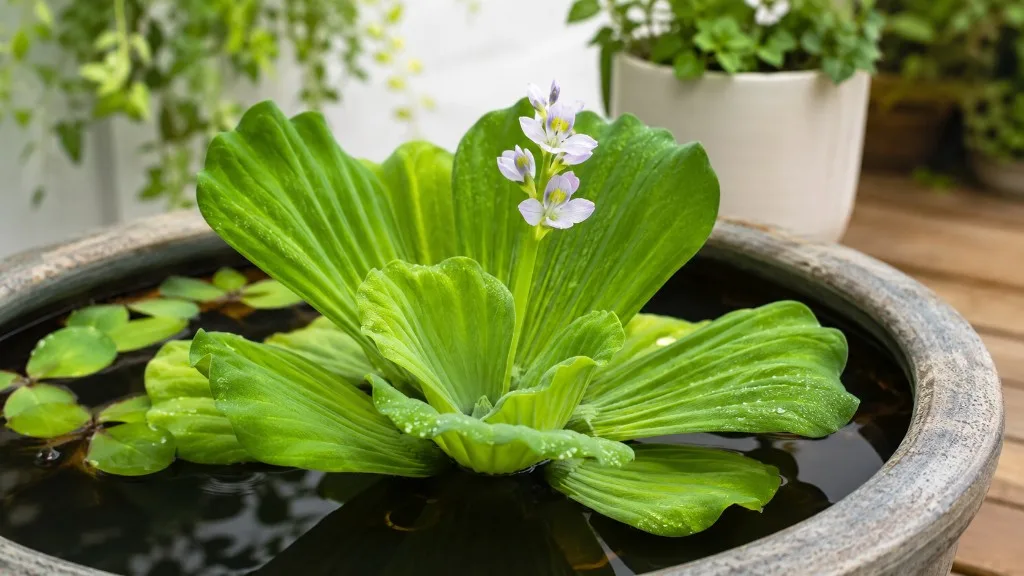
Water lettuce (Pistia stratiotes) provides shade and root grazing in pond-style turtle setups. Check local regulations—it is invasive and restricted in some U.S. states. Indoor turtle tanks often lack the light and humidity it wants; expect melt unless conditions are bright and warm.
Why it works: Naturalistic pond cover when legal and conditions match.
Care tip: Remove melted leaves promptly. See water lettuce care guide.
Common mistake: Adding to dim indoor tanks without adequate warmth.
Avoid this plant if: Your state prohibits possession or you run a small filtered aquarium.
Useful care guides:
Common Mistakes With Turtle Tank Plants
Letting pothos roots dangle into the tank. Pothos is toxic—see Plants Toxic to Turtles.
Assuming cat-safe houseplants are turtle-safe. Mammal ASPCA status does not translate to reptile enclosures.
Skipping quarantine. Snail treatments and pesticides harm turtles.
Ignoring decay after nibbling. Ammonia spikes sicken turtles faster than plant toxicity.
Treating plants as complete nutrition. Commercial turtle diet and vet guidance still lead.
Conclusion
Start turtle planting with anubias and java fern on hardscape, hornwort or duckweed for cover, and anacharis for submerged growth—all conservative aquatic candidates, not verified food. Remove terrestrial ornamentals from Plants Toxic to Turtles. Rinse new plants, monitor water quality, and consult an ARAV-member reptile veterinarian when ingestion concerns arise.