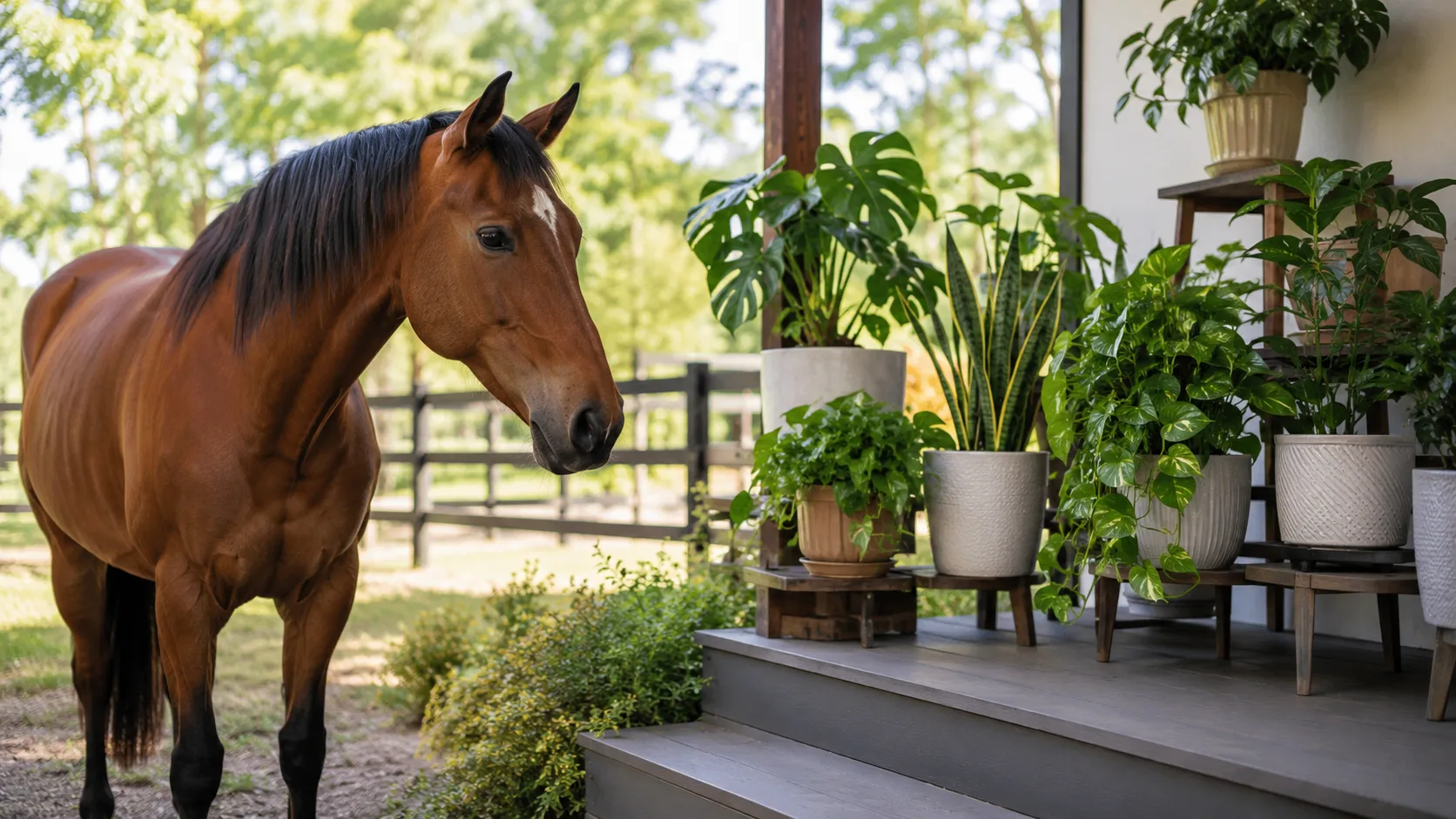
Horses do not need to share pasture with a houseplant to be poisoned by it. A pothos on the tack-room windowsill, a peace lily beside the wash rack, or English ivy trailing from a porch rail can become the only green thing within reach of a tied, bored, or curious horse. The ASPCA maintains horse-specific toxicity listings for many common ornamentals—and those listings matter most in the handling zones where horses actually encounter potted plants.
This guide ranks eight houseplants with verified ASPCA toxic classifications relevant to horse-adjacent spaces. It is not a pasture weed guide; it targets the decorative plants barn owners, grooms, and riders still keep near doorways, offices, and porches. For verified safer options near equine spaces, see Plants Safe for Horses.
The eight ornamentals to remove first near horse areas are pothos, philodendron, peace lily, dieffenbachia, ZZ plant, English ivy, aloe vera, and anthurium. Several carry explicit Toxic to Horses labels on the ASPCA database; others are toxic to cats and dogs with compounds that warrant the same conservative placement away from equine reach.
Why Barn-Adjacent Plants Matter
Pasture toxicology focuses on weeds horses graze over hours. Barn-adjacent exposure is different: concentrated sampling in minutes. A horse tied near a doorway may strip a trailing philodendron stem or chew a peace lily leaf while waiting to be tacked. The dose per minute can be high even if the total plant mass is small.
The ASPCA notes that insoluble calcium oxalate plants—including pothos, philodendron, peace lily, dieffenbachia, ZZ plant, and anthurium—cause oral irritation, pain, and swelling of mouth, tongue, and lips in affected species. For horses, the ASPCA specifically lists flamingo flower (Anthurium) as toxic to horses with those oxalate signs. (ASPCA flamingo flower)
Editor note (barn layouts): The highest-risk placements we see in horse-adjacent homes are not pasture edges—they are wash-rack doorways and tack-room windows where a tied horse faces a windowsill pot for 20–40 minutes daily. Moving or removing that one pot eliminates more repeat exposure than fencing a distant pasture corner.
When to Call Your Veterinarian
Contact your veterinarian if a horse samples a known toxic ornamental and shows:
- Oral swelling, drooling, or reluctance to eat or drink
- Colic signs, diarrhea, or reduced manure output
- Lethargy, weakness, or abnormal gait
- Persistent pawing at the mouth
Save plant material or photos for identification. ASPCA Animal Poison Control is available at 888-426-4435 (consultation fee may apply).
Quick Pick: Remove These First
Prioritize oxalate aroids the ASPCA flags for horses: pothos, philodendron, peace lily, dieffenbachia, ZZ plant, and anthurium. (ASPCA houseplant trouble article)
Remove English ivy from porch rails and entry planters—trailing habit plus ASPCA toxic listing for horses on ivy-family compounds.
Relocate aloe vera from sunny barn windowsills; ASPCA lists aloe toxic to cats and dogs—keep it out of equine reach using the same conservative rule.
How We Selected These Eight
Selection criteria:
- ASPCA toxic listing — horse-specific where available; otherwise cat/dog toxic with known irritant or saponin compounds and conservative horse placement.
- Barn-adjacent realism — species sold as houseplants and kept in offices, porches, and wash areas.
- Reach profile — trailing or windowsill placement intersecting tied horses.
- LeafyPixels inventory — each plant has a care hub for identification support.
Pasture weeds, hay contaminants, and ornamental trees are outside this page’s scope.
Toxic Ornamental Comparison Table (Horse Spaces)
*Aloe lacks a dedicated horse line on ASPCA; we treat it as off-limits near horses because of verified cat/dog toxicity and saponin content.
Pothos
Safety status: Toxic to horses — ASPCA lists golden pothos as toxic to horses. (ASPCA golden pothos)
Exposure risk: Trailing stems on porch posts, office shelves facing cross-ties
Mechanism: Insoluble calcium oxalates
Pothos is ubiquitous in barn offices because it tolerates fluorescent light. A horse tied facing that windowsill can reach trailing stems with a neck stretch. ASPCA clinical signs include oral irritation and difficulty swallowing.
Safety note: Water-propagation jars on desk edges are within reach when horses are led past—not just when tied.
Action: Remove from all horse traffic and tying zones.
Useful care guides (for ID):
Philodendron
Safety status: Toxic to horses — ASPCA philodendron listing includes horses. (ASPCA philodendron)
Exposure risk: Moss poles and hanging baskets beside barn doors
Mechanism: Insoluble calcium oxalates
Philodendron’s soft stems break easily when brushed by a passing horse, dropping leaves into the aisle.
Safety note: Heartleaf and brasil cultivars share the same toxicity profile.
Action: Replace with non-toxic barn décor or move to a human-only office.
Useful care guides (for ID):
Peace Lily
Safety status: Toxic to horses — ASPCA peace lily listing includes horses. (ASPCA peace lily)
Exposure risk: Floor pots in barn lounges and wash-area waiting spots
Mechanism: Insoluble calcium oxalates
Despite the “lily” name, this is an aroid—not a true lily—but still ASPCA-toxic to horses. Broad leaves attract browsing when hay is not available nearby.
Safety note: Not related to daylily or true lily pasture concerns; separate ID issue, same removal advice.
Action: No peace lilies in any room where horses stand tied.
Useful care guides (for ID):
Dieffenbachia
Safety status: Toxic to horses — ASPCA dieffenbachia listing includes horses. (ASPCA dieffenbachia)
Exposure risk: Large floor specimens in barn entry corners
Mechanism: Insoluble calcium oxalates; intense oral irritation
Dieffenbachia’s common name “dumb cane” reflects severe oral swelling potential. Horses that chew a leaf may refuse water afterward.
Safety note: Sap irritates human skin during pruning—bag clippings before horses pass through.
Action: Remove from barn-adjacent spaces entirely.
Useful care guides (for ID):
ZZ Plant
Safety status: Toxic to horses — ASPCA ZZ plant listing includes horses. (ASPCA ZZ plant)
Exposure risk: Low-light side tables in barn offices and feed rooms
Mechanism: Insoluble calcium oxalates
ZZ plant’s thick leaves look unappetizing to humans but still get sampled by bored horses in confined waiting areas.
Safety note: All parts considered toxic per ASPCA.
Action: Move to living quarters disconnected from horse handling.
Useful care guides (for ID):
English Ivy
Safety status: Toxic to horses — ASPCA English ivy listing includes horses. (ASPCA English ivy)
Exposure risk: Porch rails, entry planters, gift baskets
Mechanism: Triterpenoid saponins
Ivy trails down toward head height on porch steps where horses are led. Fallen leaves persist and remain palatable enough to browse.
Safety note: Verify Hedera helix—not Swedish ivy (Plectranthus).
Action: Remove from any ledge or rail on horse routes.
Useful care guides (for ID):
Aloe Vera
Safety status: Toxic to cats and dogs — ASPCA aloe listing; treat as unsafe near horses. (ASPCA aloe)
Exposure risk: Sunny barn windowsills and first-aid stations
Mechanism: Saponins and anthraquinones
Owners keep aloe near wash racks for human sunburn care—exactly where horses wait. ASPCA lists vomiting and lethargy in cats and dogs; apply conservative exclusion for horses.
Safety note: Gel used on humans does not make the whole plant safe for horses to eat.
Action: Store aloe in a closed human-only area.
Useful care guides (for ID):
Anthurium
Safety status: Toxic to horses — ASPCA flamingo flower (Anthurium scherzeranum) lists toxic to horses. (ASPCA flamingo flower)
Exposure risk: Gift plants on barn office desks, show-flower arrangements
Mechanism: Insoluble calcium oxalates
Anthurium’s waxy spathes look unlike hay or grass—which can make horses investigate with their lips. ASPCA lists oral irritation and swelling for horses.
Safety note: Often sold as “flamingo lily”—still anthurium, still toxic.
Action: Decline desk anthuriums in horse-facing offices or relocate immediately after events.
Useful care guides (for ID):
Audit Horse-Adjacent Zones
Check these locations on foot with a lead rope in hand:
- Tack room and office windowsills
- Wash rack and cross-tie sight lines
- Porch rails and entry planters
- Feed-room side tables
- Gift plants after shows or clinic visits
Replace removed plants with options from plants safe for horses only after verifying each species—not all “safe” lists apply to every barn layout.
Common Mistakes
Assuming pasture management covers barn plants. Indoor ornamentals are a separate exposure route.
Hanging baskets over cross-ties. Falling leaves and broken stems land in reach.
Keeping “temporary” show flowers in the aisle. Remove before bringing horses through.
Trusting common names. Peace lily is not a true lily; flamingo “lily” is anthurium—check ASPCA botanical listings.
Waiting for severe colic before calling the vet. Oral irritation can reduce drinking early.
Conclusion
Horse plant safety is about access during handling, not just pasture walks. Pothos, philodendron, peace lily, dieffenbachia, ZZ plant, and anthurium carry explicit ASPCA toxic to horses listings and should leave every tack room, porch, and wash-area sight line first. English ivy and aloe vera follow with ASPCA toxic classifications that warrant the same conservative distance.
Remove the plant your tied horse stares at daily—that windowsill pot eliminates more risk than debating theoretical pasture weeds. Call your veterinarian or ASPCA Animal Poison Control at 888-426-4435 if a horse samples any plant on this list and shows oral or GI signs.